
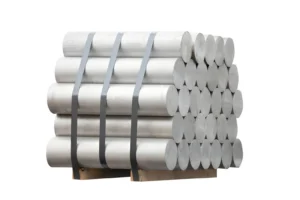
6061-T6 Aluminum: Properties, Machinability, and Uses
6061 T6 aluminum is an aluminum-magnesium-silicon alloy that has been solution heat-treated and artificially aged to increase its strength. It’s a common choice for CNC-machined brackets, housings, and fixtures because it balances low weight, strength, and ease of machining. This guide explains how to read its property data, when to choose 6061 T6 or 6061 T651, and what to watch for when machining deep pockets and thin walls.
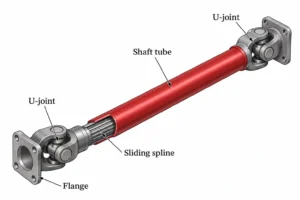
What Is a Drive Shaft? Components, Types, and How It Works
What is a drive shaft? A drive shaft, also spelled driveshaft, is a rotating mechanical component that transmits torque between parts of a drivetrain. In a typical rear-wheel-drive vehicle, it connects the transmission to the differential, which distributes torque to the drive wheels.
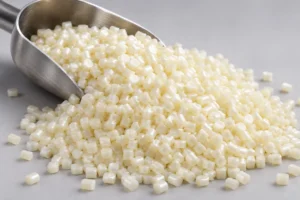
ABS Melting Point: Softening Temperatures, Grades, and Applications
The ABS melting point is not a single fixed temperature. As an amorphous thermoplastic, ABS softens gradually when heated. To choose suitable molding, machining, or 3D printing conditions, you need to distinguish its glass transition temperature from its processing temperatures. This guide explains those differences, compares ABS grades and other plastics, and shows how temperature affects your parts and printing settings.
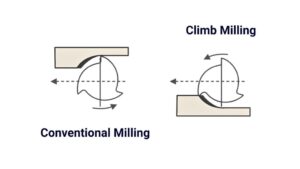
Climb Milling vs Conventional Milling: Key Differences and How to Choose
When comparing climb milling vs conventional milling, the main difference is how the cutting edge engages your workpiece. In climb milling, chips start thick and become thinner; in conventional milling, chips start thin and become thicker.
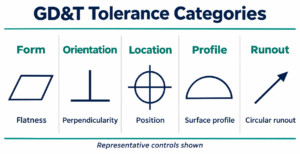
GD&T Symbols Explained: Meanings, Charts, and Drawing Examples
GD&T symbols tell you how much a part’s geometry can vary while still meeting its design requirements. These symbols help you communicate requirements for shape, alignment, and location on engineering drawings. This guide explains their meanings and shows you how to read them through a reference chart and practical drawing examples.
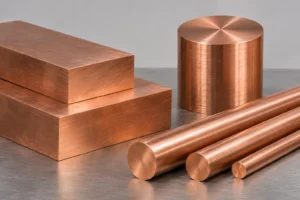
Density of Copper: Properties, Grade Comparison, and Measurement
Copper is widely used in electrical, thermal, and industrial components. At room temperature, the density of copper is approximately 8.96 g/cm³ (8,960 kg/m³). You can use this value to estimate CNC part weight and the mass of material needed for machining. This guide explains copper density units, compares common grades and metals, and shows you how to measure density.
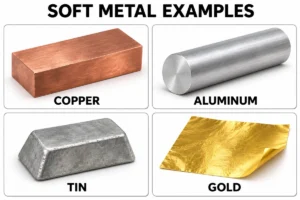
Soft Metals: Properties, Uses, and CNC Machining Considerations
Soft metals have relatively low hardness, making them easier to scratch, indent, or permanently deform. Common examples include cesium, lead, tin, gold, silver, pure aluminum, and pure copper.
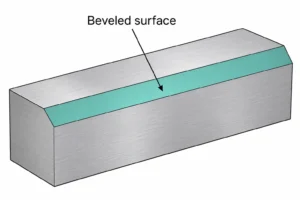
What Is a Bevel? Types, Engineering Uses, and Machining Guide
A beveled edge is a sloped surface along the edge of a part. You can use it to prepare a weld joint, guide parts during assembly, or form a cutting edge. Its angle and size depend on the function you need. This guide explains bevel types, their relationship to chamfers and fillets, and how you can specify, machine, and measure them.
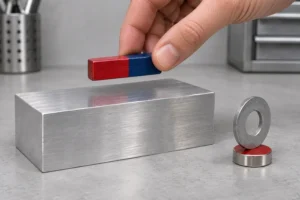
Is Aluminum Magnetic? A Guide to Its Magnetic Properties
Aluminum is widely used in everyday products and industrial parts, but is aluminum magnetic? If you hold a regular magnet against it, it won’t stick. Unlike iron, aluminum is only weakly paramagnetic, so its attraction to a magnetic field is usually too small for you to notice. This guide explains why aluminum behaves this way and what it means for your material choices and applications.
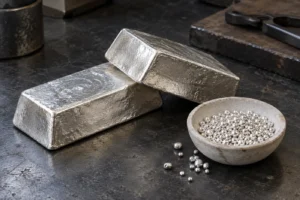
Melting Point of Silver: Temperatures, Alloys, and Melting Guide
Silver is a common precious metal widely used in jewelry and electronics. This guide introduces you to the melting point of silver across different types and alloys, the factors that affect it, and the silver-melting process, helping you understand the role of temperature control in casting, joining, and recycling.
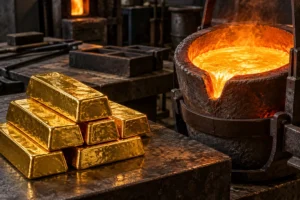
Gold Melting Point Guide: Temperatures, Melting, and Uses
Gold (Au) is a precious metal that melts at approximately 1,064°C (1,948°F) in its pure form. Gold alloys, such as 18K and 14K gold, melt at different temperatures depending on their composition. This guide covers gold melting temperatures, the equipment used to melt gold, and why the material’s composition matters.
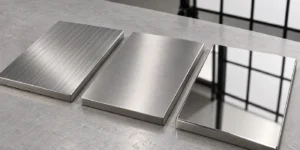
How to Polish Stainless Steel: Steps, Tools, and Finishes
You’ll find stainless steel everywhere, from kitchen utensils and home appliances to medical instruments and aircraft components. Over time, though, it can lose its shine. How can you make it look new again? Polishing can help restore its appearance. In this guide, you’ll learn how to polish stainless steel and what you need at each step.