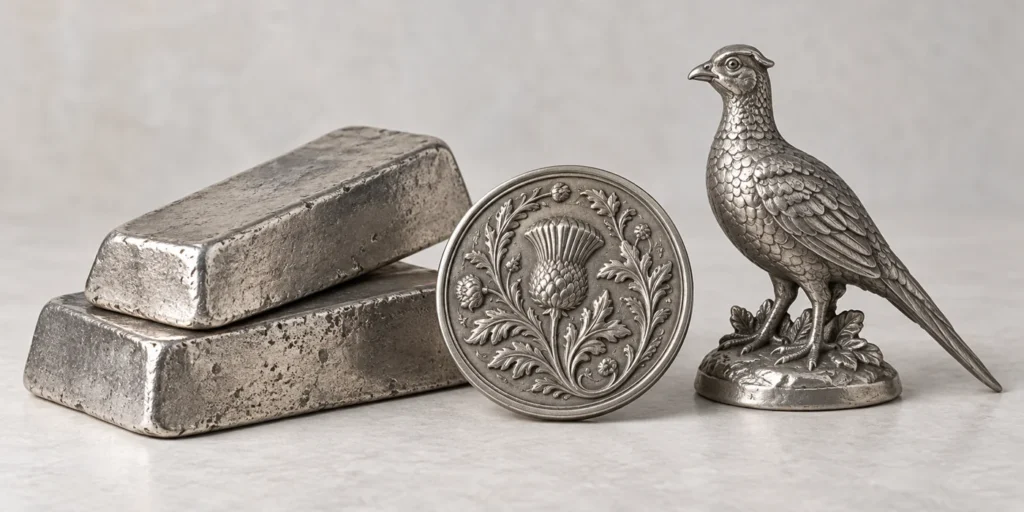
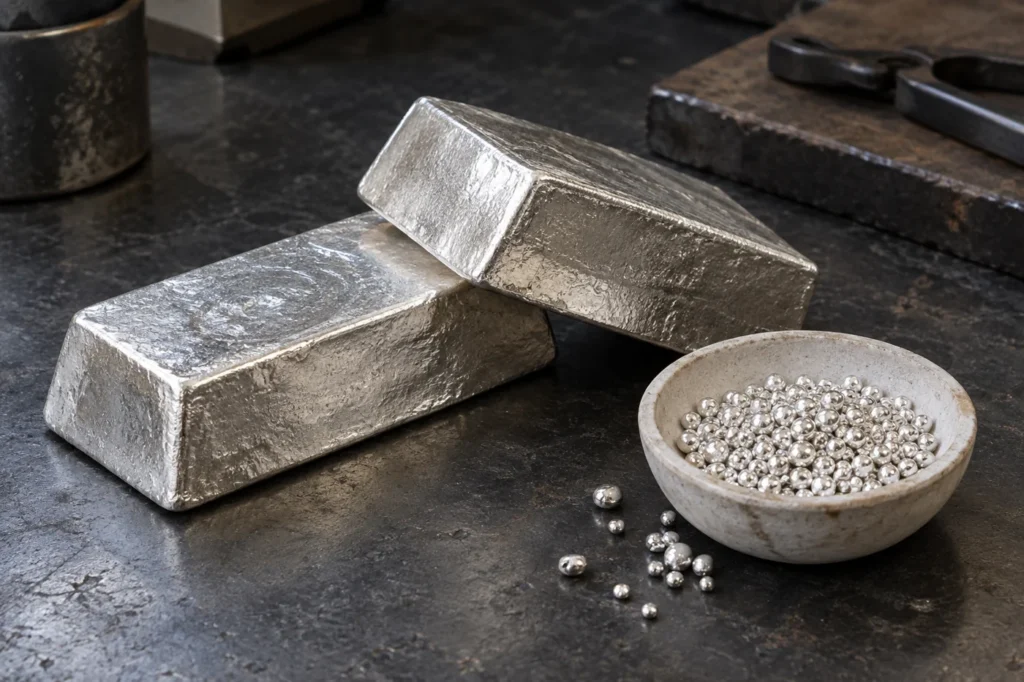
Silver is a common precious metal widely used in jewelry and electronics. This guide introduces you to the melting point of silver across different types and alloys, the factors that affect it, and the silver-melting process, helping you understand the role of temperature control in casting, joining, and recycling.
What Is the Melting Point of Silver?
The melting point of pure silver is 961.78°C (1,763.2°F or 1,234.93 K) at standard atmospheric pressure. At this temperature, solid silver can change into liquid silver as it absorbs the heat needed for melting.
| Temperature Unit | Reference Value | Common Rounded Value |
| Celsius (°C) | 961.78°C | 962°C |
| Fahrenheit (°F) | 1,763.2°F | 1,763°F |
| Kelvin (K) | 1,234.93 K | 1,235 K |
Source: Royal Society of Chemistry — Silver
Silver alloys, such as 925 sterling silver, generally melt over a temperature range. The solidus marks the start of melting, while the liquidus marks complete melting. Pure silver’s melting point therefore cannot serve as a universal processing temperature for every silver material.
Melting Points of Different Types of Silver
The melting temperature for silver depends on its purity and alloy composition. The melting point of fine silver is close to the pure-element reference, while 999 silver is a commercial purity designation for 99.9% silver. The table compares the pure-element reference with specific commercial alloy grades.
| Silver Type or Grade | Silver Content | Melting Point or Range (°C) | Melting Point or Range (°F) |
| Pure silver | Pure Ag reference | 961.78°C | 1,763.2°F |
| 935 silver alloy 935 AG 11 | 93.5% | 800–900°C | 1,472–1,652°F |
| 925 sterling silver 925 AG 10 | 92.5% | 800–900°C | 1,472–1,652°F |
| 835 silver alloy 835 AG 10 | 83.5% | 780–840°C | 1,436–1,544°F |
The alloy ranges above apply to the named C.Hafner grades. They are not universal values for every alloy with the same silver content.
Source: C.Hafner — Silver alloy specifications
The sterling silver melting point is better described as a melting range. Sterling silver contains 92.5% silver, with copper or other metals making up the remaining 7.5%. For 925 AG 10, melting spans 800–900°C (1,472–1,652°F). Changing the metals in the remaining 7.5% can shift these temperatures even when the silver content stays the same.
Before choosing processing temperatures, identify the exact material and obtain its solidus, liquidus, and recommended casting conditions. Keep these three values distinct: the start of melting, complete melting, and the temperature suitable for pouring.
What Affects the Melting Point of Silver?
Silver’s composition is the main factor that determines its melting behavior under normal processing conditions. You should also distinguish factors that change its melting temperature from those that simply affect how quickly it melts.
Silver Purity and Impurities
The reference melting point applies to pure silver. Small amounts of other elements can shift the onset of melting or broaden the transition. A purity label identifies silver content but does not always describe every trace constituent.
Alloying Elements and Composition
Adding copper or other alloying elements changes silver’s melting behavior. The resulting temperature range depends on both the elements present and their proportions, so silver content alone does not tell you the complete picture.
For example, two alloys labeled 925 silver can contain different combinations of metals in the remaining 7.5%. The same silver percentage does not guarantee the same melting range.
Pressure
Pressure can change the temperature at which silver melts. However, for ordinary jewelry work and industrial melting near atmospheric pressure, composition is much more relevant. Unless you work under unusual pressure conditions, standard-pressure material data is generally the appropriate starting point.
Melting Point vs. Melting Time
The size and mass of your silver, the heat source, and heat loss affect how long melting takes. They do not, by themselves, change the material’s equilibrium melting point.
A larger batch needs more energy to melt, while an unsuitable heat source may struggle to bring the entire batch to temperature. If your silver melts slowly, assess the heating setup and batch size before assuming that its melting point is higher.
Silver’s Melting Point Compared with Other Metals
The melting point of silver is lower than those of gold and copper, but higher than those of aluminum and zinc. You can use the table below to compare these pure metals at standard atmospheric pressure.
| Pure Metal | Melting Point (°C) | Melting Point (°F) |
| Zinc | 419.53 | 787.15 |
| Aluminum | 660.32 | 1,220.58 |
| Silver | 961.78 | 1,763.20 |
| Gold | 1,064.18 | 1,947.52 |
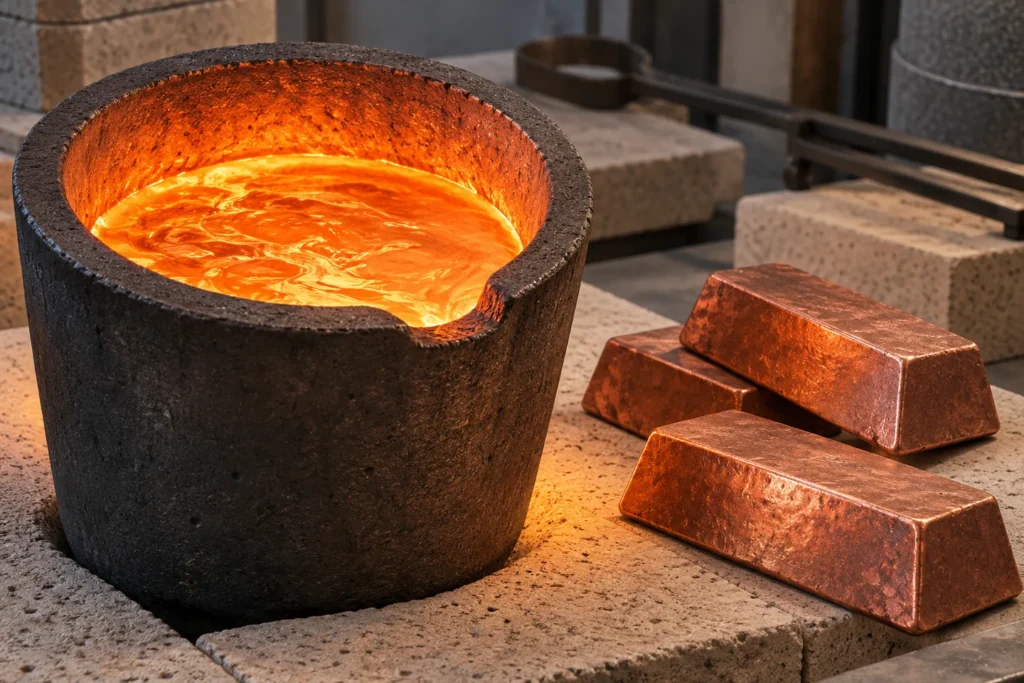
| Copper | 1,084.62 | 1,984.32 |
Pure silver melts approximately 102°C below gold and 123°C below copper. However, a lower melting point alone does not tell you how quickly a metal will melt or how much energy your process will consume. Batch mass, starting temperature, thermal properties, and equipment efficiency also matter.
For a closer comparison of pure copper and its alloys, see our guide to the melting point of copper.
If you also work with precious-metal alloys, our gold melting point guide explains why pure gold and karat gold require different temperature data.
These values apply to pure metals. If you work with sterling silver, gold alloys, brass, or aluminum alloys, check the specifications for the exact material rather than using its main element’s melting point.
How Is Silver Melted?
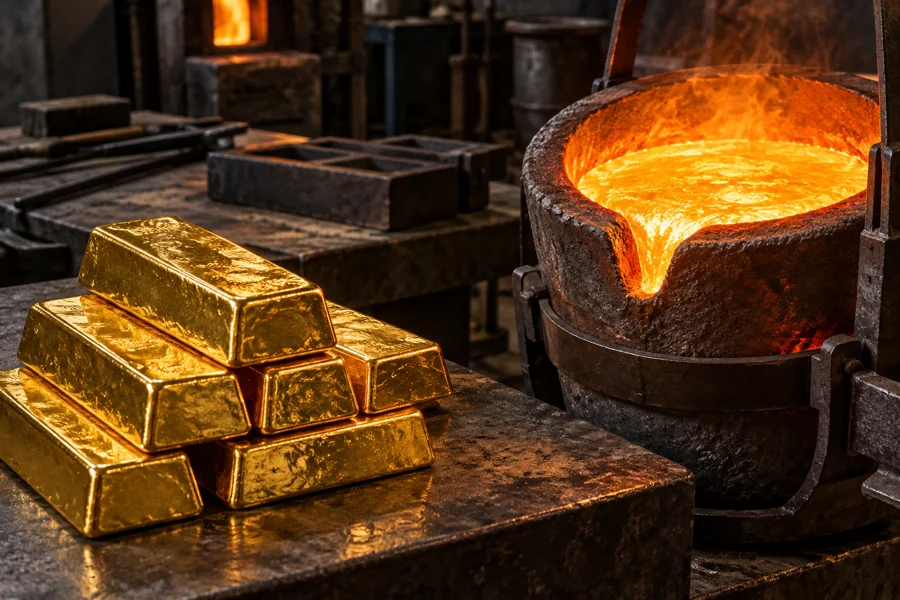
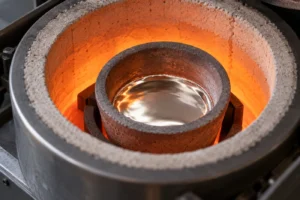
You melt silver by heating it in a suitable crucible until it becomes fully liquid, then pouring it into a prepared mold. The temperature to melt silver depends on the material: pure Ag undergoes its transition at a defined temperature, while most silver alloys pass through a melting range.
Equipment and Preparation
You need a furnace or torch suited to your batch size, a crucible compatible with the alloy and heating method, suitable crucible-handling tools, and a mold designed for molten metal. Use temperature-measuring equipment rated for the process rather than judging temperature by color alone.
Prepare a dry, heat-resistant work area with appropriate ventilation. Wear eye and face protection, heat-resistant gloves, protective clothing, and suitable footwear. Keep moisture away from molten metal: wet tools or molds can cause violent splashing. Dry, condition, and preheat crucibles and molds according to their manufacturers’ instructions.
Melting and Pouring Process
- Identify and inspect the silver. Confirm its grade and separate materials with unknown compositions, coatings, or solder residues. Establish the melting and casting conditions before loading the furnace.
- Prepare the equipment. Inspect the crucible for damage, prepare the mold, and ensure all tools that may contact molten silver are dry.
- Heat under controlled conditions. Follow the furnace or torch instructions and monitor the temperature. Use flux or a protective atmosphere only where the alloy and process require it.
- Confirm complete melting. For an alloy, reaching the solidus only starts melting; the batch must reach its liquidus to become fully liquid. Avoid unnecessary overheating or prolonged holding.
- Pour and cool. Use the recommended pouring temperature and handling method for your casting setup. Allow the casting to solidify and follow the specified cooling procedure before removing it. Do not quench a hot mold or casting unless the process specifically calls for it.
Silver Melting Temperature vs. Casting Temperature
How hot does silver have to be to melt? Pure silver must reach about 961.78°C (1,763.2°F) and absorb sufficient heat to complete melting. This transition temperature does not automatically tell you the correct furnace setting or pouring temperature.
For casting, you generally need some additional temperature above the liquidus to keep the metal fluid during transfer and mold filling. The amount depends on the alloy, part geometry, mold, and casting method. The furnace setting may also differ from the actual metal temperature because of sensor location and heat transfer.
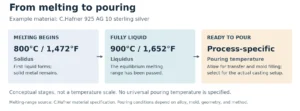
Conceptual stages for 925 AG 10. The 800–900°C melting range comes from C.Hafner; the figure does not prescribe a pouring setpoint.
Source: C.Hafner — 925 AG 10 melting range
Establish the working settings for the combination of alloy, furnace, mold, and casting method. A change in part geometry or transfer time can require a different pouring condition even when the material’s melting range stays unchanged.
Why Does Silver’s Melting Point Matter in Manufacturing?
Understanding the melting point of silver helps you choose processing temperatures, select compatible joining materials, and assess whether an alloy suits your application. Its relevance depends on whether you intend to melt the silver, join it, or machine it into a finished part.
Casting and Recycling
In casting, you need enough heat to fully melt the alloy and maintain fluidity during mold filling. Insufficient temperature can contribute to incomplete filling, while excessive heating can increase energy use and aggravate oxidation of alloying elements.
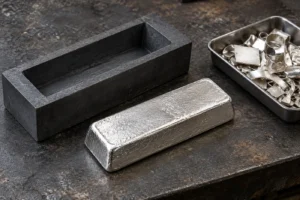
When recycling silver, you also need to identify and sort the feedstock. Scrap may contain solder, coatings, or other metals that change its composition and melting behavior. Melting scrap does not, by itself, refine it into pure silver.
Soldering and Brazing
When you solder or braze a silver component, you normally melt the filler metal while keeping the base material solid. You therefore need a filler with a suitable working temperature below the silver component’s solidus.
Silver-containing fillers are not the same as pure silver or sterling silver. Their compositions are designed for particular joining conditions, so you should check the filler’s melting range and recommended working temperature separately. The term “silver solder” alone does not provide enough information to select a heating temperature.
Machining and Material Selection
In CNC machining, you remove silver as chips rather than melting it. Melting point alone therefore cannot tell you how easily a silver grade will machine. Hardness, ductility, thermal conductivity, cutting conditions, and tool geometry also influence chip formation, burrs, and surface finish.
When choosing silver for a component, consider its electrical and thermal performance, strength, and service temperature alongside its manufacturing requirements. A melting point is not a maximum operating temperature: softening and other performance changes can become relevant well before melting begins.
If you are comparing silver with alternative metals for a component, review our CNC machining materials guide alongside the requirements for conductivity, strength, and manufacturing.
What Is the Boiling Point of Silver?
The boiling point of pure silver is 2,162°C (3,924°F or 2,435 K) at standard atmospheric pressure. When comparing the melting and boiling point of silver, remember that melting changes solid metal into liquid, while boiling changes liquid into vapor. Silver’s melting point is far lower, at 961.78°C, so casting and recycling do not require temperatures near its boiling point.
Source: Royal Society of Chemistry — Silver
Frequently Asked Questions
What Is the Freezing Point of Silver?
Pure silver freezes at 961.78°C (1,763.2°F) under standard atmospheric pressure, the same equilibrium temperature at which it melts. When you cool a silver alloy, it generally solidifies over a temperature range determined by its composition.
What Is the Nickel Silver Melting Point?
Nickel silver is a copper–nickel–zinc alloy, not a silver-based material. For example, UNS C77100 has a melting range of approximately 949–991°C (1,740–1,815°F), according to the Copper Development Association. It begins melting at the lower temperature and becomes fully liquid at the upper temperature. You should use these values only for C77100, since other nickel silver grades have different compositions and melting ranges.
Can You Melt Silver in a Household Oven?
No. Your household oven cannot reach pure silver’s melting point of 961.78°C (1,763.2°F). You need equipment designed for melting metal, such as a suitable melting furnace or torch setup.
Can You Identify Real Silver by Its Melting Point?
You cannot reliably confirm an item’s silver content from its melting behavior alone. Alloys, solder, coatings, and mixed materials can affect what you observe, and melting damages the item. If you need to establish its silver content, use a professional assay rather than a melting test.
Conclusion
The melting point of silver is 961.78°C (1,763.2°F) for pure silver, while silver alloys generally melt over a composition-dependent range. Identify the material first, distinguish melting data from casting settings, and choose conditions for the actual equipment and process. Reaching the start of melting does not mean an alloy is fully liquid or ready to pour.
Sources
Royal Society of Chemistry — Silver: https://periodic-table.rsc.org/element/47/silver
C.Hafner — Alloys for industrial and medical engineering applications: https://www.c-hafner.de/en/technologies-materials/materials/alloys-for-industrial-and-medical-engineering-applications.html
Royal Society of Chemistry — Gold, copper, aluminum, and zinc: https://periodic-table.rsc.org/element/79/gold ; https://periodic-table.rsc.org/element/29/copper ; https://periodic-table.rsc.org/element/13/aluminium ; https://periodic-table.rsc.org/element/30/zinc
Copper Development Association — Nickel silvers composition: https://live.copper.org/publications/pub_list/pdf/a1360.pdf
Copper Development Association — UNS C77100 thermal properties: https://alloys.copper.org/alloy/C77100