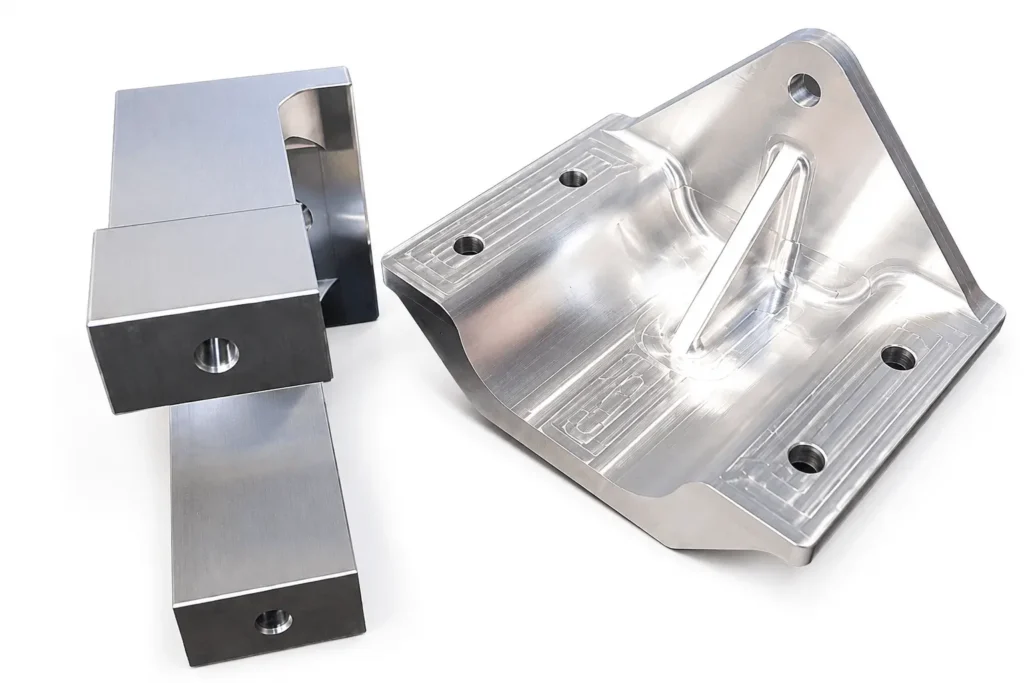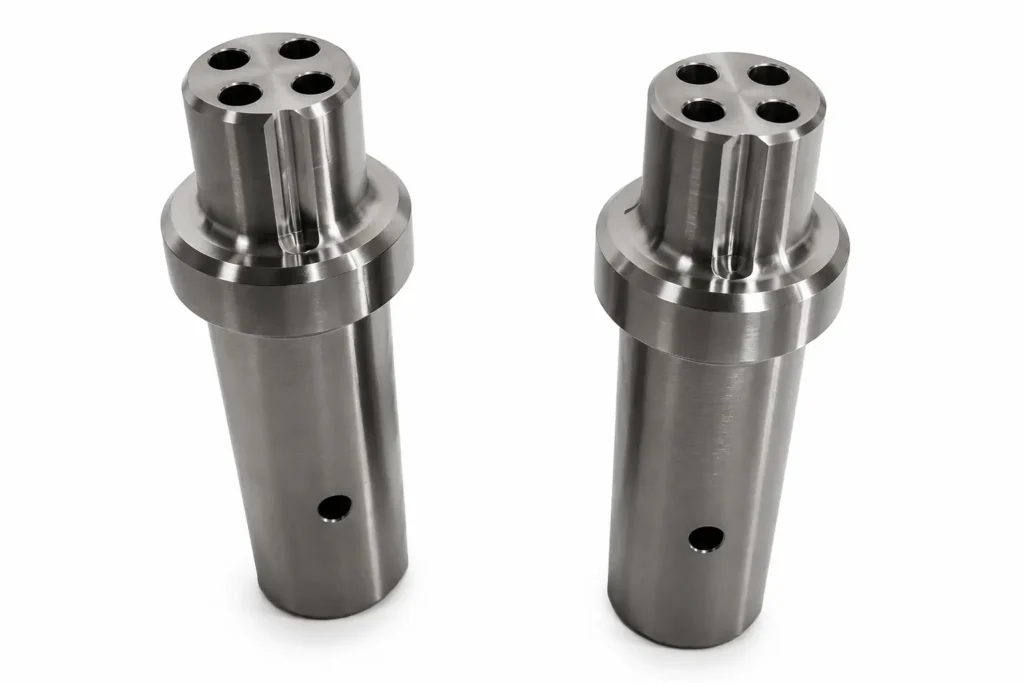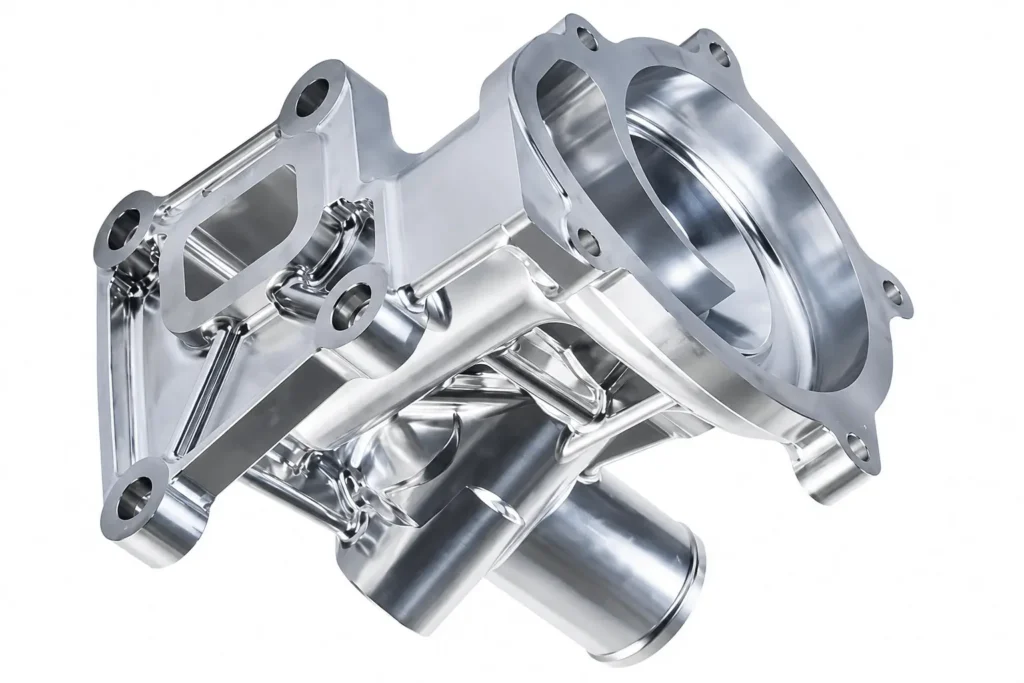
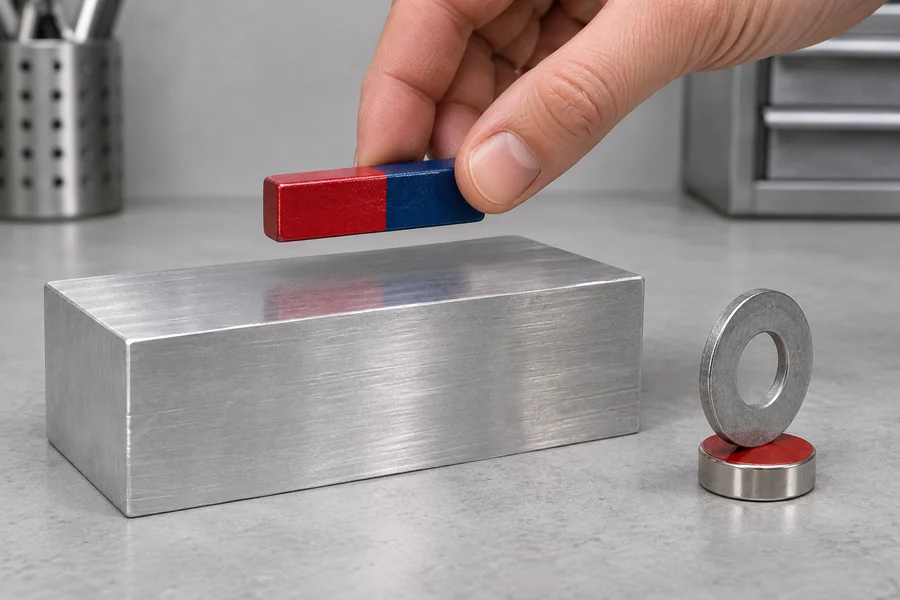
Aluminum is widely used in everyday products and industrial parts, but is aluminum magnetic? If you hold a regular magnet against it, it won’t stick. Unlike iron, aluminum is only weakly paramagnetic, so its attraction to a magnetic field is usually too small for you to notice. This guide explains why aluminum behaves this way and what it means for your material choices and applications.
Is Aluminum Magnetic?
Aluminum is considered a non-magnetic metal in everyday use because an ordinary magnet will not stick to it. If you place a refrigerator magnet against an aluminum sheet, can, or machined part, you won’t see the strong attraction you would expect from iron or carbon steel.
In physics, however, aluminum is paramagnetic. An external magnetic field induces a small magnetization in the same direction as the applied field. This produces a weak attraction toward regions where the field is stronger, but the effect is generally too small for you to notice with a handheld magnet.
Aluminum is not ferromagnetic: it does not develop the strong magnetic ordering responsible for obvious attraction. That is why aluminum is not magnetic in the everyday sense, even though its magnetic response is not zero.
Can Aluminum Be Magnetized?
You can magnetize aluminum weakly while an external magnetic field is present. However, you cannot turn an ordinary aluminum part into a permanent magnet by rubbing it with a magnet or exposing it to a strong field.
The distinction is whether the magnetization remains after you remove the field. Aluminum’s induced magnetization follows the applied field and returns essentially to zero when that field is removed. Ferromagnetic materials, such as iron and certain steels, can retain magnetization, although the amount depends on the material and its condition.
How Does Aluminum Compare with Other Metals?
Aluminum, copper, and titanium will not hold an ordinary magnet, but their magnetic behavior differs. Aluminum and titanium are weakly paramagnetic, while copper is diamagnetic, meaning it is weakly repelled by a magnetic field. These responses are generally too small for you to notice with a handheld magnet.
| Metal | Magnetic behavior | Will an ordinary magnet stick? |
| Aluminum | Weakly paramagnetic | No |
| Copper | Diamagnetic | No |
| Titanium | Weakly paramagnetic | No |
| Iron and most carbon steels | Ferromagnetic | Yes, strongly |
| Nickel | Ferromagnetic | Yes |
| Austenitic stainless steel, such as 304 and 316 | Generally weakly paramagnetic in the annealed condition | Usually no; cold working can increase attraction |
| Ferritic and martensitic stainless steel, such as 430 and 410 | Ferromagnetic | Yes |
These comparisons describe typical magnetic behavior at room temperature. Alloy composition and processing condition can affect the response.
For your material selection, a magnet test is a quick screening tool, but it cannot confirm a metal’s identity or grade. Aluminum and copper can both pass a “magnet does not stick” test despite having different properties. Similarly, some stainless steels attract magnets strongly, while others show little attraction. Use material certificates or suitable composition testing when you need to verify a specific alloy.
Common Misconceptions About Aluminum and Magnets
Aluminum and magnets can interact even when they do not stick together. This is a common source of confusion about aluminum magnetism. The key is to distinguish ordinary magnetic attraction from effects caused by changing magnetic fields.
Myth: All Metals Stick to Magnets
Being a metal does not mean a material will hold a magnet. Electrical conductivity and magnetic attraction are different properties. Aluminum conducts electricity well, but it does not exhibit the strong ferromagnetic response that makes a magnet cling to iron or carbon steel.
Myth: A Slowing Magnet Proves Strong Magnetism
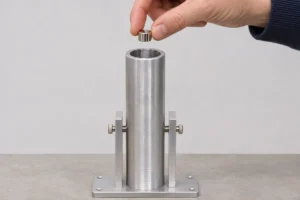
If you drop a strong magnet through an aluminum tube, it can fall noticeably slower than you expect. As the magnet moves, the changing magnetic flux induces circulating electrical currents, called eddy currents, in the tube walls. These currents generate magnetic fields that oppose the magnet’s motion.
This braking effect depends on electromagnetic induction and aluminum’s conductivity. It does not mean the tube can hold a stationary magnet like steel does. The same principle helps explain why moving magnets can create drag near aluminum plates.
Myth: Aluminum Foil Blocks Every Magnetic Field
Aluminum foil is not magnetic in the everyday sense: it will not hold an ordinary magnet. It also does not provide effective shielding against a static magnetic field, such as the field around a stationary permanent magnet. You cannot wrap a magnet in foil and expect its attraction to nearby steel to disappear.
Aluminum can attenuate electromagnetic fields under suitable conditions, but shielding performance depends on frequency, thickness, openings, and electrical continuity. “Non-magnetic” does not mean “blocks magnetic fields.”
Myth: Magnetic Attraction Comes from the Aluminum Itself
If your aluminum part attracts a magnet strongly, use the checks below to identify the likely source.
| What you observe | Possible cause | What to check |
| Attraction around a screw hole | A steel screw or threaded insert | Review the hardware materials and assembly drawing |
| Attraction at scattered surface spots | Attached iron or steel particles | Clean the surface using an appropriate method, then retest |
| Attraction across one face | A steel backing plate or bonded layer | Check the part’s construction and material specifications |
| Strong attraction throughout the piece | Incorrect material identification or concealed ferrous material | Verify traceability and arrange suitable material testing |
Test several locations and, where practical, inspect the aluminum separately from attached hardware.
What Affects Aluminum’s Magnetic Response?
The response you observe depends on the aluminum’s composition, the applied magnetic field, and how you perform the test. You also need to distinguish the aluminum itself from coatings, attached particles, and other components.
Is Aluminum Alloy Magnetic?
Common engineering aluminum alloys such as 5052, 6061, and 7075 are generally treated as non-magnetic in everyday use: an ordinary magnet will not stick to them. Alloying elements and second-phase particles can affect their magnetic properties, but this does not normally give these alloys the strong attraction you associate with steel.
The presence of iron or nickel in an alloy’s composition does not automatically make the finished material strongly magnetic. Their amount and the phases they form matter. You cannot reliably distinguish aluminum grades by comparing their attraction to a handheld magnet.
External Magnetic Field
Both field strength and field gradient—the change in field strength over distance—affect the weak attractive force on aluminum. A sufficiently sensitive setup can reveal a response that your ordinary magnet test cannot detect.
A changing field introduces another effect: eddy currents. If you move the magnet during testing, the resulting drag or brief movement can mask the much weaker paramagnetic attraction. Keep the magnet and sample stationary when assessing static attraction.
Test Conditions
Sample size, distance from the magnet, surface friction, and instrument sensitivity influence what you can observe. A small, freely suspended sample may show movement that a heavy aluminum block resting on a bench cannot.
For a meaningful comparison, keep the magnet, gap, sample geometry, and test method consistent. If your application requires a specified magnetic permeability, use an appropriate measurement method under defined conditions rather than relying on whether a magnet sticks.
Surface Materials and Assembly Components
The response of a finished component may differ from that of its aluminum base material. Use the checks in the misconceptions section to distinguish a material property from the effects of attached components or surface materials.
Specify requirements for the complete assembly, including fasteners, inserts, and coatings. Testing a clean aluminum blank alone will not establish how the assembled part behaves near a magnetic field.
Why Does Aluminum’s Magnetic Behavior Matter in Industry?
Aluminum’s low magnetic response is useful where strong magnetic attraction or field distortion could affect your equipment.
Electronics and Telecommunications
Aluminum is used for housings, heat sinks, and sensor mounts. Its low magnetic response helps reduce interference from structural components near magnetic sensors, while its thermal conductivity supports cooling.
Medical Equipment
You can use aluminum for lightweight equipment frames and housings. Components intended for MRI environments still require assessment for heating, forces, and imaging effects.
Aerospace and Transportation
Aluminum provides lightweight structures, brackets, and housings. Its low magnetic response is an additional advantage near compasses and magnetic navigation sensors.
Industrial Instruments
Aluminum supports and enclosures are useful near magnetic measurement systems. Around moving magnets, however, you must consider eddy-current drag and heating.
Consumer Products
Aluminum is common in phone shells, laptops, and appliances. If your design needs a magnetic attachment, add a suitable steel target or a separate magnet.
How Is Aluminum Separated During Recycling?
Recycling facilities typically use ordinary magnetic separators to remove iron and steel from mixed waste. Aluminum remains in the stream because it does not stick to these magnets.
An eddy-current separator can then recover aluminum and other conductive non-ferrous metals. Its rapidly changing magnetic field induces electrical currents in the metal pieces, producing a force that sends them away from less conductive materials such as plastics and glass. This process relies on aluminum’s conductivity, rather than its weak paramagnetism.
Separation is not perfect. Recovery depends on particle size, shape, conductivity, and equipment settings. Thin foil, very small fragments, and aluminum bonded to other materials can be difficult to recover. Eddy-current separation also cannot reliably distinguish aluminum alloy grades, so you may need additional sorting to obtain a specific material stream.

FAQs
Does Anodizing Make Aluminum Magnetic?
No. Anodizing forms an aluminum oxide layer on the surface; it does not make your aluminum part ferromagnetic or allow an ordinary magnet to stick.
Can a Metal Detector Detect Aluminum?
Yes. Metal detectors can detect aluminum through its electrical conductivity. Detection depends on the equipment, sensitivity settings, and the size and position of your aluminum object.
Is Aluminum the Same as Alnico?
No. Alnico is a family of permanent-magnet alloys containing aluminum, nickel, cobalt, and iron. Its magnetic properties differ substantially from those of ordinary aluminum alloys.
Can You Measure Coating Thickness on Aluminum with a Magnetic Gauge?
A gauge that relies only on magnetic attraction is intended for ferrous substrates and is not suitable for an aluminum base. For a nonconductive coating on aluminum, such as paint or anodizing, you can use a compatible eddy-current coating thickness gauge. Check the probe’s substrate and coating specifications before measuring.
Does Aluminum Have a Curie Temperature?
Aluminum does not have a ferromagnetic Curie temperature like iron because it is not ferromagnetic under ordinary conditions. You cannot make an aluminum part behave like iron simply by heating it or cooling it within normal service temperatures.
Conclusion
Aluminum is weakly paramagnetic, but an ordinary magnet will not stick to it. Its interaction with changing magnetic fields comes mainly from eddy currents, which matter in applications such as recycling and equipment design.
If you need custom aluminum parts, send YD Rapid your drawings, material grade, quantity, and operating requirements. Include any magnetic requirements so they can be considered alongside your machining specifications.