
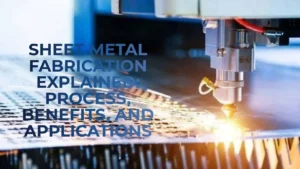
Sheet Metal Fabrication Explained: Process, Benefits, and Applications
The production of metal parts in modern times is extremely significant. One can notice the presence of these parts in cars, aircraft, computer systems, and several other types of structures. The term sheet metal fabrication implies the shaping of flat metal pieces into some useful parts and shape.
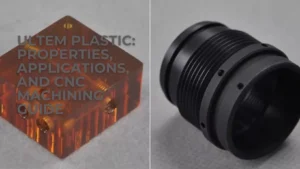
ULTEM Plastic: Properties, Applications, and CNC Machining Guide
Plastics play an important role in the manufacturing industry. There are some plastics that can be used in heavy-duty applications, ULTEM being one of the best-in-class plastics. What is PEI plastic? PEI is the abbreviation of polyetherimide. The special high-performance thermoplastic is called ULTEM, a high-temperature-stable, strong engineering thermoplastic.

CNC Robotics: Applications, Benefits, and Future Trends
With CNC Robotics, the operation has become automated, whereby one just needs to press a button until the operation is completed. In diverse industries, robots are being used along with CNC machines at this time.
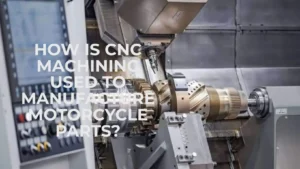
How Is CNC Machining Used to Manufacture Motorcycle Parts?
CNC machining is employed to produce various motorcycle parts. They require excellent components to work properly. Companies today are making them with computers, by a process known as CNC machining motorcycle parts.
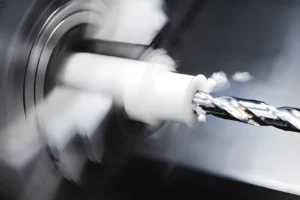
Plastic CNC Machining Cost: What Makes Plastic Parts Expensive to Machine?
The price of a CNC-machined plastic part depends largely on how the part needs to be made, not just how much plastic it contains. Two parts made from the same material can have very different prices because their geometry, tolerances, setups, and finishing requirements are different.
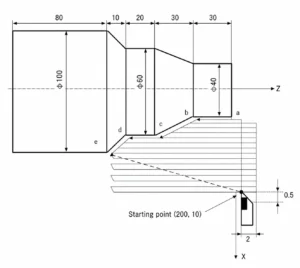
CNC Turning Efficiency: How to Reduce Cycle Time and Increase Output
CNC turning time is made up of several steps. The tool has to remove the stock, change tools, move between features, and the part has to be loaded and removed. If one of these steps takes longer than necessary, the total cycle becomes longer.
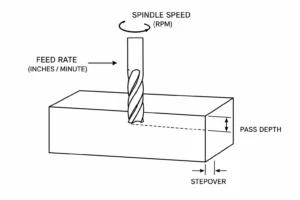
CNC Milling Speed: How to Machine Faster Without Sacrificing Quality
CNC milling speed is usually discussed as spindle RPM. However, the useful value is the cutting speed at the tool edge. With carbide end mills, a practical starting range for 6061 aluminum is about 180 to 450 m/min.
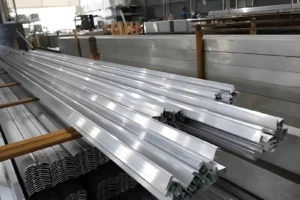
6063 vs 6082 Aluminum: Which Alloy Is Better for CNC Machining?
6063 vs 6082 aluminum are both 6xxx-series aluminum alloys. Their usual supply forms and strength levels are different. 6063 is widely used for extruded sections where the cross-sectional shape and surface appearance are important.
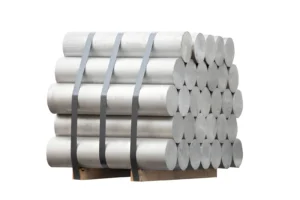
Aluminum 6061 for CNC Machining: Why Is It So Widely Used
Aluminum 6061 is a common starting material for CNC machining. It works well across a wide range of parts. It is easy to source, cuts cleanly, and provides enough strength for many brackets, housings, mounts, plates, shafts, and machine components.
Aluminum 5083 for CNC Machining: When Should You Use It?
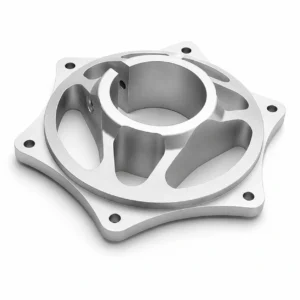
Choosing Aluminum 5083 for a CNC part usually comes down to the service environment and the way the part will be manufactured. It is not simply a matter of selecting another aluminum grade because the part needs to be lightweight.
QPQ Coating: How It Improves Wear and Corrosion Resistance
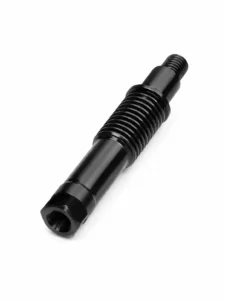
QPQ treatment is a thermochemical surface treatment. It is used mainly for steel components that need better wear resistance and
PI Material for CNC Machining: What Makes Polyimide Different?
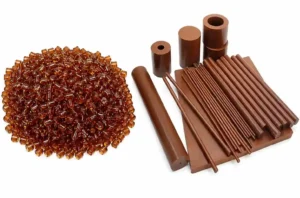
Polyimide (PI) is used for CNC-machined parts that must remain functional under high heat, friction, electrical exposure, and repeated contact. Parts such as bushings, seals, washers, spacers, and insulating components can be made from PI when the service conditions call for its specific properties.