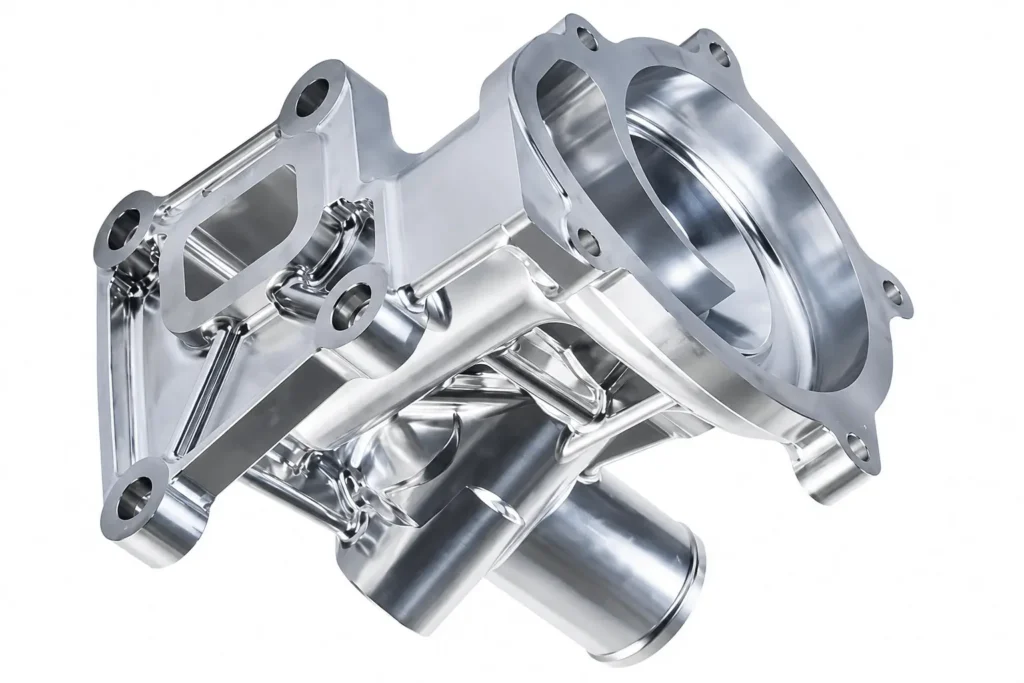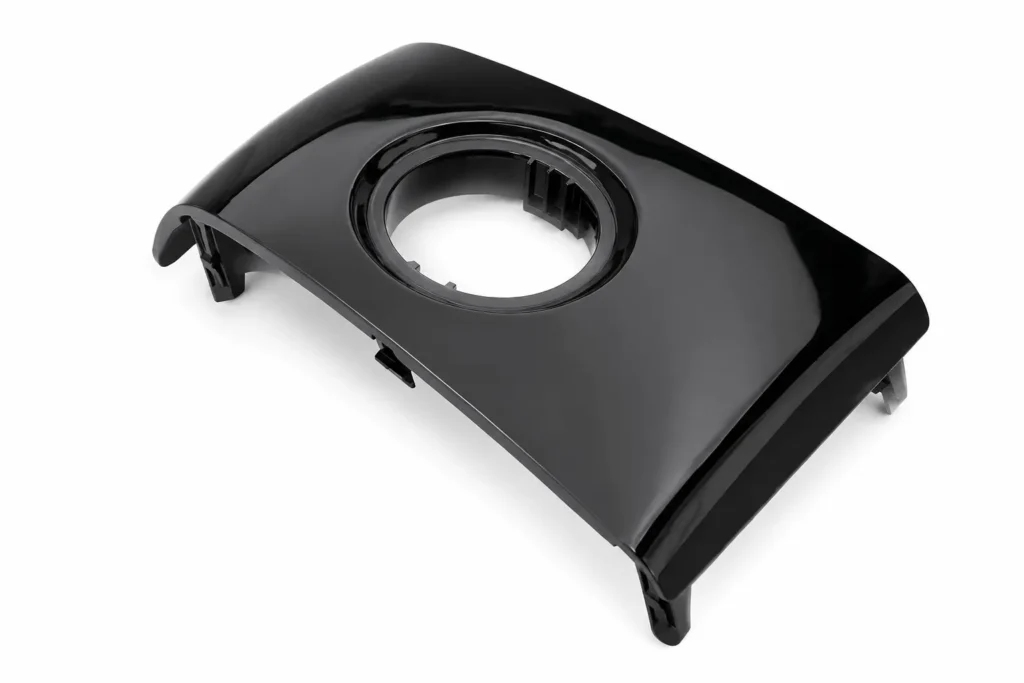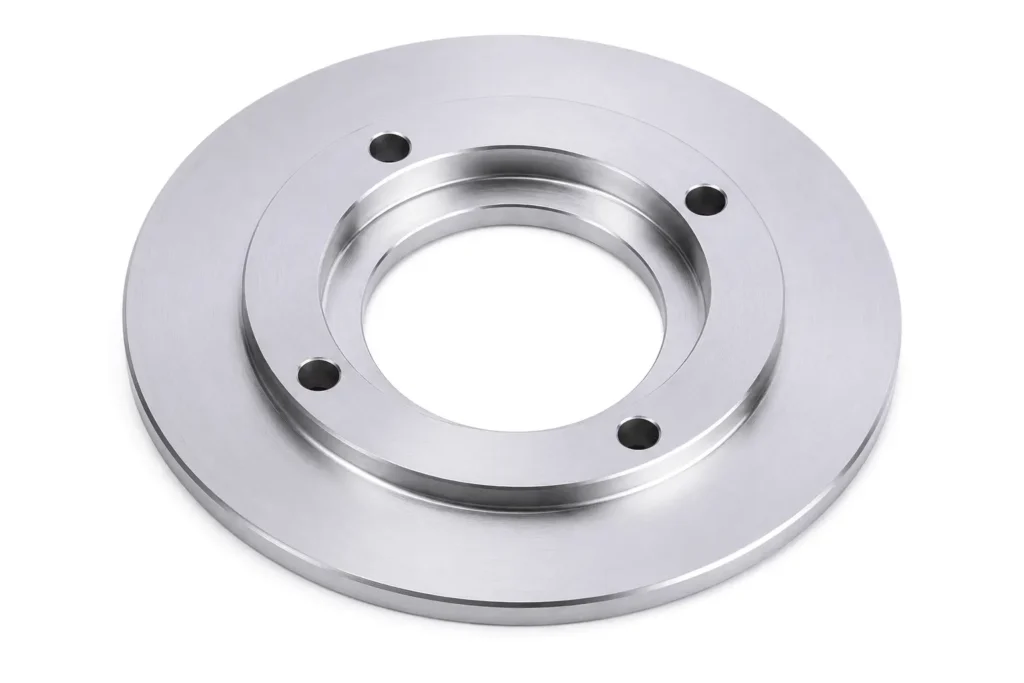
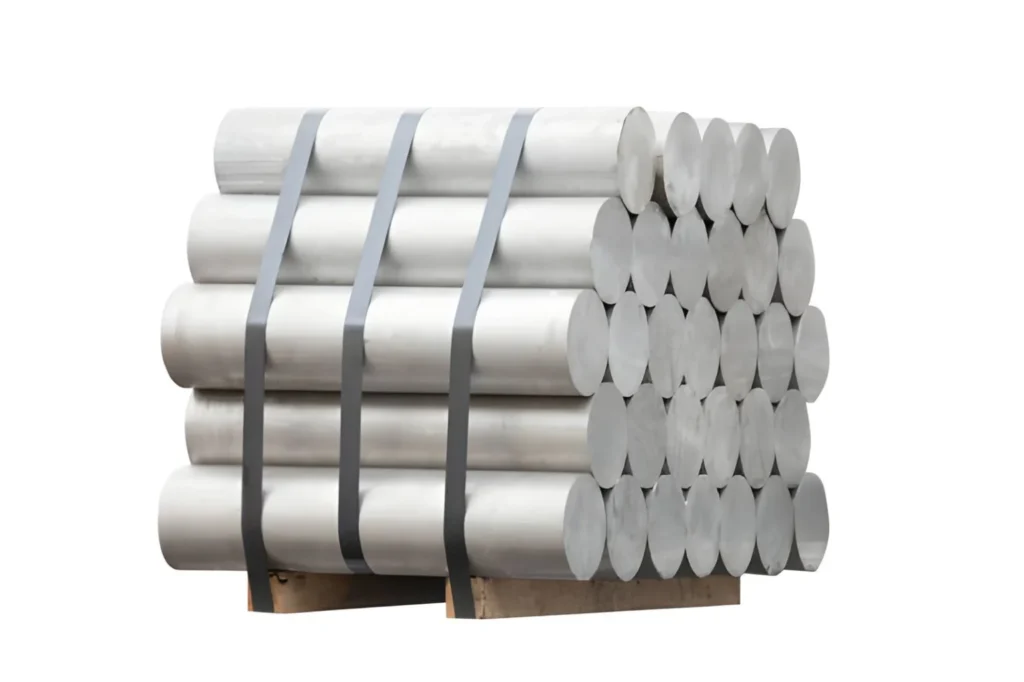
6061 T6 aluminum is an aluminum-magnesium-silicon alloy that has been solution heat-treated and artificially aged to increase its strength. It’s a common choice for CNC-machined brackets, housings, and fixtures because it balances low weight, strength, and ease of machining. This guide explains how to read its property data, when to choose 6061 T6 or 6061 T651, and what to watch for when machining deep pockets and thin walls.
What Is 6061-T6 Aluminum?
6061 is the alloy designation, and T6 identifies the temper. In the 6061 aluminum alloy, magnesium (0.8–1.2% by weight) and silicon (0.4–0.8%) are the main alloying elements. Together, they allow the alloy to gain strength through heat treatment. ASM composition data
To produce the T6 temper, the alloy is first heated so that magnesium and silicon dissolve into the aluminum matrix. Rapid cooling, called quenching, keeps them in solution. The alloy is then reheated at a lower temperature for artificial aging. During aging, fine particles form and make it harder for the metal to deform permanently under load.
When you specify 6061-T6 on a drawing, you’re telling your supplier both which alloy to use and which temper it must meet.
6061-T6 Aluminum Material Properties
Mechanical Properties
The typical 0.2% offset yield strength of 6061-T6 aluminum is 276 MPa (40 ksi) at about 24°C (75°F). Its typical ultimate tensile strength at the same temperature is 310 MPa (45 ksi). Tensile strength is the peak stress reached during a tensile test. The 0.2% offset yield strength indicates the stress associated with 0.2% permanent strain.
| Property | Typical Value | Unit | Test Condition or Note |
| Ultimate tensile strength | 310 | MPa | At approximately 24°C (75°F) · ASM Table 84 |
| 0.2% offset yield strength | 276 | MPa | At approximately 24°C (75°F) · ASM Table 84 |
| Young’s modulus (elastic modulus) | 68.9 | GPa | Typical tensile modulus · ASM datasheet |
| Elongation after fracture | 12 | % | Typical for a 1/16 in. (1.6 mm) thick specimen · ASM datasheet |
| Brinell hardness | 95 | HB | 10 mm ball and 500 kgf test load · FAA Table 4-5 |
Use the typical yield strength of 276 MPa and ultimate tensile strength of 310 MPa to compare materials. For purchase acceptance, look up the required minimums in the specification called out on your drawing or purchase order for the temper, product form (such as plate or bar), and thickness or diameter. Check the mill test report against those requirements when it is supplied.
The elastic modulus of 6061-T6 aluminum is typically 68.9 GPa. Use this value to estimate how much a part deflects under load while the material remains elastic.
Elongation measures how much a tensile specimen stretches before fracture. It helps you compare ductility across tempers. For a formed part, check the bend radius for your sheet thickness and bend direction.
Physical and Thermal Properties
| Property | Typical Value | Unit | Test Condition or Note |
| Density | 2.70 | g/cm³ | At 20°C (68°F) |
| Thermal conductivity | 167 | W/(m·K) | At 20°C (68°F), T6/T651 |
| Linear thermal expansion coefficient | 23.6 | µm/(m·K) | Average from 20 to 100°C (68 to 212°F) |
At 20°C (68°F), the density of 6061 aluminum is about 2.70 g/cm³. The thermal conductivity of 6061-T6 aluminum is typically 167 W/(m·K) at the same temperature, a useful reference for estimating heat flow through a housing or mounting plate. Thermal expansion matters when a machined part locates another component. For example, a 100 mm aluminum plate heated from 20 to 70°C expands by about 0.12 mm along that length if it can move freely. 6061 sheet and plate data
Corrosion Resistance
6061-T6 has good general corrosion resistance, but saltwater exposure can lead to pitting or corrosion in crevices where moisture collects. If your part sees repeated salt spray, assess the finish, drainage, and contact with dissimilar metals. An outdoor bracket that dries between exposures faces different conditions from a fitting that stays immersed. NOAA marine materials reference
6061 Aluminum Tempers: T6 vs. T651
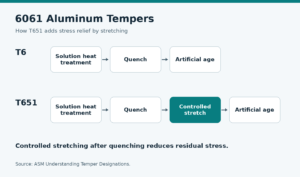
If you’re milling a deep pocket or leaving a thin floor, consider 6061-T651 plate. Both tempers are solution heat-treated, quenched, and artificially aged. For T651, the stock is also stretched after quenching and before aging to reduce residual stress. This helps limit distortion when you remove a large amount of material. (ASM temper designations; Sandia report)
| Temper | Processing | Common Stock and Parts | Why You’d Choose It |
| 6061-T6 | Solution heat-treated, quenched, and artificially aged | Round bar for turned spacers and adapters, or extruded stock for brackets and rails | The available stock suits your part geometry and meets the drawing requirements. |
| 6061-T651 | Solution heat-treated, quenched, stress-relieved by stretching, and artificially aged | Plate for deep-pocket housings, thin floors, and parts with critical flat faces | Lower residual stress helps reduce the risk of bowing after substantial stock removal. |
Thin sections can still move during machining or after you release the clamps.
Is 6061-T6 Aluminum Easy to Machine?
Yes. 6061-T6 aluminum is generally easy to mill, turn, and drill. For a milled bracket, choose plate close to the finished thickness so you spend less time facing off excess stock. Leave enough material to clean up the faces and enough room to clamp the plate clear of the toolpath.
For a turned sleeve, choose round bar slightly larger than the finished outside diameter. This reduces the amount of material you need to turn away. Allow extra length for the chuck to grip. If the sleeve has a thin wall, check the bore after unclamping, since jaw pressure can temporarily distort it. See our aluminum CNC machining services for custom milled and turned parts.
| What You See | What to Check First |
| Aluminum sticking to the cutting edge | Inspect the edge for built-up aluminum. If the edge is worn or chipped, replace the cutter. |
| Chips collecting in a deep pocket | Check whether coolant or air reaches the bottom of the pocket and carries chips clear of the toolpath. |
| Burrs around a drilled hole | Check which side has the burr. For an exit burr, inspect the drill edges for wear and check the support where the drill breaks through. |
6061-T6 vs. 7075-T6 Aluminum Properties
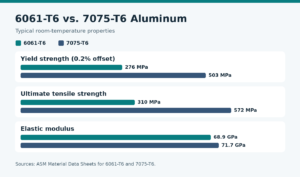
7075-T6 aluminum has a typical yield strength about 82% higher than 6061-T6, while its elastic modulus is only about 4% higher. That difference matters when you’re deciding whether your part needs to carry more load before yielding or simply bend less under load.
| Property | 6061-T6 | 7075-T6 |
| Density | 2.70 g/cm³ | 2.81 g/cm³ |
| Ultimate tensile strength | 310 MPa | 572 MPa |
| 0.2% offset yield strength | 276 MPa | 503 MPa |
| Elastic modulus | 68.9 GPa | 71.7 GPa |
These are typical reference values. For material acceptance, check the applicable specification for your product form and dimensions. ASM data for 6061-T6 · ASM data for 7075-T6 To compare other options, see our guide to CNC machining materials.
If your bracket is at risk of permanent bending, 7075-T6 gives you more margin before yielding. If the bracket stays elastic but deflects enough to affect alignment, switching alloys will only slightly reduce deflection under the same load and geometry. A thicker section, a reinforcing rib, or a shorter unsupported span can have a much larger effect.
Common Uses of 6061-T6 Aluminum
Electronics Housings and Heat Spreader Plates
6061-T6 works well for machined housings and mounting plates that need to carry heat away from a component. If your housing doubles as a heat spreader, check the contact area and the thermal interface between the component and the housing. For a cover that only protects the electronics, weight, rigidity, and machining cost can matter more than thermal conductivity.
Accessory Mounts for Bicycles and Lightweight Equipment
A machined accessory mount is a good example of where low weight and easy machining matter together. You can mill bolt slots, locating faces, and the mounting profile from one piece of stock. Check the actual loads and vibration in service, especially around fastener holes and narrow sections of the mount.
Outdoor Equipment Brackets and Fittings
Machined mounting brackets and fittings for outdoor instruments can benefit from 6061-T6’s corrosion resistance. If water can collect beneath a fastener or between mating faces, consider drainage and a protective finish when you design the joint. Salt spray or immersion may change the material and finish requirements.
Frequently Asked Questions
Can You Weld 6061-T6 Aluminum?
Yes. Welding can reduce strength in the heat-affected zone next to the weld. If that area carries load, use strength values for the welded condition when checking the joint. (Welding research archived by OSTI)
Can You Bend 6061-T6 Aluminum Without Cracking?
Yes, if the inside bend radius is large enough for the sheet thickness and bend direction. Tight bends can crack along the outside of the bend. If your design requires a tight radius, consider forming 6061 in the more formable T4 temper and confirm how you’ll achieve the required final properties. (U.S. Air Force technical manual)
Can You Use 6061-T651 if the Drawing Calls for 6061-T6?
Check the drawing, material specification, and purchase order for permitted substitutions. If those documents do not explicitly allow 6061-T651 for the required stock form, get approval from the drawing owner before using it. (Example of a procurement substitution policy)
Conclusion
6061-T6 aluminum is a practical choice for CNC-machined brackets, housings, fixture plates, and spacers that need low weight, good strength, and easy machining. To request a quote from YD Rapid, send your drawing, order quantity, and any critical tolerances or finish requirements so we can review your part and quote it accurately.