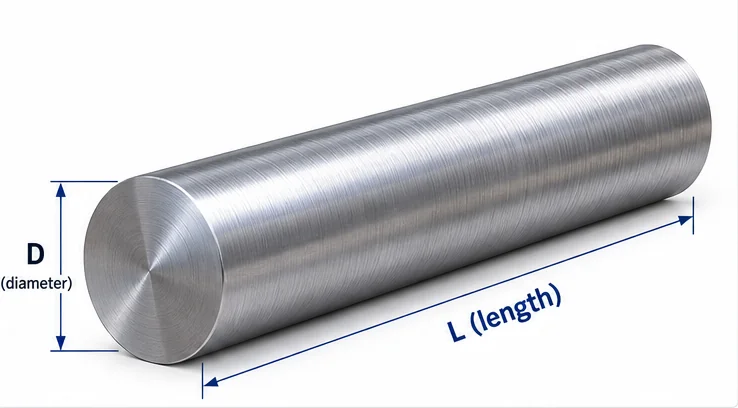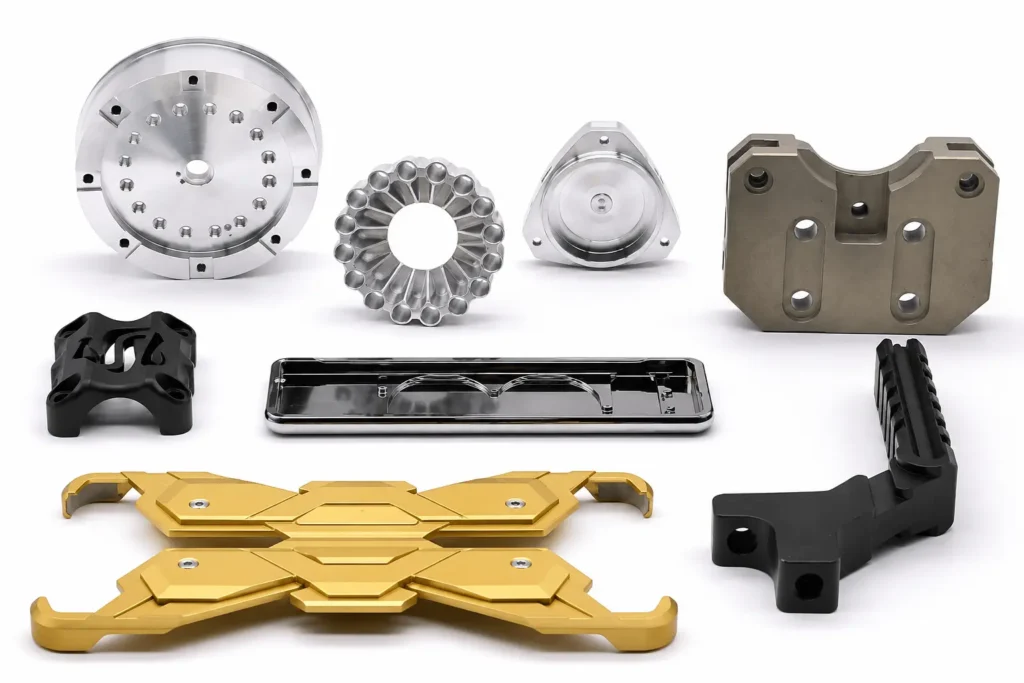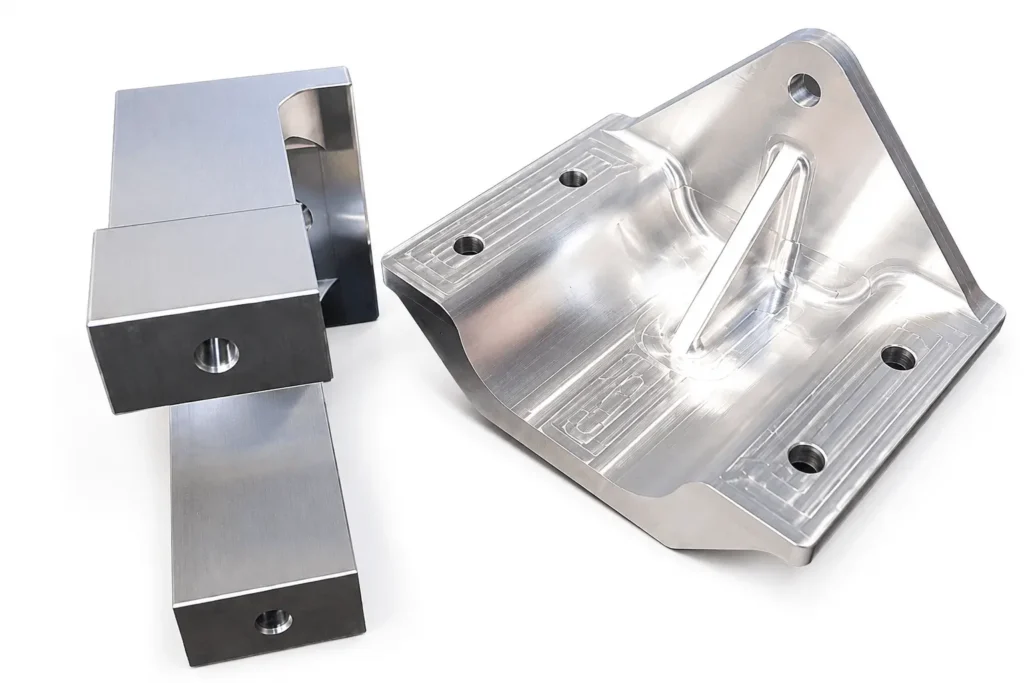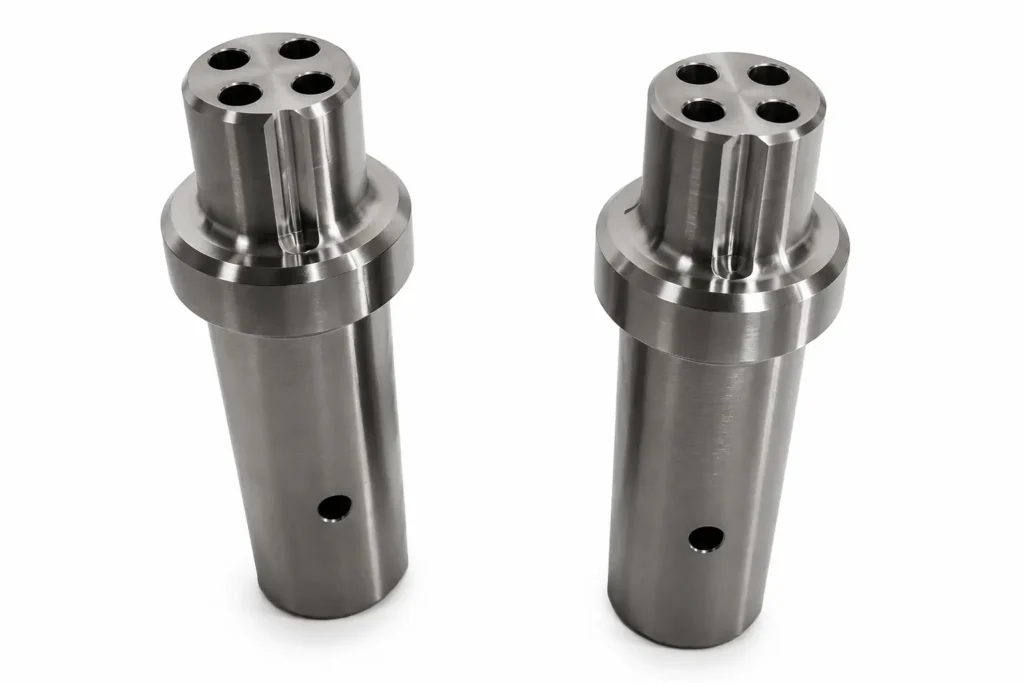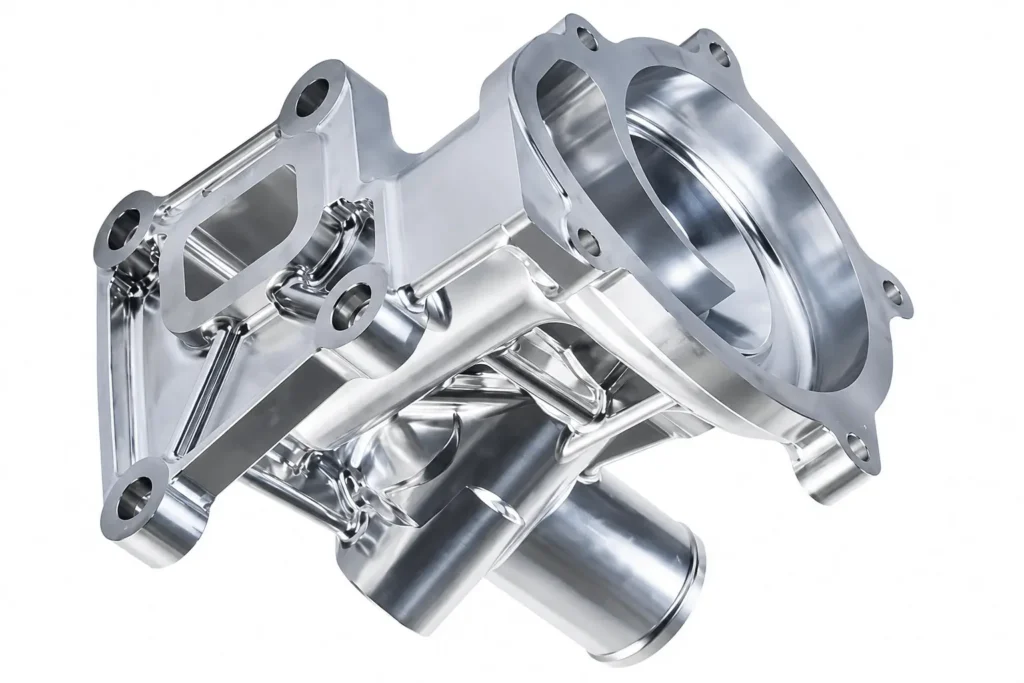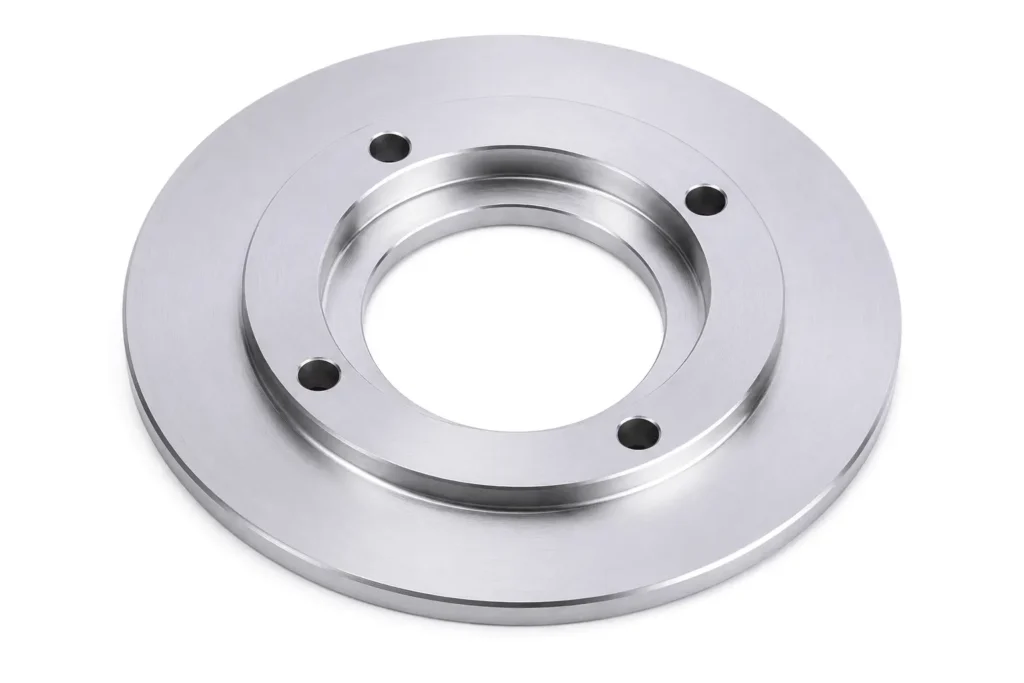
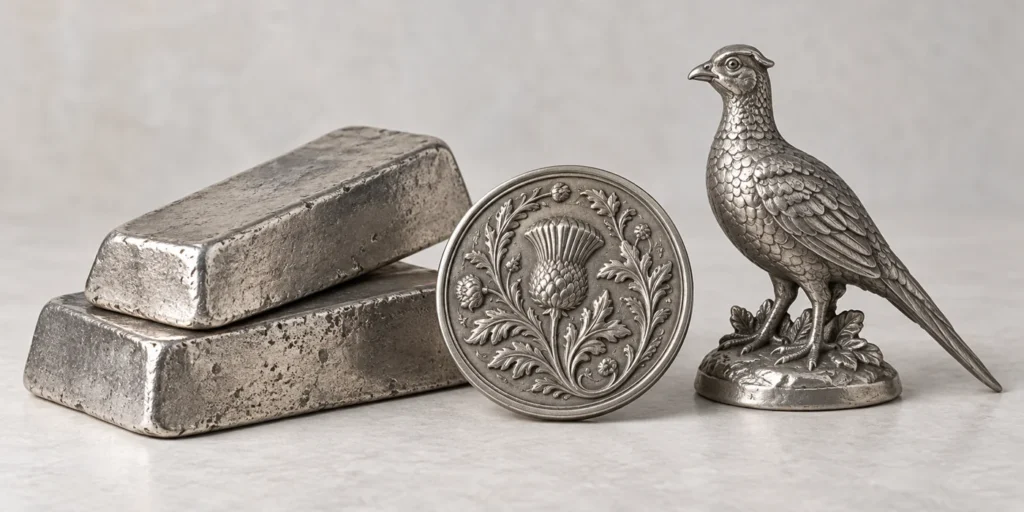
Pewter is a silver-gray metal alloy made mainly of tin, with smaller amounts of antimony, copper, or sometimes bismuth. You’ll commonly find it in jewelry, decorative objects, collectible figures, and tableware. Its low melting range makes it easy to cast into detailed shapes, while its composition affects its hardness, strength, and suitability for different uses. Below, you’ll learn what gives pewter its distinctive properties, where it’s commonly used, and how it compares with other metals.
What Is Pewter?
What Is Pewter Made Of?
Pewter metal is a family of tin-based alloys rather than a pure metal or a single fixed composition. Most modern lead-free pewter contains roughly 90–99% tin, with small amounts of antimony and copper. Some formulations also include bismuth. The composition of pewter varies, so you need the specific alloy specification to understand its properties.
| Element | Role in Pewter |
| Tin | Forms the base of the alloy, providing its silver-gray appearance, low melting range, and ease of casting. |
| Antimony | Increases hardness and strength, helping pewter resist deformation better than pure tin. |
| Copper | Adds strength and hardness; its effect depends on the amount used and the overall formulation. |
| Bismuth | Appears in some formulations to adjust melting and casting behavior. |
Older pewter often contains lead, and some commercial alloys sold as pewter still use it. A high tin content alone does not prove that pewter is lead-free. If you’re choosing pewter for your product, check the supplier’s composition specification rather than relying on its appearance or the name “pewter.”
Physical Properties of Pewter
Pewter’s physical properties include its silver-gray color, substantial weight, and relatively low melting range. Pewter alloys vary in composition, so you should use data for the specific grade when calculating weight or setting processing temperatures.
| Physical Property | Description |
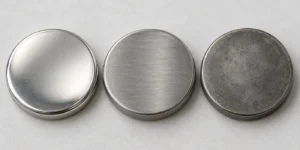
| Pewter color | Typically silver-gray. Pewter gray can range from a light metallic shade to a darker, muted tone, depending on composition, surface finish, and aging. |
| Luster | Can range from a soft satin sheen to a bright, polished metallic surface. |
| Density and weight | High-tin pewter has a density of approximately 7.3 g/cm³, although the exact value varies. Pewter is heavy compared with aluminum of the same volume, but lighter than silver. |
| Pewter melting point | Pewter melting temperature depends on the formulation. Many grades melt over a range, so a single melting point may not describe the alloy accurately. |
| Is pewter magnetic? | Conventional tin-antimony-copper pewter does not show strong attraction to an ordinary magnet. A magnet test cannot establish composition, purity, or lead content. |
Pewter conducts both heat and electricity, but these properties do not establish suitability for a heat sink or electrical contact. If either function matters, request conductivity data for the exact alloy at your operating temperature. Pure tin values should not be substituted for an unspecified pewter grade.
Supplier data shows why a universal pewter melting point can be misleading. DKL Metals lists its lead-free Casting Alloy 92J at 240°C solidus, 255°C liquidus, and a density of 7.24 g/cm³. In comparison, Nathan Trotter lists its Britannia Pewter, nominally 91.75% tin, 8% antimony, and 0.25% copper, at approximately 244°C solidus, 295°C liquidus, and 7.28 g/cm³. These are values for the named products, not a standard range for all pewter. Solidus marks the onset of melting; liquidus marks complete melting. Neither is a recommended service temperature or, by itself, a pouring temperature. For the Nathan Trotter grade, the specific gravity is approximately 7.28, a dimensionless ratio to the density of water.
Chemical Properties of Pewter
Pewter resists corrosion reasonably well in ordinary indoor conditions, but its surface can still react with the surrounding environment. Its chemical stability depends on the alloy composition, moisture, and exposure to pollutants or cleaning chemicals.
Does Pewter Tarnish or Change Color?
Modern lead-free pewter can remain bright for a long time, gradually becoming duller as a thin oxide layer forms. What is often called pewter tarnish may appear as a softer gray surface or patina. You may notice this change as the piece ages, but gradual dulling does not necessarily indicate serious deterioration.
Does Pewter Rust?
Pewter does not rust like iron or ordinary steel: it does not develop their characteristic reddish-brown iron oxides. However, it can still corrode. A stable gray surface differs from loose, powdery deposits, which can indicate active corrosion. Lead-containing pewter is particularly vulnerable to organic acid vapors; these can produce white, powdery corrosion products.
Chemical Stability in Different Environments
Clean, dry indoor storage helps preserve pewter. Moisture and surface contaminants can encourage corrosion, while enclosed wooden cabinets may release organic acids. For older lead-containing pieces, vapors from oak, deteriorating cardboard, or vinegar-based cleaning products can be especially damaging. You should therefore choose storage materials and cleaning methods that suit the specific alloy, rather than assuming all pewter reacts the same way.
Mechanical Properties of Pewter
Pewter is generally harder and stronger than pure tin, but it remains relatively soft compared with common structural metals. Its mechanical behavior varies with alloy composition and processing, so hardness or strength values for one grade should not be applied to every pewter alloy.
Hardness and Scratch Resistance
Antimony and copper help harden the tin base, but finished surfaces can still scratch or dent. As a grade-specific reference, Belmont Metals lists a Brinell hardness of 23.8 for its 791NB7 gravity-casting pewter. The published page does not give the full hardness test conditions, so use this figure for preliminary comparison rather than acceptance inspection. If your product is handled frequently, consider how contact with harder objects will affect its appearance.
Strength and Load Capacity
Pewter is better suited to decorative pieces than heavily loaded components. Belmont Metals lists a tensile strength of 8,600 psi, approximately 59 MPa, for its 791NB7 grade. This is a supplier reference value without full test conditions on the product page; it is not a yield strength, fatigue limit, or allowable design stress. Thin sections can bend, and sustained loads may cause gradual deformation through creep. A successful detailed casting does not establish adequate structural strength.
Ductility and Wear Resistance
Some pewter grades can be bent or formed, while harder formulations may be less forgiving. You should assess the specific alloy and section thickness before forming. Its relatively low wear resistance also limits its suitability for sliding surfaces, repeated friction, and heavily loaded threads.
Advantages and Disadvantages of Pewter
Pewter is worth considering when your product needs fine decorative details and a silver-gray finish. Its main tradeoff is durability: a material that is easy to shape can also be easier to scratch or deform during use.
| Advantages | Disadvantages |
| Reproduces fine details. Casting can capture lettering, textures, and intricate patterns. | Scratches and dents relatively easily. Frequently handled surfaces may develop visible marks. |
| Requires relatively low processing temperatures compared with aluminum, brass, or steel. | Has limited heat resistance. Assess service temperatures carefully near heat sources. |
| Offers polished, satin, or intentionally aged decorative finishes. | Its appearance changes over time. Maintaining a bright finish may require occasional care. |
| Allows shaping and finishing. Suitable grades can be trimmed, engraved, and polished. | Offers limited strength and wear resistance for loaded parts or sliding contact surfaces. |
| Provides a substantial feel for collectibles, awards, and decorative objects. | Adds weight. Aluminum is usually a better starting point when low weight is a priority. |
Your choice should follow the demands of the finished product. Pewter can suit an ornamental badge or collectible figure, while a load-bearing bracket or wear-resistant component will usually require another material. Also, confirm the alloy composition before purchasing: the name “pewter” alone does not establish whether it contains lead or meets your intended use requirements.
Pewter vs. Other Metals
Pewter, pure tin, silver, aluminum, and stainless steel differ in weight, durability, appearance, and processing requirements. When choosing between them, consider how your product will be made and what it needs to withstand during use.
| Material | Key Characteristics | Main Limitations | Typical Applications |
| Pewter | Silver-gray tin-based alloy; captures fine cast details; generally harder than pure tin. | Easy to scratch or deform; limited suitability for high loads, wear, or heat. | Figures, decorative castings, badges, jewelry, and suitable grades of tableware. |
| Pure Tin | Soft, malleable metal with a low melting temperature; used as a coating or alloy ingredient. | Low strength and hardness limit standalone structural use. | Tin plating, alloy production, specialized foil and chemical applications. |
| Silver | Bright white precious metal with excellent electrical and thermal conductivity. Sterling silver is harder than pure silver. | Higher material cost; can tarnish and scratch; properties depend on composition. | Fine jewelry, silverware, decorative objects, electrical contacts. |
| Aluminum | Much lighter than pewter; alloys suit machining, forming, and casting. | Hardness, strength, and corrosion resistance vary by alloy, temper, and finish. | Lightweight housings, brackets, equipment and transportation components. |
| Stainless Steel | Generally stronger and more wear-resistant than pewter; suitable grades offer good corrosion resistance. | Higher processing temperatures and generally greater cutting forces; grade selection matters. | Fasteners, shafts, kitchen equipment, industrial and load-bearing parts. |
For detailed decorative castings, pewter can be a practical choice. If your priority is low weight, consider aluminum. For strength, repeated handling, or wear resistance, stainless steel is usually a better starting point. Silver suits products where precious-metal value and appearance justify the cost, while pure tin is more commonly selected for coatings and alloying than for durable finished parts.
Choosing a Material for Your Product
For a display model, pewter is worth considering when cast detail and a substantial feel are priorities. Check thin swords, arms, or other projecting features for bending during handling. A decorative appearance alone does not establish durability.
For a pendant or badge worn daily, assess rubbing, scratches, attachment points, and the weight the wearer will carry. Review a sample in the intended finish before committing to production; a finish that suits a display piece may show wear quickly in daily use.
For a load-bearing bracket, start with an appropriate structural aluminum or stainless steel grade and verify strength, stiffness, temperature, and fatigue requirements. Pewter’s decorative casting advantages do not compensate for these demands. These examples are engineering selection guidance, not YD Rapid project results.
Applications of Pewter
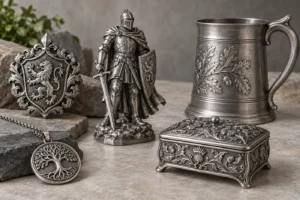
Common pewter uses include jewelry, collectible figures, decorative objects, and tableware. These applications favor appearance, fine detail, and ease of casting over structural strength.
Jewelry, Badges, and Medallions
Pewter jewelry includes pendants, charms, and brooches made from tin-based alloy. The material can capture small patterns, raised lettering, and recessed logos, which also makes it useful for club badges and commemorative medals. Its silver-gray surface can be polished or given an aged finish to suit your design. For pieces worn or handled every day, consider the risk of scratches, dents, and deformation of thin features.
Models and Collectibles
Figurines, game pieces, scale-model components, and commemorative objects benefit from pewter’s ability to reproduce facial features, textures, and detailed relief. Casting these features into the piece can reduce the detail you need to add afterward. Its weight also gives small collectibles a substantial feel, although projecting parts still need enough support to resist bending.
Decorative Objects and Tableware
Pewter is used for ornaments, picture frames, trinket boxes, tankards, goblets, pitchers, and serving plates. It allows decorative shapes and offers polished or satin finishes. If you’re selecting pewter for contact with food or drink, verify the alloy’s suitability for the intended use; a “lead-free” description alone does not establish this.
Different Types of Pewter
Pewter can be grouped by its composition, particularly whether it contains lead. Modern lead-free pewter and traditional lead-containing pewter are broad categories, while Britannia metal is a named type within the lead-free group.
Modern Lead-Free Pewter
Modern lead-free pewter uses tin as its base, with antimony and copper added to increase hardness and strength. Some formulations include bismuth or other alloying elements to adjust casting behavior. The proportions vary between grades, so the term “lead-free pewter” does not describe one fixed recipe.
When choosing a grade, check its composition and intended application. A formulation suited to detailed cast figures may differ from one selected for formed sheet products.
Traditional Lead-Containing Pewter
Many historical pewter objects contain lead, which was added partly as a lower-cost ingredient. However, “antique pewter” does not automatically mean lead-containing, and lead-bearing pewter is not limited to antiques: suppliers still offer some commercial formulations containing lead. You therefore cannot establish the composition from an item’s age or appearance alone.
Britannia Metal
Britannia metal is a tin-antimony-copper pewter alloy made without intentionally added lead. The Pewter Society describes a typical composition as 92% tin, 6% antimony, and 2% copper, although commercial formulations vary. Its comparatively high antimony content helps distinguish it from some softer pewter formulations.
Britannia metal belongs to the pewter family; it is not a separate base metal. If you specify it for your product, use the supplier’s actual grade and composition rather than treating the name as a universal specification.
CNC Machining Considerations for Pewter
Pewter can be drilled, machined, and engraved, but its softness requires careful support and clamping to avoid surface marks or distortion. Whether CNC machining suits your part depends on its geometry, alloy composition, and dimensional requirements.
If you’re evaluating materials for a custom component, you can share your drawing, quantity, and intended use with YD Rapid to discuss material selection and CNC machining options.
FAQs
Is Pewter the Same as Solder?
No. Although both can be tin-based alloys, they are formulated for different purposes. Pewter is used to make objects, while solder is designed to join metal surfaces. You should not substitute one for the other simply because their main ingredient is tin.
Can Pewter Be Recycled and Remelted?
Yes. Pewter can be remelted and cast again. However, mixing scrap of unknown composition can introduce lead or other unwanted elements. If you need consistent properties, keep identified alloys separate and verify the composition of recycled material.
Does a Pewter Finish Mean an Item Is Made of Pewter?
No. A “pewter finish” or “pewter metal finish” may describe a gray metallic color or surface treatment applied to another material. The color name does not establish the base metal. If you need solid pewter, check the material specification rather than relying on the finish name.
What Is Pewter Worth?
Pewter’s value depends on what you are buying or selling. Scrap value depends on alloy composition, weight, and the buyer’s current rates, while a finished or antique item may also have value from craftsmanship, maker, age, rarity, and condition. Before comparing prices, distinguish the value of the metal from the value of the object.
Conclusion
Pewter suits decorative products where fine cast detail, a silver-gray finish, and a substantial feel matter. Its softness and limited resistance to wear and heat make it less suitable for heavily loaded or demanding mechanical parts.
Before choosing pewter, confirm the alloy composition, expected handling, service temperature, and finish requirements. For tableware or drinkware, also verify suitability for the intended food-contact use. If your design includes machined features, you can discuss the drawing and material specification with YD Rapid to assess the manufacturing options.