How much does titanium cost per pound? There is no single reliable titanium price per pound for all grades and forms. A Grade 2 sheet, a Grade 5 round bar, and certified Grade 23 stock can have very different prices. Published online ranges are often not directly comparable because quantity, size, certification, and quote date are missing. To estimate your cost, first obtain a supplier price for the specified material, then calculate the weight of the starting blank—not only the finished part. The examples below use an explicitly hypothetical $25/lb rate to show the math, not a current market quotation.
Titanium Price Per Pound by Grade: What to Specify for a Quote
| Titanium grade | Typical procurement form | Quote details to confirm |
| Grade 1 | CP sheet / plate | Thickness, surface, specification |
| Grade 2 | CP bar / sheet / plate | Size, certification, quantity |
| Grade 4 | CP bar / plate | Condition, size, specification |
| Grade 5 (Ti-6Al-4V) | Bar / plate | ASTM B348 or applicable specification; condition |
| Grade 9 (Ti-3Al-2.5V) | Tube / bar | OD, wall thickness, seamless/welded |
| Grade 23 (Ti-6Al-4V ELI) | Bar / plate | ELI chemistry, traceability, certification |
Price-data status (checked October 15, 2026): Comparable, dated supplier quotations for all six grades were not available for verification. For that reason, the table below lists procurement specifications rather than presenting third-party blog estimates as current market prices. Request quotations for the same grade, product form, dimensions, quantity, certification, currency, and delivery terms before comparing titanium price per pound.
Commercially Pure Titanium (Grades 1–4)
Commercially pure (CP) titanium is selected primarily for corrosion resistance and formability. Grade 1 is highly formable; Grade 2 balances strength and ductility and is commonly specified for chemical-processing and marine equipment. Grades 3 and 4 offer progressively higher strength but may be harder to source in certain sizes. A higher grade number does not automatically mean a higher quoted price: availability and product form matter. If corrosion resistance is your main requirement and loads are moderate, Grade 2 may avoid the unnecessary expense of a higher-strength alloy.
Grade 5 Titanium (Ti-6Al-4V)
Grade 5 contains approximately 6% aluminum and 4% vanadium and provides substantially greater strength than CP titanium. It is useful for weight-sensitive or highly loaded parts. Its alloy production requirements and machining demands can increase total cost. Pay the premium when the drawing requires its strength or other specified properties—not merely because Grade 5 is widely recognized. For searches such as grade 5 titanium price per pound or titanium 6al 4v price per pound, compare quotes for the same Ti-6Al-4V specification and stock form.
Grade 9 and Grade 23 Titanium
Grade 9 (Ti-3Al-2.5V) combines strength with useful formability, particularly for tubing. Grade 23 is the extra-low-interstitial (ELI) version of Ti-6Al-4V, chosen when tighter chemistry limits and associated toughness or ductility requirements matter. Either can command a premium when the needed size or documentation is less readily available. Compare identical product forms; a Grade 9 tube quote is not comparable to a Grade 5 bar quote.
Why Do Titanium Prices Vary So Much Between Suppliers?
Material Grade and Product Form
Two quotations labeled “Grade 5” may cover different products. Bars, thin sheets, thick plates, and seamless tubes undergo different processing and finishing. Compare the complete material description, including condition, dimensions, and tolerance, rather than the alloy designation alone.
Order Quantity and Stock Dimensions
Larger orders can spread setup, handling, and cutting costs over more pounds. Small cut pieces may carry minimum charges. Standard stock sizes are often easier to buy than unusual diameters or thicknesses. Ask whether the supplier bills the actual cut pieces or a larger parent stock section.
Material Certification and Traceability
A mill test report, heat-number traceability, additional testing, and application-specific approvals are not equivalent services. Aerospace or medical purchasing specifications may require tighter documentation and controls. State exactly what your drawing requires; unnecessary testing adds cost, while missing documentation can make cheaper stock unusable.
Supplier Location and Delivery Terms
Compare delivered costs, not just ex-works material prices. Freight, duties, customs, currency, and lead time can change the ranking of two offers. Specify the same destination and delivery terms so the quotations are genuinely comparable.
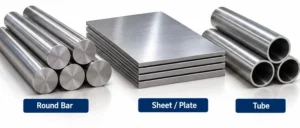
How Titanium Prices Differ for Bars, Sheets, Plates, and Tubes
Titanium Round Bar
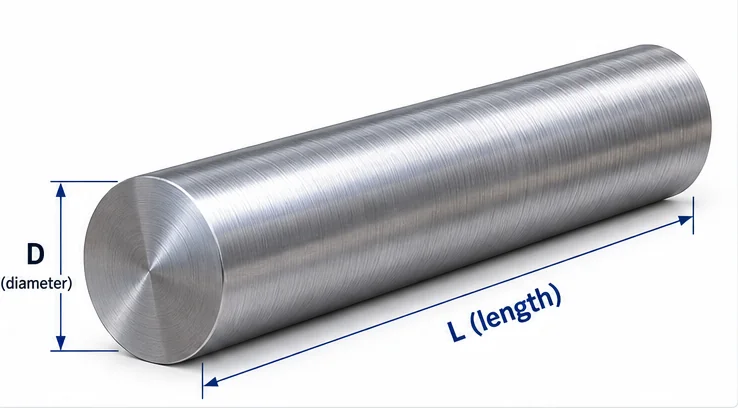
Round bar is common stock for turned shafts, bushings, and machined components. Diameter, tolerance, finish, and cut length affect its price. For a given length, a Ø60 mm bar weighs 44% more than a Ø50 mm bar of the same grade. Choosing a suitable diameter can save material even when both bars have the same unit price.
Titanium Sheet and Plate
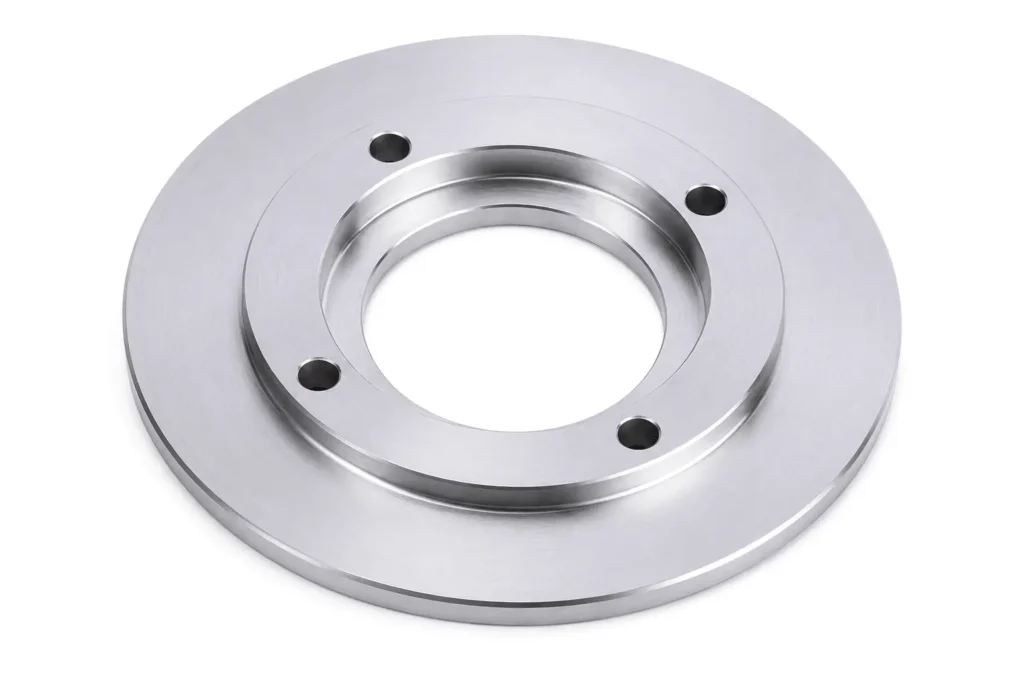
Thin sheet may require more rolling and thickness control than plate; plate cost also depends on flatness, finish, thickness, and cut size. If a component needs a 12 mm finished thickness, a suitable 15 mm plate uses 25% less starting volume than a 20 mm plate of the same length and width. Leave enough allowance for machining and stock tolerance.
Titanium Tube
Tube pricing depends on outside diameter, wall thickness, grade, and whether it is seamless or welded. Thin walls and uncommon sizes can add manufacturing complexity. Because suppliers may quote per meter or foot, convert each offer to a common weight basis before comparing.
How to Calculate Titanium Cost by Weight
Titanium Price Per Pound vs. Per Kilogram
1 lb = 0.45359237 kg; 1 kg ≈ 2.20462 lb. Price per kg = price per lb × 2.20462. At an assumed $25/lb, Grade 5 titanium costs approximately $55.12/kg. All prices in the following worked examples are hypothetical, not current supplier quotes. The titanium price per kg is a unit conversion, not a separate market price. A titanium price per gram can be derived by dividing the price per kilogram by 1,000.
How to Calculate Titanium Bar Weight
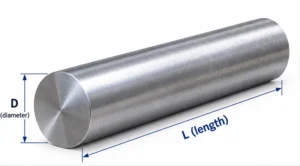
For a solid round bar measured in millimeters: Weight (kg) = π × D² ÷ 4 × L × ρ ÷ 1,000,000, where D is diameter (mm), L is length (mm), and ρ is density (g/cm³). Use a nominal Grade 5 density of 4.43 g/cm³. A Ø50 × 100 mm bar weighs π × 50² ÷ 4 × 100 × 4.43 ÷ 1,000,000 = 0.870 kg (1.918 lb), costing about $47.95 at $25/lb.
How to Calculate Titanium Plate Weight
For rectangular plate: Weight (kg) = length × width × thickness × density ÷ 1,000,000, with dimensions in millimeters and density in g/cm³. A Grade 5 plate measuring 200 × 100 × 15 mm weighs 1.329 kg (2.930 lb), giving a theoretical material cost of approximately $73.25 at $25/lb.
Example: Cost of a Grade 5 Titanium Blank
A Ø60 × 100 mm Grade 5 blank has a volume of 282,743 mm³ and weighs approximately 1.2525 kg, or 2.7613 lb. At the assumed $25/lb, its raw material cost is approximately $69.03. This excludes kerf, saw-cut charges, stock minimums, freight, and machining. Calculate from the unrounded weight and round only the final price.
Why Does Titanium Stock Size Matter More Than You Think?
Finished Part Weight vs. Starting Stock Weight
CNC machining removes material to form surfaces, pockets, and holes. The purchased blank therefore usually weighs more than the finished component. Material utilization (%) = finished part weight ÷ starting stock weight × 100. This ratio helps quantify waste, but it does not replace checks for clamping and machining allowances.
How Oversized Stock Increases Material Waste
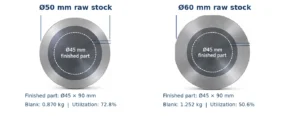
For equal-length round bars, weight scales with diameter squared. Moving from Ø50 to Ø60 mm increases starting volume by (60² ÷ 50² − 1) × 100 = 44%. That extra stock must be purchased and usually removed, potentially increasing roughing time and tool consumption.
Example: Two Stock Sizes for the Same CNC Part
Assume a simple finished cylinder Ø45 × 90 mm in Grade 5 titanium, with no holes or pockets. Compare two 100 mm-long blanks at the same hypothetical $25/lb. Both must first be confirmed suitable for workholding and finishing allowances.
| Measure | Ø50 × 100 mm blank | Ø60 × 100 mm blank |
| Starting weight | 0.870 kg | 1.252 kg |
| Finished part weight | 0.634 kg | 0.634 kg |
| Material utilization | 72.8% | 50.6% |
| Material removed | 0.237 kg | 0.618 kg |
| Raw material cost | $47.95 | $69.03 |
Selecting the smaller blank saves approximately $21.08 per part, or about 30.5% of theoretical raw material cost. Across 100 parts, that is about $2,108 before supplier minimums, cut charges, scrap credits, or differences in machining time. A smaller blank is not automatically feasible: verify gripping length, stock tolerances, and process allowances. If you are comparing titanium costs for production, request the actual stock size and cut-length allowance rather than judging a quote by its price per pound alone.
How Does Titanium Price Per Pound Affect CNC Machining Cost?
Raw Material Cost vs. Finished Part Cost
A $50 titanium blank does not make a $50 finished part. Programming, setup, machine time, tooling, finishing, and inspection must also be covered. Material can dominate simple parts; machining can dominate complex, tight-tolerance components.
Machining Time, Tool Wear, and Inspection
Titanium conducts heat poorly compared with aluminum, concentrating heat near the cutting edge. Suitable tooling, cooling, and controlled cutting conditions are important. Deep pockets, thin walls, and demanding tolerances can add machining and inspection time independently of the material price.
When a Cheaper Titanium Grade May Not Reduce Total Cost
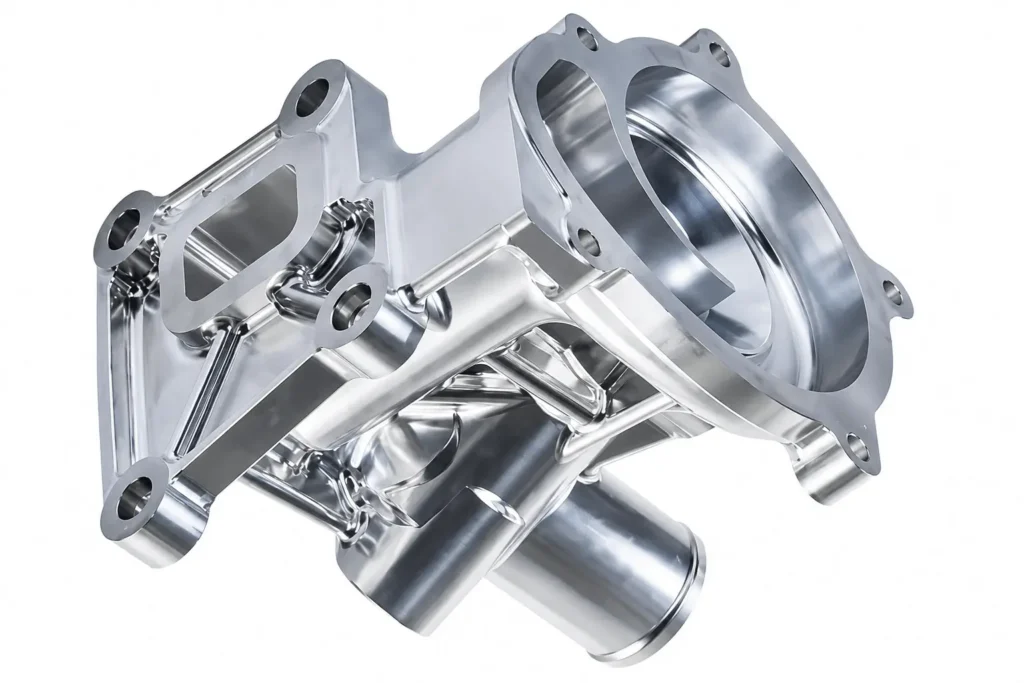
A lower-priced grade may require a larger cross-section to meet design loads, or a nonstandard size may be expensive to procure. Never substitute grades without engineering approval. For custom parts, see YD Rapid’s CNC machining services to evaluate the complete manufacturing cost.
For a practical titanium CNC quote, share your 2D drawing or 3D CAD file, titanium grade and material specification, annual or batch quantity, critical tolerances, surface finish, and delivery destination. YD Rapid can review the part for CNC machining and quote the finished component; the Ø50/Ø60 example above illustrates why stock selection should be considered alongside the per-pound rate. Submit the details through the YD Rapid RFQ form: https://ydrapid.com/request-a-quote/.
How to Compare Titanium Quotes and Avoid Overpaying
Consider two hypothetical quotations for 20 Grade 5 round-bar pieces, each Ø50 × 100 mm, with ASTM B348 specified and a mill test report included. Both suppliers quote the same nominal cut-piece quantity and delivery destination.
| Quote detail | Supplier A | Supplier B |
| Unit price | $22/lb | $25/lb |
| Theoretical total weight | 38.36 lb | 38.36 lb |
| Material charge | $843.92 | $959.00 |
| Cutting fees | $100 | Included |
| Shipping | $120 | $40 |
| Lead time | 5 business days | 7 business days |
| Total estimated cost | $1,063.92 | $999.00 |
Supplier B costs $64.92 less despite its higher per-pound price. The material charges use a displayed weight rounded to 38.36 lb for this illustration; actual invoices may differ slightly. Check grade and specification, cut dimensions and quantity, certification and traceability, cutting fees, taxes, shipping terms, and lead time. Ask whether the supplier bills cut-piece weight or a full stock length. The two suppliers and their prices are fictional examples, not dated commercial quotations.
Frequently Asked Questions
How Does the Current Titanium Price Compare With Last Year?
A year-over-year comparison is meaningful only when it uses the same grade, product form, specification, quantity, and currency. Compare dated supplier quotations or a clearly defined market series. A change in an industrial titanium benchmark does not necessarily reflect the price change for certified Grade 5 bar or finished CNC parts.
Conclusion
Titanium price per pound depends on the material grade, product form, order quantity, and supplier requirements. Grade 2 and Grade 5 can have different costs, but the lowest price per pound does not always mean the lowest cost for your finished parts.
If you’re buying titanium for CNC machining, pay attention to the starting stock size, material waste, machining time, and inspection requirements. As the Ø50 mm and Ø60 mm bar comparison shows, choosing the right stock dimensions can reduce material costs before machining even begins.
At YD Rapid, we review your part drawings, material specifications, and production quantities to help you select suitable stock and avoid unnecessary machining costs. Send us your drawings for a CNC machining quote.