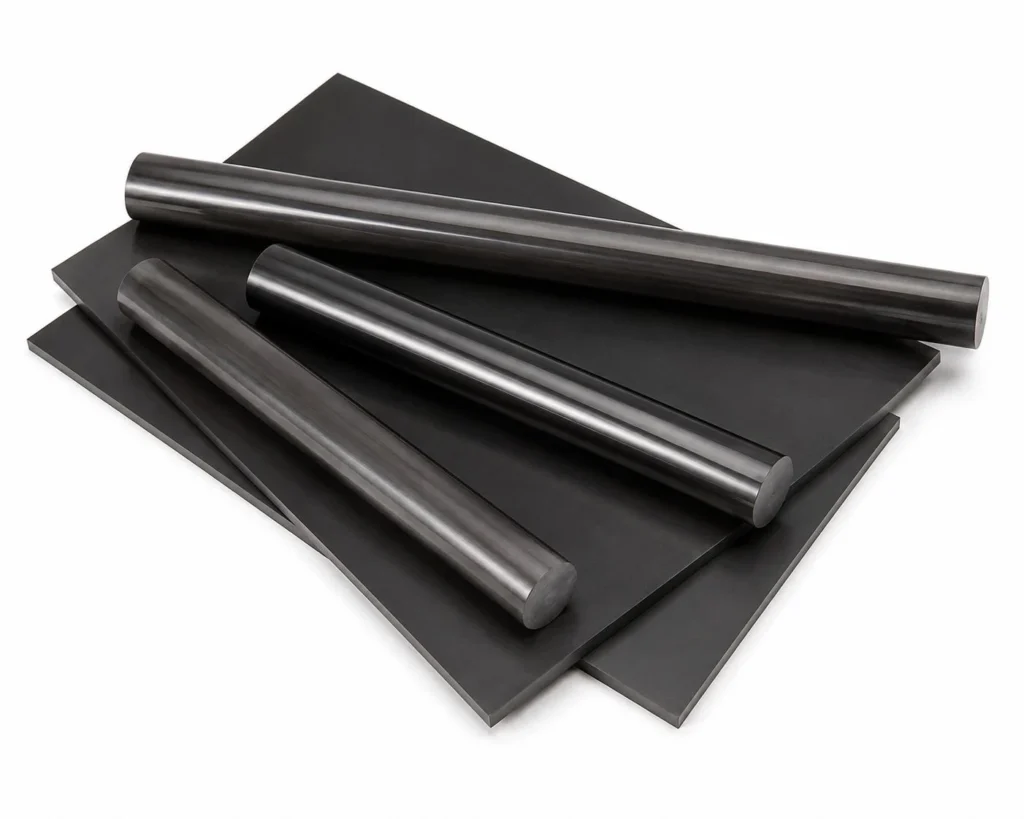
Torlon 4301 PAI is a glass-fiber-reinforced polyamide-imide. Usually, it is used for parts that face high loads, wear, and elevated temperatures. It provides good strength, dimensional stability, and low friction. These features make it suitable for bushings, bearings, seals, and electrical components.
CNC machining Torlon 4301 needs careful control of cutting conditions because heat and machining stress can affect the finished part. Tool selection, workholding, chip removal, and finishing conditions all need attention during machining.
This article covers the key properties of Torlon 4301 PAI, CNC machining considerations, and common applications.
What Is Torlon 4301 PAI?
Torlon 4301 is a specific grade within the PAI family. It is formulated for applications involving sliding contact and wear, rather than being treated simply as a general-purpose engineering plastic.
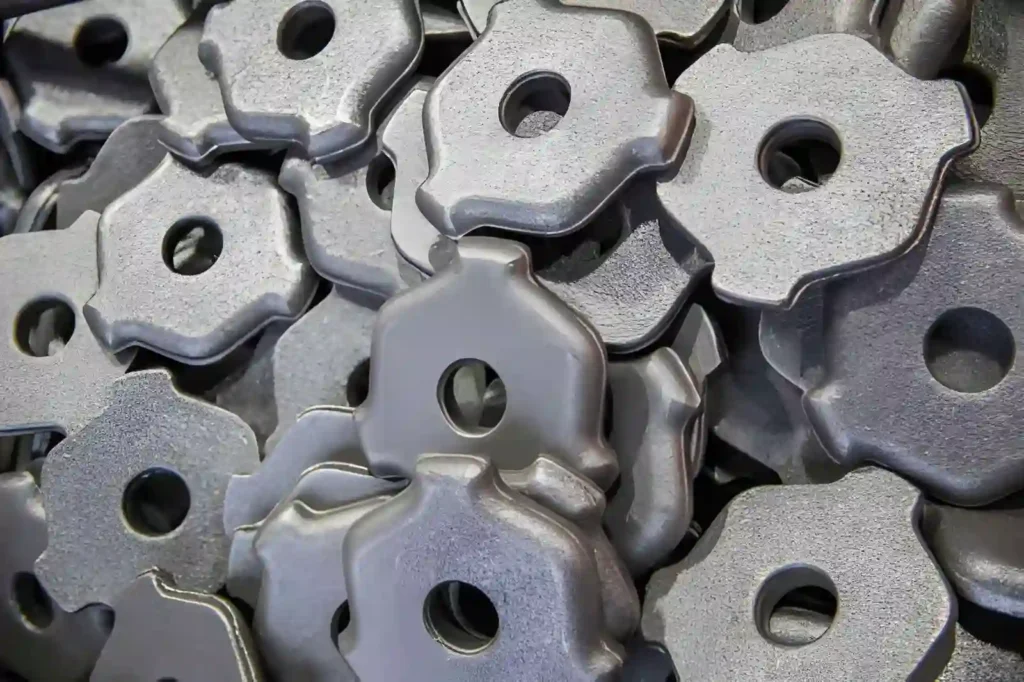
This grade is commonly supplied in stock shapes for machining into components such as bushings, bearings, thrust washers, and seals. Its formulation gives it a different performance profile from unfilled PAI grades, particularly in sliding applications.
Composition of Torlon 4301 PAI
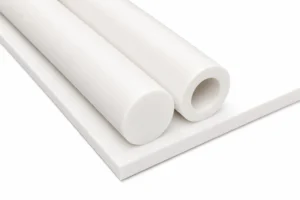
Torlon 4301 contains graphite and PTFE within the PAI resin. These additives are included primarily to modify the material’s sliding and wear behavior.
Graphite helps support wear resistance during contact, while PTFE lowers friction at the mating surface. The combination is useful in components that operate under sliding contact and may have limited external lubrication.
Torlon 4301 PAI Material Properties
Before selecting Torlon 4301 for a machined component, engineers should check the material data against the part’s load, temperature, movement, and electrical requirements. The values below provide a useful starting point for that assessment.
| Property | Test method | Torlon 4301 value | Unit |
| Tensile strength | ASTM D638 | 113 | MPa |
| Tensile modulus | ASTM D638 | 6.8 | GPa |
| Tensile elongation | ASTM D638 | 3.3 | % |
| Flexural strength | ASTM D790 | 215 | MPa |
| Flexural modulus | ASTM D790 | 6.9 | GPa |
| Compressive strength | ASTM D695 | 166 | MPa |
| Notched Izod impact | ASTM D256 | 64 | J/m |
| Heat deflection temperature | ASTM D648 | 279 | °C |
| Linear thermal expansion | ASTM D696 | 25 | ppm/°C |
| Volume resistivity | ASTM D257 | 8 × 10¹⁵ | Ω·cm |
| Surface resistivity | ASTM D257 | 8 × 10¹⁷ | Ω |
| Dielectric strength at 1 mm | ASTM D149 | 33 | kV/mm |
Mechanical Properties
Under cited ASTM D638 test conditions, Torlon 4301 has a tensile strength of 113 MPa and a tensile modulus of 6.8 GPa. It has a flexural strength of 215MPa and a compressive strength of 166MPa. The material is rather brittle, with only 3.3% tensile elongation and hence has very different properties compared to more ductile engineering plastics.
These values are helpful for checking sections of machined parts that are subjected to loading without the polymer undergoing much deformation. This is a combination of stiffness and strength that can be utilized in bushings, bearing cages, thrust washers, and structural wear components.
Thermal Properties
According to Solvay, the Torlon 4301 has a heat deflection temperature of 279°C at an 1.82 MPa load. It has a coefficient of linear thermal expansion of ~25 ppm/°C.
The expansion value can be especially useful for dimensional calculations. If the published coefficient of expansion is still valid over that range of temperature, for instance, a 100 mm feature exposed to a 100°C temperature increase would have a theoretical linear expansion of approximately 0.25 mm.
It can be used for considerations like bushings, seals, and close-fitting parts, which are meant to be used under a wide temperature range.
Friction and Wear Properties
Torlon 4301 has been formulated for wear applications, and its friction characteristics are greatly affected by load, sliding velocity, mating material, and lubrication. Solvay’s dry-test data gives a coefficient of friction of approximately 0.19 to 0.39 for each of the conditions tested and does not give a single value that can be applied to every use.
Under the conditions of the tests, Solvay reports that under “lubricated testing” conditions, the static coefficient of friction is 0.08, the dynamic coefficient of friction is 0.10, and the wear factor is 2.1 × 10⁻⁸ mm³/N·m. After 1,000 hours of such testing, a wear depth of 0.11 mm was reported.
These numbers can be helpful for initial material comparisons, but should not be used as design limits. A bushing bearing running against hardened steel will have a different performance when compared to a bushing running against aluminium, stainless steel, or another polymer.
Electrical Properties
Torlon 4301 has high electrical resistivity according to the ASTM D257 test method. Solvay’s volume resistivity is 8 × 10¹⁵ Ω·cm, its surface resistivity is 8 × 10¹⁷ Ω, and its dielectric strength is 33 kV/mm at 1 mm thickness.
One practical point here: Torlon wear grades with graphite do exhibit some electrical conductivity under certain higher frequency/higher voltage applications, even though they exhibit high resistance in normal DC tests. Solvay emphasizes this aspect of 4301.
Torlon 4301 Vs. PEEK Vs. PTEF Vs Unfilled PAI
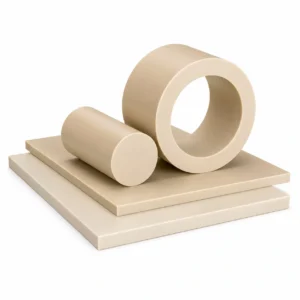
Torlon 4301 is often considered alongside PEEK, PTFE, and other PAI grades for demanding applications. The table below highlights the main differences that can help engineers narrow down the material choice.
| Property / Consideration | Torlon 4301 PAI | PEEK | PTFE | Unfilled PAI |
| Material type | Carbon-fiber-reinforced PAI | High-performance thermoplastic | Fluoropolymer | Unfilled polyamide-imide |
| Temperature capability | High | High | High | High |
| Wear resistance | Very high | High; grade-dependent | Good; grade-dependent | Good |
| Friction | Low | Low to moderate | Very low | Low |
| Strength and stiffness | High | High | Relatively low | High |
| Dimensional stability | Very good | Good | Lower under sustained load | Very good |
| Load-bearing capability | High | High | Lower than PAI and PEEK | High |
| Creep resistance | Very good | Very good | Relatively low | Very good |
| Machining | Sharp, wear-resistant tooling recommended; heat and tool pressure need control | Generally machinable with carbide tooling | Relatively easy to machine but can deform | Similar to other PAI grades |
| Typical selection reason | Wear resistance, stiffness, strength, and dimensional stability | High temperature, chemical resistance, and mechanical performance | Very low friction and chemical resistance | High mechanical performance without reinforcement |
| Compared with Torlon 4301 | — | May be preferred where PEEK’s specific thermal or chemical properties are required | Better suited to very low-friction applications with lower mechanical loads | Lower reinforcement-related stiffness and wear performance |
How to CNC Machine Torlon 4301 PAI
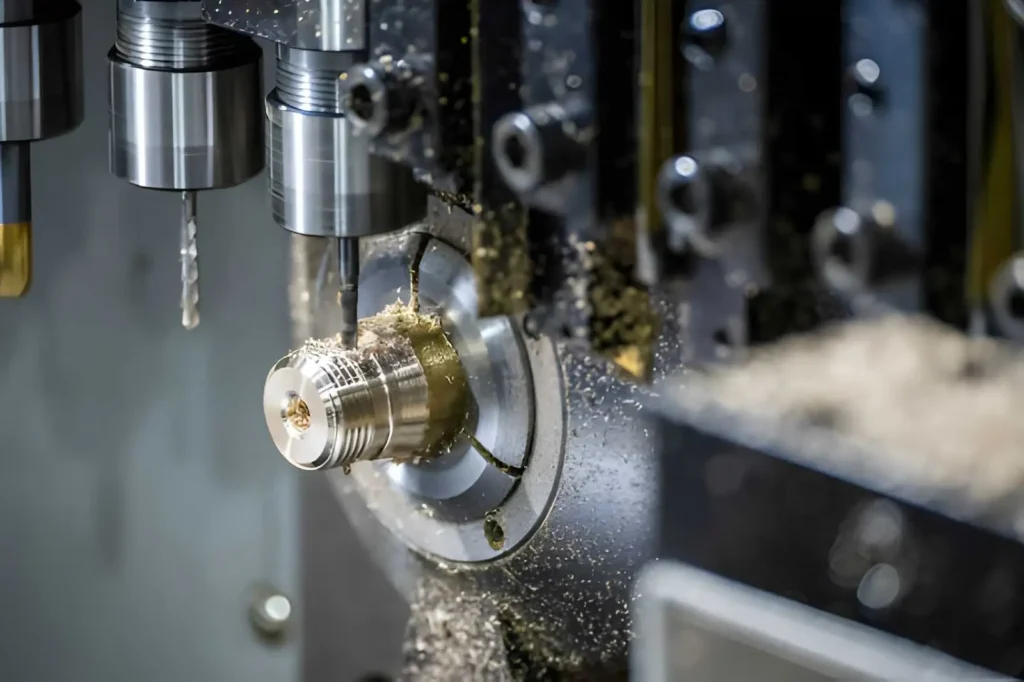
Torlon 4301 PAI can be machined using conventional CNC equipment, but it needs more attention to heat, tooling, and workholding than many common engineering plastics. The material is hard and wear-resistant, while its low thermal conductivity means heat can build up around the cutting area if the tool rubs or chips are not cleared properly.
When producing parts with close tolerances, the primary concern is to control cutting forces and the temperature. Always use a sharp carbide tool, do not overclamp, and allow sufficient material for a further finishing pass. These steps are particularly crucial for thin walls, large flat parts, and parts with close tolerances.
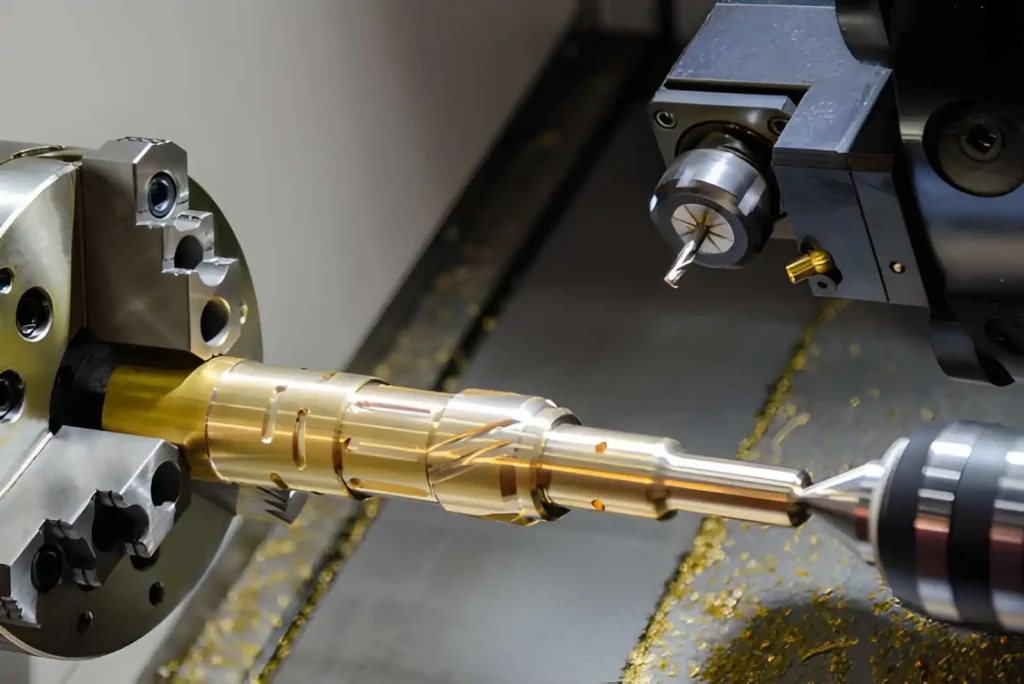
Machining Torlon requires the same heat and workholding controls used in demanding plastic CNC machining projects.
Tool Selection
Sharp carbide tools are a good place to start working with Torlon 4301. Where longer tool life is needed, such as in production, PCD tooling can be used. It may be abrasive, so it can wear out much sooner in continuous production than in a short run, which is an acceptable tool during the short run.
The cutting edge must be sharp enough to cut the material without rubbing. It is preferred to have positive cutting geometry, which will give less cutting pressure. According to the Solvay Torlon machinery guide, the following values are a general guide: Rake angle 7° to 15° and relief angle 5° to 15°.
The selection of the carbide grade is not as critical as the condition of the tools. A worn edge will cause increased heat and cutting force and may result in a dimensional deviation in the finished product. If the surface begins to become rough or the spindle load is increasing, run the test to make sure the surface is good before switching the machining strategy, not changing the entire tool.
Cutting Speed and Feed
While useful, the published machining data for Torlon is just a starting point and depends on the cutter, machine, part geometry, and operation.
For turning, Solvay gives a cutting speed of approximately 300–800 ft/min (90–245 m/min) and a feed of 0.004 to 0.025 in/rev (0.10 to 0.64 mm/rev). A reference depth of cut is around 0.025 in (0.64 mm).
The recommended cutting speed for milling is about 500–800 ft/min (150–245 m/min), with a typical depth of cut of about 0.035 in (0.89 mm).
These are only suggested guidelines, and not absolute targets for production. Before simply increasing or decreasing the spindle speed, check the tool sharpness, tool engagement, chip removal, and feed if the cutter is producing excessive heat.
Stock should be left lightly and uniformly, and a sharp working tool should be used for the finishing. The cutter should continue to cut, not rub.
Workholding
Torlon 4301 may experience discernible changes in size due to workholding. If too much clamping pressure is applied, it may cause the material to be distorted, especially for thin pieces or large flat parts.
A part can be measured in the clamp and then expanded or contracted when removed. This occurs frequently with thin-wall rings, bushings, large plates, etc., when the fixture is exerting a great amount of pressure.
Apply the appropriate clamping force so that it will hold the part but will not crush it. Distributing the load with soft jaws and larger contact areas. Also, long or thin parts should be supported near the cutting site.
The order of the machining is also a factor. Removing a large amount of material from one side can allow internal stresses in the stock to redistribute. Balanced roughing and separate finishing can provide more stable dimensions for larger parts.
Drilling and Milling
Do not over-engage the cutter during milling. If a large radial or axial engagement is used, it can place extra cutting pressure on the thin section, causing it to bend.
The following milling methods are typically recommended for Torlon: sharp cutters, climb milling. Ensure that the cutter is not moving against the surface of the material but against the chip; otherwise, the cutter will rub and not produce a clean chip.
Special attention is needed to remove the chips in pockets and deep features. Chips can be added by recutting, which can damage the surface and add heat. An air blast can be helpful for removing chips, and coolant can be used when more heat control is needed.
Drilling should be subject to the same attention. Use a sharp drill and ensure that chips are able to exit the hole. Peck drilling can be helpful in preventing chip packing in deeper holes. Do not stayat then bottom of the hole as the drill may continue to heat without removing material.
The use of a larger drill in one operation to bore larger holes may allow for less control than will be obtained by first boring undersize and then boring or enlarging the hole.
Turning Torlon 4301
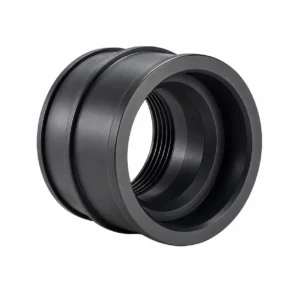
Turning is suitable for bushings, rings, shafts, sleeves, and other cylindrical components made of Torlon 4301.
Use positive geometry carbide or PCD tools. Minimize tool overhang and properly support long workpieces. On roughing, cut material but do not overcut; allow for the extra stock needed for finishing.
Special attention should be given to thin-wall bushings and rings. When the chuck pressure is too tight, it will cause the part to be distorted, and it will affect the diameter of the bore or the outside diameter after it is taken out. You can help with the soft jaws or by applying even pressure through the jaws.
Use a sharp tool and stable cutting conditions for the final pass. Don’t cut too lightly, or it will rub.
Managing Heat During Machining
Machining problems with Torlon 4301 are primarily caused by heat. The material is not as heat-conductive as metals, and overheating quickly occurs when rubbing and chip recutting happen in the cutting zone.
Excessive cutter engagement, poor chip clearance, and heat buildup due to a worn tool or improper feed can all cause heat buildup. Excessive heat affects surface finish and can cause less dimensional consistency.
An air blast is helpful to remove chips, especially in milling. It can help to keep chips from being recut and minimize heat caused by chip build-up.
Coolant is valuable in drilling applications and other processes that require greater heat control. Coolant should be compatible with Torlon 4301 and should be used per the recommendation of the material supplier. Do not use coolant as a replacement for the proper cutting conditions; a dull tool will still produce excessive heat even when using coolant.
Finishing and Inspection
Avoid taking the part to final size after rough machining without leaving a controlled amount of material for finish machining.
Avoid aggressive deburring; use a sharp tool on the last pass. Typically, burrs can be removed by a light controlled operation without compromising the functional edges.
When measuring precision parts, wait until the component has returned to a stable temperature before making the last measurement. This is especially critical following intense machining or when handling big parts.
Measure out parameters of interest, including bore, outside diameter, wall thickness, flatness, runout, or hole position. When a part alters its dimensions after it has been removed from the fixture, look for work-holding issues or workspace stresses, and not just retool.
When the components are demanding, a practical solution is to rough machine, if needed, let the part settle, finish machine, and inspect the final product. This will yield more consistent results than attempting to attain the desired dimensions during part machining when heat from machining and clamping is still in effect.
Common Applications of Torlon 4301 PAI
Torlon 4301 PAI is used for components that need a combination of wear resistance, low friction, strength, and dimensional stability. Its applications include moving parts, wear components, and electrical parts where these properties are required.
Bushings and Bearings
Torlon 4301 can be used for bushings and bearing components exposed to sliding or rotating movement.
These parts can include:
- Bushings
- Plain bearings
- Bearing cages
- Thrust washers
- Wear pads
Its wear resistance and low-friction characteristics make it suitable where the component is in repeated contact with another surface.
Seals and Wear Rings
Torlon 4301 is used for wear rings and other components that experience continuous contact and movement.
It can also be selected for certain sealing applications where the material needs to maintain its mechanical properties under the specified operating conditions. The exact design should consider pressure, temperature, movement, and contact with the mating component.
Electrical and Insulating Components
Torlon PAI can be used for electrical and insulating components that require both mechanical strength and electrical insulation.
Common examples include:
- Insulating bushings
- Spacers
- Supports
- Electrical component holders
The specific Torlon grade should be selected according to the electrical and temperature requirements of the application.
Aerospace and Industrial Components
Torlon 4301 is used in aerospace and industrial components where its combination of strength, wear resistance, low friction, and temperature resistance is required.
Torlon 4301 Design Considerations for CNC Machining
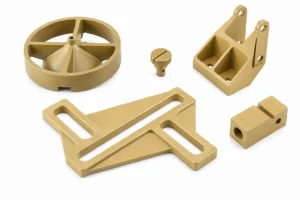
Torlon 4301 can be machined accurately, but part geometry has a direct effect on cutting forces, heat, workholding, and inspection. A design that provides adequate wall thickness, sensible hole geometry, and realistic tolerances is easier to machine consistently.
Torlon should be compared with other CNC machining materials according to temperature, load, wear, dimensional stability, and cost.
Wall Thickness and Thin Sections
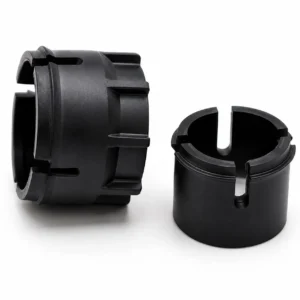
In most cases, avoid very thin walls. Thin sections can bend while being milled or turned, and when clamped, they can bend.
For thin walls:
- Ensure sufficient material is provided for the machining process and load.
- Never deep pockets (leave unsupported wall)
- Use big radii when they will not affect the function of the part.
- Make appropriate clamping and supporting points.
When absolutely necessary, use a thin wall, leave it supported during roughing, and then remove the final amount of material with a light finishing pass.
Holes, Threads, and Deep Features
The depth of the hole should be feasible for the cutting tool used. Deep, narrow holes are harder to chip and generate more heat in the drilling operation.
Where possible:
- Don’t make deep blind holes where they are not needed.
- Allow sufficient room for working with holes and drill/cutter.
- Appropriate entry/exit conditions for minimizing burrs.
- Think of a pilot hole if you’re creating a bigger hole.
- Access to tools for internal threads.
Internal threads should be deep enough, and tool clearance should be sufficient for the tool employed. In deep holes, chip evacuation is more important for precision holes, as trapped chips might interfere with the cutting process.
Tolerances and Dimensional Stability
Never use tighter tolerances than called for by the application. More than one finishing process may be needed, and thorough accuracy control of temperature, workholding, and inspection may be necessary for tight tolerances.
In addition, Torlon 4301 may undergo slight changes due to machining of the stock and the stresses that are released from the material. An additional factor is heat generated by the machining process, which can further impact dimensions, especially for larger or thinner parts.
Use a roughing and finishing technique and let the part cool down before final inspection when working with critical dimensions. Do not use the fixture to determine dimensions; only when it has been removed from the fixture.
Surface Finish Requirements
The finish required for a bearing surface, sealing surface, or sliding interface might be controlled, whereas the finish required for an exterior surface that will not be a bearing surface or sealing surface may not need to be controlled.
Do not give unnecessary fine finishes. They can extend the time required for the machining, damage the tool, and not improve the performance of the part. Usually, the required finish can be obtained without significant secondary processing if a sharp tool, stable cutting conditions, and a suitable finishing pass are used.
How to Select Torlon 4301 for a Machined Part
Torlon 4301 should be selected based on the actual conditions the machined part will experience. Before specifying it, check the temperature, mechanical load, wear conditions, dimensional requirements, and chemical environment.
Operating Temperature
Verify continuous operating temperature and any short-term peak temperatures. Avoid choosing the maximum temperature the material is able to withstand for a short period of time.
Also take into account repeated temperature changes that might occur on the component, since these can cause size and clearances to change.
Load and Wear
When moving parts, think about:
- Contact pressure
- Sliding speed
- Frequency of movement
- Mating material
- Lubrication conditions
- Expected service life
A bushing, wear ring, or bearing part should be considered for use based on its load and motion rather than its material strength.
Dimensional Requirements
Review the required tolerances in conjunction with the size and geometry of the part. Tight clearances, thin walls, and large sections may call for more consideration of thermal expansion, workholding, and machining sequence.
If close-tolerance parts are being produced, pay attention to the type of behavior the material and component will exhibit in the process of being cut and after the part is detached from the fixture.
Chemical Exposure
Test Torlon 4301 with chemicals that will come into contact with the finished part during use. This encompasses lubricants, fuels, cleaning chemicals, solvents, and process chemicals.
The actual concentration, temperature, and exposure time should be checked for compatibility. Materials that are appropriate for one chemical may not be appropriate for another set of chemical and temperature conditions.
Torlon 4301 PAI CNC Machining Services
YD Rapid provides CNC machining services for custom Torlon 4301 parts based on customer drawings and application requirements. Our team can review your part requirements, recommend suitable machining approaches, and help select the right material and finishing options for the application.
With a free DFM review, you can identify potential machining issues before production starts. YD Rapid also provides ISO 9001:2001-certified manufacturing services with inspection and quality control throughout the process.
Whether you need a prototype or production quantity, we can support the complete process, including:
- Free DFM review for your Torlon 4301 part design
- Material selection based on the application’s requirements
- CNC milling, turning, and other precision machining
- Dimensional inspection and quality control
- Surface finishing and post-machining solutions
- Prototype and production quantities
Share your CAD file or drawing with YD Rapid to review the part and determine the appropriate machining and finishing solution.

FAQs
What makes Torlon 4301 different from standard PAI?
Torlon 4301 has increased stiffness, strength, and wear resistance compared to unfilled PAI due to the carbon-fiber reinforcement. This results in its ability to work under more challenging loads and usage.
Is Torlon 4301 suitable for CNC machining?
Torlon 4301 can be processed by conventional CNC milling processes, turning, drilling, and other operations. Good surface finish and dimensional control are important and require sharp tooling and heat control.
What cutting tools are used for machining Torlon 4301?
Tools used are usually sharp carbide tools. For longer production runs, PCD tools can be useful since the carbon-fiber reinforcement can lead to tool wear.
How should Torlon 4301 be held during CNC machining?
Apply sufficient clamping pressure, but not enough to crush the part. To minimize distortion, use soft jaws or larger contact areas, and add support as needed, particularly for thin walls and large flat parts.
Can Torlon 4301 be used for bushings and bearings?
Torlon 4301 can be used for bushings, plain bearings, wear rings, and other sliding parts that must resist wear and support a mechanical load.
What temperature can Torlon 4301 withstand?
Torlon 4301 is designed for high-temperature applications; however, the operating temperature range is dependent on the load and operating conditions. When designing, consider the manufacturer’s temperature data for the particular service condition, not one maximum temperature.
Is coolant recommended when machining Torlon 4301?
Coolant can help control heat and remove chips, particularly during drilling. During milling, an air blast can be useful for clearing chips. Always confirm that the selected coolant is compatible with Torlon 4301.
How do you control dimensional changes when machining Torlon 4301?
Keep cutting heat and clamping pressure under control. For tight-tolerance parts, rough the part first, leave finishing stock, allow it to stabilize, and then take the final cut. Measure critical dimensions after the part has been released and has reached a stable temperature.