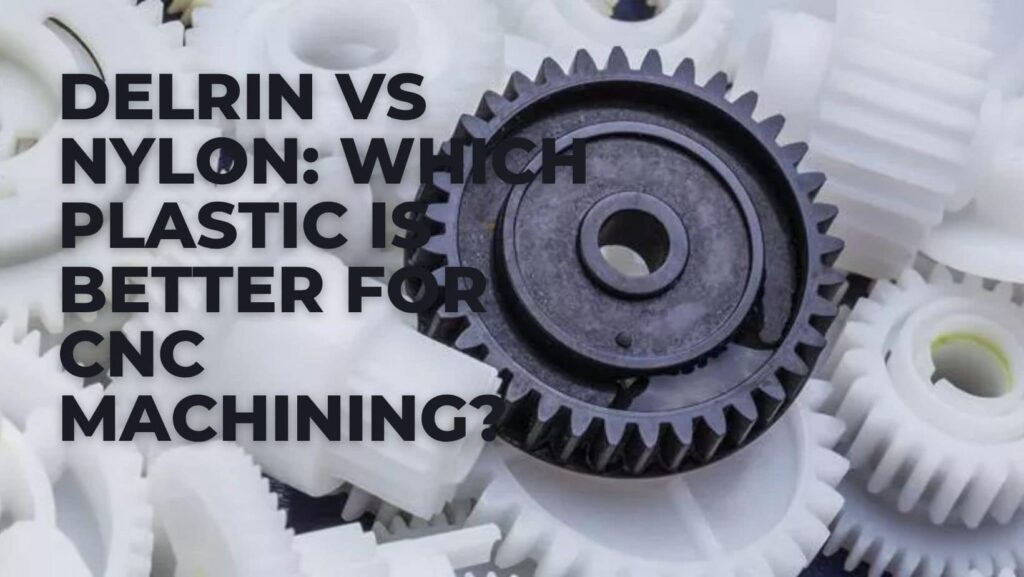
Delrin vs nylon CNC machining is one of the most common comparisons when selecting engineering plastics for precision parts. Both materials offer excellent machinability, but they differ in strength, moisture absorption, wear resistance, and cost. Choosing the right material depends on the application, performance requirements, and machining conditions.
When comparing Delrin and Nylon for CNC machining, differences in abrasion resistance, moisture absorption, dimensional stability, and price become important factors for material selection.
Key Takeaways
- Delrin offers excellent tolerance and stability for precision applications.
- Nylon has great shock resistance and impact strength.
- Delrin has low moisture absorption.
- Nylon is less expensive for higher quantity orders.
- Delrin offers fine machining results and smooth surfaces.
- Nylon has great resistance to wear.
Why Is Material Selection Important in CNC Plastic Machining?
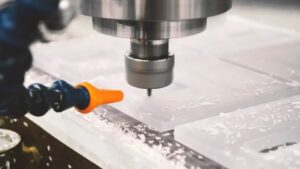
Some components need to be completely rigid, while others need to bend without breaking. Selecting the wrong type of plastic will lead to part failure in an operational system. When selecting the best engineering plastic for CNC parts , it’s critical to understand the conditions of your operational environment.
Performance Requirements
Your parts must handle the physical forces of their daily job. Some parts must turn fast, like gears. Other parts must hold heavy loads without crushing, like support blocks. You need to look at Delrin vs Nylon properties like tensile strength and hardness to see if the plastic can survive these forces.
Environmental Exposure
Where will your part live? If your part sits inside a machine with water or chemicals, some plastics will swell up or get soft. For example, some plastics soak up moisture from the air like a sponge. This changes their size and shape. Other plastics can handle harsh chemicals and hot fluids without changing at all.
Precision And Dimensional Stability
A part with excellent dimensional stability stays the same size all the time. This is critical for high-precision components that fit tightly with other metal parts. Using plastic for precision machining means the material will not warp when the temperature or humidity changes in the room.
Cost And Production Efficiency
Material cost is only one piece of the puzzle. You also have to think about how fast a machine can cut the plastic. A material that is easy to cut reduces machine time, which lowers the price of every part you buy. Sourcing teams must look at the total cost, including raw stock and machine shop labor.
How Do Delrin vs Nylon Properties Affect Machining Performance?
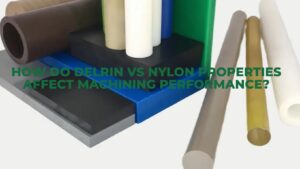
To make the best choice for your project, you must look at how Delrin vs Nylon properties differ under real-world machining conditions. Both materials are strong, but they respond to heat, moisture, and cutting tools in different ways.
Moisture Absorption
This is the biggest difference between the two plastics. Nylon absorbs water from the surrounding air. Delrin does not do this. If your part needs to fit into a tight space, nylon’s moisture habit can cause the part to jam up or get stuck.
Friction And Wear
Delrin has a lower coefficient of friction than nylon, meaning it is more slippery right out of the box. However, when you want to know how to assess Delrin vs nylon wear resistance, you have to look at the pressure. Under heavy, scraping loads, nylon actually resists wear better than Delrin.
Heat Resistance
Both plastics can handle moderate heat, but they soften if they get too hot during the cutting process. If the machine operator runs the tools too fast without cooling fluid, the nylon can melt and stick to the drill bit.
Chemical Resistance
Delrin stands up well to many solvents, oils, and fuels. Nylon has great resistance to oils and grease, but it can be attacked by strong acids and alcohols. Buyers often look at Nylon vs delrin picks based on the specific fluids the part will touch.
| Property / Feature | Delrin (Acetal) | Nylon (Polyamide) |
|---|---|---|
| Tensile Strength | High (70 MPa) | Very High (80 MPa when dry) |
| Impact Resistance | Moderate | Excellent (Absorbs shock) |
| Moisture Absorption | Very Low (0.2%) | High (2.0% to 7.0%) |
| Dimensional Stability | Excellent | Poor to Moderate |
| Machining Ease | Very Easy (Crisp chips) | Moderate (Can gummy/stringy) |
| Surface Finish Quality | Smooth, burr-free | Good, requires deburring |
| Coefficient of Friction | Extremely Low | Low |
| Relative Material Cost | Higher | Lower |
How Does Delrin Perform in CNC Machining Applications?
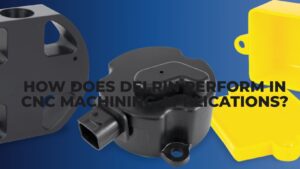
Delrin is a popular brand name for acetal homopolymer. It is a very stiff plastic with a smooth, slippery surface. When you ask engineers, “Can you CNC Delrin?” the answer is always a big yes. It is one of the most machine-friendly plastics in the world today.
Machining Characteristics
Delrin cuts beautifully on mills and lathes. It is a rigid material that does not gum up your cutting tools. When the tool cuts the plastic, it creates small, crisp chips that fly away easily. This is why delrin machines better than nylon in high-speed production runs. It allows the machine shop to run at fast speeds without melting the material.
Surface Finish Quality
Parts made from delrin CNC machining come out of the machine looking very smooth. The material does not leave burs, which are those annoying little hairy plastic edges left behind by sharp tools. This clean cut saves money because workers do not have to spend extra time cleaning up the parts by hand after machining.
Industrial Applications
You can find Delrin parts in many high-tech industries. It is used to make fuel system components, electrical insulators, and precision consumer goods. Dimensional stability makes pom delrin acetal CNC machining the top choice for components that must remain exactly the same size in all weather conditions. It is also common in medical devices that need to be wiped down often.
Why Is Nylon Used for CNC Machined Plastic Parts?
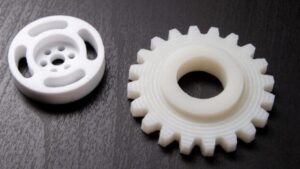
Nylon is a synthetic polyamide plastic that is famous for its extreme toughness. If you are wondering, is nylon a thermoplastic? Yes, it is. It can be melted down and shaped many times. For machined parts, nylon is sold in solid extruded blocks or cast sheets that are perfect for nylon CNC machining projects.
Toughness And Impact Strength
Nylon is incredibly difficult to break. It can take heavy impacts and repeated drops without cracking. While Delrin might chip or crack under a sudden heavy blow, nylon absorbs the shock energy and keeps working. This makes CNC machining nylon ideal for rugged industrial environments.
Wear Resistance
Nylon has excellent resistance to abrasion. It loves to rub against other rough surfaces without losing material. When engineers look for nylon precision CNC machining options, they often choose it for parts that experience constant scratching or sliding friction under heavy pressure.
Load-Bearing Capability
Nylon resists deformation under heavy loads over long periods. Cast nylon grades can hold up big pieces of machinery without flattening out. When you choose a high-precision white nylon CNC machining grade, you get a part that can replace bronze or iron bearings in heavy equipment.
Common Industries Using Nylon
Nylon is widely used in aerospace, automotive manufacturing, and heavy construction equipment. It is common in conveyor systems, wear pads, and large industrial rollers where metal-on-metal contact would cause too much damage and noise.
Why Does Delrin Machine Better Than Nylon In Some Projects?
If you talk to any CNC machine operator, they will tell you that they love working with Delrin. It is a dream material for people who run lathes and mills all day long.
Selecting the right engineering plastic depends on machining requirements, dimensional stability, wear resistance, and the intended application. Our plastic CNC machining service covers Delrin, Nylon, PEEK, PTFE, ABS, and other engineering plastics for both prototype and production parts.
Chip Formation
When a tool cuts Delrin, the plastic breaks into tiny, brittle chips. These chips fly away from the cutting zone instantly. When cutting even the best CNC machining nylon, the chips tend to form long, continuous strings. These plastic strings can wrap around the spinning tool like a nest, forcing the operator to stop the machine to clean it out.
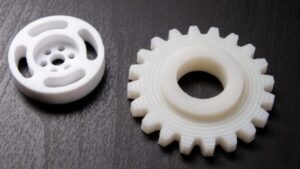
Tool Wear
Delrin is gentle on cutting tools. Because it does not cause high friction during the cut, your carbide tools stay sharp for hundreds of parts. Nylon can be tougher on tools, especially if it contains glass fibers for added strength. Glass-filled nylon will dull a sharp steel tool very quickly.
Cutting Stability
Delrin does not vibrate or chatter as much as nylon when the machine takes a deep cut. This stability allows the manufacturers to use larger tools and remove more material in a single pass. That is why delrin machines better than nylon, a common topic in manufacturing blogs, as it simply behaves better on the machine bed.
- Cleaner cuts: Fewer fuzzy edges mean the part looks professional right out of the machine.
- Lower vibration: Reduces marks left on the plastic surface by the spinning tool.
- Better repeatability: You can make 1,000 parts, and the last one will look exactly like the first one.
- Lower finishing work: Eliminates the need for sanding or blasting parts after machining.
How Should Buyers Compare Delrin vs Nylon Prices?
Sourcing teams must look past the initial price per pound of plastic sheet or rod. The true cost of a machined part includes raw stock, machine time, and post-processing work. There are several ways to compare Delrin vs nylon prices to find the real deal.
Raw Material Cost
Is Delrin more expensive than nylon? Yes, the raw material typically carries a premium price tag. As a basic rule, standard nylon raw material is cheaper than standard Delrin raw stock.
Machining Time
Because Delrin can be cut at much faster speeds without melting, the machine spends less time making each part. Since machine shops charge by the hour, a part that is quick to cut can end up costing less overall than a part made from a cheaper plastic.
Tooling Costs
If your project uses standard materials, tool wear is low for both. But if your team buys a Delrin CNC machining wholesaler stock, you can save money on bulk orders and enjoy fast cycle times.
| Component Type | Preferred Material | Why It Is Chosen |
|---|---|---|
| Precision Gears | Delrin | High stiffness, low friction, holds tight pitch sizes without warping. |
| Industrial Bushings | Nylon | Excellent wear resistance, dampens noise and absorbs heavy shock loads. |
| Medical Instrument Manifolds | Delrin | Low moisture absorption, clean appearance, resists sanitizing chemicals. |
| Automotive Wear Pads | Nylon | Resists abrasive road grime, survives constant heavy rubbing forces. |
| Electrical Insulators | Delrin | Great dielectric properties and stays dimensionally stable over time. |
| Conveyor Rollers | Nylon | High load capacity, will not dent or scratch metal tracks. |
Conclusion
In conclusion, Delrin and nylon are among the best-in-class engineering plastics. Delrin is an engineering plastic with superior dimensional stability and moisture absorption. Nylon is used to manufacture resilient parts in the industrial sector.
There is a clear difference when looking at delrin vs nylon CNC machining. The distinction between Delrin vs Nylon properties ensures the part produced is of high quality, and the tooling is done to the highest standard.

Material selection is only one factor in producing reliable plastic components. Machining strategy, tolerances, and application requirements also influence the final performance of a part. YD Rapid supports custom CNC machining projects with a wide range of engineering plastics for prototypes and production.
Frequently Asked Questions
What is the best plastic for CNC machining?
The best plastic depends on your project goals. Delrin is the top plastic for precision machining because it is stiff and easy to cut. For heavy-wear parts, nylon is the best engineering plastic for CNC parts.
Delrin vs nylon, which plastic holds tight tolerances?
When comparing delrin vs nylon CNC machining, Delrin holds much tighter tolerances. Nylon absorbs water from the air and swells up. Delrin stays the same size because it resists water, making nylon precision CNC machining harder for tight fits.
Is Delrin better than nylon?
Delrin is not always better, but it is different. Delrin is better for smooth, stable, and precise parts. Nylon is better if your parts need to take hard impacts, carry heavy loads, or resist heavy rubbing without cracking.
What is the best plastic for CNC machining based on application needs?
To choose the best engineering plastic for CNC parts, check your environment. Use Delrin for high-precision gears and wet areas. Choose the best CNC machining nylon picks for rugged, high-impact wear pads and heavy industrial rollers.