Key Takeaways
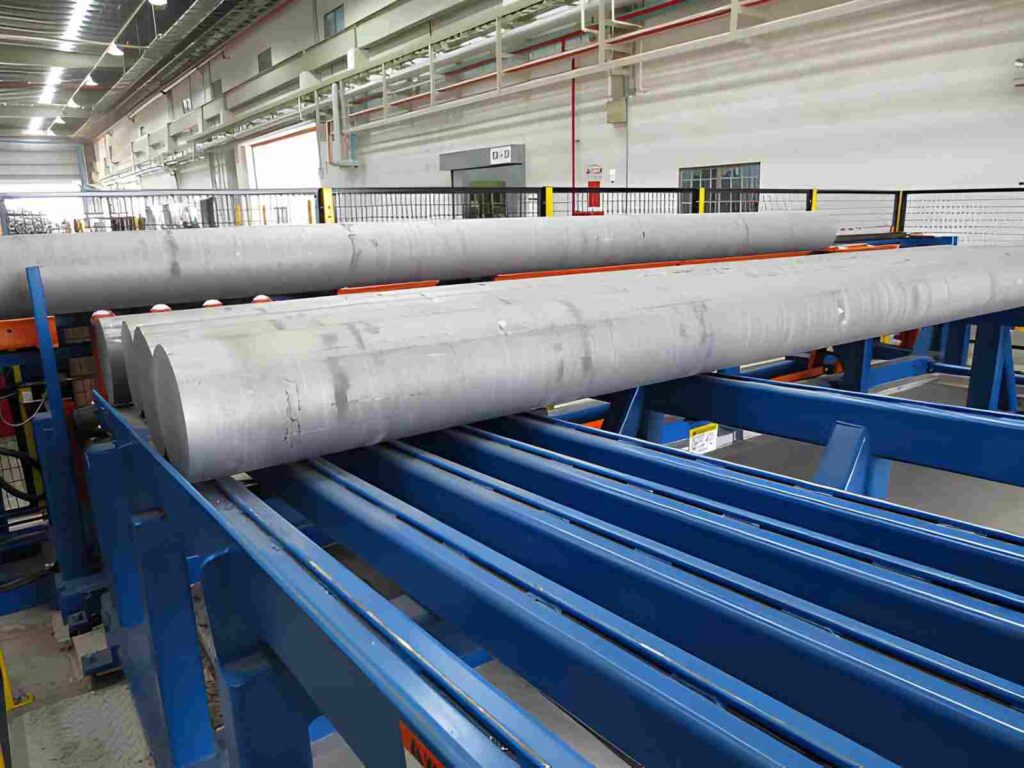
- An aluminum billet is a solid piece of aluminum prepared for CNC machining, extrusion, and forging.
- Billets are available in different alloys, tempers, shapes, and sizes to suit different part designs.
- The billet quality influences chip formation, cutting stability, tool life, surface finish, and finished dimensions.
- Common billet alloys include 6061, 6082, 7075, 2024, and 5052, each offering different mechanical properties.
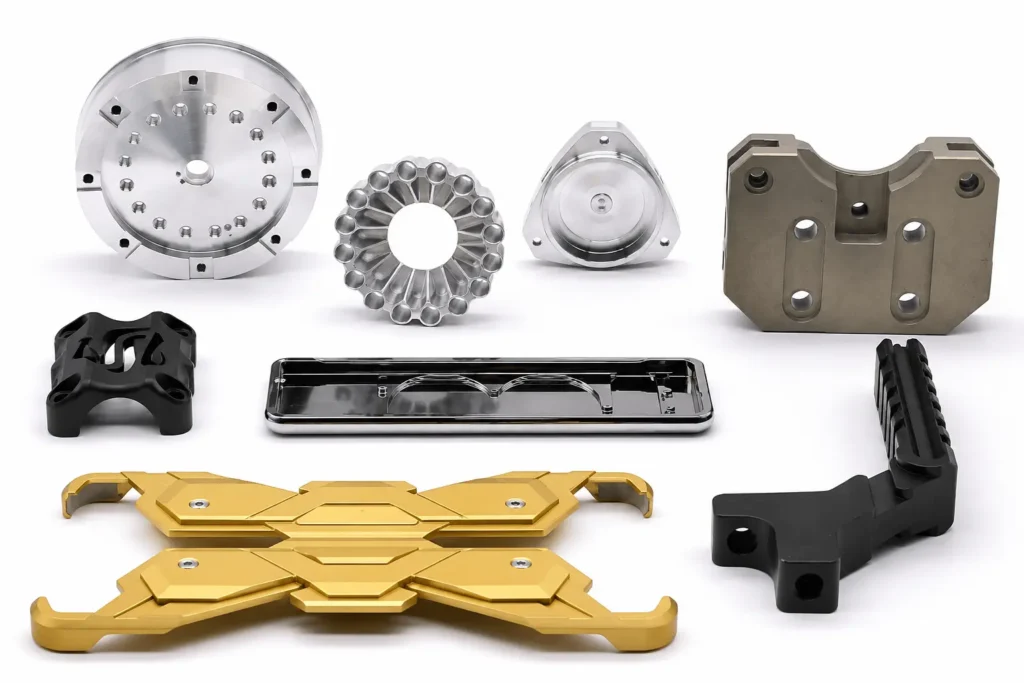
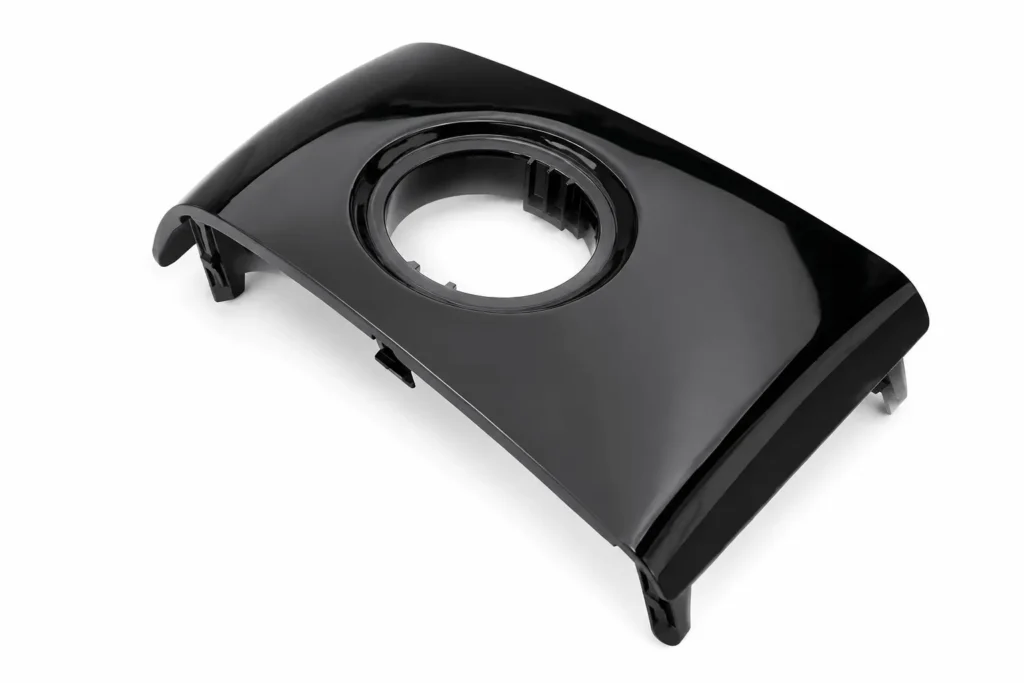
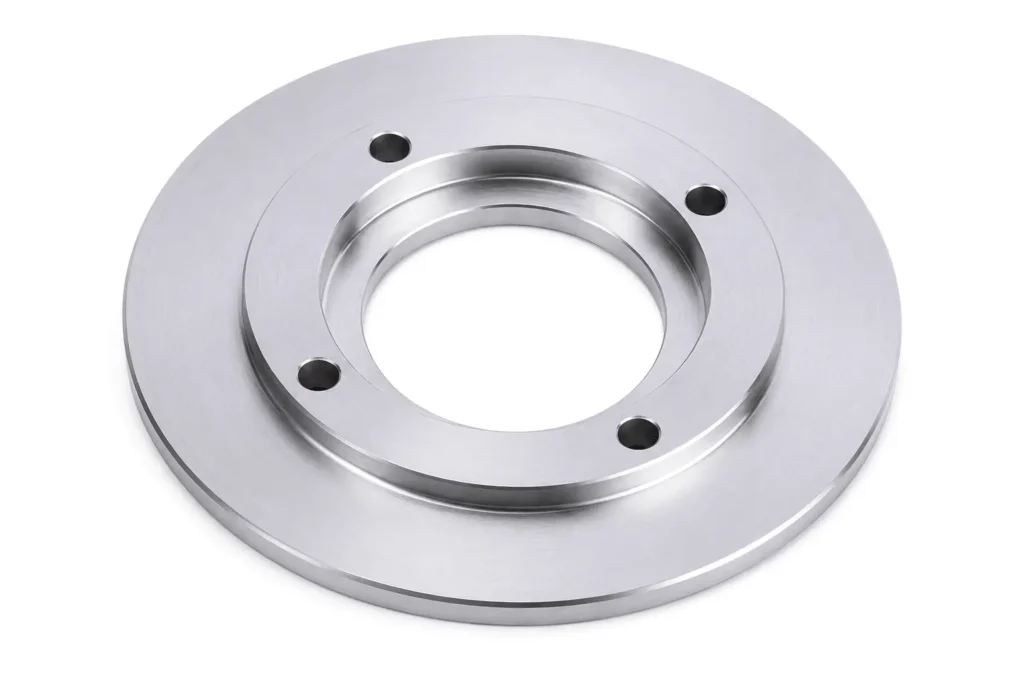
- Aluminum billets are machined into components for aerospace, automotive, electronics, medical equipment, and industrial machinery.
Introduction
Every machined aluminum part starts with a piece of stock material. In many CNC machining projects, that stock is an aluminum billet. The billet is cut to size first, then milling, turning, drilling, and other machining operations shape it into the finished component.
A billet may look like a simple bar, block, or rod, yet there is much more behind it. The alloy, temper, and internal grain structure influence how the material cuts, how chips break away, how the surface looks after machining, and how accurately the finished part matches the drawing. Two billets with the same outside dimensions can produce different machining results if their material conditions differ.
Aluminum billets are supplied in round, square, and rectangular forms with many alloy options. A small electronic housing, an automotive bracket, an aerospace fitting, and a machine fixture can all start from billet stock, though each part may require a different alloy and temper.
This article explains what an aluminum billet is, how it is produced, the common billet types and alloys, their mechanical properties, how billet aluminum compares with cast aluminum, and why billet stock remains the preferred starting material for many CNC machined components.
What Is an Aluminum Billet?
An aluminium billet is a semi-finished solid material. It usually comes in the form of rods, blocks, and square bars. It is used by many CNC workshops to produce the final components. The majority of parts start as a round bar, square block, or rectangular billet before becoming a housing, bracket, fixture, or mounting plate.
The billet is not the final product. It just supplies the material for the machining process. The material is removed until the desired dimensions and features are obtained. To minimize waste and machining time, billet size and alloy are determined based on the part geometry/drawing.
How an Aluminum Billet Is Made

- The first step is to melt the aluminum and add the necessary alloying elements.
- The molten metal is solidified into a billet by the Direct Chill (DC) casting process.
- The billet is heated after casting to enhance grain structure before machining.
- It is then cut to standard lengths and checked for surface defects.
- The manufactured billets are delivered as stock material for CNC, extrusion, or forging.
Why Aluminum Billets Are Used for CNC Machining
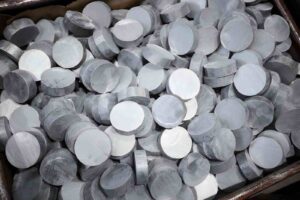
Any material that cuts evenly from end to end is ideal for the CNC machine. Billets give that foundation.
These appear more predictable when cut, resulting in smoother surfaces and precise features. It also has higher cutting speed than many other engineering metals, thus reducing the machining time.
The other benefit is the alloy selection. The material properties can be chosen to meet the strength, corrosion resistance, weight, and machining requirements of the finished part, with billets available in a variety of grades, including 6061, 6082, 7075, and 2024.
Types of Aluminum Billets
Aluminum billets are not available in a fixed form. Typically, the billet is chosen based on the part design and the manufacturing process. Machining less material with stock that is closer to the part shape results in lower part machining time, less material removed, and lower material waste.
Round Aluminum Billets
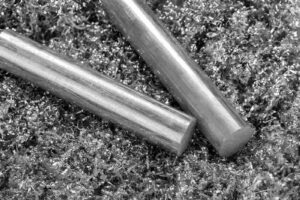
Round billets are primarily used for parts with circular features. They are usually manufactured on a CNC lathe where the material is rotating at a consistent speed while being cut.
This begins with a round billet, eliminating the need to machine the corners off a square block. This not only saves machining time and material, but is particularly beneficial for shafts, rollers, bushings, and flanges.
Square Aluminum Billets
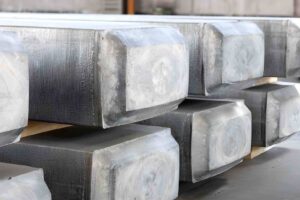
A square billet is suitable for parts that are already flat. They tend to be attached directly to a milling machine, and are simple to set up.
This billet is often used for fixture blocks, mounting plates, machine parts, and tooling because it is not as rough as the other types of billets before being finished.
Rectangular Aluminum Billets
For long and wide parts, rectangular billets are selected. They are an effective method of holding stock on large flat surfaces and avoiding any waste of material in a thicker block.
Usually employed to create base plates, equipment panels, brackets, heat sink bases, and structural components that need more length than width.
Extrusion Aluminum Billets
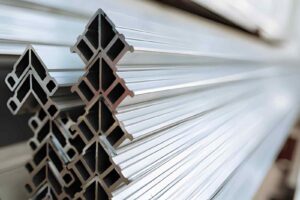
Extrusion billets are not used to make finished parts. Rather, they are heated and extruded through a die to create long aluminium profiles of the same cross-sectional area at both ends.
These are then cut to size and can be further CNC processed with holes, slots, threads and other features.
Forging Aluminum Billets
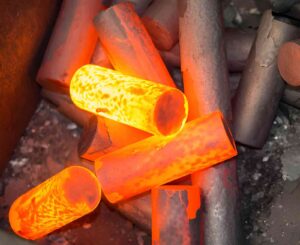
Billets are forged into a near-net shape before CNC machining. The billet is heated and pressed into its shape, providing a better grain flow of the material and making it stronger in areas of high load.
It is used in manufacturing suspension parts, aerospace fittings, connecting rods, wheel hubs, and other heavy-load parts.
Types of Aluminum Billets Comparison
The table below compares the types of aluminum billets based on their cross-section, size ranges, typical manufacturing process, and applications.
| Billet Type | Cross Section | Common Size Range* | Primary Manufacturing Process | Typical CNC Operations | Common Parts |
| Round Billet | Circular | Ø50 – 600 mm | Turning, Extrusion | Turning, Drilling, Boring | Shafts, Bushings, Rollers, Flanges, Spacers |
| Square Billet | Square | 50×50 – 300×300 mm | Milling, Forging | Milling, Drilling, Tapping | Fixture Blocks, Tooling, Mounting Blocks, Machine Parts |
| Rectangular Billet | Rectangular | Thickness 20 – 300 mm | Milling | Face Milling, Pocket Milling, Drilling | Base Plates, Brackets, Heat Sink Bases, Equipment Panels |
| Extrusion Billet | Round | Ø100 – 500 mm | Extrusion | Secondary Milling, Drilling, Tapping | Aluminum Profiles, Frames, Rails, Heat Sinks, Channels |
| Forging Billet | Round / Square | Application dependent | Closed-die / Open-die Forging | Finish Milling, Turning, Drilling | Wheel Hubs, Connecting Rods, Suspension Parts, Aerospace Fittings |
Common size ranges vary by manufacturer.
What are the Common Types of Aluminum Billet Alloys?
Different aluminum alloys are available in billet form, and each one machines a little differently. The alloy is usually selected based on the required strength, corrosion resistance, machining behavior, and the part’s working conditions.
| Alloy | Strength | Machinability | Corrosion Resistance | Typical Applications |
| 6061-T6 | High | Excellent | Excellent | General CNC parts, brackets, housings, fixtures |
| 6063-T5 | Medium | Good | Excellent | Extruded profiles, frames, architectural parts |
| 6082-T6 | High | Good | Good | Structural components, machine parts, plates |
| 7075-T6 | Very High | Good | Fair | Aerospace fittings, moulds, high-load components |
| 2024-T4 | High | Fair | Fair | Aircraft structures, mechanical components |
| 5052-H32 | Medium | Good | Excellent | Marine fittings, panels, enclosures, covers |
Please Note: Temper designation also affects the machining performance of an aluminum billet. For example, 6061-T6 machines more easily than annealed 6061-O, while 7075-T6 is commonly selected for parts that require higher strength.
Mechanical Properties of Aluminum Billets
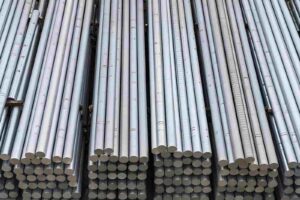
The mechanical properties of an aluminum billet vary with the alloy and temper. Before selecting a billet, these values are usually checked to confirm that the material matches the part requirements.
Typical Mechanical Properties of Common Aluminum Billets
| Property | Typical Value |
| Density | 2.68 to 2.81 g/cm³ |
| Tensile Strength | 170 to 570 MPa |
| Yield Strength | 55 to 505 MPa |
| Hardness | 45 to 160 HB |
| Elastic Modulus | 68–72 GPa |
| Thermal Conductivity | 120 to 235 W/m·K |
| Electrical Conductivity | 30 to 62% IACS |
| Melting Range | 477 to 660°C |
The Values vary by alloy and temper.
Quick Tips For Selection
- Compare the property values with the part drawing before selecting the billet.
- Higher-strength billets usually require higher cutting forces than softer aluminum alloys.
- Harder billets can increase cutting tool wear during long machining cycles.
- Parts that transfer heat, such as heat sinks and electronic housings, often use alloys with higher thermal conductivity.
- Always check the material certificate to confirm the alloy, temper, and mechanical properties before machining.
Aluminum Billet Manufacturing Process
An aluminium billet goes through several manufacturing stages before it gets to a CNC machine. These steps produce aluminum billets with the required alloy composition, size, and quality for machining.
Alloy Preparation
The process starts by melting aluminum and adding the required alloying elements. The quantity of each element is controlled to give the desired aluminum grade, for example, 6061 or 7075.
Direct Chill (DC) Casting
The molten aluminum is poured into a mold, and the billet is cooled. It’s a casting technique that is broadly adopted and yields billets of standard sizes for additional processing.
Homogenization
After casting, the billet is put into a furnace and maintained at a controlled temperature for several hours. This prepares the material for either machining, extrusion, or forging.
Billet Cutting
Once cooled, long billets are cut to standard length. The size of the billet is determined based on the customer’s order or the subsequent manufacturing process.
Quality Inspection
Each billet is checked before it leaves the factory. Typically, the inspection involves billet size, surface condition, alloy type, and material certificate.
What’s the Difference Between Billet Aluminum vs Cast Aluminum
Billet aluminum and cast aluminum both start from molten aluminum. But they follow different manufacturing routes.
The below highlights the common differences between billet aluminum vs cast aluminum.
| Factor | Billet Aluminum | Cast Aluminum |
| Manufacturing Method | Billet casting, CNC machining | Near-net-shape casting |
| Material Structure | Uniform wrought structure | Cast dendritic structure |
| Internal Porosity | Very low | Low to moderate |
| Mechanical Strength | Higher | Moderate |
| Machining Performance | Stable cutting, good chip formation | Varies with casting quality |
| Surface Finish | Smooth machined finish | May require additional machining |
| Material Cost | $$$ | $$ |
| Typical Applications | Precision machined parts, aerospace fittings, fixtures | Pump housings, engine blocks, valve bodies |
Applications of Aluminum Billets
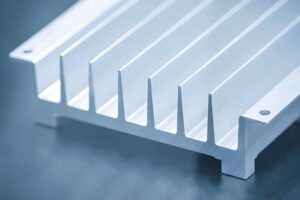
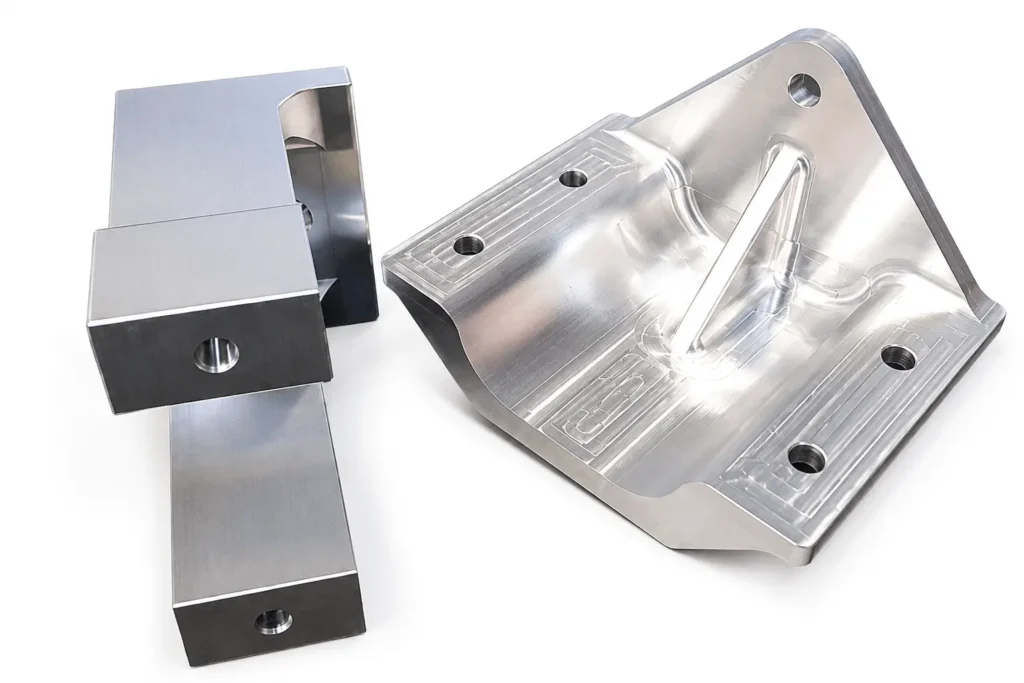
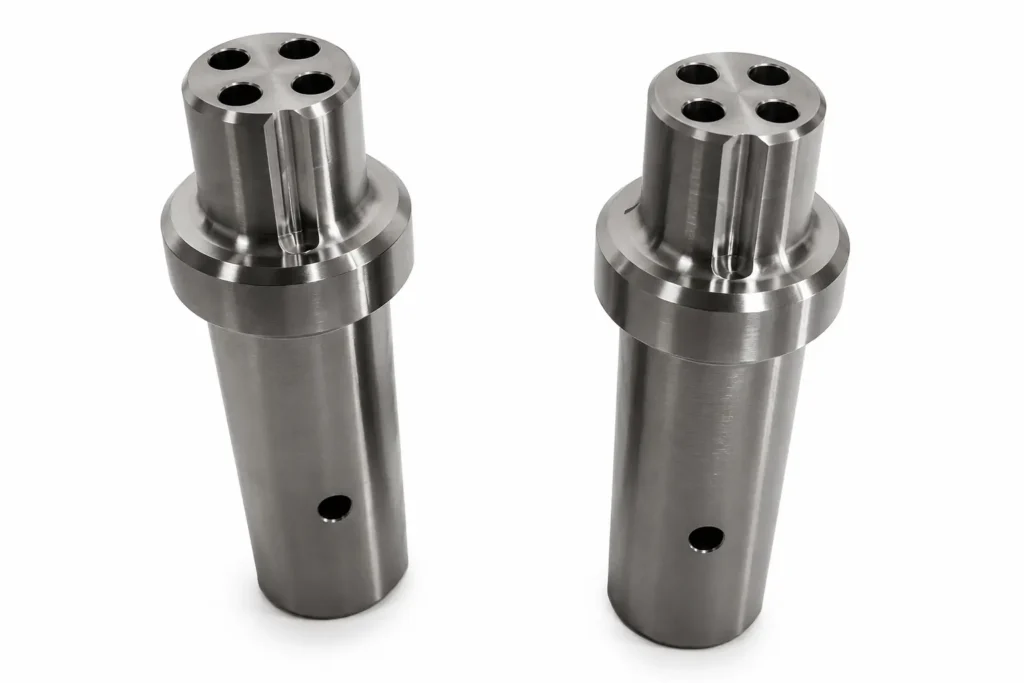
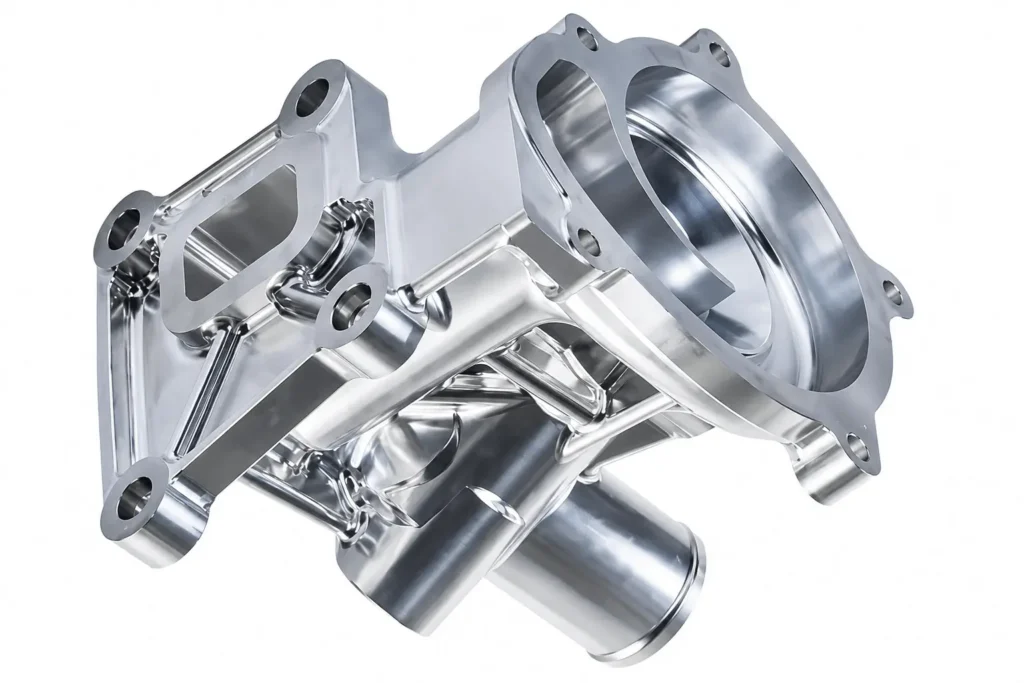
Aluminum billets are machined into housings, brackets, frames, heat sinks, shafts, and other components that require low weight and reliable mechanical performance. In aluminum CNC machining, billet grade, temper, part geometry, tolerance, and surface finish all affect the machining method and final result.
Here are the common part examples:
- Brackets
- Mounting plates
- Machine fixtures
- Valve bodies
- Heat sinks
- Electronic enclosures
- Gearbox housings
- Hydraulic manifolds
- Wheel hubs
- Brake calipers
- Aircraft fittings
- Robot arm components
- Surgical instrument handles
- Sensor housings
- Bearing housings
How to Select the Right Aluminum Billet Type
Part drawing is the foremost step in the selection of an aluminum billet. Alloy, billet size, and temper help facilitate the machining process and to meet the requirements of the finished part. Considering these factors before production will minimize unnecessary machining, material waste, and production expense.
Alloy Selection
The alloy should be consistent with the mechanical and environmental requirements for the part. 6061 alloy, for instance, is frequently selected for general CNC machining. Whereas 7075 alloy is preferred when components need to have maximum strength.
Billet Size
Choose a billet that is slightly oversized for the desired finished product. Usually, it is considered sufficient material for machining and allows for a reduction of excess stock removal with minimal machining time.
Temper Condition
Always check the drawing and material specification for the temper indicated. The same alloy can have different mechanical properties and different machining characteristics, depending on the temper condition of the metal (T6, T651, etc.).
Mechanical Requirements
Also, check the mechanical properties required before choosing the billet for the application: The material should be able to satisfy the design requirements, but not use a higher grade of alloy than required.
Corrosion Resistance
Think about the environment where the final component will be used. An alloy with appropriate corrosion resistance should be used for components that come into contact with moisture, chemicals, or the outside environment.
Surface Finish Requirements
When anodizing, powder coating, polishing, or bead blasting, be sure the chosen alloy can be finished in the desired manner and appearance.
Material Cost
The higher strength grades are more expensive than the standard grades for machining. Choose the billet that meets the requirements of the drawing and does not go overboard with material costs.
Custom Aluminum Billet CNC Machining at YD Rapid
At YD Rapid, we machine aluminum billets into custom parts based on your drawings and specifications. We work with common billet grades such as 6061, 6082, 7075, 2024, and 5052, producing everything from simple machined parts to complex components with multiple features.
Before machining begins, our engineers review the drawing, material selection, billet size, and critical dimensions to identify potential manufacturing issues early. Once approved, the parts are produced using CNC milling and turning, followed by the required surface finishing and final inspection before shipment.
Whether you need a few prototype parts to verify a design or a production order for ongoing supply, our team is ready to support your project. Send us your CAD file or technical drawing, and we’ll review it and provide a quotation with material recommendations and manufacturing feedback.

FAQs About Aluminum Billets
What is an aluminum billet?
An aluminum billet is a solid piece of aluminum that serves as the starting stock for manufacturing. It is supplied in standard shapes and sizes, then machined, extruded, or forged into finished components. Many precision CNC parts begin with an aluminum billet before any material is removed.
How is an aluminum billet made?
The process starts by melting aluminum and adding the required alloying elements. The molten metal is cast into a solid billet using the Direct Chill (DC) casting process. After casting, the billet is heat treated, cut to standard lengths, and inspected before it is shipped to manufacturers.
Which aluminum billet alloy is best for CNC machining?
No one alloy fits all applications. 6061-T6 is commonly used for general-purpose machining applications due to its good strength, corrosion-resistant, and machining properties. 7075-T6 is typically chosen for use in parts requiring greater strength, while 5052 is used in parts that are prone to moisture and corrosive environments.
What is the difference between billet aluminum and cast aluminum?
The difference is only minor; the material is used differently. Billet aluminum is a solid stock that is cut to create the final product. Cast aluminium is cast into a mould that is already similar to the final product. Precision-machined parts are often made from billet aluminum, and cast aluminum is popular for parts that have complicated shapes.
Can aluminum billets be heat treated?
A variety of heat-treated tempers are available for many alloys of aluminum billets. Typical grades used include 6061, 6082, 2024, and 7075, in tempers such as T6 and T651 for various applications.
What industries use aluminum billets?
The billet of aluminum is processed into aerospace, auto, electronic, medical equipment, industrial machine, robot, ship, and other engineering parts and products. They can be used for prototype development or for production machining.
Why are aluminum billets preferred for precision machining?
Aluminum billets provide a stable starting material for CNC machining. They cut cleanly, support accurate machining, and are available in a wide range of alloys and sizes.