Key Takeaways
- Titanium anodizing changes the oxide layer that already exists on titanium.
- It does not add another coating on top.
- The oxide layer is very thin. Therefore, you normally do not need to worry about changes in part size.
- The voltage used during anodizing controls the color you see on the surface.
- The surface finish before anodizing affects the final appearance. Tool marks and scratches can still show.
- Titanium anodizing helps with part identification, electrical insulation, and surface protection.
Introduction
A machined titanium part is not always ready to go straight into assembly. In many cases, the surface needs one more step before the part is used. Titanium anodizing is often chosen at this stage. It simply changes the outer surface and keeps the original shape and dimensions of the machined component.
The part condition before anodizing has a direct effect on the final finish. If the surface has visible tool marks, scratches, and polishing lines, anodizing will not cover them.
Instead, the oxide layer forms over the same surface, so any existing marks may still appear after processing.
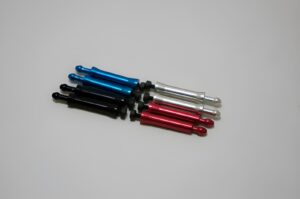
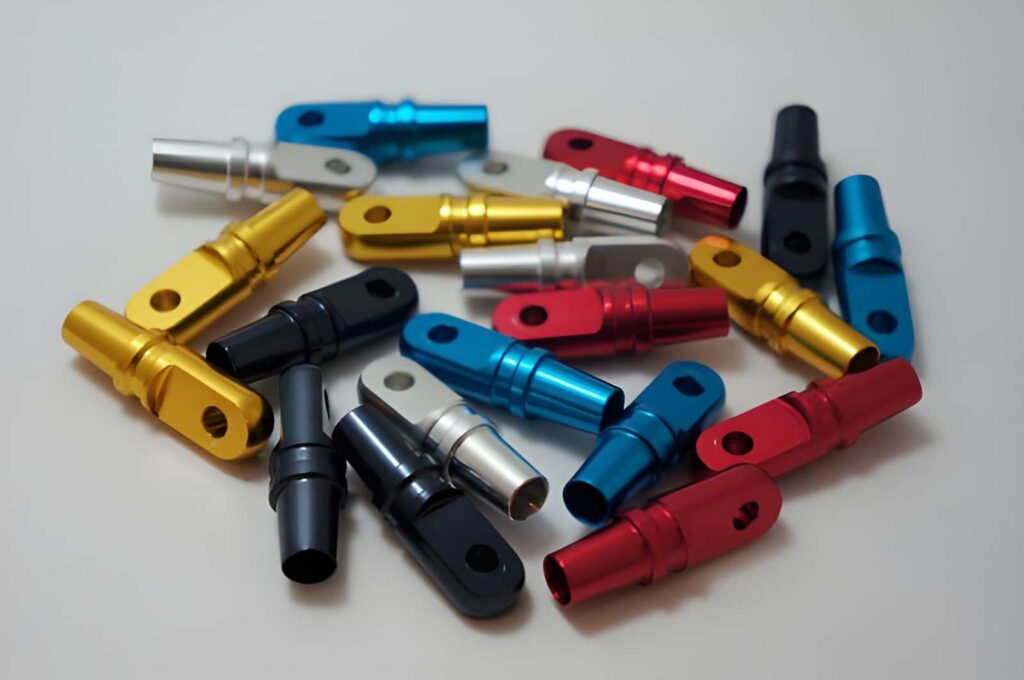
The primary reason that titanium parts are anodized is to create clear color differences on the surface. The color does not come from paint or a coating. In fact, it appears when the anodizing process changes the thickness of the oxide layer through voltage control.
These colors are often used to separate similar parts during assembly. While the oxide layer also adds electrical insulation and extra surface protection.
In this guide, we will cover:
- How titanium anodizing works,
- Grades suitable for anodizing, Pros, Cons, and CNC applications
- What you should check before sending CNC titanium parts for anodizing.
What Is Titanium Anodizing?
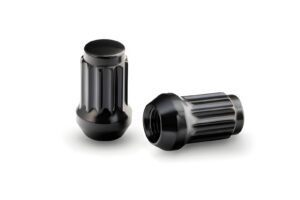
Titanium anodizing is a surface finish treatment. It is used to modify the natural oxide layer that already exists on titanium.
Unlike paint or plating, it does not add another material to the part; the process increases the oxide layer thickness directly on the titanium surface, keeping the original shape and dimensions.
On the application side, titanium anodizing is used for parts that need:
- Color identification
- Electrical insulation
- Extra surface protection
- Cleaner finished appearance after machining.
What Happens to the Surface During Anodizing?
During anodizing, the titanium surface itself does not change, as the main change happens only in the thin oxide layer on the outside.
Simply put, the anodizing process does not rebuild the surface. It works with the surface you already have.
During the process:
- The natural oxide layer becomes thicker.
- The oxide thickness creates the visible color.
- The titanium underneath keeps its original dimensions.
- Existing surface marks may remain visible.
How Does the Titanium Anodizing Process Work?
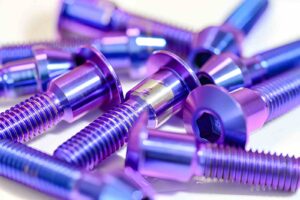
The final anodized finish is determined before the titanium part is placed in the anodizing tank. Safety precautions, such as surface cleanliness, voltage settings, and handling of the part, can affect the outcome you see at the end of the process.
If a part is not properly prepared, it may result in an inconsistent color, marks, and a surface area that is different from the remainder of the part.
Step 1: Surface Preparation
After machining, the parts may retain cutting oil, coolant residue, fingerprints, and other contaminants, which are by no means obvious. So the surface of the titanium part is properly cleaned before the anodizing process.
Machining marks and scratches should also be prevented since the anodizing layer only covers the existing surface.
Step 2: Anodizing Process
- After cleaning the part, it goes into an electrolyte solution.
- Further, it is connected to a power supply. The electrical current thickens the natural oxide layer that is formed on the surface of the titanium.
- The voltage controls the oxide layer thickness and hence the final colour.
Step 3: Final Cleaning and Inspection
The part is then cleaned after anodizing to remove any residual solution, before proceeding to assembly or post-machining.
When inspecting, engineers typically check for the following:
- Variations in color over the surface
- Unwanted stains or discolorations
- Handling marks
- Specific regions to avoid treatment
- The final surface condition
Why Does Titanium Anodizing Produce Different Colors?
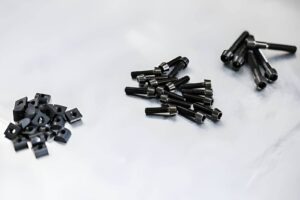
The anodized color is not painted or coated. It is due to the thin oxide layer that already exists on the surface being altered by the anodizing process.
The thicker the oxide layer, the more it affects the way light reflects from the titanium. Therefore, the same material can exhibit various colors such as:
- Blue, Purple, Gold, and Green, without altering the metal.
It is usually challenging to get the same color on each part. There are a couple of factors that may impact the possible color:
- Voltage: If the voltage is changed slightly, the thickness of the oxide and its color will be affected.
- Color: It may look differently if the surface is marred or polished with tooling or scratches.
- Grade of material: Other grades of titanium can yield different shades.
- Cleaning: Any oils and residue on the surface can create an uneven surface.
How Does Voltage Change the Anodizing Color?
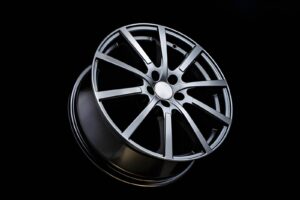
The anodizing colour is primarily controlled by adjusting the voltage. Based on a principle:
- The higher the voltage, the thicker the oxide layer, and the lower the voltage, the thinner the oxide layer. The colour will also change as the oxide thickness changes, so light is reflected differently.
But voltage is not the final factor. The pre-treatment of the titanium surface will also directly impact the condition. Generally, a well-prepared surface will produce a more uniform color, and tool marks, scratches, and polishing inconsistencies may remain after processing.
If color matching is your primary concern, then you will need to maintain uniformity with the anodizing parameters as well as the surface preparation. It is important to pay close attention to both steps, as it can make a big difference in the result.
Common Titanium Anodizing Color Chart
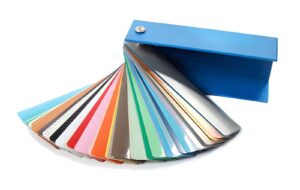
The values below show common voltage ranges used to achieve different appearances.
| Voltage (Approx.) | Typical Color | Common Applications |
| 10 to 15 V | Bronze | Part identification, prototypes |
| 15 to 20 V | Purple | Medical instruments, custom components |
| 20 to 30 V | Blue | Aerospace parts, engineering components |
| 30 to 45 V | Light Blue | Consumer products, decorative components |
| 45 to 55 V | Yellow | Assembly identification |
| 55 to 70 V | Magenta | Industrial equipment |
| 70 to 85 V | Green | Product identification |
| 85 to 100 V | Light Green | Specialty components |
| 100 to 110 V | Pink | Custom products |
| 110 to 120 V | Gold | Decorative and premium components |
Why Can Two Machined Titanium Parts Have Different Colors?
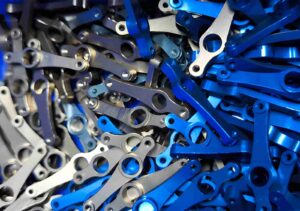
If two identical titanium parts are anodized at the same voltage and show slightly different colors, the process here is usually not the only reason.
For instance, it can be due to:
- Different surface finishes can reflect light differently.
- Titanium grades may produce slightly different colors.
- Small voltage changes can affect oxide thickness.
- Cleaning residue, oil, or fingerprints can create uneven areas.
- Complex shapes may show slight color differences across the surface.
Which Titanium Grades Can Be Anodized?
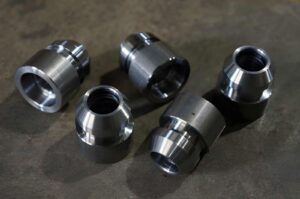
Anodizing is commonly used on aluminum parts; however, it can also apply to some grades of titanium. It is not always possible to obtain the same colour from all grades.
Various variables influence the formation of the oxide layer: alloy chemistry, machining finish and surface condition.
This is why two parts of titanium can be anodized at the same setting, but entail slightly different shades. When colour matching is your main concern, it is recommended to sample a part before commencing a full batch production.
Commercially Pure Titanium
For a clean and uniform anodized finish, commercially pure titanium is usually the preferred choice. It typically reacts well to the process and provides a stable colour if the surface is properly prepared.
This grade is frequently used for medical parts, chemical equipment, and industrial parts in which surface appearance and corrosion resistance remain important factors.
Ti-6Al-4V (Grade 5)
Ti-6Al-4V, or Grade 5 titanium, is the most popular machinable titanium alloy. It is widely used in a variety of applications, including aerospace, medical, and performance parts, due to its lightweight yet high-strength properties.
Anodised can be done successfully with it, but it may not be the same color as commercially pure titanium. For a special color, it is preferable to obtain a sample first for confirmation before production.
Common Titanium Grades for Anodizing
Here are the typical titanium grades suitable for anodizing:
| Titanium Grade | Typical Anodizing Result | Common Applications |
| Grade 1 | Smooth finish with consistent colors | Medical parts, chemical equipment |
| Grade 2 | Stable colors for general applications | Industrial, marine components |
| Grade 5 (Ti-6Al-4V) | Good colors with slight shade changes | Aerospace, medical, automotive parts |
| Grade 7 | Similar results to Grade 2 | Chemical processing equipment |
| Grade 23 | Even finish for precision parts | Surgical instruments, medical devices |
What Benefits Does Titanium Anodizing Provide?
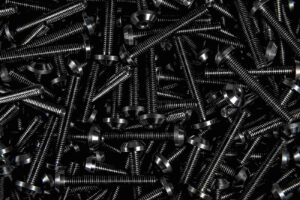
Titanium anodizing improves the surface performance and appearance of titanium parts while keeping the original machined dimensions. The main benefits include:
- Better corrosion protection
- Improved surface wear resistance
- Electrical insulation
- Easy part identification through color
- Enhanced surface appearance
- Minimal dimensional change
- Better control of visible surface finish
What Are the Limitations of Titanium Anodizing?
Titanium anodizing can improve the surface, but it cannot correct problems created during machining.
Factors that affect the finish include:
- Machining marks.
- Surface preparation.
- Cleaning quality.
- Anodizing control.
Knowing these limits helps you avoid unexpected results after processing.
Color Matching Can Be Difficult
The little variations in the process can alter the final look, such as:
- Anodizing voltage
- Surface finish
- Titanium grade
- Cleaning condition
That’s why it’s common practice for manufacturers to test a sample part before starting anodizing a full production batch.
Surface Finish Changes the Final Look
Unlike anodizing, which does not obliterate the original surface of the titanium. Follows existing texture of the part. Machining lines, scratches, and polishing marks can also be seen after anodizing if they are on the surface.
Not Needed for Every Part
All titanium parts don’t require anodizing. Some parts just need to be accurately sized, machined, and fit. In this instance, a supplemental finishing process may be necessary to extend the manufacturing process but will not be beneficial process.
The Surface Can Still Scratch
The anodized oxide film is harder than untreated titanium, but it can be damaged. Even with sharp tools, rough handling, and improper storage can leave a mark on the surface.
Which Titanium Parts Are Commonly Anodized for Custom Applications?
Here are some typical titanium part examples that are commonly anodized for custom applications:
Medical Components
Medical components frequently come in many shapes/forms and require clear identification due to the similarity of many components. Anodized colors make it easy to distinguish between versions/sizes without labels or markings.
Titanium anodizing is mostly used for surgical tools, dental components, bone plates, and dental implant parts. The process also maintains the lightness of the titanium and gives it a more controlled surface finish.
Aerospace Parts
Titanium has extensive use in the aerospace industry. It offers high strength with reduced weight. Usually, custom brackets, fasteners, housings, and fittings are anodized after machining and before they are assembled.
In these instances, the colour is not just for looks. It can be used to help teams identify parts during installation, and the oxide layer can give surface protection in harsh environments.
Robotics Components
Robotic systems are typically made up of numerous small components. These must be assembled properly. Anodized parts can be assembled with relative ease because of the color differences. This is particularly true of parts with similar shapes.
Anodized titanium can be beneficial in mounting brackets for sensors, sensor holders,s and other lightweight frames. The finish also protects surfaces exposed to daily use and contact.
Automotive Performance Parts
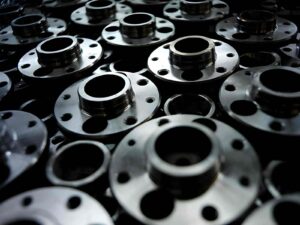
For automotive and motorcycle parts, anodizing is often chosen because the component remains visible after installation. Titanium fasteners, pedals, suspension parts, and engine accessories can gain a colored finish without using paint.
The process keeps the metallic look of titanium while adding a cleaner appearance for performance builds and custom applications.
Consumer Electronics
In consumer products, appearance is often just as important as function. Titanium cases, watch components, camera parts, and device frames may use anodizing to create different colors while keeping the natural feel of the metal.
Unlike painted surfaces, anodizing does not cover the titanium with another layer. The color comes from the surface itself, which helps maintain the original material character.
What Design Considerations Can Help Before Titanium Anodizing?
Many anodizing issues can be avoided before the part ever reaches the finishing stage. The way you design the part, machine the features, and handle the surface before anodizing will show in the final result.
A few details that seem minor during machining can become obvious after anodizing. Planning for them early saves you from rework and helps you get a more consistent finish.
Surface Finish Requirements
Anodizing does not smooth out the titanium surface. Whatever texture is left after machining will still be there.
For instance, if tools, scratches, or polishing marks can be seen before anodizing, they will most likely be visible after anodizing. For a clean look, it is better to select the surface finish before machining rather than after anodizing.
Hole and Thread Considerations
Details can cause issues when cleaning. Cutting oils or small chips generated during machining can be trapped in deep holes, narrow slots, or threaded areas.
Cleaning can be more difficult if access is difficult in these areas. Aim for a design that will afford easier access for proper preparation before anodizing.
Electrical Contact Points
Anodized parts must have an electrical connection to them. The area that will be used for this connection will not be the same as the rest of the surface.
For this reason, manufacturers typically locate the contact point in an area out of sight (on an internal surface or on a non-critical area). Properly planned in the design, the location ensures the preservation of final appearance.
Part Handling During Processing
The part can still pick up marks after anodizing. Fingerprints, scratches, or contact with rough surfaces may affect the finished look.
Careful handling between anodizing, inspection, and assembly helps keep the surface clean and prevents avoidable damage.
How Can You Choose the Right Titanium Anodizing Service?
Choosing an anodizing supplier is not only about finding the lowest price. The finishing process can change how your titanium parts look and how consistent they are from one batch to the next.
Before sending out your parts, it helps to understand how the supplier manages the anodizing process, checks the finished surface, and handles color requirements.
Process Control
The control of small details makes for a consistent anodized finish. The final colour and surface appearance are influenced by the process parameters, cleaning, and/or the voltage settings.
When looking into a supplier, inquire how they handle these steps. It’s also important to verify if they are experienced with anodizing other types of grades of titanium, as this may not work with all materials.
Inspection Capability
A finished titanium part should not only be correct, but it should look correct. It should also conform to the requirements on your drawing.
A good supplier will have a clear inspection procedure to ensure the colour, condition of the surface and any areas requiring protection or masking are correct. This is particularly important when components are incorporated into assemblies where fit and appearance are important.
Color Consistency
It can be difficult to get the titanium colour to match between different components. The final color can vary depending on minor variations in surface preparation, material, or anodizing parameters.
If color is a critical part of your project, it is advisable to discuss color options before production. You can get a sample part and process it first to ensure the finish before placing the order.
CNC Machining and Anodizing in One Facility
Titanium parts intended for anodizing must be machined with the final surface appearance in mind. Tool marks, scratches, sharp edges, and inconsistent polishing can remain visible after treatment. Coordinating titanium CNC machining with anodizing helps control these details before the parts enter the finishing stage.
Working with a supplier that handles both CNC machining and anodizing can make the process easier. The same team can follow the drawings, understand the surface requirements, and manage the part from machining through final finishing.
Need CNC Machining and Titanium Anodizing Support?
Getting the machining and finishing steps right from the beginning helps avoid surface issues, color differences, and delays during production. Clear CNC drawings and finishing requirements allow the manufacturing team to understand your part needs before machining starts.
A proper review of your design helps identify surface finish requirements, anodizing areas, critical dimensions, and inspection points. This makes communication easier between engineers, machinists, and finishing teams throughout the process.
Need CNC machined titanium parts with anodizing and surface finishing? YD Rapid provides CNC machining, titanium anodizing, and finishing services with support for material selection, surface requirements, and production planning. You can simply share your drawings or CAD files with our team to discuss your project and find the right finishing approach.

FAQ’s
Does titanium anodizing change the size of a CNC machined part?
No, titanium anodizing usually does not create a noticeable size change in CNC machined parts. The process only thickens the natural oxide layer on the surface, which is extremely thin. Most parts can be anodized without affecting their fit or assembly.
Is titanium anodizing used only for corrosion protection?
No, corrosion protection is only one use of titanium anodizing. Manufacturers also use it to create electrical insulation, add color identification, and improve the appearance of visible titanium parts.
Can you anodize Grade 5 titanium?
Yes, Grade 5 titanium can be anodized and is one of the most common titanium alloys used for machined parts. However, it may produce a different color compared with commercially pure titanium because the alloy composition changes the oxide formation.
Why does not every anodized titanium part have the same color?
Because titanium anodizing color depends on more than just the voltage setting. The titanium grade, surface finish, cleaning process, and anodizing conditions can all affect the final shade. Even small differences can create visible color variations.
Does the anodized surface peel or wear away?
No, the anodized surface does not peel or flake because the oxide layer grows from the titanium itself. However, the finish can still be damaged by deep scratches, heavy friction, or rough handling.
Can CNC machined threads be anodized?
Yes, CNC machined threads can be anodized with the rest of the part. For precision threads, the anodizing process should be considered during design because critical fits may need additional attention.
Final Thoughts
If you are adding titanium anodizing to a CNC machined part, begin with a simple question: What should the surface do after machining? The answer usually points to the right finishing method. Reviewing the application, material, and surface requirements before production helps you avoid unnecessary processing and achieve a finish that matches the part’s intended use.