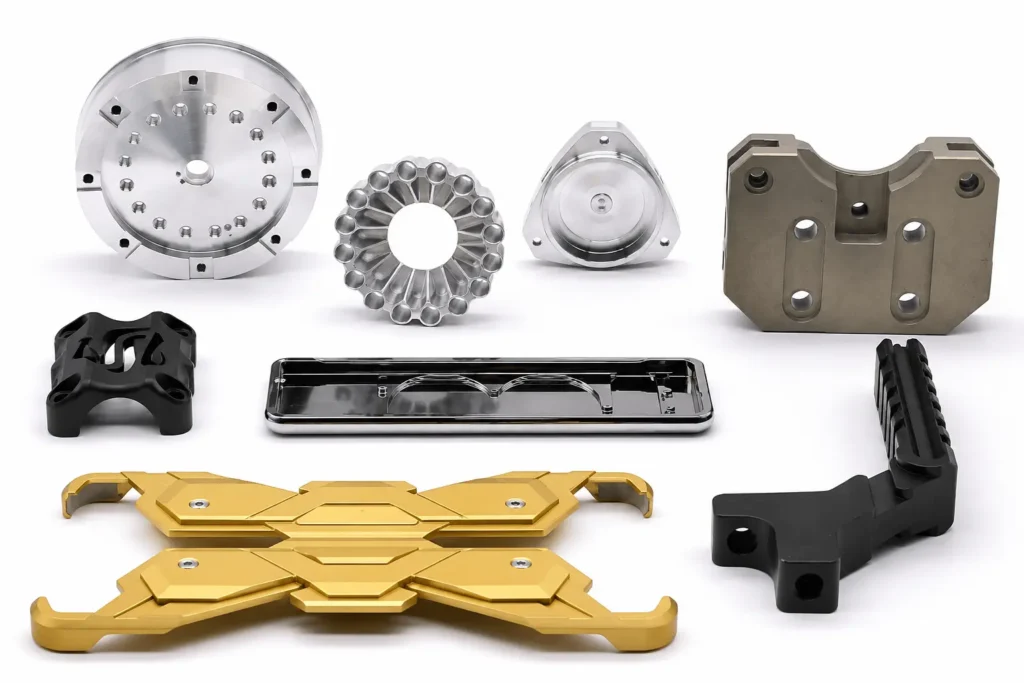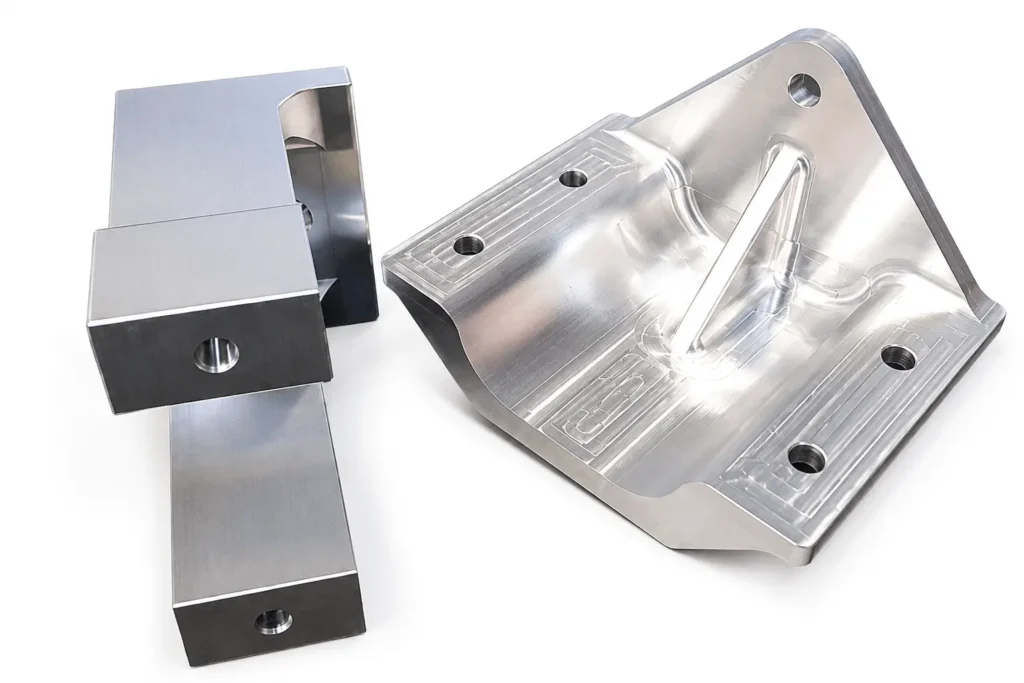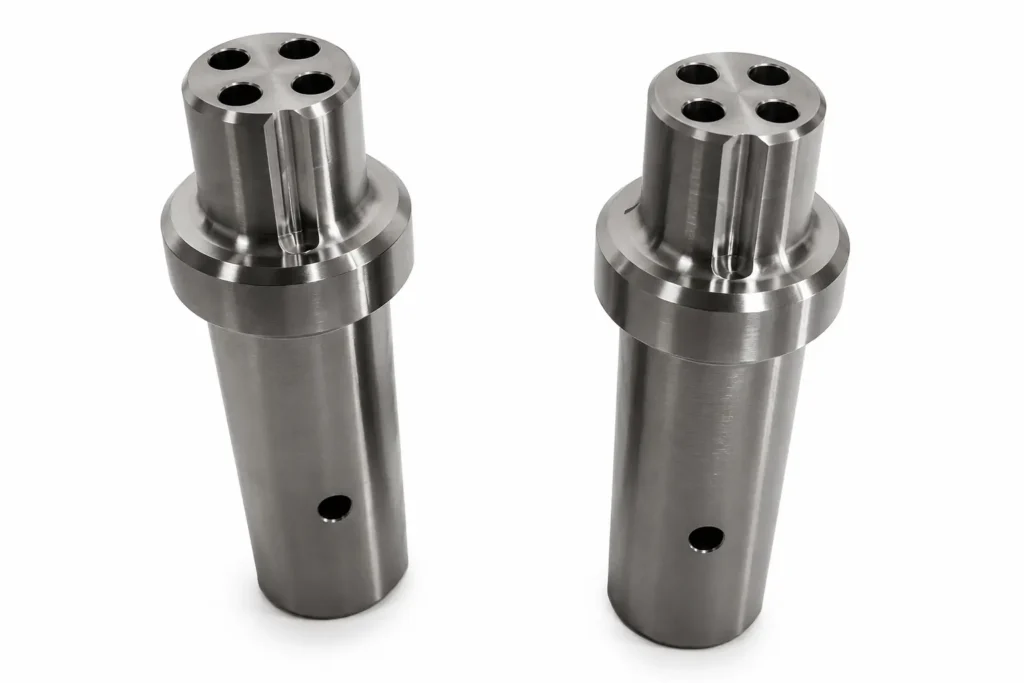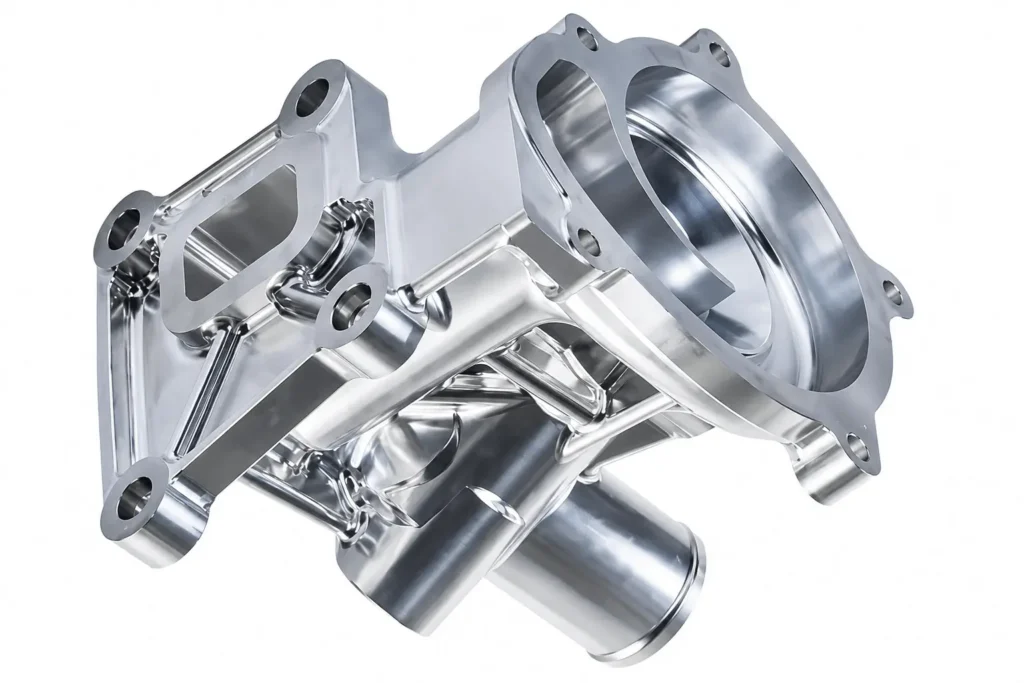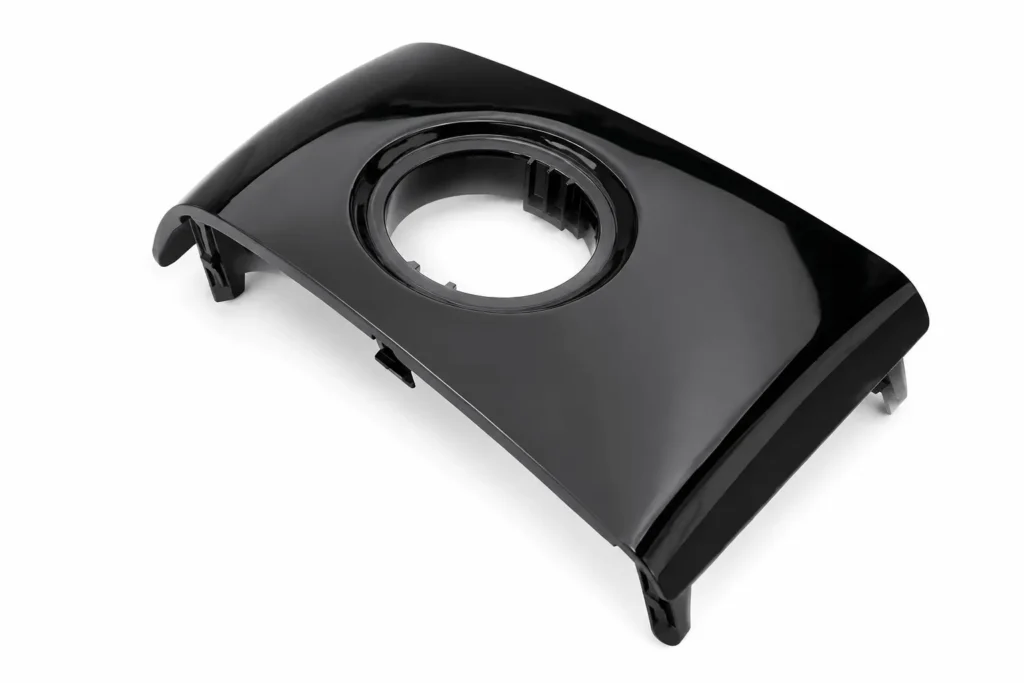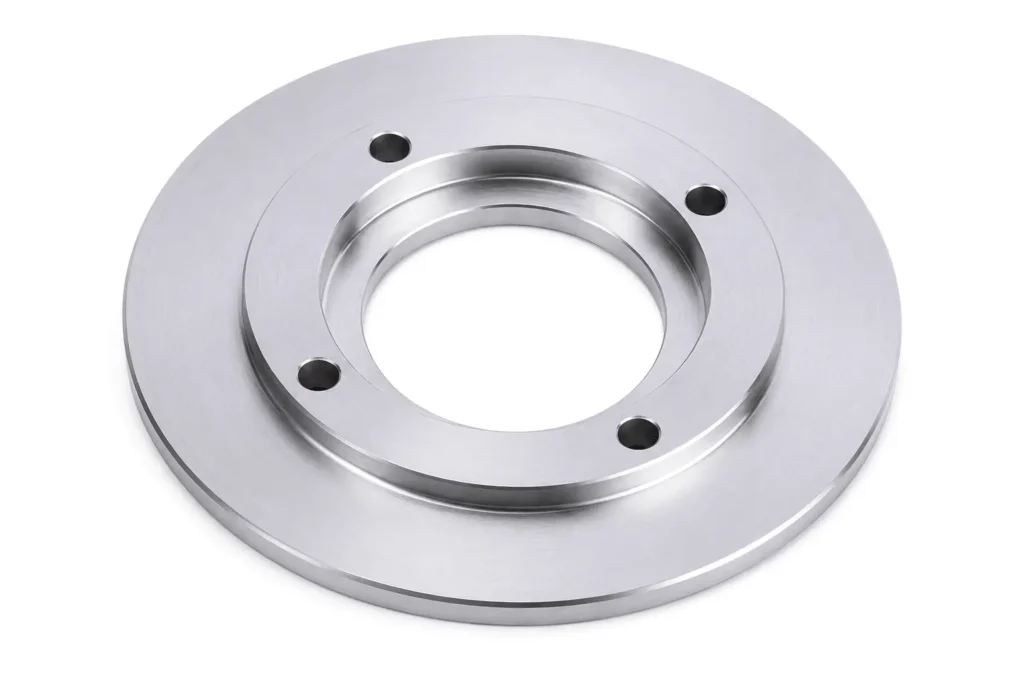
Industrial equipment, vehicles, buildings, etc., are surrounded by various metal elements that need protection from corrosion, wear, and environmental exposure over the long term. Powder coating is one of today’s best finishing techniques for metal. This state-of-the-art coating technology provides a durable, attractive, long-lasting finish that surpasses many of the traditional liquid paint systems.
Powder coating for metal parts is used in various industries, including steel frames, aluminum enclosures, automotive wheels, and outdoor furniture, where manufacturers demand high levels of protection and durability.
This guide details the advantages, applications, costs, limitations, and quality considerations of powder coating for metal parts.
Key takeaways:
- Powder coating for metal parts offers a high level of durability, corrosion resistance, and surface protection.
- Uniform application and high adherence of powder coating are achieved on intricate metal surfaces.
- To achieve the optimum performance and life of the coating, it is important that the surface is prepared correctly.
- There are many powder coat colors, textures, and finishes available to choose from with powder coating.
- Automotive, industrial, architectural, and consumer goods are typical applications for powder coatings.
- Powder coating is very durable but is not suitable for heat-sensitive materials and is not suitable for field repairs.
What is Powder Coating on Metal?
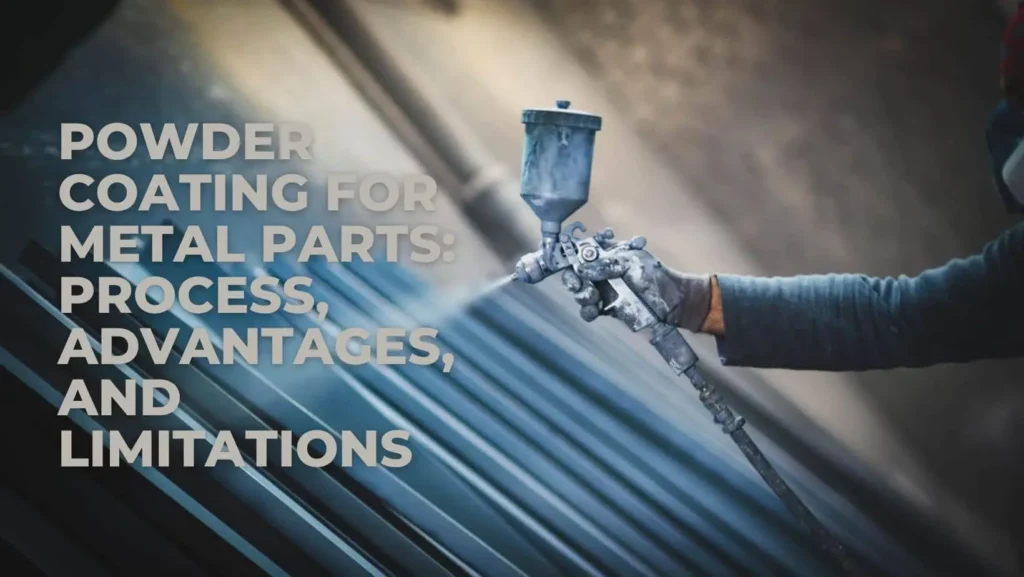
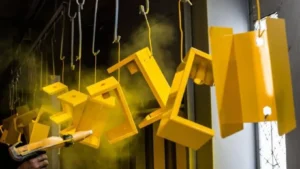
Powder coating is a dry metal finishing technique that uses a fine powder of resin and pigment particles, which are held onto a metal surface by electrostatic charge. Powder coating is different from conventional paint as it does not require liquid solvents. The powder is sprayed onto a grounded metal part and then hardened in an oven, where it melts and chemically fuses with the metal surface to form a hard protective layer.
The final coat is extremely durable, uniform, and highly resistant to weathering, chemicals, abrasion, and impact. It is also more environmentally friendly than conventional liquid painting processes, as there is no need for solvents in the process.
Today, manufacturers can choose from thousands of powder coat colors, textures, gloss levels, and specialty finishes to meet both functional and aesthetic requirements.
How Does the Powder Coating for Metal Parts Process Work?
Electrostatic powder coating is dependent on surface preparation, application, and curing. All stages are important in influencing coating performance and durability.
The procedure starts with surface cleaning. All oil, grease, dirt, rust, machining debris, and contamination need to be thoroughly eliminated to make sure that the proper adhesion is achieved. Cleaning methods may include washing, chemical degreasing, acid treatment, or abrasive blasting.
Many manufacturers will follow the clean with pretreatment processes, including phosphating or conversion coatings. These treatments increase adhesion and greatly increase powder coating corrosion resistance. Steel parts in harsh environments are usually treated with zinc phosphate and iron phosphate.
After coating, the part is placed in a curing oven, usually 160°C – 200°C, where the powder will melt, flow and chemically cross-link to form a tough protective coating. Once the coated part has cooled, it is inspected to ensure the thickness of the coating, appearance, adhesion, and overall finish quality.
Powder coating is one of the most widely used finishing methods for metal parts, but it is not the only option. Depending on the material, operating environment, and appearance requirements, anodizing, bead blasting, polishing, and other treatments may also be suitable. You can compare these processes on our Surface Finishing Services page before selecting the right finish for your project.
Why is Surface Preparation so Important Before Powder Coating?
Poor surface preparation can cause many coating failures, not the powder.
Correct cleaning eliminates the factors that hinder adhesion. Over time, weak points develop where coatings can peel or blister, such as when caused by rust, oil, scale, and machining fluids.
Pretreatment processes like phosphating cause microscopic surface structures that enhance mechanical bonding between the metal and coating. These treatments can enhance the powder coating corrosion resistance of surfaces by two to three times over untreated surfaces.
How Do Different Powder Coating Types Compare?
Selecting the right powder coating formulation is essential because each resin type offers different levels of durability, weather resistance, and chemical protection. The ideal choice depends on where the part will be used and the performance requirements.
| Powder Coating Type | Corrosion Resistance | UV Resistance | Chemical Resistance | Best Applications |
| Epoxy | Excellent | Poor | Excellent | Indoor machinery, electrical enclosures, industrial equipment |
| Polyester | Good | Excellent | Good | Outdoor furniture, automotive parts, architectural components |
| Epoxy-Polyester Hybrid | Very Good | Moderate | Very Good | General industrial applications, indoor metal parts |
| Super-Durable Polyester | Excellent | Excellent | Good | Outdoor structures, railings, building facades |
| Urethane | Excellent | Good | Excellent | Chemical processing equipment, industrial machinery |
| Fluoropolymer | Excellent | Exceptional | Excellent | Premium architectural and marine applications |
What are the benefits of Electrostatic Powder Coating?
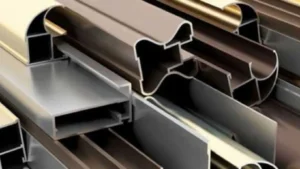
- The key to electrostatic powder coating lies in the ability of the powder particles to adhere to the grounded metal surface through electrical forces.
- This electrostatic attraction gives a more even coverage than various liquid paint systems. The powder can wrap around corners, edges, and holes.
- The overspray powder can be recovered for reuse, which can help optimize production and lower waste.
- The even coating results in uniform film thickness, better aesthetics, and greater durability.
Why is Powder Coating More Superior than Regular Paint?
The benefits of powder coating over traditional liquid paint are evident.
- The curing process forms powerful chemical cross-linking, resulting in outstanding hardness and durability.
- Powder-coated surfaces are more resistant to scratching, chipping, abrasion, and impact than many types of paint finishes.
- Powder coatings contain no significant volatile organic compounds (VOCs), unlike liquid paints, which are environmentally unfriendly due to their high VOC levels.
- The process also offers better thickness, so that it can be applied as a single coat.
- Outdoor powder coatings can last for 15-20 years or more in a normal environment.
Why is the Corrosion Resistance of Powder Coating Important for Metal Parts?
The most significant advantage manufacturers are drawn to powder coating for metal parts is its ability to provide excellent corrosion protection.
The coated layer is continuous and protects the metal surface from moisture, oxygen, and contamination. In addition to suitable pretreatment, powder-coated surfaces provide very good protection against rust and oxidation.
Powder coating is frequently used for outdoor equipment, automotive parts, architectural structures, fencing, agricultural equipment, and marine products, among other applications, due to its durability.
In highly corrosive environments, manufacturers can apply a dual-layer system for protection: an epoxy primer followed by a UV-resistant polyester topcoat.
What’s the Best way to Select Powder Coat Colors?
Today, the possibilities of powder coating colors are almost endless.
- Standard RAL colors, custom color matches, metallic, textured, wrinkle, matte, satin, or high-gloss finishes can be selected by the manufacturer.
- Powder coat colors are selected based on appearance, brand specifications, exposure, and use.
- For outdoor use, it is preferable to use a powder that is resistant to UV and will maintain color and glaze for many years.
- Quality control and matching are crucial processes in large-scale production, and a quality powder coating supplier will closely manage the procedures.
How to Powder Coat Aluminum?
Most of the manufacturers ask whether you can powder coat aluminum. Yes, aluminum is one of the most commonly powder-coated materials. Powder coating provides additional corrosion protection to aluminum and provides color, durability, and resistance to scratches. Powder Coating is a common process for aluminum parts in architecture, electronics enclosures, transportation systems, bicycles, automotive components, and consumer products. But, right pretreatment is essential as Aluminum has a natural oxide layer that can impact adhesion.
How Thick Is Powder Coating?
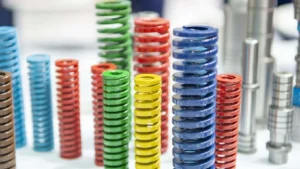
Most powder coatings are applied at thicknesses of 50-150 microns, or around 2-6 mils. Thinner coatings may be used in light-duty indoor applications, and thicker protective layers might be necessary for industrial and outdoor use. It is essential that the coating be the correct thickness, as a too-thin coating would not be sufficiently protective, and a too-thick coating could crack, peel, or experience curing problems.
How does Powder Coating get Defects?
Powder coating is very reliable, but powder coating defects may occur if process controls are not adequate.
- A few common causes of poor adhesion are inadequate cleaning, contamination, or lack of proper curing.
- Orange peel texture can occur if the spray setting is wrong, the wrong powder is used, or the curing conditions are incorrect.
- Pinholes generally form due to gases, moisture or contamination trapped during curing.
- By failing to make good contact, by spraying the wrong way, or by poor part geometry, thin coverages can occur.
- If the coatings are too thick, they can crack, chip, or peel off due to over-application.
A wide variety of powder coating problems can be avoided by the appropriate pretreatment, application parameters, and curing parameters.
Advantages and Disadvantages of Powder Coating?
Many buyers of powder coating ask a wide range of questions, such as the advantages and disadvantages of powder coating.
Advantages
- The benefits are that they are very durable.
- These powder-coated metal parts are highly corrosion-resistant.
- All the powder-coated metal parts are available in a wide range of colors, are environmentally friendly, impact-resistant, and have a long lifespan.
- Some plastics, seals, or electronics that are assembled parts may not be suitable for powder coating due to the curing temperatures typically used.
What are the drawbacks of powder coating?
- Powder coating is usually limited to conductive materials that can withstand heat during the curing phase.
- The disadvantages are that they can be more costly for the initial investment and can be more difficult to repair if coatings are damaged.
- Thin decorative coatings sometimes pose a challenge to achieving uniform deposition.
- There are very few field repairs that look as good or are as durable as the factory finish.
Will a Powder Coat Require a Primer?
The other popular query is, Do You Need Primer Before Powder Coating? Not always. There are many powder coating systems that can be applied directly to a properly pretreated metal surface.
However, in applications where increased corrosion resistance, chip resistance, and durability in outdoor service life are desired, primers are often recommended.
Epoxy and zinc-rich primers are frequently applied in marine, high-humidity, and heavy industrial settings. The use of the appropriate primer will significantly increase coating life and enhance overall performance.
How Much Does Powder Coating Cost?
The price is subject to part size, geometry, material types, coating thickness, part condition, color options, volume production, and inspection standards. A small component can cost as little as a few dollars, while a large industrial structure can be much more expensive.
Specialty powders, custom colors, extensive masking, and corrosion-resistant pretreatment all add to the price.
If someone is looking for powder coating near me, consider getting multiple quotes to compare capabilities, lead times, and pricing structures.
Powder Coating for Metal Parts: Applications
As demand for durability and sustainability grows, the applications of modern powder coating technology continue to expand. Many industries use the powder coating technique. Such as:
- Automotive
- Aerospace
- Architecture
- Construction
- Agriculture
- Electronics
- Telecommunications
- Medical equipment
- Furniture manufacturing
- Consumer products
The manufacturers appreciate its beauty, rust protection, environmental friendliness, and durability. Powder coating is one of the best finishing methods for metal products, in line with growing environmental concerns and longer product lifetimes.
Rely on YD Rapid for Powder Coating Assistance
YD Rapid offers professional powder coating services for metal parts, prototypes, and low-volume production runs. We use thick, long-lasting electrostatic powder coatings with precise thickness that provide superb corrosion protection, wear resistance, and a uniform surface. Available in a variety of glossy or sand finishes and in virtually any RAL or Pantone color. Send your CAD today and receive expert assistance with powder-coated metal components.
Conclusion
Metal manufacturers have turned to powder coating as a preferred metal finishing technology because of its durability, corrosion resistance, environmental and aesthetic benefits. Powder coatings can be applied to surfaces and cured precisely to provide a protective finish that may last for many years.
If you’re considering powder coating near you, choosing which powder coat colors to use with powder coating, comparing powder coating with other finishing options, or estimating the powder coating cost, it’s easier to arrive at the best outcome when you understand the process.

Powder coating is only one part of producing a reliable metal component. Material selection, machining quality, and the finishing process all influence the final result. YD Rapid helps manufacturers combine these processes into an efficient production workflow for custom metal parts.
FAQs
What is the thickness of powder coating?
Most powder coatings fall between 50 and 150 microns (2-6 mils) in thickness, depending on the application and required performance.
What is the price of powder coating?
The price depends on the size of the parts, preparation requirements, powder type, color, coating thickness, and production quantity.
How much will it cost to powder coat rims?
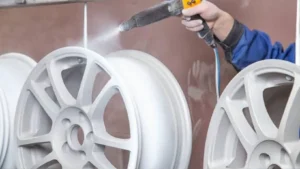
The price of powder coating wheel rims is generally determined by wheel size, condition, required preparation, color, and local labor costs. Powder coating is still widely used for wheels because it is highly resistant to road debris, moisture, brake dust, and wear and tear.
What are the advantages and disadvantages of Powder Metallurgy?
Advantages include material efficiency, near-net-shape production, and cost-effective mass production; disadvantages include the high cost of specialized equipment, limited shape and size, low toughness, and difficulty in controlling the final properties.