Key Takeaways
- Zinc phosphate and manganese phosphate serve different finishing requirements. Zinc phosphate is commonly used beneath paint, while manganese phosphate is commonly used with oil on mechanical components.
- Phosphate coating forms a conversion layer on the steel surface. It does not provide the same barrier as a plated coating.
- The corrosion protection depends on the phosphate system and the treatment applied after it. An oil-treated phosphate surface and a painted zinc-phosphate surface should not be specified in the same way.
- The steel surface must be properly prepared before treatment. Machining oil, scale, rust, and grinding residue can affect the phosphate layer.
- Threads, blind holes, grooves, and machined faces need attention during cleaning, rinsing, and drying.
- Manganese phosphate is useful on parts such as gears, pins, bushings, and sliding components because its surface structure can retain lubricant.
- A drawing that only states “phosphate coated” leaves the finishing requirement incomplete. The phosphate type and post-treatment should be identified.
- Functional surfaces should be reviewed before coating so the finishing process does not interfere with thread fit, mating surfaces, or other specified dimensions.
Introduction
Phosphate coating is used on steel for a different reason than a plated finish. The treatment reacts with the prepared steel surface and forms a phosphate crystal layer. That layer can then serve as a base for paint or retain oil on a mechanical component.
The first choice is the phosphate type. Zinc phosphate is commonly used in paint systems, while manganese phosphate is more common on mechanical parts that are subsequently oiled. A gear, pin, and bushing may therefore receive a different phosphate treatment from a painted steel housing, even though both drawings may simply call for a surface finish.
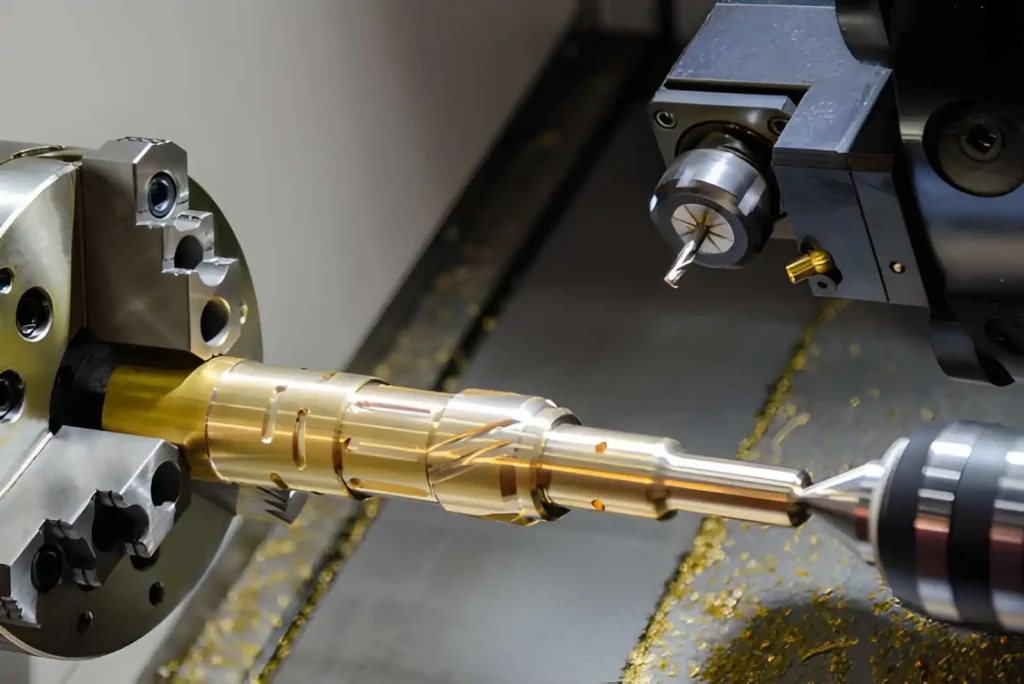
A component produced through steel CNC machining can carry cutting oil into the cleaning stage. A ground part may have abrasive residue, while scale and oxidation can remain on steel that has gone through heat treatment. These contaminants have to be removed before the phosphate layer can form properly.
For machined steel parts, the specification also needs to account for threads, blind holes, grooves, mating faces, and surfaces that must remain untreated. This article looks at the main phosphate types, their corrosion-protection role, and the design details that should be settled before the parts go to finishing.
What Is Phosphate Coating on Steel?
Phosphate Coating is a chemical conversion process that changes the surface of a steel part. Treatment forms a layer of phosphate crystals on the prepared surface of steel. The phosphate layer is not applied onto the steel like paint or zinc plating, but is formed by a chemical reaction between the steel and the material.
How the Phosphate Layer Forms
The oil, dirt, rust, and other surface residue are first eliminated with the use of cleaning before the steel part is treated. It is then immersed in a phosphate solution. The solution reacts with the surface of the metal, and the product is an insoluble phosphate crystallizing out on the surface of the metal.
These crystals vary in size and structure in relation to the phosphate chemistry and processing conditions. The surface that forms is fine crystalline and can hold oil and be used as a good painting base.
Phosphate Coating vs Plated Coatings
The process of phosphate coating and plating affects the surface of the steel in different ways. Phosphate is a conversion coating, which is a process that involves the interaction between the treatment and the steel and creates a new surface layer on the steel.
Zinc plating is a different process. The deposited zinc is deposited as a separate metal layer on the steel. This results in zinc plating having a different function in terms of corrosion protection and thickness.
Therefore, phosphate finish is not recommended as a direct alternative to zinc plating. The finish should be chosen based on the required protection and post-treatment.
Surface Condition Before Phosphating
The surface of the steel should be clean prior to phosphate treatment. Oil, rust, scale, grinding contaminants, and other conditions in the machine have a negative effect on the reaction and can cause uneven or incomplete coatings.
Some parts that are cut with a CNC machine may need to be well degreased before phosphating, as cutting fluid can accumulate in holes, grooves, pockets, and threads. Rust and scale should also be removed to ensure that the phosphoric acid solution will come into contact with the steel surface.
Types of Phosphate Coating for Steel Parts
The three common phosphate systems used on steel parts are zinc phosphate, manganese phosphate, and iron phosphate. The choice depends mainly on what the part will receive after phosphating and how the finished surface will be used.
Zinc Phosphate
The principal uses of zinc phosphate are in the base of paint. The surface provided by the phosphate crystals to the paint is adequate for adhesion and can enhance the corrosion protection of the entire paint system.
Zinc phosphate is frequently followed by painting or other protective treatment for machined steel housings, brackets, covers, etc.
Manganese Phosphate Coating
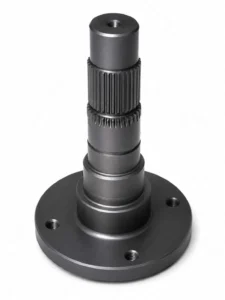
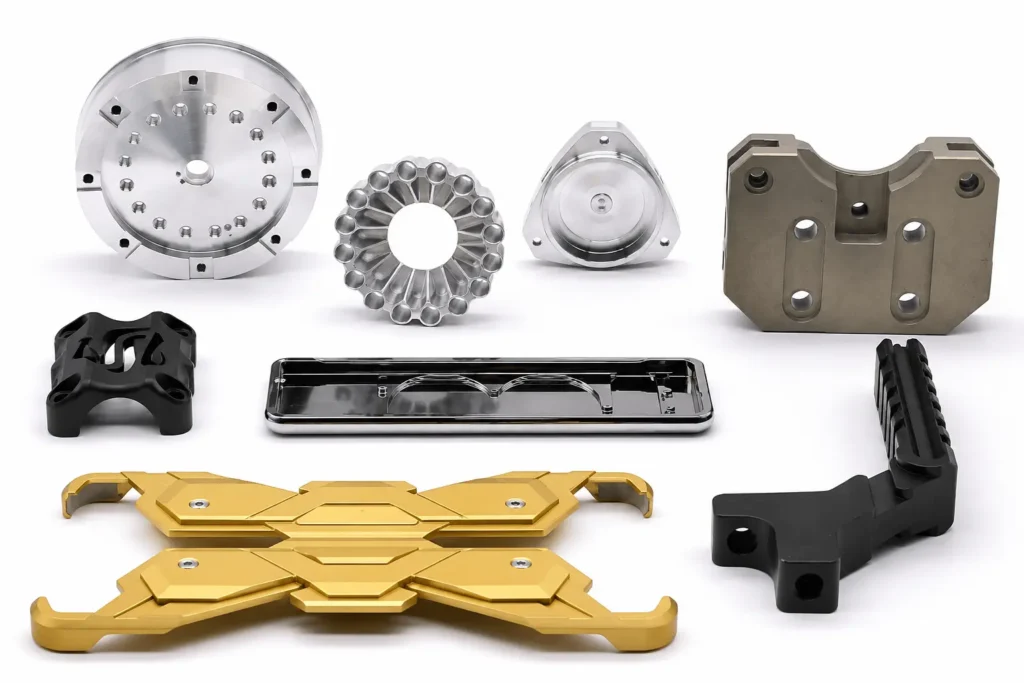
Manganese phosphate is primarily applied to mechanical steel parts that are lubricated in use. The absorbent surface is beneficial for oil-holding properties on sliding and contacting surfaces. It is often used for gears, pins, bushings, shafts, and the like. Typically dark grey to black in color.
Iron Phosphate Coating
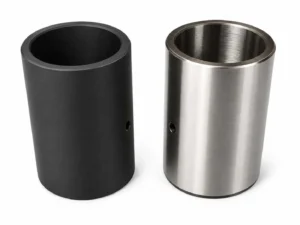
Iron phosphate has a principal application as a light pretreatment prior to painting. Thinner phosphate coating compared to zinc and manganese phosphate.
It is applied to sheet-metal parts and painted steel parts where the phosphate treatment is used to prime the surface for the subsequent coating process instead of being used as the primary corrosion protection.
Phosphate Coating Comparison
| Feature | Zinc Phosphate | Manganese Phosphate | Iron Phosphate |
| Main use | Paint pretreatment | Oil-retaining mechanical finish | Paint pretreatment |
| Typical appearance | Grey to dark grey | Dark grey to black | Light grey |
| Oil retention | Moderate | High | Low |
| Paint compatibility | Common | Possible | Common |
| Typical parts | Housings, brackets, covers | Gears, pins, bushings | Sheet-metal parts |
Zinc Phosphate vs Manganese Phosphate
The main difference is the job expected of the finished surface. Zinc phosphate is commonly used before painting, while manganese phosphate is commonly used on lubricated mechanical parts.
Zinc Phosphate for Painted Steel Parts
Zinc phosphate coating is frequently used for steel parts that are to be painted later. The phosphate coat will provide the paint system with a prepared surface and will minimize issues attributed to painting on bare steel.
It is frequently applied to steel housings, brackets, covers, and fabricated steel parts. The phosphate treatment is usually not the final corrosion barrier, but is followed by the paint system.
Manganese Phosphate for Mechanical Components
Manganese phosphate is commonly used on gears, pins, shafts, bushings, and sliding parts. It has a crystalline surface capable of retaining oil, which can be utilized on components that are lubricated.
The color of the finish is mostly dark grey or black. The surface treatment is achieved by combining the phosphate layer with the oil; if you don’t specify manganese phosphate along with the required post-treatment, then you are leaving the finishing requirement undefined.
Oil Retention and Surface Texture
A light phosphate pretreatment results in a less pronounced crystalline texture than is normally obtained with manganese phosphate. A surface can be “porous” to trap a lubricant in its microstructure.
Otherwise, zinc phosphate is a popular choice. It is used as a part of the paint-preparation system, and therefore it is important that the paint adheres and the subsequent corrosion-protection system is effective.
Choosing the Phosphate Type
- Use zinc phosphate when the steel part is going to be painted, where the phosphate provides the pretreatment.
- Apply manganese phosphate to mechanical parts that need to be lubricated and can be given an oil-holding surface.
- Identify the type of phosphate and post-treatment. This eliminates the confusion of two finishes with different applications.
How Phosphate Coating Protects Steel From Corrosion
Phosphate coating gives steel a prepared, crystalline surface, but the phosphate layer itself is not a complete corrosion barrier. The final protection depends on the treatment used after phosphating and the environment in which the part will be stored or used.
Protection From the Phosphate Layer
The crystals of phosphate adhering to the surface of steel minimise direct exposure of the metal. This layer also serves as a surface for the oil to rest on or onto which a further coat can be applied.
Phosphate coatings are porous, and water can still penetrate the steel. This restricts the protection of phosgene oxime alone.
Role of Oil and Sealers
Manganese phosphated mechanical parts are a common application of oil. It penetrates the pores of the phosphate layer and stays on the surface, which helps to keep the moisture away from the steel.
Unlike sealers, sealers don’t stop the water from reaching the metal; they just try to block the way for it. The post-treatment that is specified should, therefore, be the same as the service conditions of the part.
Phosphate Under Paint
Zinc phosphate is used under paint on steel parts. The phosphate treatment cleans and prepares the steel for the paint system; the primer and topcoat are the primary barriers to moisture.
When examining the corrosion performance of painted components, it should be considered as a coating system, not just the phosphate layer.
Bare Phosphate in Humid Conditions
Rust may occur on a bare phosphate surface due to exposure to high humidity, condensation, or water. This makes it unsuitable to use bare phosphate as a sole protective finish for parts which are exposed to extended wet service conditions.
An oil or other protective treatment may be called for for storage to minimize moisture contact with the steel.
Phosphate Coating Thickness and Surface Condition
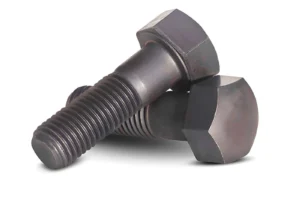
Phosphate coating is measured differently from a conventional plated coating. Coating weight, crystal size, and surface texture are commonly used to describe the treatment. The final surface depends on the phosphate chemistry, cleaning, activation, bath conditions, and treatment time. For example, Henkel notes that changes in conditioner concentration, pH, and time can change the crystal structure and coating weight of zinc phosphate.
Coating Weight vs Coating Thickness
Suppliers of phosphate are often not able to state one specific thickness of coating in micrometres, but state the coating in coating weight (g/m2). This is helpful, as phosphate is a crystalline conversion coating with an irregular surface.
This can be misleading because a single thickness value can be applied to multiple layers. It is not appropriate to simply use a coating weight for every steel part, as the required coating weight must be taken from the finishing specification or from the supplier’s process data.
Surface Roughness After Phosphating
The surface texture is altered by the process of “phospha-tion” in which phosphate crystals grow over the surface of the steel. The finer the crystal structure, the different the surface that is produced when a heavier, coarser phosphate layer is used.
This is especially true when dealing with painted parts. If the coating is too thick, it could compromise paint adhesion, and it could compromise corrosion protection if it’s not thick enough, Henkel says.
Crystal Structure
The size of the crystals depends on the treatment process. To obtain a fine, dense crystal structure, zinc phosphate is treated with a surface conditioner prior to the phosphate stage. The coating obtained depends on the process conditions, such as conditioner concentration, pH, and treatment time.
Manganese phosphate is normally used as an oil-absorptive crystalline coating and is applied to mechanical parts that are lubricated.
Effect on Machined Dimensions
Phosphate treatment is recommended for parts that have functional threads, bores, fits, and mating faces. Although the coating is very thin compared to many standard paint or plated finishes, it alters the surface’s properties.
The finishing supplier should verify the coating weight and process to be applied to a close-fitting feature before the production process. Do not assume that one nominal coating thickness will be applicable to all phosphate systems.
Coating Build-Up on Threads and Holes
Small holes, grooves, and recessed parts should be properly cleaned and rinsed during processing. If the part design is not conducive to fluid movement, chemicals may be left behind in hard-to-drain areas.
If the threads are used for function, or the holes are close-fitting, the drawing should specify the finish required and any surfaces that should not be treated.
Please note: There is no single coating-thickness value that applies to every phosphate process. The required coating weight or thickness should be taken from the applicable supplier specification, process standard, or customer drawing. This is especially important for functional machined surfaces.
Phosphate Coating for Machined Steel Parts
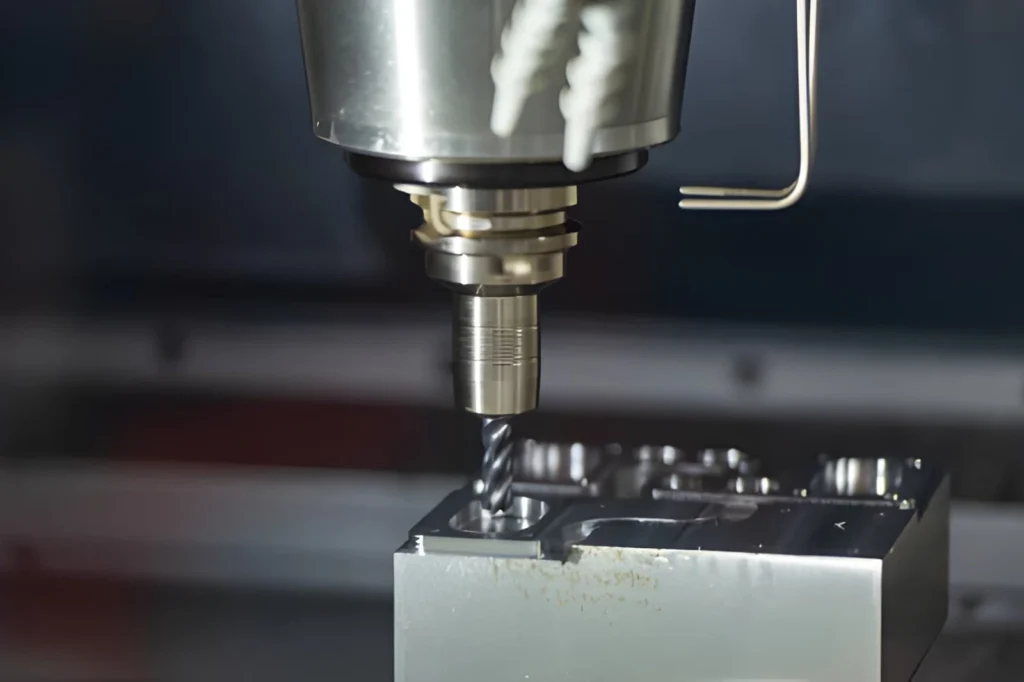
CNC-machined steel parts have features that need attention during phosphating. Threads, blind holes, grooves, and functional faces can retain cleaning chemicals or receive the coating differently from open surfaces. These features should be reviewed before the finishing process.
Threads and Threaded Holes
The surface texture of the thread flanks is obtained by the phosphate coating. When using the threads for function, verify the finished fit after coating and determine which threads do need to be left untreated.
Blind Holes and Recessed Features
Cleaning solution, phosphate chemicals, and rinse water can be trapped in blind holes and deep recesses. Rinsing and draining may be necessary to remove residues from the inside of the feature after treatment.
Mating and Bearing Surfaces
Prior to phosphating, mating faces and bearing surfaces should be inspected. When the surface is to be treated or masked by a fit or contact condition, the coating specification should include this requirement.
Machined Edges and Burrs
Particles, sharp machining edges, and burrs should be removed prior to phosphating. A burr may cause problems when cleaning and can create a non-square edge finish after the coating operation.
Surfaces That Must Remain Uncoated
Certain surfaces might require that the removal of phosphates be avoided, as it can affect fit, electrical contact, sealing, or assembly. There should be no ambiguity about these areas on the drawing, and they should not be assumed by the finishing supplier.
Phosphate Coating and Dimensional Changes
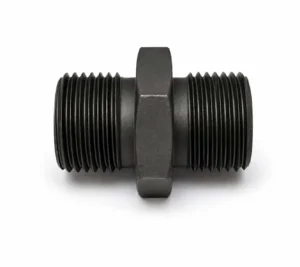
Phosphate coating is a thin conversion finish, so its dimensional effect is normally much smaller than a typical paint or plated coating. The important point for production drawings is to define which dimensions control the finished part and which are simply machining dimensions.
Effect on Threads
In the case of a normal thread, the phosphate process is typically chosen to achieve the desired thread fit. The useful inspection point is the completed thread, particularly when a mating fastener is used to assemble parts.
When using controlled thread classes, state the standard for the thread required and check the thread at the proper gauge.
Effect on Holes and Bores
When there is a specified fit for a hole, the dimensional change becomes more significant. It would not be appropriate to finish a 10 mm clearance hole and a 10 mm H7 bore in the same manner.
The finishing process is for fitted bores to be part of the manufacturing plan before the final machining dimension is set.
Mating Surfaces
The question isn’t how much phosphate is on the surface, but rather what kind of surface it makes. Different outcomes can be achieved by two parts that will contact each other when one is phosphated, and the other is left machined.
When selecting and locating interfaces that need to slide or be fitted, specify the desired surface characteristics and verify the fit after assembly.
Allowance for Finishing
The fixed allowance (e.g., 0.01 mm or 0.02 mm) should not be added without reference to the actual process of phosphate. The phosphate coating weight is different based on the finishing specification and also the crystal structure.
To get the finisher’s process range for a critical dimension, first determine whether the feature should be machined before or after treatment, then determine the process range.
Areas Requiring Masking
Masking should be used according to the use of the feature and not because of the small dimension.
There are situations in which a surface must be left unphosphated for use as an electrical contact, sealing, bearing location, or as a defined assembly datum. The requirements should be indicated directly on the drawing.
Common Problems With Phosphate Coating
Phosphate defects usually start with surface preparation, bath conditions, rinsing, drying, or handling. The type of defect can help identify which stage needs attention.
Uneven or Patchy Coating
The non-uniform coating may be caused by oil, rust, scale, grinding residue, and dirt remaining on the surface of the steel. These contaminants will prevent the phosphate solution from touching the metal in an even manner.
Areas of patchiness can also result from a cleaning solution that does not penetrate through to pockets, grooves, and recessed surfaces.
Poor Crystal Formation
Incorrect bath chemistry, bath temperature, treatment time, and surface conditioning can be attributed to poor crystal formation.
If the surface conditioning stage is not properly controlled, a zinc-phosphate process can yield coarse crystals. Before switching to a different finishing specification, it is important to perform bath checks and process control.
Flash Rust After Treatment
Freshly phosphated steel can suffer flash rust if it is left exposed to moisture before it is subjected to the desired post-treatment.
Risk can be higher if contaminated rinse water is used, if drying occurs in high humidity, and when the oil or paint is delayed before use. The parts need to be rinsed, dried, and then transferred to the post-treatment without undue delay.
Excessive Residue in Recessed Areas
Phosphate solution and rinse water may be trapped in blind holes, grooves, pockets, and deep recesses during processing.
Improper drainage can cause the residual presence of chemicals within these features. Trapped liquid can be avoided by correcting the orientation of parts, rinsing thoroughly, and drying them properly.
Poor Paint Adhesion
Oil, dust, loose residue, crystal deposits, or handling contaminations can impair paint adhesion on a phosphate surface.
The phosphate process must also be suitable for the primer and paint system used. Before replacing the paint system, inspect cleaning, phosphate conditions, rinsing, and surface handling for adhesion problems if they occur in more than one area.
Phosphate Coating Design Considerations
Before releasing a steel part for phosphating, check the drawing for features that can make cleaning, drainage, masking, and final inspection difficult. A few changes in the drawing can prevent finishing problems later.
Drainage From Blind and Recessed Features
Check how liquid will leave blind holes, deep pockets, slots, and recessed areas during cleaning and rinsing. A pocket that has no practical drainage path can hold treatment chemicals after the part leaves the bath.
For parts with several recessed features, the finishing supplier should know the intended processing orientation.
Threads and Small Holes
Small threaded holes can be difficult to clean and rinse completely. This becomes more noticeable with deep threads and small-diameter holes.
If the hole has a specific assembly function, include the thread size and class on the drawing and make the finished requirement clear.
Mating Surfaces
Don’t automatically phosphate all machine faces. The surface of a part may be a surface that is intentionally provided for location, sealing, bearing contact, or electrical connection.
If a phosphate finish is not necessary on such a surface, state it on the drawing rather than provide a general note.
Areas Requiring Masking
The most effective masking is when the area is easily recognized and physically accessible. Narrow sealing land or small internal features may be challenging to mask in a consistent manner.
If the masked area is part of a critical fit or assembly feature, show the masked area directly on the drawing.
Coating Specification on the Drawing
Don’t use a drawing note that reads “phosphate coated. Identify the type of phosphate and the post-treatment, indicating any areas with a different requirement.
If multiple layers are used to finish the dimension, set the final condition. For instance, is the critical dimension before or after the surface has been coated with phosphate, primer, and paint?
How to Specify Phosphate Coating on Steel Part
A phosphate note should tell the finishing supplier exactly what finish is required and how it will be checked. Keep the coating requirement separate from the general machining notes.
Phosphate Type
Specify the phosphate process directly:
- Zinc phosphate
- Manganese phosphate
- Iron phosphate
Avoid using only “phosphate coating” when the required process is known.
Post-Treatment
State the treatment required after phosphating, such as oil, sealer, primer, or paint. For example, a manganese phosphate specification may require an oil treatment as part of the finished surface.
Appearance
Add an appearance requirement if the visible finish is controlled. Specify details such as colour, gloss, surface uniformity, or acceptable visible marks. Keep these requirements separate from corrosion and dimensional requirements.
Corrosion Requirement
Give a measurable requirement when corrosion performance needs to be verified. A drawing can reference a recognised corrosion test standard together with the required test duration and acceptance limit. Avoid using only a phrase such as “high corrosion resistance.”
Uncoated Areas
Show surfaces that must remain free of phosphate directly on the drawing. Use a masking note, detail view, surface indication, or other clear drawing reference so the excluded area can be identified during finishing and inspection.
Dimensional Requirements
State whether controlled dimensions apply before coating or after coating.
For example:
Ø20.00 mm AFTER PHOSPHATE COATING
This makes the inspection condition clear. For a phosphate + primer + paint system, specify the dimensional condition that applies to the completed finish.
Phosphate Coating vs Other Steel Finishes
Phosphate coating is not simply a cheaper version of zinc plating, black oxide, or paint. Each finish changes the steel surface differently and is selected for a different combination of coating build, surface texture, lubrication, corrosion protection, and appearance.
Technical comparison
| Parameter | Phosphate | Zinc Plating | Black Oxide | Paint |
| Coating type | Chemical conversion layer | Deposited zinc layer | Chemical conversion layer | Organic film |
| Typical coating build | Process-specific; zinc-phosphate systems can be specified by coating weight | Commonly specified by zinc thickness | Very thin conversion layer; process-specific | Commonly tens of µm per coating system |
| Published example | SurTec zinc-phosphate process: >10 g/m²; Henkel manganese phosphate example: 5–40 g/m² | Thickness specified by the applicable plating specification | Process-specific; should be obtained from the finishing supplier | ISO 19840 applies to nominal dry-film thicknesses ≥40 µm for its measurement procedure |
| Surface texture | Crystalline; zinc phosphate can be fine-grained | Relatively continuous metallic surface | Thin conversion finish | Depends strongly on primer, paint type, application method |
| Surface roughness | Can increase with heavier/coarser phosphate crystals | Generally follows the plated deposit condition | Small surface change | Can substantially change the original surface texture |
| Oil retention | Good with manganese phosphate | Low without an additional lubricant treatment | Good | Poor |
| Paint pretreatment | Zinc phosphate is widely used | Can be painted after suitable preparation | Limited compared with phosphate pretreatment | Already the final coating |
| Bare corrosion protection | Limited | Generally stronger than bare phosphate | Limited | Depends on film system and environment |
| Dimensional effect | Small, process-dependent | More significant because zinc is deposited as a measurable layer | Small | Potentially significant on fits and mating features |
| Typical engineering use | Paint pretreatment; lubricated mechanical parts | Corrosion protection | Dark finish; lubricated components | Long-term barrier protection |
| Typical cost level | $ | $$ – $$$ | $ – $$ | $$ – $$$ |
CNC Machining and Phosphate Coating Services
Send your CAD model and 2D drawing to YD Rapid before production. Our engineering team can review the part for CNC machining and check the phosphate requirements at the same time.
The review can cover threads, holes, machined faces, mating surfaces, masking areas, drainage features, coating type, and the required post-treatment. If a phosphate callout is incomplete, we can flag it before the part reaches finishing.
You also receive free DFM feedback and a quotation based on the actual part geometry and finishing requirements. YD Rapid provides CNC machining with an engineering-led review and is ISO 9001:2009 certified.

Send your CAD model and 2D drawing to YD Rapid for a practical engineering review before production.
FAQ’s
Does phosphate coating prevent steel from rusting?
Phosphate coating gives steel limited protection by itself. The porous surface is usually combined with oil, sealer, primer, or paint for stronger corrosion protection.
How long does phosphate coating protect steel?
The service period depends on the phosphate type, post-treatment, humidity, water exposure, and storage conditions. Bare phosphate has a much shorter protection period than an oiled or painted phosphate system.
Can phosphate coating be applied to CNC-machined steel?
Phosphate coating is commonly applied after CNC machining. Cutting oil, coolant, rust, scale, and machining residue must be removed before treatment.
Does phosphate coating affect thread dimensions?
Phosphate crystals form on the thread surface and add a small amount of surface build. Standard threads are generally processed without difficulty, while controlled thread fits should be checked after finishing.
Can phosphate coating be applied inside threaded holes?
The treatment can reach internal threads when the hole allows proper cleaning, chemical contact, rinsing, and drainage. Deep small-diameter holes need particular attention because they can retain processing chemicals.
Does manganese phosphate need oil after coating?
Manganese phosphate is commonly followed by oil treatment. The oil enters the porous phosphate surface and provides lubrication and additional protection.
Can zinc phosphate be used without painting?
Zinc phosphate can remain unpainted, but its corrosion protection is limited. Oil, sealer, or another suitable post-treatment may be used when paint is not required.
What colour is manganese phosphate?
Manganese phosphate normally has a dark grey to black appearance. The final shade varies with the phosphate process and post-treatment.
Can stainless steel be phosphate coated?
Standard phosphate processes are developed mainly for steel and iron surfaces. Stainless steel behaves differently because of its passive surface, so the specific grade and finishing process should be confirmed with the coating supplier.
Does phosphate coating increase surface roughness?
Phosphate crystals change the surface texture. The effect depends on the phosphate type, coating weight, and crystal size. Manganese phosphate generally produces a more noticeable crystalline texture.
Can phosphate coating be removed from steel?
Phosphate can be stripped using a suitable chemical process. The stripping method needs to match the phosphate type and steel grade to avoid unnecessary attack on the base metal.
What should be masked before phosphate coating?
Mask surfaces that must retain their original condition for sealing, electrical contact, bearing location, assembly fit, or another defined function. These areas should be identified clearly on the engineering drawing.