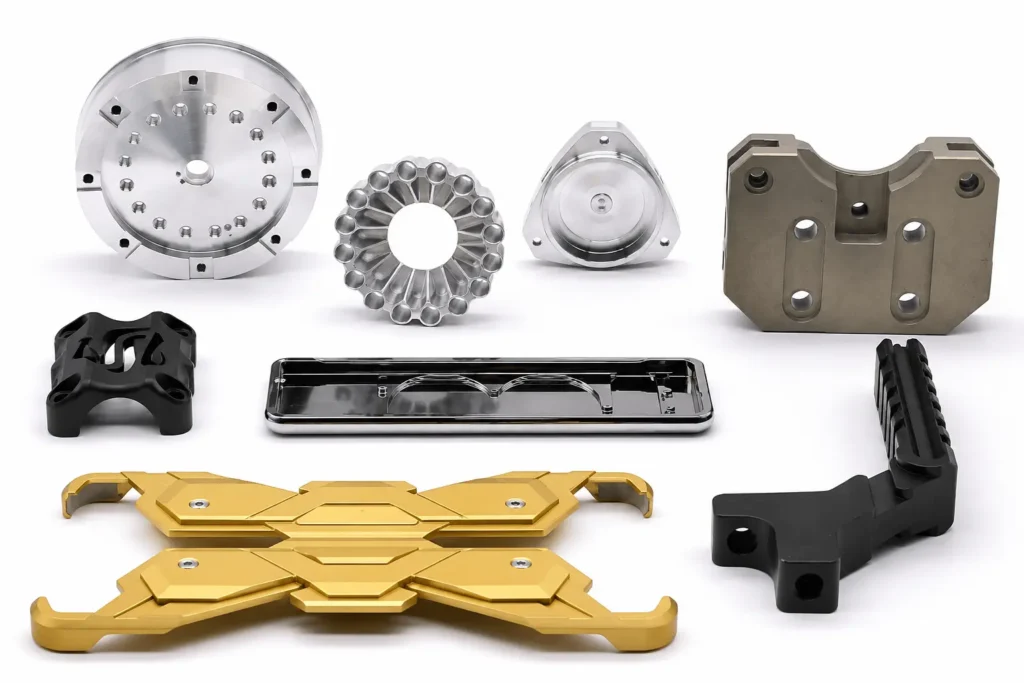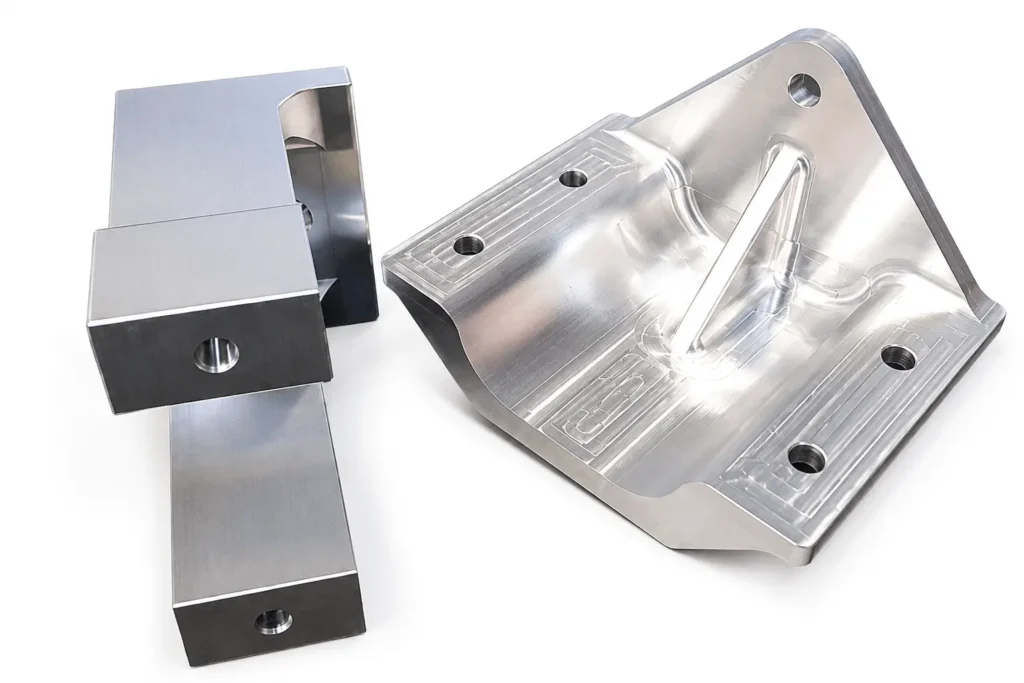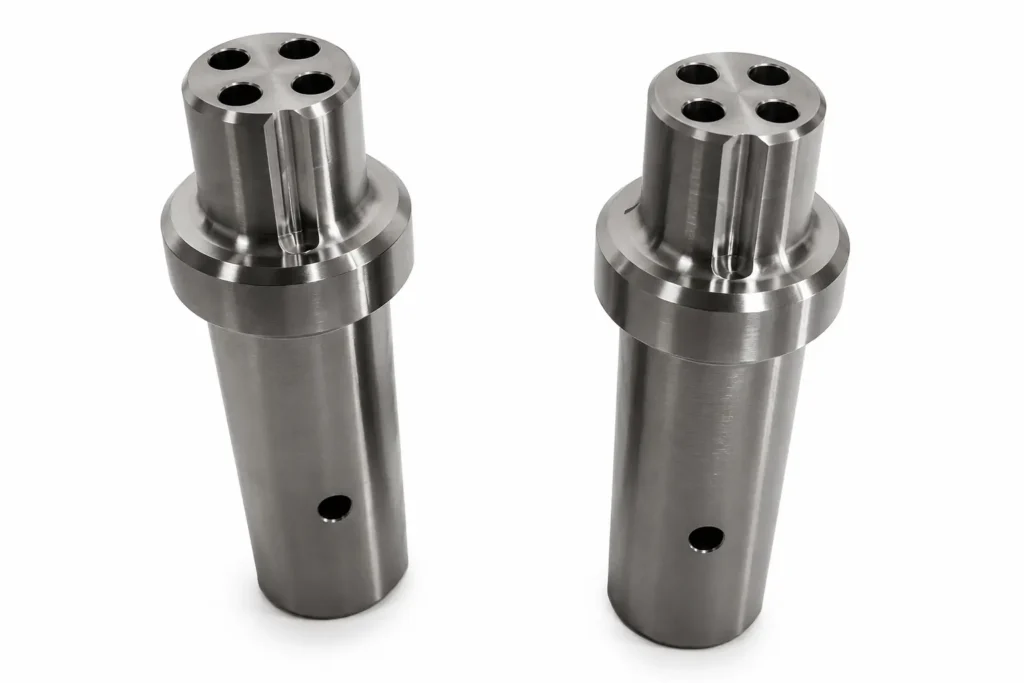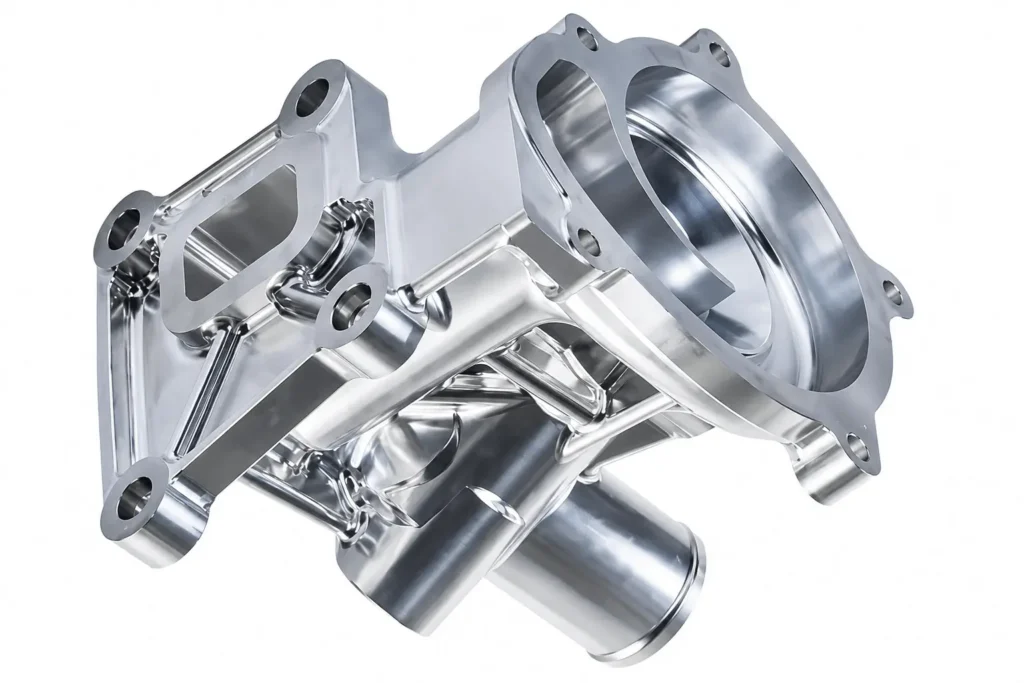
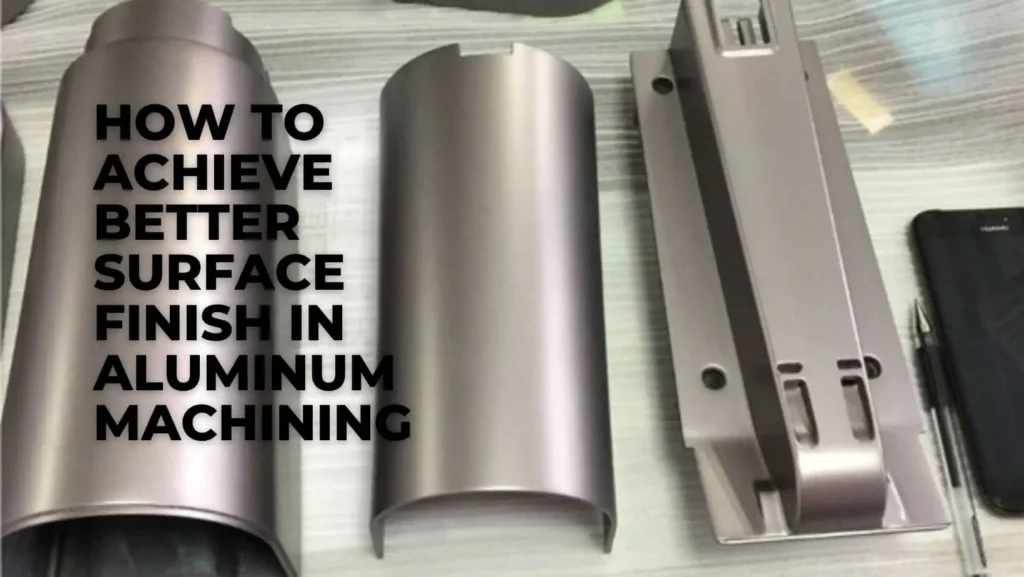
The production of high-quality aluminum surface finish machining is a top priority for the engineers and the buyers. Aluminum is commonly used because it is both lightweight and durable, but aluminum has a “gummy” characteristic that prevents the production of smooth surfaces.
Getting the right aluminum surface finish machining result is not always easy. Aluminum is soft. It can stick to your tools. It can chip in ways that ruin your part. Unless you apply the best aluminum surface machining techniques, you will notice the marks or rough spots. But with the right steps, you can get a clean, smooth, and even mirror-like finish.
Surface finish affects how a part performs. It also affects how it looks. In aerospace, automotive, and medical industries, a poor finish can mean a rejected part.
This guide covers everything: aluminum surface finish, measurement standards, aluminum machining process, tooling, coolant, and finishing methods.
What is
Aluminum
Surface Finish and Why Does It Matter?
Aluminum surface finish refers to the texture and smoothness of a machined aluminum part. A poor finish means more friction, more wear, and weaker fatigue resistance. For buyer decisions, finish quality can mean the difference between accepted and rejected parts.
Surface roughness is the fine, small-scale texture. It is measured using parameters:
- Ra – Arithmetic Average Roughness. This is the most common value used.
- Rz – Mean Peak-to-Valley Height. It measures the average of the highest peaks and lowest valleys.
- Rt – Total Height of Profile. This is the full peak-to-valley range.
How to Understand Surface Roughness in Aluminum Machining?
You need to understand how we measure a good surface finish when milling aluminum. Surface roughness is the amount of small peaks and valleys on a part. We take Ra (Arithmetic Average Roughness) as the primary unit. This informs us of the mean height of those peaks.
Surface finish is indicated on engineering drawings with a check-mark symbol. The next thing written is the Ra value. A good finish is one of 32 Ra ( µin ) or higher. Below 16 Ra is a mirror finish.
- Lay is defined as the direction of tool marks. It is important to know where lines slide past each other.
- Waviness is the high-level variation – due to machine vibration or tool deflection.
Aluminum Surface Finish: Which is better, 6061 vs 7075?
This is one of the most common questions in aluminum machining services. Choosing the right grade is the first step in aluminum fabrication. Not all alloys act the same under a tool.
- 6061 Aluminum: This is the most common grade. It is excellent for the general aluminum machining process. It provides a very good surface finish for milling aluminum as it is simple to cut.
- 7075 Aluminum: This is much stronger and harder. It is hard, but usually stiffer when cutting. This implies that it is actually capable of creating a very shiny surface on aluminum since it does not adhere to the tool as the softer grades do.
Here is a side-by-side comparison:
| Property | 6061 Aluminum | 7075 Aluminum |
| Machinability | Excellent | Good |
| Surface Finish Quality | Smooth, consistent | Crisp, shiny (when done right) |
| Tool Wear Rate | Low | Moderate to High |
| Hardness | Lower (T6: ~95 HRB) | Higher (T6: ~87 HRB) |
| Chip Formation | Long, stringy chips | Shorter, cleaner chips |
| Typical Ra Achievable | 16–63 µin | 16–32 µin |
| Built-Up Edge Risk | Higher | Lower |
| Best Use Case | General machining, good finish | Aerospace, structural, high-strength |
| Cost | Lower | Higher |
Additional Information: Cast aluminum, such as A380, contains high silicon. It is highly offensive. It needs PCD (Polycrystalline Diamond) tooling to achieve uniform finishes.
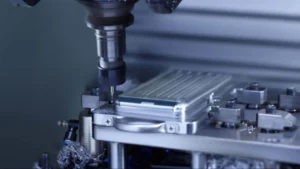
What Are the Best Aluminum Surface Machining Techniques?
Choosing the aluminum surface finish machining techniques is key to getting a good finish every time.
1. Climb Milling vs. Conventional Milling
Always finish passes with climb milling. With climb milling, the chip begins thick and ends thin. This minimizes the heat transfer to the part. It leaves a smoother surface. Conventional milling is for roughing. It generates more heat and leaves a coarser texture.
2. High-Speed Machining (HSM)
HSM employs extremely fast spindle speeds and light cuts. This results in improved surface quality and extended tool life. Always apply a special finishing pass. This is a light, final cut, typically 0.005 to 0.020 inches radial depth of cut. It also eliminates tool marks of roughing and results in a smooth surface.
3. Trochoidal Milling
Trochoidal (circular) toolpaths are used in roughing and keep the heat low. This avoids warping of the aluminum before the finishing pass.
4. Stepover & Scallop Height
The smaller the stepover, the smaller the effect on the surface in terms of peaks and valleys. Make finishing passes easier by reducing the stepover.
5. Vibration Control (3:1 Rule)
Keep the tool as short as possible. Use rigid setups. Adjust spindle speed to avoid resonance frequencies.
- Maintain a maximum tool length-to-diameter ratio of 3:1
- Example: A 0.5-inch diameter tool should not extend more than 1.5 inches
Why it matters: Long tool life causes vibration, resulting in visible surface quality problems and a low-quality finish.
How to Improve Surface Finish in Aluminum Machining?
When your components are not shiny, you should adjust your aluminum machining service options. Here is a practical guide on how to improve surface finish in aluminum machining:
- Cutting Speed: Higher speeds generally give a better finish. Target 600–2,000 SFM for aluminum, depending on the alloy.
- Feed Rate: Lower feed rate = smoother finish. The relationship is: Ra increases with the square of the feed rate. Cut feed for finishing passes.
- Depth of Cut: Use a light depth of cut for finishing. This reduces tool deflection and leaves fewer marks.
- Spindle Speed (RPM): Higher RPMs reduce the time each tooth is in contact. This improves the surface.
What Tool Geometry Gives The Best Aluminum Surface Finish?
Aluminum is best with carbide tools. They have a longer shelf life and can deal with high speed. Your tooling choice directly affects aluminum surface finish machining.
- High rake angle: A positive rake angle cuts more cleanly and reduces built-up edge. ● High helix angle (35°–45°): Helps pull chips away from the cut. Reduces cutting forces.
- 2–3 flutes: More flutes block chip clearance in aluminum. Stick to 2 or 3.
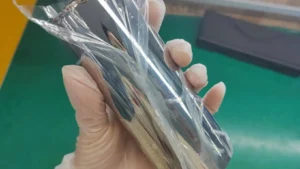
How to Assess the Math Behind Surface Finish?
Knowing how to evaluate the math of the surface finish lets you determine the quality of the finish before you cut. The most common equation used to calculate theoretical surface roughness is:
Surface Roughness
Ra ≈ (f²) / (32 × r)
Where:
- f = feed rate (inches or mm per rev)
- r = tool nose radius (inches or mm)
Optimal Speed & Feed for Aluminum Machining
Aluminum has a greater cutting speed than most other metals. Inappropriate speeds may cause heat accumulation and low-quality surfaces.
- Cutting Speed (SFM): Typically 1,200 – 2,500 SFM for finishing operations ● Chip Load: Around 0.001″ – 0.003″ per tooth for fine finishing
The chip load formula is:
Fz = Vf / (n × z)
Where:
- Fz = chip load per tooth
- Vf = feed rate
- n = RPM
- z = number of flutes
Surface Roughness Reference Measurements
Use these formulas to set starting parameters. Then fine-tune based on the actual result.
| Ra (µin) | Ra (µm) | Finish Level | Typical Application |
| 250 | 6.3 | Rough | Heavy roughing, structural parts |
| 125 | 3.2 | Semi-rough | General machining, non-critical |
| 63 | 1.6 | Medium | Functional parts, general use |
| 32 | 0.8 | Good finish | Sliding surfaces, good aesthetics |
| 16 | 0.4 | Fine finish | Precision parts, sealing surfaces |
| 8 | 0.2 | Very fine | High-precision, tight tolerances |
| 4 | 0.1 | Mirror-like | Optical, decorative, and medical parts |
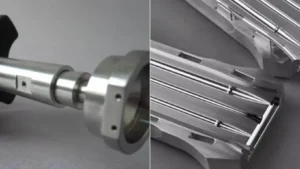
Which Aluminum Finishes Can Enhance Your Product Performance?
Aluminum product finishing affects corrosion resistance, durability, and appearance. Here are the main types:
- Powder Coating: Dry electrostatic coating. Large color variety. UV-resistant and eco-friendly. Excellent in aesthetic components.
- Liquid Paints: Flexible colour choices. Good for small batches. Contains VOCs. Weaker than powder coating.
- Wood Grain Finish: It relies on sublimation print to provide a pattern of wood. Also applied in furniture and architecture.
- Alodinating (Chromate Conversion): Coating used to improve the corrosion resistance of a material without making it electrically non-conductive.
- Bright Dipping: A chemical polishing process. Gives a mirror-like finish. Restricted to some alloys. Excellent in decorative sections.
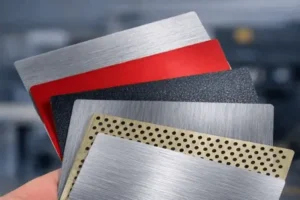
Choosing the right surface treatment is essential for improving appearance, corrosion resistance, and functional performance of CNC aluminum parts. YD Rapid provides professional surface finishing services for aluminum and other machined components, including anodizing, bead blasting, polishing, and custom finishing options.
How Does Coolant Affect Aluminum Surface Finish?
How coolant affects the aluminum surface finish is not adequately recognized. Coolant has three functions: it lowers heat, eliminates accumulated edge, and removes chips.
Types of Coolant
Utilize aluminum-centered coolant products when feasible. These include: soft metal lubricant, and adjusted lubricants;
- Flood coolant, the most commonly used coolant, will remove heat and remove chips from the cutting area, but if not directed properly, chips will wash back into the cut.
- Mist (vaporized) lubricant uses very fine mist droplets to lubricate and create visibility in the cutting area, and give a better finish on light cuts.
- HPC (High Pressure Coolant) will push out of the coolant nozzle directly into the cut.
- Dry machining is typically used for lightweight cuts. There is a high risk of producing BUE due to the heat generated while machining.
Aluminum Surface Finish: Exterior Applications
The exterior applications in aluminum surface finish machining are subjected to weather, UV, and moisture. It must have a finish that is protective and attractive.
Anodizing is the most suitable option. It forms a hard oxide coating, a part of the metal. It does not peel or chip off. Anodized aluminum is used in window frames, curtain walls, and facades of buildings.
The PVDF coating is used when a high level of color retention is required. They are hard to dissipate over decades. A fine-machined finish should be used to obtain smooth exterior finishes.
What to do with the surface of the Aluminum? Apply secondary operations such as anodizing, buffing, or bead blasting to the main machining.
Measurement & Inspection of Aluminum Surface Finish
Always take measurements at several points on the part. The finish of the surface may change depending on the location. Use these tools:
- Contact Profilometer: It has a diamond-tipped stylus. Provides accurate values of Ra, Rz, and Rt.
- Non-Contact Profilometer: Laser or white light. Works well on sensitive or fragile surfaces.
- Surface Roughness Tester (portable): Measures rapid Ra on the shop floor.
- Optical Measurement Systems: Uses 3D surface maps and high-level analysis.
- Visual Inspection Standards: Comparator plaques provide a rapid visual comparison of Ra values.
Conclusion
There are four key components in achieving an aluminum surface finish machining: selecting the correct aluminum material, using appropriate tooling, setting the proper parameters, and using the appropriate finishing processes.
Select an aluminum alloy for the intended application. Generally, use 6061 aluminium for general machining. Use 7075 aluminum for high strength and fine finish. Whether you are in aerospace, automotive, or consumer products, a controlled aluminum machining process delivers parts that meet spec, every time.
Need A Reliable Aluminum Machining Service?
Contact our team today. We provide precision-machined aluminum parts with consistent surface finish control, tight tolerances, and fast turnaround.

YD Rapid supports CNC machined aluminum parts with a variety of surface finishing options, from anodizing and bead blasting to polishing and custom treatments. Whether you need prototypes or production parts, our engineers can help match the right finish to your functional and appearance requirements.
FAQs
How to get a good surface finish when milling aluminum?
Buy very sharp tools and use a strong spray to keep the metal parts cool.
How to improve surface finish in aluminum machining?
Make the machine spin faster, but move the tool slower for the last light cut.
How to get a shiny surface on aluminum?
Use fast speeds and clean tools with special oil to make the metal look bright.
How to finish the Aluminum surface?
Use a tool with two edges to help the metal chips fall away very fast.
How to finish aluminum parts?
Use a polish or a chemical bath to make the part look shiny and new.
How to specify aluminum surface finish?
Include Ra or Rz values and ISO 1302 symbols clearly on your technical engineering drawings.