The ABS melting point is not a single fixed temperature. As an amorphous thermoplastic, ABS softens gradually when heated. To choose suitable molding, machining, or 3D printing conditions, you need to distinguish its glass transition temperature from its processing temperatures. This guide explains those differences, compares ABS grades and other plastics, and shows how temperature affects your parts and printing settings.
What Is ABS Plastic?
ABS plastic, short for acrylonitrile butadiene styrene, is an amorphous thermoplastic that combines rigidity, impact resistance, and ease of processing. You can use it to make lightweight parts through injection molding, extrusion, CNC machining, and 3D printing.
Its three main components contribute different properties:
- Acrylonitrile contributes chemical resistance and heat resistance.
- Butadiene provides toughness and impact resistance.
- Styrene contributes rigidity, surface gloss, and ease of processing.
Manufacturers adjust formulations for higher impact strength, heat resistance, or easier flow. Choose your grade according to the manufacturing method and operating conditions.
What Is the Melting Point of ABS Plastic?
ABS has no sharply defined melting point because it is amorphous. As you heat it, its stiffness decreases before it becomes fluid enough for processing.
The glass transition temperature of ABS is around 105°C (221°F) for many common grades. This transition marks a substantial loss of rigidity, rather than free flow.
Processing guides instead specify a melt temperature range. For example, Terluran GP-35 lists 220–260°C (428–500°F). This range describes suitable manufacturing conditions for that grade, not a thermal transition or a service temperature.
| Temperature term | What it tells you |
| Glass transition temperature (Tg) | The temperature region where ABS loses stiffness and becomes more deformable. |
| Vicat softening temperature | The temperature at which a standard needle penetrates the material to a specified depth under defined test conditions. |
| Heat deflection temperature (HDT) | The temperature at which a test specimen reaches a specified deflection under load. |
| Melt processing temperature | The temperature range used to obtain suitable flow for a particular manufacturing process. |
An ABS temperature rating may describe HDT, Vicat softening, or long-term performance. Check which property and test conditions the rating refers to before using it to assess your part.
Thermal Properties and Processing Temperatures of Different ABS Grades
ABS grades balance impact strength, stiffness, flow, and heat resistance differently. Compare their measured properties and processing guidance rather than assigning each grade a single melting point.
The following examples compare specific grades:
| ABS grade type | Example grade | Vicat temperature and method | Melt processing temperature |
| High-flow ABS | Terluran GP-35 | 95°C (203°F), B50 | 220–260°C (428–500°F) |
| High-impact ABS | Terluran HI-10 | Approximately 94°C (201°F), A50 | Approximately 218–260°C (425–500°F) |
| High-heat ABS | Novodur HH-106 | 106°C (223°F), B50 | 230–260°C (446–500°F) |
Vicat values follow ISO 306. GP-35 and HH-106 use B50: 50 N at 50°C/h. HI-10 uses A50: 10 N at 50°C/h. Because the loads differ, its value is not directly comparable with the other two. Vicat results are not melting points or continuous-use ratings.
Data sources: INEOS Styrolution product data for Terluran GP-35, Terluran HI-10, and Novodur HH-106. HI-10 values are converted from 201°F and 425–500°F; Celsius values are rounded. Figures apply only to the listed grades and test conditions.
Among the two B50 examples, HH-106 has a higher Vicat result than GP-35 despite overlapping processing windows. For a thin-walled enclosure, assess flow and impact requirements; near a heat source, also compare HDT and long-term behavior under your expected load.
Flame-retardant and glass-fiber-reinforced grades offer other property combinations. Check flame performance, stiffness, and thermal data separately against your requirements.
ABS Melting Point vs. Other Plastics
When comparing the ABS melting point with other plastics, separate glass transition temperature (Tg) from melting temperature (Tm). ABS, PETG, and standard PC are amorphous and lack a sharp crystalline melting point. Crystallized PLA and POM have a measurable melting transition.
| Plastic | Structure | Glass transition temperature (Tg) | Melting temperature (Tm) |
| ABS | Amorphous | Around 105°C (221°F) for many common grades | No sharp melting point |
| PLA | Can develop a semicrystalline structure | Depends on grade | Approximately 145–160°C (293–320°F) for Ingeo 4043D |
| PETG | Typically amorphous | Approximately 80°C (176°F) for Eastar 6763 | No sharp melting point |
| PC | Amorphous | Approximately 144°C (291°F) for Makrolon 2405 | No sharp melting point |
| POM | Semicrystalline | Below room temperature; grade-dependent | Approximately 166°C (331°F) for many Hostaform copolymer grades |
These are representative grade examples, not universal specifications. PLA melting behavior also depends on crystallinity and thermal history. Data sources: NatureWorks, Ingeo Biopolymer 4043D Technical Data Sheet; Eastman, Eastar Copolyester 6763 Technical Information (MBS-80Q); Covestro, Makrolon 2405 product data; Celanese, Hostaform POM Product Manual. ABS Tg is an approximate reference value.
A higher Tg can help screen materials, but it does not establish a safe operating temperature. For a loaded enclosure or snap-fit, compare HDT under matching test conditions and check whether prolonged heating could cause creep or loss of fit.
For example, Eastar 6763 has a Tg near 80°C, yet its reported deflection temperature is 64°C at 1.82 MPa. Likewise, POM’s melting point does not describe its load-bearing limit. Select for the temperature and stress your finished part will actually experience.
What Factors Affect ABS Thermal Behavior?
Formulation and processing history influence ABS flow during manufacturing and shape retention when heated.
Material Composition and Grade
The proportions and structure of ABS components influence its thermal properties. Formulations designed for impact resistance, stiffness, or flow can behave differently under heat.
High impact strength does not automatically mean higher heat resistance. Similar processing temperatures also do not guarantee similar performance in use.
Fillers, Reinforcements, and Additives
Glass fibers can increase stiffness and limit deformation under load. Their effects depend on content and orientation. A higher HDT does not necessarily mean a comparable increase in Tg.
Flame retardants, pigments, and other additives can affect processing and performance. Check flame resistance and heat resistance separately.
Processing Conditions and Thermal History
Melt temperature, shear, and residence time work together. Excessive exposure can damage ABS, while repeated processing can change its properties. Raising temperature is not always the solution to poor flow.
Cooling affects residual stress and dimensional stability. Moisture can cause bubbles and surface defects, making suitable drying important before melt processing.
Assess temperature alongside load and exposure time. Brief, unloaded heating and prolonged exposure under stress place different demands on the same grade.
Common Applications of ABS Plastic
ABS is commonly used for housings, trim, and prototypes. Consider nearby heat sources, loads, and grade-specific thermal properties when selecting it.
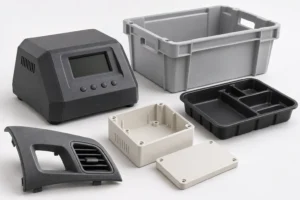
Electronics and appliance housings: Controller enclosures, instrument housings, vacuum cleaner bodies, and appliance panels benefit from ABS toughness and moldability. Near motors or power supplies, check heat resistance and required flame ratings.
Automotive interior components: Dashboard trim, console panels, and covers use suitable ABS grades. Account for cabin temperatures, sunlight, and mounting stresses that could distort your part.
Consumer products: Toys, protective cases, and luggage shells use ABS for its toughness, weight, and appearance. Choose a formulation suited to the product’s impact and surface requirements.
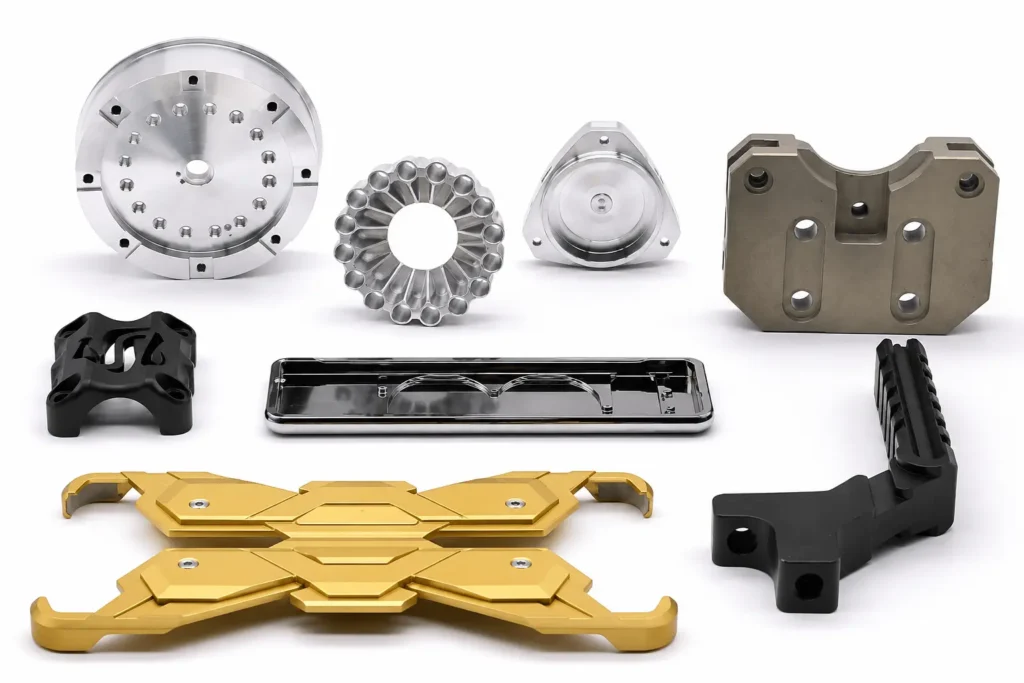
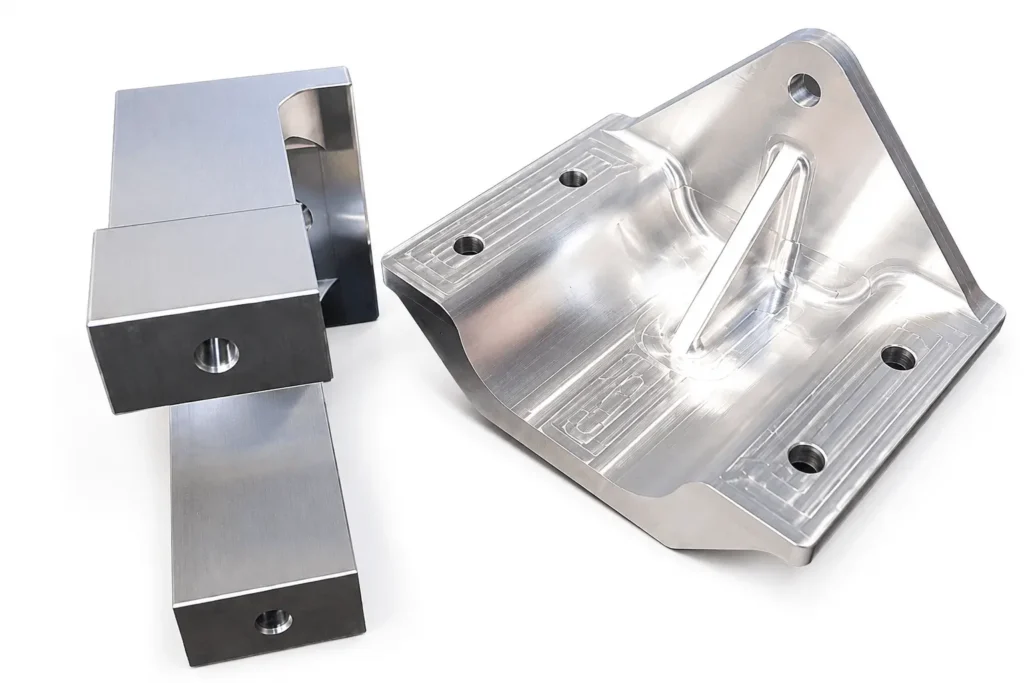
Functional prototypes: CNC-machined ABS stock and printed ABS filament can produce enclosure and assembly samples. These help you check fit and function, although printed, machined, and molded parts can perform differently.
Industrial equipment covers: Control panels, housings, and guards use ABS where operating conditions allow. Evaluate temperature, exposure duration, and sustained loads before choosing a grade.
ABS Temperatures in 3D Printing
For ABS filament, nozzle temperature is a processing setting, not a fixed melting point. Start with the material profile recommended for your filament and printer, then adjust within the approved range.
- Nozzle: Start with your filament’s recommended profile. Prusa recommends 255°C (491°F), while Bambu Lab specifies 240–270°C (464–518°F) for its ABS.
- Bed and enclosure: A heated bed and stable enclosure help reduce uneven cooling, warping, and layer separation. Prusa recommends a bed temperature of at least 100°C (212°F).
- Adjustments: Too little heat may cause poor extrusion or weak layer bonding; excessive heat may increase oozing. Change one setting at a time, and check moisture, speed, and cooling before blaming temperature alone.
FAQs
Will ABS Melt in Boiling Water?
ABS generally will not become a freely flowing melt in boiling water, but it may soften or deform. Whether your part retains its shape depends on the grade, exposure time, and mechanical load.
Does Acetone Lower the Melting Point of ABS?
Acetone softens or dissolves ABS through solvent action. This is different from thermal melting, so you should not treat acetone smoothing as a way to establish a lower ABS melting point.
How Is ABS Glass Transition Temperature Measured?
Differential scanning calorimetry (DSC) can identify the heat-capacity change associated with glass transition. The reported result depends on the test method and thermal history; it is not a crystalline melting temperature.
Can You Melt ABS in a Household Oven?
A household oven is unsuitable for controlled ABS melt processing. Temperature variation, material emissions, and contamination make dedicated processing equipment the appropriate choice.
Will Heated ABS Return to Its Original Shape After Cooling?
Not necessarily. ABS hardens again as it cools, but deformation can remain. If heating changes your part’s geometry, cooling alone will not reliably restore its original dimensions.
Conclusion
The ABS melting point is not a single temperature. Distinguish processing settings from the heat your finished part can withstand, then choose a grade for its load and operating conditions. For ABS machining projects, share your drawings and requirements with YD Rapid to discuss material selection and production.