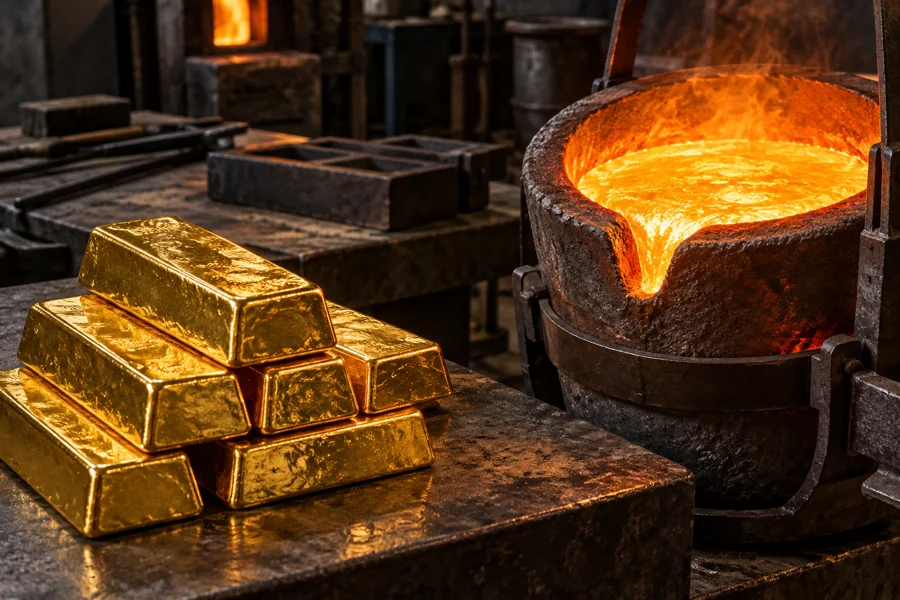
Gold (Au) is a precious metal with a melting point of approximately 1,064°C (1,948°F) in its pure form. The gold melting point can vary when gold is mixed with other metals. For example, 18K and 14K gold alloys melt over different temperature ranges depending on their composition. This guide covers gold melting temperatures, equipment, and the factors that affect how gold melts.
What Is the Melting Point of Gold?
Pure gold melts at 1,064.18°C (1,947.52°F) under standard atmospheric pressure. This reference value applies to high-purity gold. Commercial 24K gold is close to pure gold, although its exact purity may vary.
| Temperature scale | Melting point of pure gold |
| Celsius | 1,064.18°C |
| Fahrenheit | 1,947.52°F |
| Kelvin | 1,337.33 K |
At its melting point, pure gold absorbs heat as it changes from solid to liquid. When it cools under the same pressure, its equilibrium freezing point is the same as its melting point. Gold alloys may melt over a range instead of at a single temperature.
Melting Points of Different Karat Gold Alloys
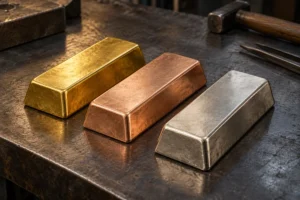
The melting point of pure gold is a useful reference, but you cannot apply it to every gold alloy. Alloys such as 18K and 14K gold contain other metals, and their melting temperatures depend on the type and amount of each metal in the mixture.
Gold Content in 24K, 22K, 18K, 14K, and 10K Gold
The karat number tells you how much gold an alloy contains by weight. For example, 18K gold contains 18 parts gold out of 24, or 75% gold.
| Gold grade | Approximate gold content | Approximate content of other metals |
| 24K | Near-pure gold | Small amounts, depending on purity |
| 22K | 91.7% | 8.3% |
| 18K | 75.0% | 25.0% |
| 14K | 58.3% | 41.7% |
| 10K | 41.7% | 58.3% |
The karat number does not tell you exactly which metals make up the rest of the alloy. As a result, you cannot determine an alloy’s melting temperature from its karat value alone.
Melting Ranges of Different Gold Alloys
Two 18K alloys both contain approximately 75% gold, but the remaining metals and their proportions can differ. These may include silver, copper, palladium, or other elements. Changing the composition can also change the alloy’s melting range.
The following examples from precious-metal supplier Hilderbrand show how melting ranges differ among specific gold alloys:
| Hilderbrand alloy | Karat / color | Gold content | Melting range (°C) |
| 18K2N | 18K yellow | 75.1% | 880–920 |
| 18K4Nh C | 18K pink | 75.1% | 860–880 |
| 22KY | 22K yellow | 91.7% | 950–990 |
| 14KP | 14K pink | 58.5% | 875–910 |
| 18KPd100 C | 18K white | 75.1% | 1,080–1,155 |
Source: Hilderbrand. Values apply to the specific alloys listed.
The first two alloys are both designated 18K, yet their listed melting ranges differ. The 14K, 22K, and white gold values are also specific to the named products; they are not universal ranges for every alloy of the same karat or color. Check your supplier’s data before selecting a processing temperature.
What Are Solidus and Liquidus?
Many gold alloys do not melt at a single temperature. Instead, they melt over a range defined by two temperatures:
Solidus: the temperature at which the alloy begins to melt.
Liquidus: the temperature at which the alloy becomes fully liquid.
Between these temperatures, solid and liquid are present together.
For example, Indium Corporation lists its Indalloy 178 gold-indium solder with a solidus of 451°C and a liquidus of 485°C. It begins to melt at approximately 451°C and is fully liquid at approximately 485°C. This is a gold-based solder, not an 18K jewelry alloy; its temperatures do not apply to 18K gold.
For another example of how alloy composition affects melting range, see our guide to pewter properties.
What Affects Gold’s Melting Behavior?
Gold’s composition affects the temperature at which it melts. Other factors, such as the size of the metal and the power of the furnace, affect how quickly it heats up. Understanding the difference helps you choose the right temperature data and equipment.
Factors That Change the Melting Range
Purity and impurities: Pure gold melts at approximately 1,064°C. When other elements are present, the melting behavior can change. The effect depends on the type and amount of each element; impurities do not always lower the melting temperature.
Alloy composition: Gold alloys contain metals such as silver, copper, or palladium. Their proportions affect the solidus and liquidus temperatures. Even if two alloys have the same karat value, they may have different melting ranges.
Pressure: Pressure can affect the melting temperature, but its effect is generally small under ordinary workshop conditions. The commonly quoted melting point of gold assumes standard atmospheric pressure.
Factors That Affect Heating and Melting Time
Size and shape: A large gold bar generally takes longer to heat through than a small piece under the same heating conditions. Thin pieces can heat more quickly because heat has a shorter distance to travel.
Equipment power and heat transfer: The furnace or torch must supply enough heat to raise the metal’s temperature and melt it. Heating time depends on how much of that heat reaches the gold.
Crucible and furnace temperature: The crucible transfers heat to the metal, while temperatures can vary within a furnace. The temperature measured by the equipment may therefore differ from the temperature of the gold itself.
These factors affect how quickly and evenly gold heats; they do not necessarily change the melting point of the material.
Gold Melting Point vs. Other Metals
Gold melts at a higher temperature than aluminum and silver, but slightly below copper. Platinum has a considerably higher melting point than all four metals.
| Pure metal | Approximate melting point (°C) | Approximate melting point (°F) |
| Aluminum | 660°C | 1,220°F |
| Silver | 962°C | 1,763°F |
| Gold | 1,064°C | 1,948°F |
| Copper | 1,085°C | 1,984°F |
| Platinum | 1,768°C | 3,214°F |
Gold melts about 21°C below copper. If you want to compare their temperatures and uses in more detail, read our guide to the melting point of copper.
These values are reference temperatures for pure metals. If you’re working with an alloy, check its specific composition and melting range instead of relying on the value for the pure metal.
What Equipment Is Used to Melt Gold?
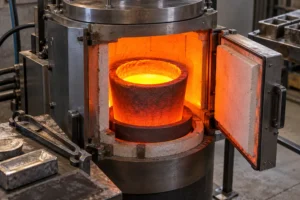
To melt gold, you need a heat source, a suitable container, and a way to monitor the temperature. Your choice of equipment depends on how much gold you’re melting and whether it is pure gold or an alloy.
| Equipment | Purpose | What to consider |
| Melting furnace | Heats gold in a controlled chamber | Check its temperature range, capacity, and temperature controls. |
| Torch | Provides a concentrated heat source | Choose a torch suitable for the amount of metal and the required temperature. |
| Crucible | Holds the gold during heating | Check that the crucible material is compatible with the gold alloy and the expected working temperature. |
| Temperature-measuring equipment | Monitors the temperature during heating | Use a device rated for the required range, and check where it measures the temperature. |
| Protective equipment and ventilation | Helps protect against heat, splashes, and fumes | Follow the equipment manufacturer’s instructions and account for the metals in the alloy. |
Choose a heat source with enough capacity for the material and consult the alloy and equipment specifications. The furnace display may measure the chamber rather than the metal itself.
How Is Gold Melted?
Gold is heated in a suitable crucible until it becomes liquid. The equipment and processing temperature depend on the alloy, the amount of material, and the next operation.
- Identify the material. Check whether you have pure gold or a gold alloy. If it is an alloy, use the supplier’s specifications to find its melting range.
- Choose the equipment and crucible. Select a furnace or torch with enough heating capacity for the amount of metal. Make sure the crucible is suitable for the alloy and working temperature.
- Check the temperature measurement. Use equipment rated for the expected temperature and note where it measures heat. A furnace sensor may measure the chamber rather than the metal.
- Heat the gold. Follow the equipment and material suppliers’ instructions. Monitor the temperature and observe the metal as it melts.
- Handle the molten metal for the next process. Once the metal is ready, it can be transferred or used in the next operation with suitable equipment and protection.
- Allow it to cool and inspect it. After cooling, check the material for visible defects or contamination. Further inspection depends on how it will be used.
The melting point describes when a material changes from solid to liquid. The furnace setting controls the equipment, while the actual processing temperature is the temperature used for the specific operation. These values may differ, so follow the specifications for your alloy and equipment.
Melting alone does not purify gold; removing impurities requires a separate refining process.
Why Does Gold’s Melting Point Matter in Manufacturing?
Gold’s melting point helps you choose suitable temperatures for processes involving heat. The value you need depends on the material: pure gold, a gold alloy, solder, and a gold-plated component may all behave differently when heated.
Jewelry Processing and Recycling
If you’re melting gold jewelry or scrap, knowing the alloy’s melting range helps you select suitable equipment and control the heating process. A piece of 18K gold may melt at a different temperature from a piece of 14K gold, but the exact range depends on each alloy’s composition.
Check the material’s composition or documentation before remelting. If the gold content is uncertain, testing or refining may be needed to establish or recover its purity.
Soldering and Electronic Components

During soldering, you need to consider the melting temperature of the solder and the heat limits of the parts being joined. The goal is to melt the solder without damaging the surrounding components or unintentionally melting the base material.
A gold-plated component is not made entirely of gold. Its base metal, solder, and other parts may be affected by heat at temperatures below the melting point of pure gold. For this reason, 1,064°C is not a safe operating or soldering temperature for the whole component. Check the specifications for the complete assembly and the solder you plan to use.
FAQs
Can Gold Be Identified by Its Melting Point Alone?
No. Melting behavior alone cannot reliably confirm whether an item is gold or determine its purity. Gold alloys can have different melting ranges, and other metals may melt at similar temperatures. If you need to verify the material, use an appropriate test, such as X-ray fluorescence (XRF) analysis, or have it assessed by a qualified laboratory.
Does Gold Lose Weight When It Is Melted?
Pure gold does not simply disappear when it melts. However, the amount recovered after melting can be lower if material remains in the crucible, is lost during handling, or if other substances are removed. Gold alloys may also contain metals that can be lost during heating.
What Is the Difference Between Gold’s Melting Point and Boiling Point?
The melting point is the temperature at which solid gold becomes liquid. The boiling point is the temperature at which liquid gold changes into vapor. Pure gold melts at approximately 1,064°C (1,948°F); its boiling point is much higher, at approximately 2,856°C (5,173°F).
Conclusion
Pure gold melts at approximately 1,064°C (1,948°F). For 18K, 14K, and other gold alloys, the melting range depends on their composition. Check the specifications for your particular material and equipment before heating it.
Sources
National Institute of Standards and Technology (NIST) — NIST Measurement Services: Radiance Temperature Calibrations (gold freezing point, ITS-90).
C. Hafner & Hilderbrand — Carat & Hallmarking Semi-Finished Products: Carat Gold Alloys
Indium Corporation — Gold Solder: Gold-Based Alloys.