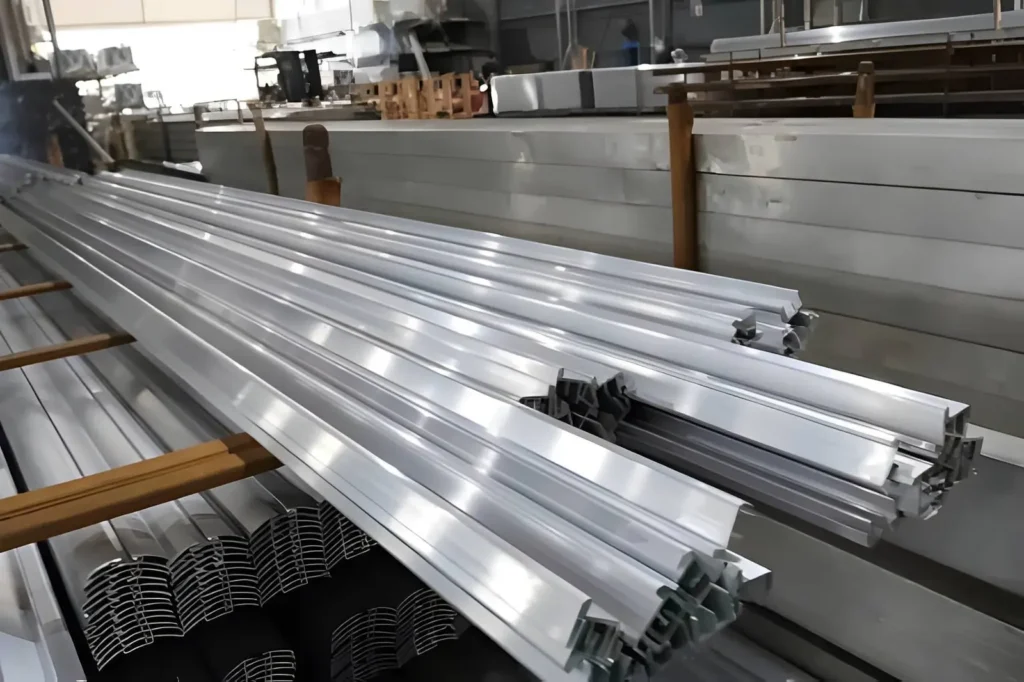
Quick Comparison: 6063 vs 6082 Aluminum
| CNC Requirement | 6063 Aluminum | 6082 Aluminum |
| Strength level | Lower | Higher |
| Typical tensile strength, T6 | ~215 MPa | ~310 MPa |
| Typical yield strength, T6 | ~170 MPa | ~260 MPa |
| Extrusion | Excellent choice | Suitable |
| Plate and bar | Available, but less common | Common |
| Complex extruded profiles | Strong choice | Suitable |
| Machined structural parts | Suitable at lower loads | Better suited |
| Surface finish after machining | Generally good | Good |
| Anodizing | Good | Good, with appearance depending on the process |
| Best starting point | Profile-driven parts | Strength-driven machined parts |
These values are typical minimums associated with common T6 product specifications. The exact mechanical values depend on:
- Product form
- Thickness
- Temper
- Applicable standard
Introduction
6063 vs 6082 aluminum are both 6xxx-series aluminum alloys. Their usual supply forms and strength levels are different. 6063 is widely used for extruded sections where the cross-sectional shape and surface appearance are important. On the other hand, 6082 is a higher-strength 6xxx alloy commonly supplied for structural and machined components.
For CNC machining, the starting stock makes a significant difference. If the required component already has a long, constant cross-section, a 6063 extrusion can provide much of the finished shape before machining begins. For a part being cut from a plate or bar, 6082 is often considered because of its higher strength.
The material specification should include the alloy and temper, not just “6063” or “6082.” For example, comparing 6063-T6 with 6082-T6 gives a useful engineering comparison, while comparing unspecified tempers does not provide enough information to judge strength.
The practical choice comes down to the required material strength, stock form, finished geometry, and machining operations.
What Is the Main Difference Between 6063 Vs 6082?
6063 is widely used for aluminum extrusions. 6082 is more popular for plate and bar to machine structural and load-bearing parts.
Aluminum 6063: Chosen Mainly for the Profile
6063 is a practical choice if the desired shape is to be extruded. For example, if a part is a long channel having a uniform cross section over its length, the channel can be extruded first, followed by a subsequent deformation to form the desired shape. CNC machining will then be used to give the parts any other characteristics that are not produced during the extrusion process, such as holes, slots, threaded holes, and end faces. This can reduce the significant machining time of a solid part.
Aluminum 6082: Chosen More Often for the Finished Part
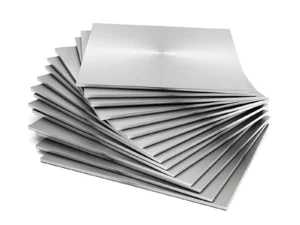
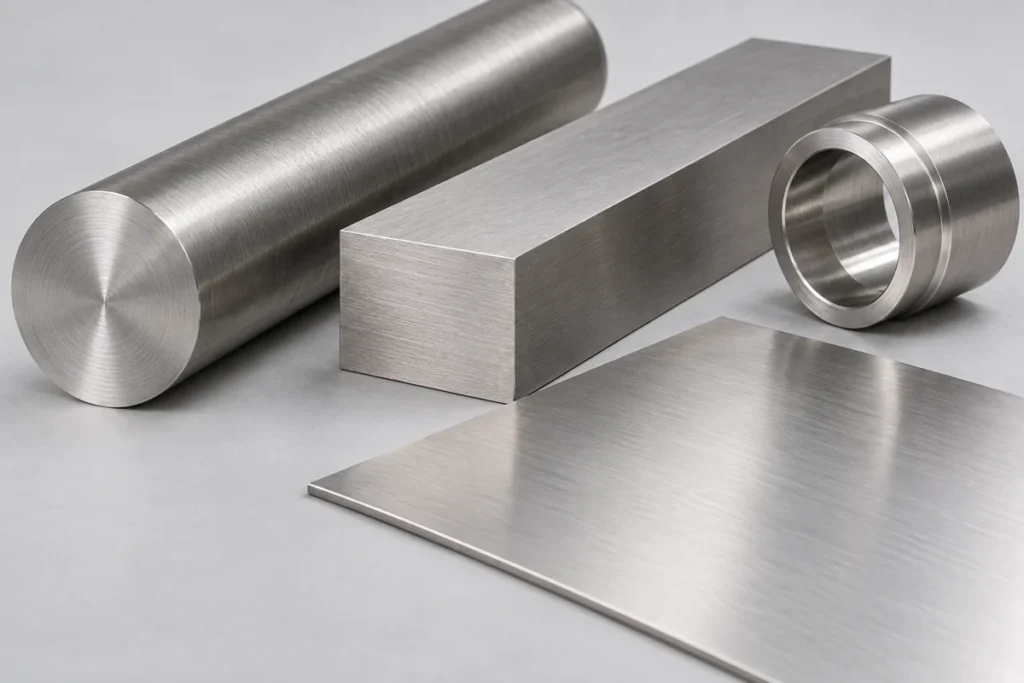
6082 is frequently manufactured in plate and bar form and is thus useful for parts of rectangular or round shape. For instance, a mounting bracket made of 20 mm 6082-T6 plate can be milled to its desired shape, and then holes, pockets, and mounting faces can be added. 6082-T6 is preferred over 6063-T6 for many load-bearing components for its higher strength.
Compare the Same Temper
Do not compare only “6063” and “6082.” The temper has an influence on the material properties as well. The typical minimum tensile strength is approximately 215 MPa for 6063-T6 and 310 MPa for 6082-T6 for a T6 comparison. The yield strength is approximately 170 MPa and 260 MPa, respectively.
Therefore, when the drawing calls for a mechanical property, you must ensure that the exact temper, product form, and material standard are specified before choosing a material.
How Does Stock Form Affect the CNC Job?
The stock form is the beginning of the CNC process. When the stock already has most of the desired shape, the required feature(s) are typically added using some form of machining. If it begins as a solid block, then more cutting will be needed to achieve the same geometry.
Starting With 6063 Extrusion
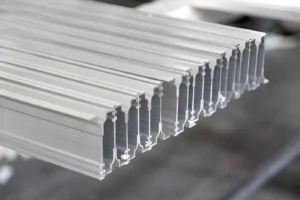
The 6063 extrusion can be applied when the profile of the parts to be formed remains constant in length. The outer shape may be obtained directly from the extrusion of a 1000 mm section. The CNC work can then include cutting to length, drilling holes for mounting, milling slots, and end work.
The method is applicable to custom profiles, as the extrusion itself contains the basic geometry, which will be used as a basis for the machining.
Starting With 6082 Plate
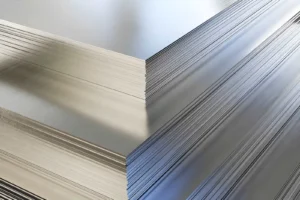
6082 plate is a starting point. Typically, the piece to be cut is made from a rectangular blank, and then the CNC machine cuts the required shapes.
An example is a bracket that was designed to end up as 12 mm in thickness but could be cut from a 20 mm plate. The process should cut off the excess material, which is 8 mm beyond the dimensions of the final faces and features.
It is also a useful part blanking tool for parts that have an irregular outside shape, which can’t be made from a regular extrusion.
Choosing Stock Close to the Finished Shape
The stock should be sufficient for the various machining processes and not be excessive. It is a good idea to compare the blank dimensions with the finished dimensions before quoting the job. Roughing times and tooling needs also go up if the volume is large enough that a lot of material has to be removed.
Be sure the stock shape provides an appropriate amount of access for the cutter. Although the part is not a large one, the deep feature may still need long tooling. In some cases, it may be possible to lessen that requirement by changing the starting form.
6063 vs 6082 Aluminum: Which One Machines Better?
Both alloys can be successfully machined. The bigger difference comes from how the material reaches the machine. The 6063 is frequently extruded, and 6082 is typically supplied in plate or bar form. It alters the setup and the quantity of cutting prior to the final features.
CNC Milling
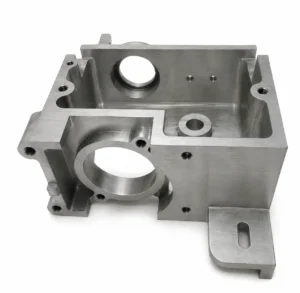
In the case of 6063 extrusion, the cutter might just need to create secondary features. Be sure to support the extrusion properly, considering the area around thin sections; e.g., do not put the extrusion under too large a clamping force that could cause it to deform.
Typically, there is more direct material removal in 6082 plate and bar. Utilize a toolpath with constant cutter load for pockets and outside profiles. Don’t put chips in pockets to be cut again.
The cutter should not rub against the material, but make a clean cut. The accumulation of aluminium on the cutting edge is a good indicator of the need for a change in the tool condition or cutting setup.
CNC Drilling and Tapping
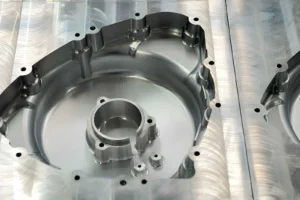
The depth of the hole does influence the removal of the chips. A shallow through hole is easy; a deep blind hole requires space for chips below the required thread depth.
The size of the tapping hole and the depth of the hole for tapping should be verified by referring to the thread specification. For instance, the tapping drill size for an M6 × 1 thread is 5.0 mm. A blind hole also requires extra depth at the bottom of the hole to prevent chips from packing against the tap.
When threads pull out of the workpiece, check the tap and the hole before switching to another CNC program if they are torn, rough, or not completed.
Finishing Passes
The final operation should be a controlled cut to remove the remaining stock. A thick final cut will tend to force the thin wall away from the cutter, creating a dimensional error.
If the wall is being machined, inspect the remaining stock, cutter reach, and tool condition prior to changing the programmed feed. If the sharp tool used for finishing is sharp, it should cut consistently along the wall.
Don’t remove the chamfer or radius edges from the CNC program for edges. This provides the finished edge with a clearly specified size rather than relying on manual deburring.
How Should You Design a CNC Part From 6063 or 6082?
The drawing should give the machinist enough room to hold the part, reach the features, remove the stock, and finish the critical surfaces. Small changes in the geometry can make a CNC job much easier.
Workholding Space
Leave a usable area for clamping/locating the part. If the profile has machining operations on all outside faces, then it can become difficult to hold a profile after the first setup.
With 6082 plate components, leaving a small border around the manufactured profile may offer an improved area for the first setup. In the last operation, the border can be deleted.
Wall Thickness
The amount of material to be removed around thin walls should be taken into account. A 2mm wall next to a large void is more challenging to finish than a 2mm wall behind solid material.
When the wall is still usable, it is better to rough up the cavity first, allowing the wall to be slightly oversized. The final cut can then be finalized to the 2 mm dimension.
Pocket Depth and Tool Reach
If you have deep, narrow pockets, then you need to use longer tools. As the cutter must reach further into the part, so does its length.
The pocket width and depth may necessitate a different cutter setup than a pocket of different width and depth. The wider it is opened, the shallower the cavity, and the larger the corner radius, the better the access is for machining.
Hole and Thread Location
The location of the hole should provide sufficient material for the feature and sufficient clearance for the drill, tap, boring tool, or inspection equipment.
Narrow access to tools can also be caused by a threaded hole near a wall. If a blind thread is to be used, leave enough depth in the hole for the tap to fit and for chips to fall into.
Machining Allowance on Critical Faces
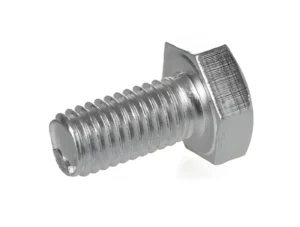
Avoid using all surfaces as final-size surfaces (as in the first operation). Critical faces can be left with a small amount of stock and finished after the part has been properly located.
For instance, if a mating face is required to have a dimensional requirement of 0.02 mm, it might be preferable to set up the reference face first and then complete the mating face from that controlled setup. This allows the CNC process to have a reference instead of attempting to make both surfaces in a heavy roughing operation.
How Do 6063 and 6082 Compare After Anodizing?
Both alloys can be anodized to provide a harder surface and enhanced corrosion protection, but they may not look the same. This depends on the alloy and the surface condition, as well as the anodizing process.
Appearance
The 6063 is commonly used for anodized profiles because it can be produced to give a clean and consistent appearance following appropriate surface treatment.
6082 may also be anodized, but may exhibit more color variations. If appearance is a critical factor, describe the type, color, and anodizing finish needed for parts before they are manufactured.
Machined Areas
The surface condition prior to anodizing is visible after anodizing. The texture of the milled face will be different than the texture of the untreated extrusion surface.
A 6063 extrusion could, for instance, have its exterior surface preserved and be drilled for holes and features at the ends. When anodized, the area to be machined may have a different appearance from the surface of the extrusion.
When more than one area is to be the same color, the surface preparation should be the same prior to anodizing.
Dimensional Features
The anodizing process is a surface treatment that adds material to the surface, so bores, threads, mating faces, and sliding surfaces should be taken into account.
It is important that the final bore size is determined before it is anodized if it is required to fit a shaft. The finishing process can then be used to determine the CNC size.
Check the critical features after anodizing. The thickness of anodizing required depends upon the thickness and process specified.
6063 vs 6082 Aluminum: Practical Applications
The manufacturing route often gives the clearest reason for choosing between the two alloys. The same component type can use either grade, but the starting material and load requirement can lead to a different choice.
| Part requirement | Better starting choice | Practical reason |
| Long section with one constant profile | 6063 | The required section can be produced by extrusion |
| Plate-machined bracket | 6082 | Suitable plate stock is available for direct machining |
| Housing built around an extruded section | 6063 | The extrusion can form the main body |
| Bracket carrying a defined load | 6082 | Higher strength gives a higher allowable load for the same basic section |
| Turned adapter from round stock | 6082 | Round bar is suitable for turning and secondary features |
| Profile where surface appearance is part of the requirement | 6063 | Commonly used for finished extruded sections |
| Extrusion requiring drilled and milled features | 6063 | CNC operations can be limited to the required secondary features |
| Part machined substantially from solid plate | 6082 | Better suited to applications requiring a higher strength level |
The key question is how much of the finished shape can be obtained from the supplied material before CNC machining starts. If extrusion can produce most of the section, 6063 has a clear manufacturing advantage. If the component starts as a plate or bar and its strength requirement is higher, 6082 is usually the more suitable route.
6063 vs 6082 Aluminum FAQs
Can 6063 and 6082 Be Used in the Same Assembly?
They can be used together if the drawing allows both alloys and their individual strength requirements are satisfied. The joint should also be checked for surface finish, anodizing, galvanic contact, and mechanical loading where these affect the assembly.
Can 6082 Be Extruded Into Complex Profiles?
6082 can be extruded, but 6063 is generally better suited to complex extrusion shapes. As the profile becomes more detailed, extrusion design and section thickness become important.
Is 6063 Available as a round bar?
6063 is available in some round extruded forms, but 6082 and other machining grades are more commonly selected for round bar work. Check the required diameter, temper, and material standard before specifying the stock.
Which Alloy Is Better for Threaded Aluminum Parts?
If a higher mechanical load requirement is necessary for the threaded part, then 6082 is typically the better option. If the available stock and the specified properties can satisfy the drawing, it is acceptable to use 6063 for a lightly loaded threaded feature.
Can 6063 Be Used Instead of 6082 Without Changing Part Dimensions?
A change of alloy should not be considered a material change. If the part was designed for the higher strength of 6082, then it may be necessary to review the section size and load requirement when switching to 6063.
Does Anodizing Affect the Choice Between 6063 and 6082?
It is controllable, especially when it comes to the anodized look. 6063 is the standard grade used for anodized visible extrusions, and 2663 can also be anodized for machined parts. The preparation of the surface must be specified and agreed upon prior to production, as well as the specified anodizing process.
Which Alloy Is Easier to Source for a Custom CNC Job?
The 6082 is more readily available in plate and bar form for a machined part. 6063 is more commonly recognized as an extrusion stock, and therefore the type and amount of profile may influence sourcing.
Can 6063-T6 and 6082-T6 Be Specified Interchangeably?
The two alloys cannot be considered equal because of the T6 designation. Mechanical properties and the material specifications are different, so it is necessary to change the alloy after checking the drawing and material properties.
What Should a CNC Supplier Check Before Machining 6063 or 6082?
The supplier shall inspect alloy and temper, stock form and stock size, finished geometry, critical tolerances, threads, surface finish, quantity, and inspection requirements. If the part is to be extruded, the available profile should also be compared to the finished part before a quotation is given.
6063 vs 6082 Aluminum: Which Should You Use?
Look at the starting material and the finished part together.
If the drawing calls for a long, constant aluminum section, check 6063 extrusion first. For example, a 1000 mm-long rail with a formed channel, rib, or groove can arrive close to its finished profile. CNC work may then be limited to cutting the length, drilling mounting holes, and machining the ends.
For a bracket, mounting plate, or housing that starts from rectangular stock, 6082 is often the more practical choice. Its higher strength is useful when the part has a defined load requirement. The drawing should confirm that requirement before the material is selected.
The temper must stay with the alloy specification. A requirement for 6082-T6 cannot be treated as simply “6082,” and 6063-T6 is not an equivalent substitute.
Stock size also deserves a check before quoting. Starting with a 50 mm-thick block for a part that finishes at 20 mm creates a very different CNC job from starting with a suitable 20 to 25 mm plate. The same applies to an extrusion that already contains most of the required profile.
For a practical selection:
- 6063: start here for extrusion-based parts where the specified strength is sufficient.
- 6082: start here for plate- or bar-machined parts where the higher strength level is required.
- Neither should be substituted blindly: check the drawing, temper, product form, and mechanical requirements first.
Send YD Rapid the CAD model, drawing, alloy and temper, starting stock, quantity, critical dimensions, and surface-finish requirement. This gives our machining team enough information to check the material and manufacturing route against the actual part.