Key Takeaways
- PI is used for parts exposed to high heat and wear, such as bushings, seals, washers, and insulating components.
- The exact PI grade should be confirmed before machining. Different grades can have different properties and machining requirements.
- For a CNC quote, provide the material grade, drawing, finished dimensions, tolerances, and surface finish requirements.
- Thin walls, small bores, and deep features need closer process control during machining.
- The machining setup should support the part without putting unnecessary force on the polymer.
- For finished PI parts, inspection should focus on the dimensions and surfaces that affect fit and function.
- If you are sending a PI part for CNC machining, a complete drawing gives the shop a much better basis for selecting the machining process and inspection method.
Introduction
Polyimide (PI) is used for CNC-machined parts that must remain functional under high heat, friction, electrical exposure, and repeated contact. Parts such as bushings, seals, washers, spacers, and insulating components can be made from PI when the service conditions call for its specific properties.
For a CNC shop, the material name alone is not enough. The PI grade, part geometry, finished dimensions, surface finish, and drawing tolerances all need to be checked before machining. A thin ring and a solid bushing made from the same PI grade can require different machining approaches.
This is also why the exact material grade should be confirmed before production. PI covers a range of materials, and the grade can affect how the material behaves during machining and in service.
What Is Polyimide (PI) Material?
Polyimide (PI) is a high-performance engineering polymer developed for applications that are too challenging for most engineering plastics. It has high-temperature resistance without loss of beneficial mechanical and electrical properties.
PI, as a material grade, is not a single entity. The strength, friction, wear, thermal, and electrical properties of different formulations may vary. Hence, it is advisable to check the grade before choosing the component for the use of PI.
What Type of Material Is PI?
The family of polymers (referred to as the polymer with imide groups in the chemical structure) is known as PI.
Polyimide can be provided in a rigid engineered form with good dimensional stability and resistance to wear and heat, depending on the formulation.
A few grades are not filled, and others have fillers of graphite, carbon, or PTFE. The additions modify the properties of the material, such as friction, wear, and mechanical properties.
What Makes PI Different From Other Engineering Plastics?
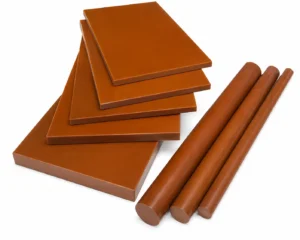
One of the primary distinctions is temperature performance. PI can maintain valuable strength and stability at temperatures that soften or cause a significant reduction in mechanical properties in many common plastics.
It also possesses good wear resistance, and its surface friction is naturally low under appropriate conditions. It also has a very useful feature: its electrical insulation properties. This is the difference between the plastic materials like nylon, acetal, or polyethylene.
What Should You Check in a PI Material Specification?
Use the same “PI” grade, rather than the word “polyimide.” Perform continuous-use temperature, tensile strength, compressive strength, hardness, friction, wear, thermal expansion, and electrical properties checks on the manufacturer’s data.
The material shape must also comply with the needs of the part. Filled PI grades may have different properties than unfilled grades, so it is important to ensure that the grade selected is the appropriate one to ensure it meets the operation requirements of the part.
Why Is PI Used for CNC Machined Parts?
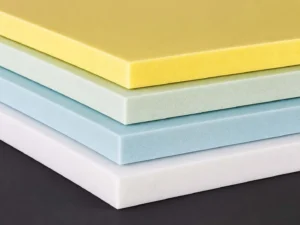
When a part requires a specific combination of demanding conditions, the material used for machined parts is selected as PI. It can be used by a designer for a component that is subjected to heat, sliding contact, electrical stress, or a prolonged mechanical load. The grade should be based on the actual service conditions, not general properties of polyimide.
What Temperature Conditions Can PI Handle?
PI maintains its shape and mechanical properties at temperatures that would make many common plastics soften. There are grades rated for continuous use at temperatures as high as 260°C, and specialized grades are available that can withstand even higher temperatures for a limited time.
All published temperature ratings are grade-specific. Verify the supplier’s data for continuous exposure, short-term exposure, and the anticipated load at temperature prior to material selection.
How Does PI Perform Under Sliding Contact?
PI is a material that can be used in sliding applications, as it is both low in friction and has good wear properties. Some designs can benefit from not having to use extra lubrication.
The mating surface is a crucial factor in determining performance. The rate of wear can vary, depending upon contact pressure, sliding speed, surface finish, temperature, and lubrication. For conditions that demand better wear performance, filled PI grades are available.
Where Does Electrical Insulation Matter?
PI has good insulating properties and is a good electrical insulator, and can retain its insulating property over a wide range. This is very useful for components that are required to be electrically isolated during exposure to heat.
When selecting materials, look at the dielectrics, insulation resistance, and temperature rating of the grade. These values are more meaningful than just saying that PI is an electrical insulator.
How Does the Operating Load Affect PI Selection?
If a PI part is placed under constant load, it may gradually deform over time, especially at high temperatures. It should be taken into account in parts that are subjected to a constant force.
Test compression, creep data, and load capacity of the grade for the desired temperature. The result will also depend on the geometry of the part, and therefore the material properties should be taken into account in conjunction with the part design.
Which PI Grade Should You Use for a CNC Part?
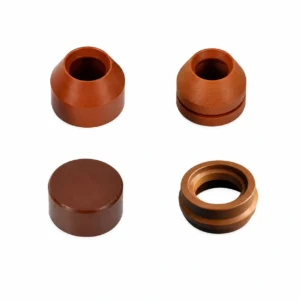
The material name alone is not sufficient for a CNC part due to the various grades of polyimide. Different strengths, wear, friction, thermal, and electrical properties can be used for each grade. Select the grade that the completed section will be exposed to.
How Do PI Grades Differ?
PI grades are prepared for various performance needs. A grade may be designed for enhanced wear resistance, and another for increased strength or electrical insulation.
Check the temperature, load, friction, wear, and chemical conditions of the part before choosing the grade. This will provide you with a far better beginning than picking the name of the provider.
When Is Filled PI Used?
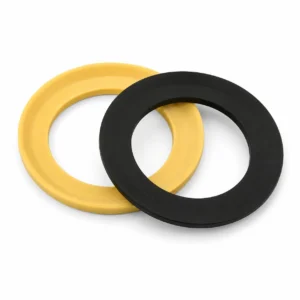
Filled PI is used to modify some properties to include materials like graphite, carbon, or PTFE. These fillers can enhance wear properties, reduce friction in the material, or alter its stiffness.
For instance, a sliding part may require a filled grade, and an electrical insulating part may require an unfilled grade. Please verify the data sheet for the correct grade.
What Information Should the Material Callout Include?
A specific PI grade or material specification should be depicted in the drawing. A simple “PI” is too general to allow for material substitutions.
Where a specific filler, grade, or standard of the material is required, specify this on the drawing or purchase specification.
How Should You Confirm PI Stock Before Machining?
Before ordering the material, ensure that the supplier can supply it. Verify the grade, stock shape, size, and quantity available.
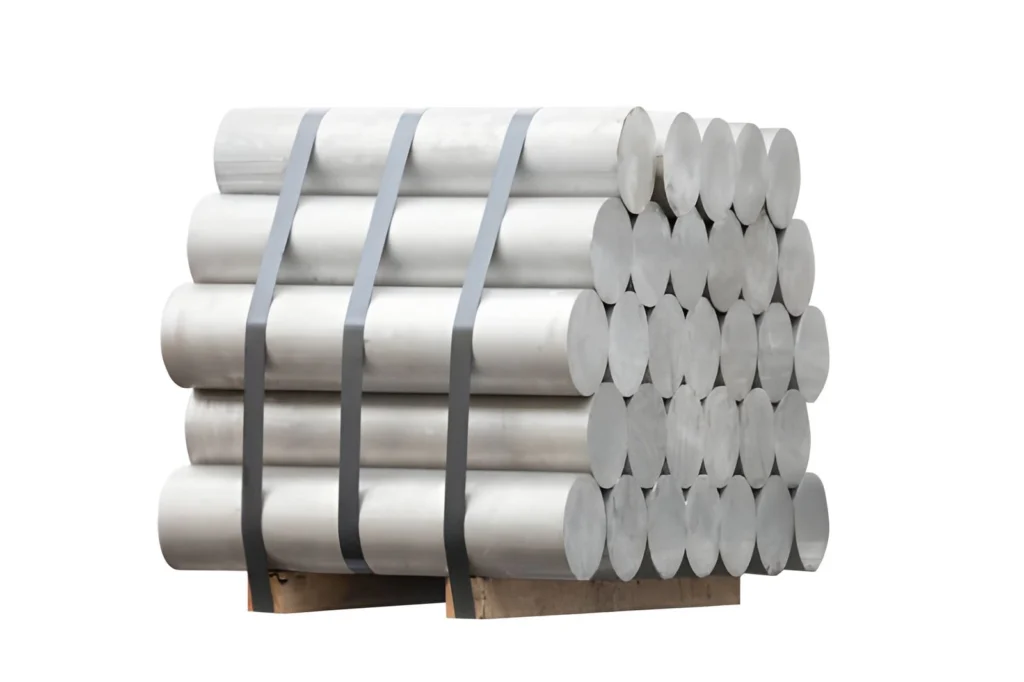
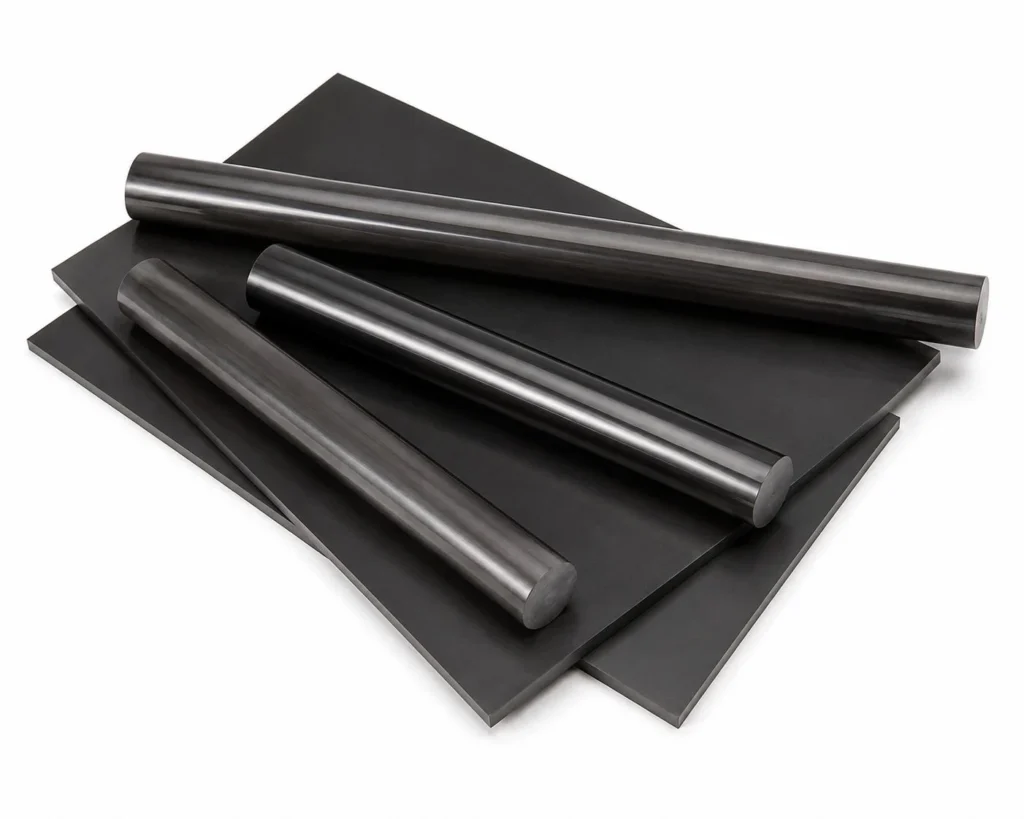
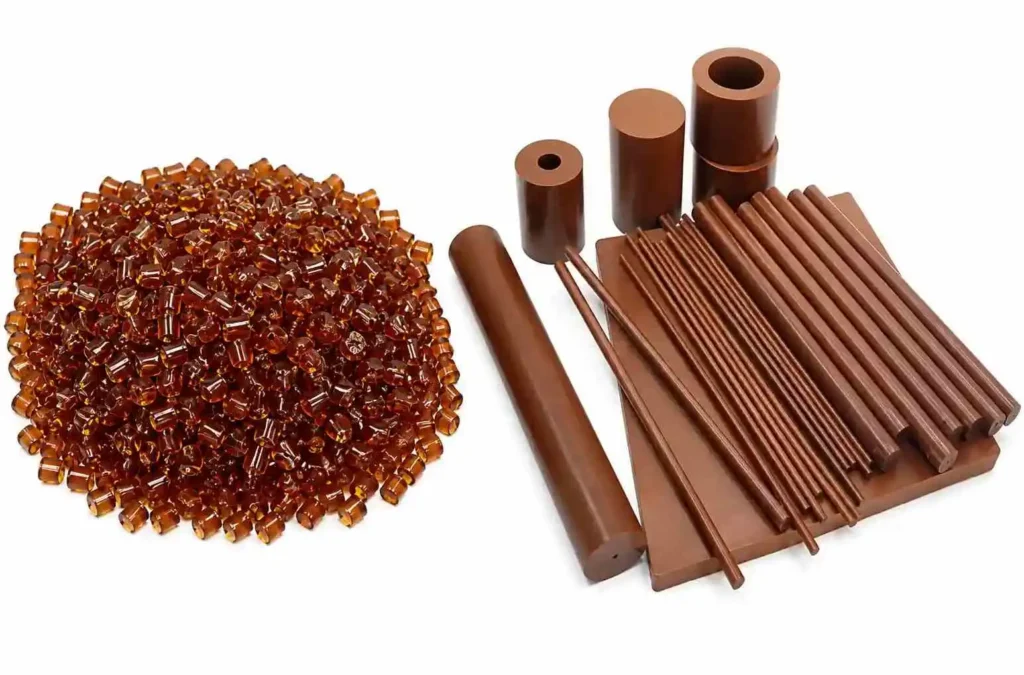
PI can be provided as sheets, plates, rods, or tubes. Having stock close to the required part size can also minimize the amount of material that is removed and the amount of money that is spent in the process.
How Is PI Machined on a CNC Machine?
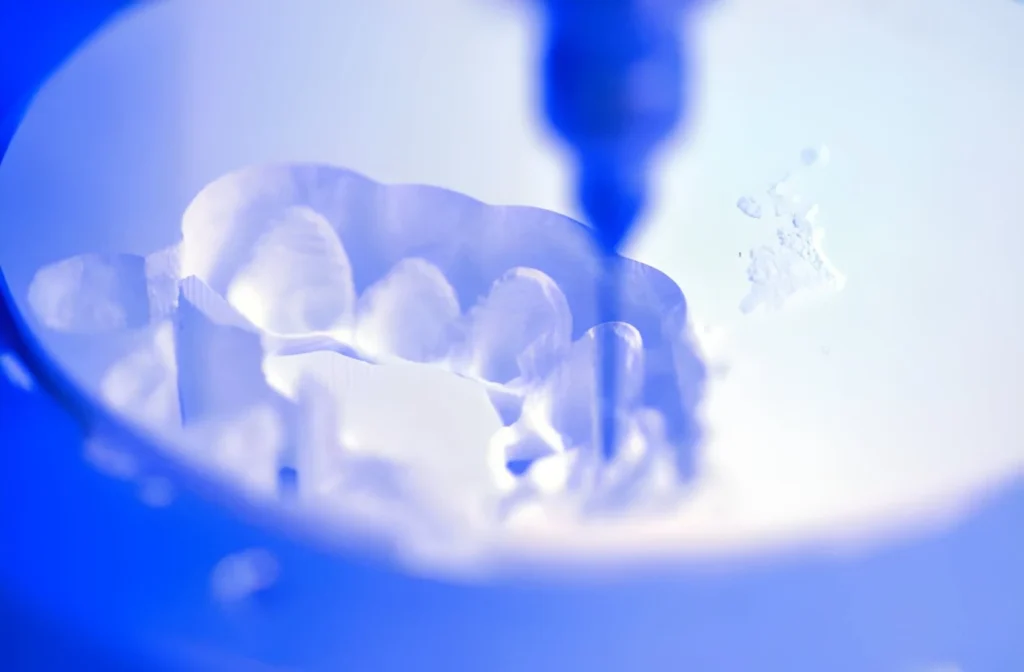
PI can be cut on a CNC machine with sharp cutting tools and proper cutting conditions. The main concern is heat. PI does not conduct heat as well as metals, and excess cutting heat may result in a softening of the surface or a change in part size.
Before making the setting, the PI grade, geometry of the tool, part shape, and stock size should all be taken into consideration.
Which Cutting Tools Are Suitable for PI?
For many PI grades, an optimal choice of tooling is sharp carbide tools. The sharp edge should be maintained since a dull edge tends to rub the material rather than cut it cleanly.
Inspect for tool wear for filled PI more frequently. Some fillers may accelerate the wear of the cutting edge more quickly than unfilled PI.
How Should Cutting Conditions Be Set?
Avoid using the same cutting speed and feed for each PI grade. Follow up on the material and tool supplier’s initial values and then modify these after making the check on the cut.
A tool should cut the material cleanly, not rub it across the surface. When the part is hot, there is a tendency for smearing on the surface, and the dimension begins to change; the cutting condition should be checked.
How Do You Control Heat During Machining?
Maintain a sharp cutting edge and clean up chips from the cutting area. An air blast is sometimes helpful to remove chips and to transfer heat from the tool.
Some PI materials can be used with coolant; however, consult the recommendations of the grade manufacturer first. Clean and dry the part after machining before inspection.
How Should Thin PI Parts Be Held?
When the clamping pressure is applied to the thin PI sections, they can move or bend. Secure the part in the clamp so that it will not move, but do not squeeze it as a metal block.
Plant with large planting spaces and keep the unplanted portion small. In addition, for thin sheet parts, where possible, a soft fixture surface or vacuum fixture may be used.
What Should Be Considered When Drilling PI?
Use a sharp drill with sufficient clearance for chips to fall into the hole. The packing of chips may generate heat and lead to damage to the hole.
If you’re drilling a very deep hole, back the bit out every few holes to remove the chips. Do not apply too much pressure, particularly when drilling thin sections, which may bend, and ensure the drill remains parallel to the hole.
What PI Features Need Extra Attention During CNC Machining?
Even if the material and CNC settings are appropriate, these factors can cause machining problems when the shape of the part is inappropriate. They have to be dealt with differently when they have little supporting material, limited chip space, and long, extended areas, which are not well supported.
How Should Small Bores Be Machined?
The causes of small bores are a deflecting drill, packing chips, and temperature. The smaller the bore, the more limited the space for chips to move from the bore.
Ensure the correct drill is selected for size and length. If the critical size of the hole is reached, leave a small stock and finish later. This will provide greater control over the final diameter than would forcing the drill to create the diameter.
What Happens With Thin Walls?
A thin PI wall may deflect due to cutting pressure or clamping force. After the clamp is removed, the wall can return and alter the dimension measured.
Hold the wall while a machine is responsible for the rest of the work, and only leave the thin section in place at the end of the work. Measuring the part while in the clamp can lead to a false measurement as well.
How Should Deep Holes Be Approached?
The greater the depth of the hole, the more difficult it is to remove the chip. The heat can be increased by chips that become stuck in the hole.
A deeper hole may be drilled by pecking or other controlled methods of chip removal that are appropriate for the type of drill. The method used will vary depending on the depth of the hole and the design of the drill.
How Do Grooves and Sharp Edges Affect the Part?
A constriction of the space will reduce the opportunity for the chips to escape and may make it harder to access the tools. Additionally, the deflection of such a small cutting tool for the feature is more sensitive.
Sharp internal corners may result in a weak area around the feature. With a slight bend (radius) added to the feature, if possible, it is easier to make without altering the overall function.
What Should Be Considered for Long, Slender Parts?
Long sections can bend over when the cutting force is applied perpendicular to the fixture. The greater the unsupported length, the more it appears to be a problem.
If possible, use a support point near the area to be cut. To confirm shaft lengths, pins, or other long, slender parts for length-to-diameter ratio or to confirm fixture stiffness before final machining.
What Tolerances Should Be Specified for CNC-Machined PI?
Although it is possible to machine PI to controlled dimensions, it is important to note that not all features on the drawing are required to be the same tolerance. The behaviour of polymer parts can vary from that of metal parts under certain conditions, such as temperature, clamping force, and machining.
Establish stricter tolerances for those dimensions that have an impact on assembly or part function. Reserve wider tolerances in uncritical dimensions of the design.
Which PI Dimensions Usually Need Closer Control?
Pay more attention to tighter dimensional control of features that locate, guide, seal, or connect to another feature. Common examples include bore diameters, shaft diameters, locations, and critical thicknesses.
If the part needs to lie flat against another surface, then a flatness requirement may be necessary on large flat areas. Don’t just overcompensate for dimensions so that the drawing appears accurate.
How Should Mating Bores and Shafts Be Toleranced?
The bore and shaft should be specified as a pair. They need to be separated according to the operating temperature, motion, load, and material combination.
The fit of PI changes with temperature, so the temperature at which it fits may vary during service. Prior to the final fit of the bore and shaft limits, check the CTE of the PI grade.
When Should GD&T Be Used?
Apply GD&T when the purpose of the part is dependent on feature-to-feature interactions. For instance, a hole pattern could require a positional tolerance to ensure that the part fits correctly when attached to another.
There should also be a clear purpose for a flatness, perpendicularity, or concentricity requirement. Geometric controls may not be necessary if the geometric control has no impact on the function of the component or on its fit.
Why Should Non-Functional Dimensions Avoid Unnecessary Limits?
Each tight tolerance requires inspection labour and manufacturing labour. Unless it has an impact on fit, movement, sealing, or another required function, where it is not necessary, it probably isn’t worth making its limit unnecessarily small.
In the case of PI parts, this can also simplify the manufacturing process because the material can be influenced by temperature and clamping during manufacturing. Establish the boundaries this part requires, and let the rest be left as practice.
How Do You Inspect a CNC-Machined PI Part?
Inspect the PI part against the drawing and the material specification. Start with the dimensions that control fit or assembly, then check the remaining features.
Before measuring, let the part reach the inspection room temperature. Thin PI sections should be supported without applying force, since clamping or pressing the part can change the reading.
How Are PI Dimensions Checked?
Select the appropriate tool for a feature and tolerance: Micro, Caliper, Height gauge, or CMM. A basic caliper is not suitable for a close-tolerance dimension; instead, use a measuring tool that will resolve the specified limit.
When a critical dimension might change throughout its length, measure at more than one point. Write answers to the drawing requirements.
How Are Small Bores Measured?
For bores, use a bore gauge, small-hole gauge, or calibrated pin gauge appropriate for the bore size. The gauge should be pushed into the hole with enough force to allow it to be taken in place.
If it is a close bore, measure the diameter at various depths and locations. This can reveal taper or out-of-roundness that could be missed by a single measurement.
How to verify Profiles and GD&T Features?
For complex profiles, hole positioning, and geometric requirements that cannot be reliably measured using hand tools, consider using a CMM.
Optical inspection may be sufficient for simpler profiles. When measuring, use the drawing datums so that the inspection is against the same datum as the feature is defined.
What Should Be Checked Before Final Approval?
Review drawing revisions, PI grade, dimensions, geometric requirements, and inspection results. Next, check the part for burrs, chips, scratches, cracks, damaged edges, and contamination.
If the part is thin, make the last measurement without squeezing or distorting the part. Before releasing the part, check the supplied certification, if required, to ensure that the material grade is the same as the specified grade for the part.
What Parts Are Commonly CNC Machined From PI?
Parts requiring more than plastic performance are manufactured using PI. These include bushings, washers, rings, seals, and insulating components. The actual classification of the grade will depend on the load, temperature, contact, and electrical conditions of the part.
Why Are PI Bushings CNC Machined?
PI bushings can be fitted on shafts and pins where sliding motion and heat are required. The inside and outside diameters of the bushing are machined to the proper size to properly fit inside the housing and on the shaft.
The running clearance should be checked at the working temperature. The clearance at room temperature may vary from one time to the next because of the expansion of PI under heat.
Where Are PI Thrust Washers Used?
A PI thrust washer is placed between two moving parts that take axial load. It is sometimes manufactured in the form of a thin ring of a known inside and outside diameter.
The primary inspection involves thickness, flatness, and the clearance around the mating part. Additionally, the wear characteristics of the washer should be examined for the particular PI grade to be used if the washer is expected to operate continuously under load.
Why Are PI Seals and Wear Rings Machined?
Seals and wear rings must be of the correct size and surface, as they must operate very close to another component. For the parts where heat, sliding contact, or wear is a part of the service, PI can be used.
The grade should be in accordance with the contract conditions. The performance of the part may be affected by the pressure, its temperature, the speed of the shaft, and the kind of material to be mated.
Where Are PI Insulating Components Used?
PI is able to be machined into spacers, sleeves, washers, and other parts that isolate conductive parts. The part can be used for electrical insulation and mechanical support.
The required insulation properties and dimensions should be checked for these components. If the part is to be operated at a high temperature, use the electrical data of the PI grade as compared to the data at room temperature.
How Does PI Compare With PEEK, PAI, and PTFE?
When a plastic component needs to operate at a high temperature, with load or sliding contact at the same time, it is generally considered that the plastic film. There are other materials that can be used in tough environments, such as PEEK, PAI, and PTFE, but they have varying properties.
When selecting materials, use the actual grade’s Continuous use temperature, tensile strength, compressive strength, coefficient of thermal expansion, friction, and wear data, as well as chemical compatibility.
PI vs PEEK: What Is Different?
Unlike PEEK, the temperature of PIs is generally higher. The temperature for the continuous use of PI is anywhere from 250-300°C; there are many grades of PEEK commonly rated between 240-260°C.
PEEK also has high mechanical properties. The tensile strength of the unfilled PEEK is typically 90-100 MPa, and some unfilled PI grades are of similar strength. The grades for filled grades can be significantly higher.
When using a PI part, ensure that you examine not its room-temperature tensile strength, but its behavior at the temperature at which it will be operating. With higher temperatures, creep, thermal expansion, and wear can vary greatly.
PI vs PAI: Which Properties Should Be Compared?
Among the engineering plastics, PAI is both strong and stiff. The typical unfilled PAI is approximately 100 – 120 MPa in tensile strength and 3.5 – 4.5 GPa in tensile modulus. In some cases, grades are reinforced well beyond these figures.
PI can offer similar performance in certain aspects, particularly at higher temperatures, but significant differences exist depending on the grade.
If it is a loaded PI or PAI component, consider compressive strength, creep, hardness, thermal expansion, and wear coefficient, instead of just tensile strength.
PI vs PTFE: What Changes in Part Selection?
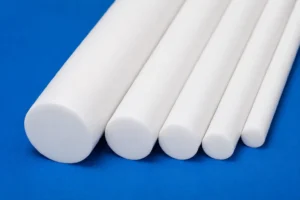
PTFE has a much lower coefficient of friction than most engineering plastics. The typical values of static or dynamic friction are in the range of 0.05 to 0.20, depending on the mating material, loading, speed, temperature, and filler.
PI usually exhibits higher stiffness and dimensional stability when under mechanical load. However, PTFE may be chosen when stiffness is not as critical as very low friction and chemical resistance.
Thermal expansion is another important difference. The coefficient of thermal expansion for unfilled PTFE is approximately 100-200 × 10⁻⁶/K, with many grades of PI having a much lower CTE. This might be important for precise bushings, seals, and tight-fitting parts.
PI Material Comparison Table
| Property | PI | PEEK | PAI | PTFE |
| Typical continuous-use temperature | ~250 to 300°C | ~240 to 260°C | ~250 to 275°C | ~260°C |
| Tensile strength, unfilled | ~70 to 100 MPa | ~90 to 100 MPa | ~100 to 120 MPa | ~20 to 35 MPa |
| Tensile modulus | ~2.5 to 4 GPa | ~3.5 to 4 GPa | ~3.5 to 4.5 GPa | ~0.4 to 0.7 GPa |
| Coefficient of thermal expansion | ~20 to 60 × 10⁻⁶/K | ~45 to 55 × 10⁻⁶/K | ~30 to 50 × 10⁻⁶/K | ~100 to 200 × 10⁻⁶/K |
| Typical friction coefficient | ~0.15 to 0.30 | ~0.20 to 0.30 | ~0.20 to 0.30 | ~0.05 to 0.20 |
| Chemical resistance | Good | Very good | Good | Excellent |
| Dimensional stability | Good | Good | Very good | Lower |
Important: These figures are general engineering ranges, not guaranteed material values. Filled grades can change tensile strength, modulus, friction, wear, and thermal expansion substantially. For a production part, use the data sheet for the exact PI, PEEK, PAI, or PTFE grade being purchased.
PI CNC Machining FAQs
Can Polyimide Be CNC Machined?
Polyimide can be CNC machined using milling, turning, drilling, and other standard operations. The machining setup should match the PI grade and the shape of the part, particularly for thin sections and small features.
Is PI More Difficult to Machine Than PEEK?
PI and PEEK behave differently during machining, so one cannot be rated simply as easier or harder. PI generally needs closer attention to heat and surface condition, while PEEK also requires suitable support and cutting conditions.
What PI Grades Are Used for CNC Machining?
Both unfilled and filled PI grades are available. Unfilled grades may suit parts requiring electrical insulation, while filled grades can be selected for higher wear resistance, lower friction, or greater mechanical strength.
Can PI Be Used for High-Temperature Components?
Selected PI grades can operate at temperatures around 250 to 300°C, depending on the formulation and service conditions. The manufacturer’s continuous-use temperature should be checked for the specified grade.
What CNC Parts Are Commonly Made From PI?
Bushings, thrust washers, wear rings, seals, spacers, sleeves, and insulating components are common PI machined parts.
These shapes can benefit from PI’s combination of thermal resistance, wear performance, and dimensional stability.
How Should PI Material Be Specified on a Drawing?
The drawing should identify the PI grade and filler type, where applicable. A material specification or manufacturer grade should be added when a particular property range is required for the finished component.
Can Thin PI Parts Be CNC Machined?
Thin PI parts can be machined, although clamping and cutting forces can cause deflection. Support should be provided close to the cutting area, with the final thin section preferably machined after the surrounding material has been removed.
What Should Be Checked After Machining a PI Part?
The inspection should cover the critical dimensions, bore sizes, profile, surface condition, and specified GD&T features. Thin parts should be measured without excessive clamping force, since pressure can change their dimensions.
What Should You Check Before Ordering a CNC-Machined PI Part?
Before sending a PI part for quotation, check the material grade, drawing details, surface requirements, and service conditions. Missing information at this stage can lead to extra questions, the wrong material, or changes after machining starts.
Is the Exact PI Grade Specified?
The drawing should name the exact PI grade, including the filler type if the material is filled. “Polyimide” alone may not identify the required mechanical, thermal, or wear properties.
If a specific manufacturer or equivalent grade is required, include that information with the material callout.
Are the Critical Dimensions and GD&T Clear?
Identify the dimensions that control assembly, movement, or fit. Bores, shafts, hole locations, wall thicknesses, and mating surfaces may need specific limits.
Use GD&T where the relationship between features affects the part. Avoid adding close limits to dimensions that have no functional purpose.
Are Surface and Edge Requirements Defined?
State any required surface finish, edge condition, chamfers, radii, or burr limits on the drawing. This is particularly useful for PI parts with sliding surfaces, sealing areas, or thin edges.
If no special finish is required, avoid adding unnecessary surface specifications.
Is the Finished Part Suitable for the Intended Service?
Check the PI grade against the actual operating conditions before placing the order. Temperature, load, sliding contact, chemical exposure, electrical requirements, and dimensional changes should be considered.
For high-temperature or wear applications, use the manufacturer’s grade data rather than relying on the general properties of PI.
Does the Supplier Have Enough Information to Quote the Part?
A CNC supplier normally needs the latest drawing, 3D CAD file where available, material grade, quantity, tolerances, inspection requirements, and any special finishing or certification requirements.
Providing these details with the RFQ gives the supplier enough information to review the part properly and identify any DFM issues before production.
Need CNC-machined PI Parts?
Send your PI drawing to YD Rapid for DFM review, material confirmation, CNC machining, and inspection. We can review the part requirements before production and identify issues that may affect machining or final dimensions.