Introduction
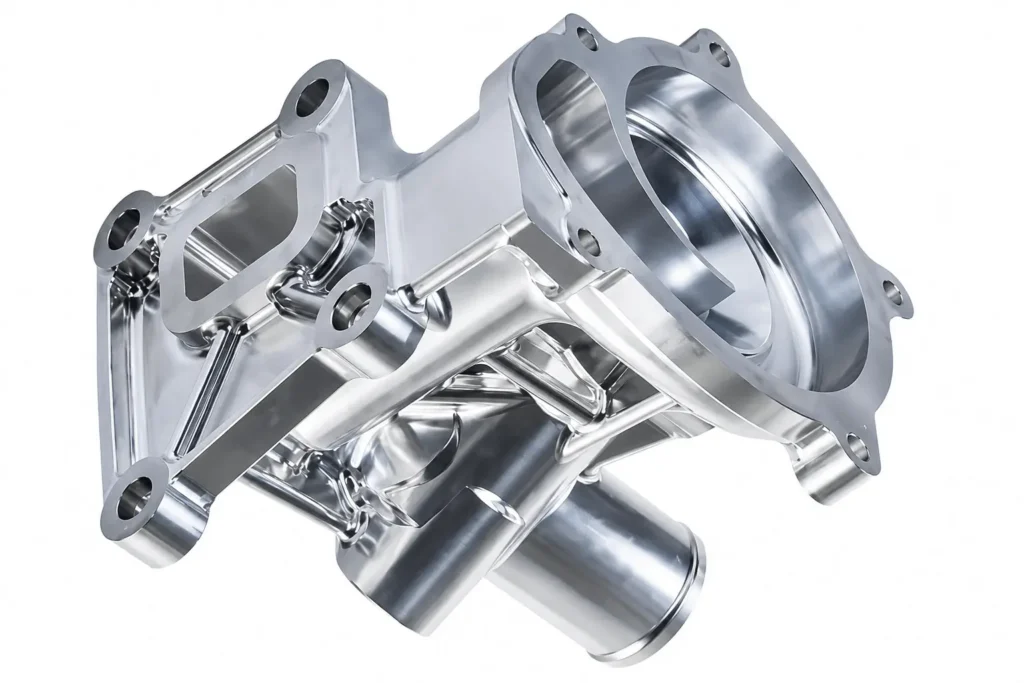
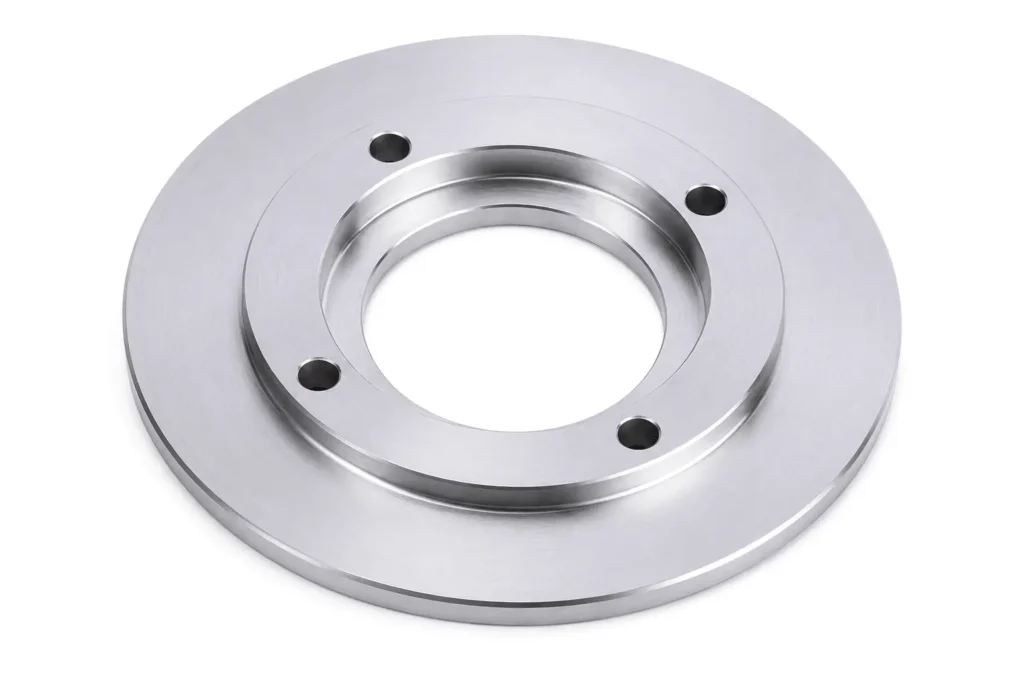
A drawing can contain dozens of machined features, although they are not all produced the same way. A flat mounting face, a locating pocket, a threaded hole, and a bolt hole may all appear on the same component, yet each feature calls for a different machining operation. This is why milling and drilling are often used together during CNC manufacturing rather than treated as interchangeable processes.
At first glance, both remove material with a rotating cutting tool. The difference becomes clear once you look at the feature being machined. Drilling is intended to produce round holes quickly, whereas milling gives the machine far more freedom to create flat surfaces, slots, contours, pockets, and many other complex features. Choosing the appropriate operation early also helps reduce secondary machining, simplify setups, and keep production moving efficiently.
In this article, we’ll compare milling and drilling by looking at their cutting tools, machining methods, achievable accuracy, production capabilities, and the types of features each process is designed to produce.
What Is Milling?
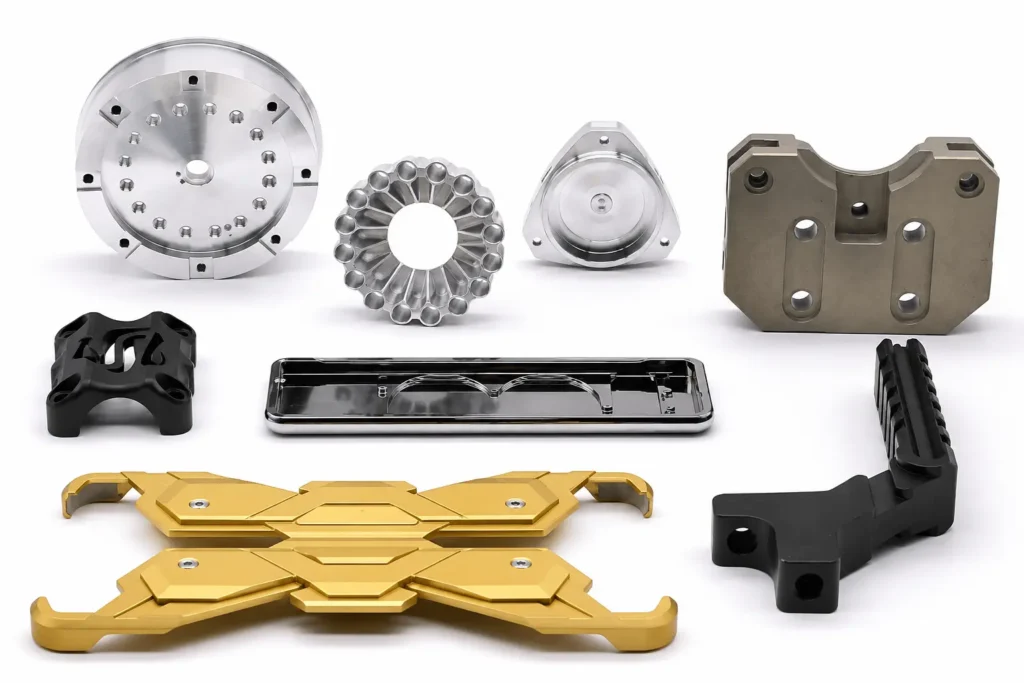
Almost every CNC machined part passes through a milling operation at some stage. Instead of producing only one feature, milling allows a single machine to create flat surfaces, pockets, slots, contours, and many other shapes using different cutting tools. The operation is flexible enough for both simple components and complex precision parts, which is why it appears in almost every machining workshop.
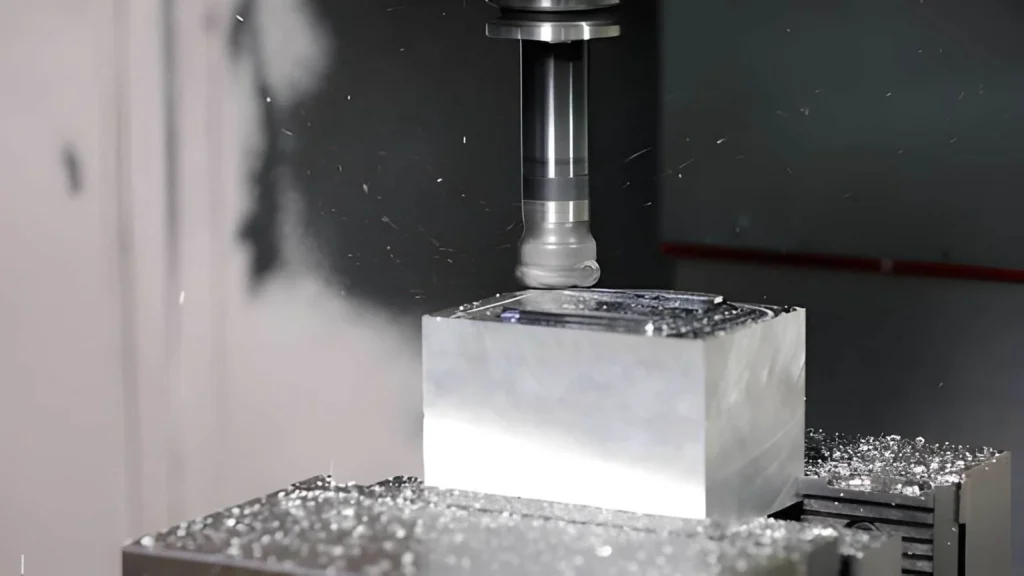
Milling uses a rotating multi-edge cutting tool to remove material from a stationary or moving workpiece. In CNC milling, the cutter follows programmed toolpaths to produce slots, pockets, contours, flat surfaces, and complex part features.
How Milling Removes Material
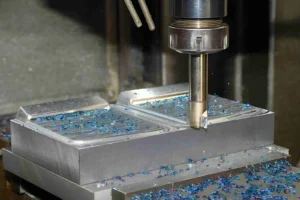
In milling, the cutting tool spins at a high rate of speed, and the material or cutter moves within a program that is designed. The cutting edges come into contact with the material and remove it in layers until the desired shape and size are achieved.
Milling will remove material from the side, bottom, or around the periphery of the cutter, unlike drilling, which only removes material along the hole axis. This allows for a multitude of features to be machined without changing the manufacturing process.
- Multiple passes to cut material rather than one plunge.
- The cutter is programmed to move along the X and Y axes as well as the Z axis to make various geometries.
- Roughing is used to remove more material, whereas finishing is used to give the final dimensions and surface quality.
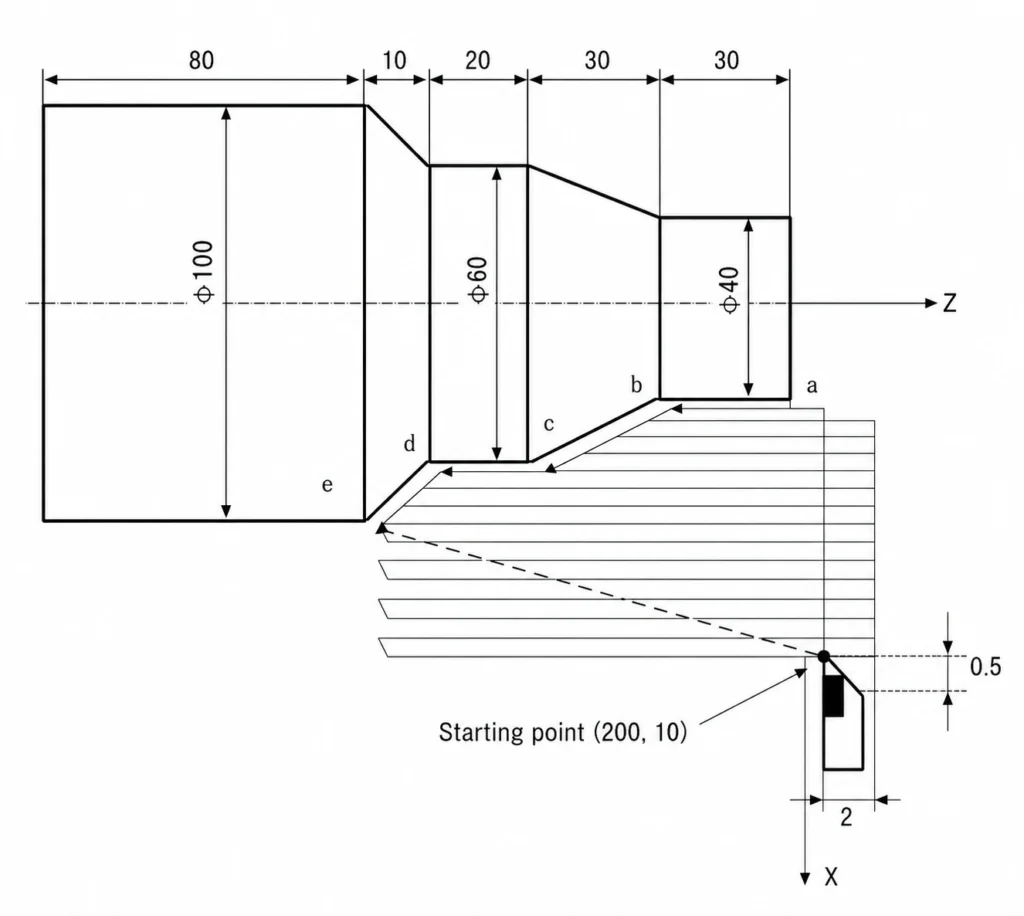
Common Milling Operations
Different type of milling operations is used based on the feature on the drawing. Many times one component will need multiple milling processes to complete it.
Face Milling
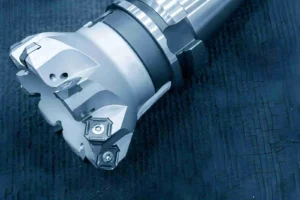
Face milling machines are used to cut large flat surfaces on the bottom cutting edges of the cutter. It is typically one of the first operations as it forms a flat reference surface for the subsequent operations.
End Milling
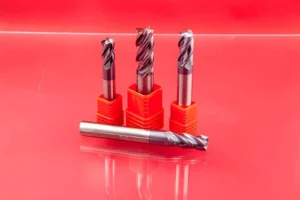
Features such as steps, shoulders, and small flat areas can be milled using the bottom and side cutting edges of the end milling tool. One of the most common CNC operations.
Slot Milling
The slot milling machine is used to produce straight or curved slots of a particular width and depth. Slots are typically employed for keys, guides, and assembly.
Pocket Milling
Pocket Milling is a process that removes material from the inside of a closed boundary without cutting into the part material. It is very common for weight reduction as well as for forming spaces for components.
Profile Milling
The tool for profile milling is used to ride the outer edge or a programmed contour to form the final shape of the part. It is typically employed in the profiles of the outside, in complex shapes and curved surfaces.
Typical CNC Milling Tools
The cutting tool is selected according to the feature being machined. Different cutter designs improve cutting stability, surface finish, and tool life for different operations.
| Tool | Typical Use |
| End Mill | Slots, pockets, shoulders, general machining |
| Face Mill | Large flat surfaces and facing operations |
| Ball Nose End Mill | 3D contours, molds, and curved surfaces |
| Corner Radius End Mill | Profiles with improved edge strength |
| T-Slot Cutter | T-slots and undercut features |
| Chamfer Mill | Chamfers, deburring, and edge preparation |
Features Produced by CNC Milling
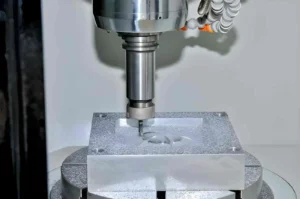
One advantage of milling is that a single setup can produce many different features on the same component. This reduces repositioning and keeps related dimensions aligned throughout the machining process.
- Flat reference surfaces
- Slots and keyways
- Open and closed pockets
- Steps and shoulders
- External profiles
- Chamfers and edge breaks
- Circular pockets and interpolated holes
- 3D contours and freeform surfaces
What Is Drilling?
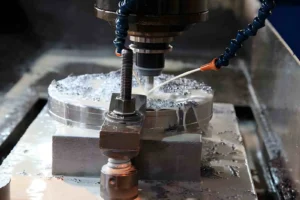
Many machined parts include holes for bolts, pins, bearings, fittings, or threaded fasteners. Drilling is the operation used to produce these holes quickly and accurately. Unlike milling, which can create many different features, drilling focuses on one task, making round holes with the required diameter and depth before any additional operations are carried out.
How Drilling Works
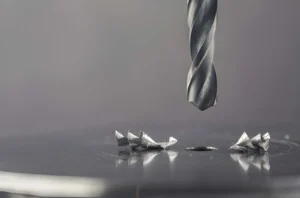
The drill bit rotates as it feeds straight into the material. As the tool moves into the hole, the cutting edges at the tip remove material, and the flutes carry chips out of the hole. After drilling to the desired depth, the drill will retract, and the next machining process can be used if necessary.
- Material is removed only at the tip of the drill.
- The tool moves in a straight line parallel to the direction of the hole.
- Coolant helps in maintaining better removal of chips and heat from the cutting operation.
Common Drilling Operations
Depending on the different sizes, depths, and drawing requirements of the holes, different drilling operations are selected. Each piece may need more than one drilling cycle to make a hole.
Standard Drilling
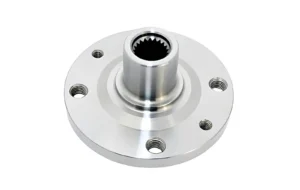
The standard operation to create through holes or blind holes. It is typically the initial operation to be performed prior to reaming, tapping, or boring for greater accuracy.
Peck Drilling
For deeper holes, peck drilling is used. The tool retracts a few times in order to remove the chips and then proceeds with the drilling operation to the full depth. This will decrease chip packing and increase tool life.
Spot Drilling
Spot drilling is a small drilling that is done ahead of main drilling. It aids in guiding the drill and minimizes the risk of the drill tool sliding across the workpiece surface.
Deep-Hole Drilling
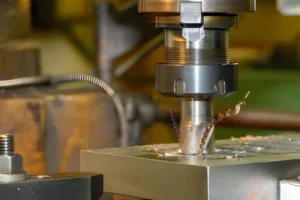
When the depth of the hole is several times that of the hole diameter, deep-hole drilling is adopted. The deeper the drilling depth, the more critical it becomes to have higher coolant pressure and to control the chip evacuation.
Common Drill Bit Types
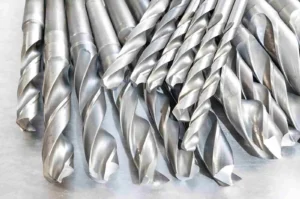
Different drill designs are used according to the material, hole depth, and production requirements.
| Drill Bit | Typical Application |
| Twist Drill | General-purpose through and blind holes |
| Spot Drill | Starting holes before drilling |
| Center Drill | Preparing accurate center holes for machining |
| Carbide Drill | High-speed machining and harder materials |
| Indexable Drill | Larger hole diameters and production machining |
| Gun Drill | Deep holes with a high depth-to-diameter ratio |
Features Produced by Drilling
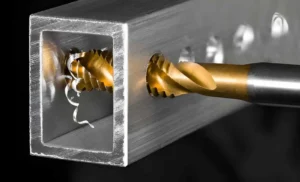
Although drilling is mainly associated with standard holes, it also prepares many features that are finished during later machining operations.
- Through holes
- Blind holes
- Pilot holes
- Threaded holes before tapping
- Dowel pin holes
- Clearance holes for bolts and screws
- Holes for reaming or boring
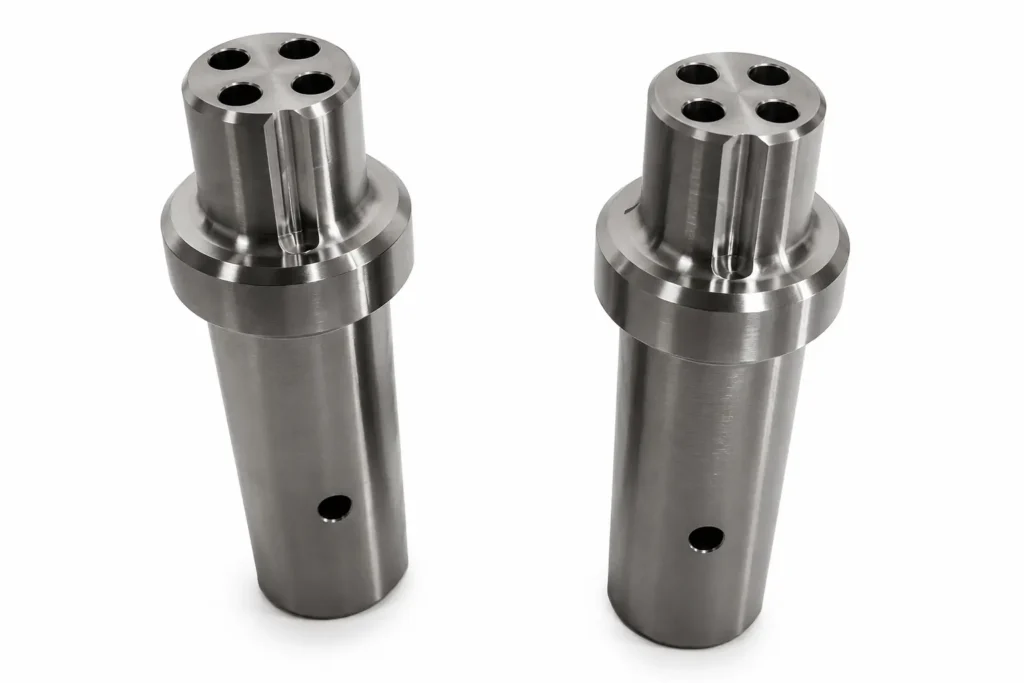
- Cross holes in shafts and cylindrical components
Milling vs Drilling: Main Differences at a Glance
Many CNC components require both milling and drilling because each operation creates different features. Instead of choosing one process over the other, engineers normally look at the part geometry first. Flat faces, slots, and pockets require milling, while standard round holes are produced by drilling. Understanding these differences early also helps reduce secondary machining and unnecessary setups.
| Feature | Milling | Drilling |
| Primary Purpose | Machines flat surfaces, slots, pockets, contours, and complex profiles | Produces round holes with a specified diameter and depth |
| Cutting Tool | End mills, face mills, shell mills, ball nose cutters, slot drills | Twist drills, spot drills, center drills, deep-hole drills |
| Cutting Motion | Rotating cutter removes material while moving along X, Y, and Z toolpaths | Rotating drill feeds axially into the workpiece along the hole axis |
| Machine Movement | Simultaneous movement in multiple axes to generate different geometries | Primarily linear feed along the spindle axis during drilling |
| Material Removal Direction | Removes material from the side and bottom of the cutter | Removes material only from the drill tip |
| Features Produced | Faces, steps, shoulders, pockets, slots, keyways, contours, chamfers, large circular pockets | Through holes, blind holes, pilot holes, threaded holes (before tapping) |
| Hole Capability | Can interpolate large holes and non-standard diameters using end mills | Produces standard hole diameters matching drill size |
| Surface Finish | Depends on cutter type, toolpath, and finishing pass; machined surfaces can reach Ra 0.8-3.2 μm | Hole wall finish commonly ranges from Ra 1.6-6.3 μm before secondary finishing |
| Typical Dimensional Accuracy | Generally ±0.02-0.05 mm depending on machine, tooling, and setup | Hole diameter typically ±0.05-0.10 mm after drilling; closer tolerances usually require reaming or boring |
| Material Removal Rate | Removes material across large surface areas and multiple feature types | Removes material rapidly when producing standard holes |
| Production Flexibility | One tool can machine several different features in a single setup | Dedicated to hole-making operations with limited feature flexibility |
| Common Secondary Operations | Surface finishing, chamfering, deburring | Reaming, boring, countersinking, counterboring, tapping |
| Typical Applications | Machine bases, molds, brackets, housings, tooling plates, complex mechanical parts | Bolt holes, dowel holes, locating holes, fluid passages, threaded hole preparation |
Can a CNC Mill Perform Drilling Operations?
Yes, most modern CNC milling machines can perform drilling operations without moving the part to another machine.
After the workpiece is clamped, the machine automatically changes from a milling cutter to a drill bit and continues machining according to the CNC program. This reduces additional setups and keeps machined features aligned from one operation to the next.
Drilling on CNC Milling Machines
A CNC mill has a spindle that can hold either a milling cutter or a drill bit. After the drilling tool is loaded, the machine will place this tool on the programmed location, and the hole will be drilled to a specified depth. If the drawing requires tapping, reaming, or counterboring, these processes may be accomplished in a single setup.
- Automatic tool changers change between the milling and drilling tools.
- The work coordinate system is used once again to control the hole position.
- More holes can be drilled without the removal of the workpiece.
When Both Operations Are Used in One Setup
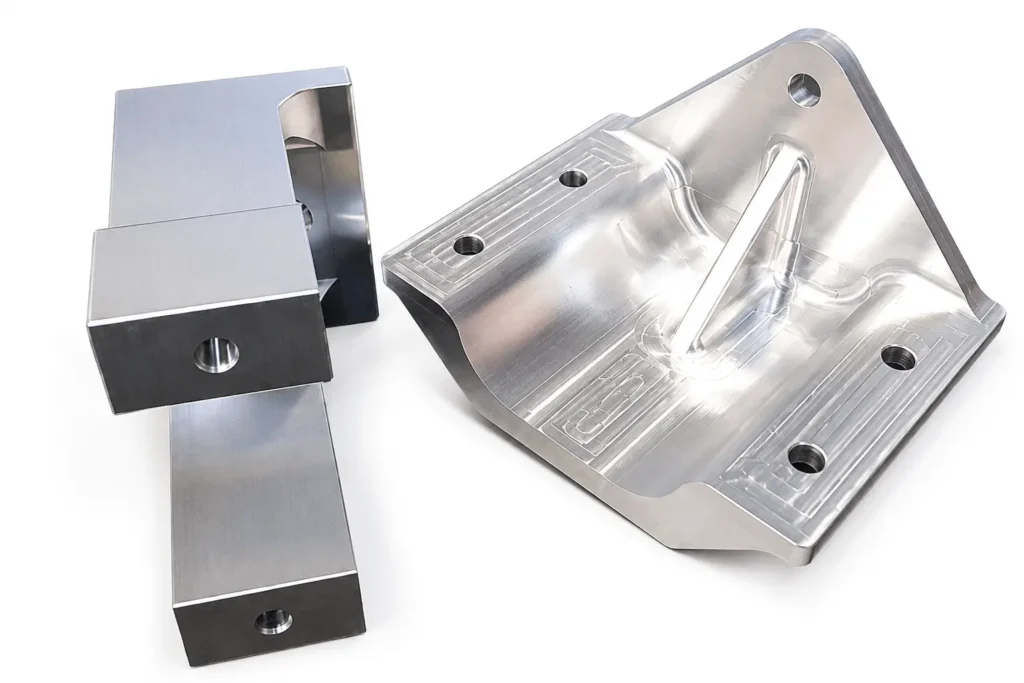
A lot of CNC parts will need multiple machining processes to complete the product. For instance, a face milling operation can be followed by pocket milling, bolt holes, threaded holes, and edge chamfers. These features being done in one setup ensures the positional relationship of the features and minimizes handling between operations.
- Machine bases for mounting and locating pockets.
- Combined brackets with slots, holes and threads.
- Machined facings, cavities and fixing holes in housings.
Advantages of Combining Milling and Drilling
It makes the process of manufacturing easier when using one CNC machine for both operations. The part remains clamped during machining, minimizing repositioning, and the consistency of the machined features is enhanced. It also reduces machine transfers, thus reducing production time.
- There are fewer setups to minimize positioning error.
- The position of holes still coincides with the position of the machined features.
- Reduce handling, which reduces the chances of damage to the parts.
- Multiple operations are completed in one production cycle, making production more rapid.
Practical Tip: If your part contains flat surfaces, pockets, slots, and multiple holes, ask your machining supplier whether they can complete all operations in a single CNC setup. Keeping the workpiece in one position often improves feature alignment and reduces overall machining time without adding extra processing steps.
Choosing Between Milling and Drilling
The drawing usually answers this question before production begins. Every feature has its own machining requirement, so the goal is not to select one process over the other. Instead, match each feature to the operation that produces it with the least amount of additional work. That approach shortens the machining route and reduces unnecessary secondary operations.
Look at the Part Geometry First
The shape of the feature is often the deciding factor. Straightforward round holes naturally suit drilling, while shapes with width, length, or changing profiles require milling. Trying to produce these features with the wrong operation usually adds extra machining later.
- Circular holes → drilling
- Slots, pockets, and steps → milling
- Curved profiles and contours → milling
- Flat reference faces → milling
Consider the Next Manufacturing Step
The hole is not necessarily the last feature. May subsequently be tapped, reamed, counterbored, or fitted with a dowel pin. Similarly, a machined surface can be the surface for inspection or assembly. Predicting the remaining operations helps to identify the most appropriate machining sequence.
- With bolt holes, frequently still tapping or countersinking.
- Bearing locations may require boring after drilling.
- Typically, reference faces are machined as part of the initial step in the hole-making process.
Think About the Entire Part, Not One Feature
For most production parts, a number of machining operations are carried out simultaneously. A gearbox housing, fixture plate, or machine bracket could need flat mounting surfaces, pockets inside, locating holes, and threaded holes from the same piece. The plan of execution helps minimize repositioning and maintain consistent relative positions during machining of these features.
- Use reference surfaces for locating the part first.
- Develop features larger than details on the machine first.
- Wait to finish operations until the material removal is finished.
Design Tips Before Machining
Most machining issues can be avoided before production begins. A quick review of the drawing often reveals features that add machining time without improving the part. Keeping the design practical makes manufacturing simpler and reduces the chance of revisions later.
Keep Milling Features Practical
All milled features require a separate machining process. When adding a pocket, step, or groove, be sure that it serves a clear purpose in the assembly or function. Anything that is added for appearance alone will raise the cost of the part due to more machining time.
Use Standard Hole Sizes Whenever Possible
The size of the hole will directly affect the machining process. When standard drill diameters are used to design the hole, the hole can be created in one operation in most cases. If the diameter is not standard, it may be necessary to perform extra finishing operations, increasing the time and inspection needs for production.
Give Cutting Tools Enough Working Space
The cutter has to have access to the feature without obstruction. Small internal corners, deep narrow pockets, and limited spaces may necessitate additional passes or smaller-sized tools. The corner radius and opening width can be slightly increased to make the part much easier to machine without changing the function.
Choosing a CNC Machining Partner
A quotation tells you the price, although it doesn’t always show how the part will be manufactured. Before placing an order, it is worth checking whether the supplier reviews drawings, supports the required machining operations, and has the equipment to inspect the finished part. These details often have a greater impact on the final result than the quotation itself.
Engineering Review
Drawings should be checked before programming. A thorough engineering review can pinpoint missing dimensions, unclear tolerances, challenging features for machining, and any factors that could impact milling or drilling operations. Answering these questions early often helps avoid delays in production.
Machining Capability
All suppliers provide the service of CNC machining, but the machines they have available may vary. Reviewing the machine capacity, materials accepted, and processes that can be performed will allow for confirmation that the part can be produced without unnecessary subcontracting or extra machining processes.
Inspection Capability
Completed components should be compared to the drawing before sending out. If the part has precision features or close parts, inquire about the methods for checking critical dimensions, hole locations, and surface finish.
Support Beyond the First Prototype
The prototype is just one step along a project. After testing, updates in the design, quantity changes, or production batches may follow. If a supplier can assist in these steps, future revisions will be more manageable, since the manufacturing process has already been laid out.
CNC Machining Supplier Checklist
| Review Item | Check |
| Engineering drawing review | ✓ |
| DFM feedback before production | ✓ |
| CNC milling capability | ✓ |
| CNC drilling capability | ✓ |
| 3-axis and 5-axis machining | ✓ |
| Hole and dimensional inspection | ✓ |
| Surface finish inspection | ✓ |
| Material certification available | ✓ |
| Prototype manufacturing | ✓ |
| Low- and high-volume production | ✓ |
Need CNC Milling and Drilling for Your Next Project?
At YD Rapid, we provide ISO-certified CNC machining for custom metal and plastic components, supporting projects from a single prototype to full production. Our manufacturing capabilities include CNC milling, CNC drilling, multi-axis machining, and precision inspection for parts used across aerospace, automotive, medical, robotics, electronics, and industrial equipment.
Every project begins with an engineering review. Our team checks your CAD files and drawings, reviews machining features, identifies potential production concerns, and provides free DFM feedback before manufacturing starts. If design adjustments can simplify machining or reduce production cost without affecting part function, we’ll discuss those recommendations with you before cutting material.
Whether you’re developing a new prototype or preparing for production, YD Rapid offers fast quotations, responsive engineering support, and a manufacturing process built around quality, consistency, and clear communication.
Upload your CAD files today, and our engineering team will review your project and provide a practical machining solution for your parts.

FAQs
Can a CNC milling machine drill holes?
Yes, most CNC machining centers perform both milling and drilling in the same setup. The machine changes tools automatically, allowing flat surfaces, pockets, slots, and drilled holes to be completed without moving the workpiece to another machine.
Is drilling more accurate than milling?
For standard holes, drilling is the fastest starting operation. If the drawing specifies a closer hole tolerance or improved surface finish, the drilled hole is often followed by reaming or boring. Milling, on the other hand, offers greater control when producing non-standard hole diameters through circular interpolation.
Can an end mill replace a drill bit?
An end mill can machine circular holes using interpolation, although it is not intended to replace a drill for every application. Standard holes are generally drilled first because the process is quicker and places less load on the cutting tool.
Why are drilled holes often reamed afterward?
A drilled hole provides the basic diameter, while reaming removes a small amount of material to improve size accuracy and surface finish. This is common for dowel holes, bearing locations, and other features that require a precise fit.
Is milling slower than drilling?
For a standard round hole, drilling normally takes less time because the tool feeds directly into the material. Milling follows a programmed toolpath to create different shapes, so machining time depends on the feature rather than the process itself.
Can milling produce perfectly round holes?
Yes, CNC milling machines can produce round holes using circular interpolation, especially when the required diameter does not match a standard drill size. This method is also useful for larger holes and features that require precise positional control.
Which process costs less for production?
That depends on the feature being manufactured. Standard holes are generally more economical to produce by drilling, while slots, pockets, flat faces, and complex profiles require milling. On most CNC parts, combining both operations provides the most practical manufacturing approach.
When are milling and drilling used together?
They are commonly combined on the same part. A component may first be face milled to create reference surfaces, followed by pocket milling, drilled mounting holes, threaded holes, and finishing operations before inspection.