Key Takeaways
- The polishing requirement should be confirmed before CNC machining starts because it influences machining allowance, surface preparation, and inspection.
- Stainless steel grades respond differently to polishing, so the required finish should match both the material and the application.
- Part geometry has a direct impact on polishing quality since deep pockets, narrow slots, and sharp internal corners require additional finishing work.
- Surface finish specifications should include the required polishing grade instead of simply stating “polished” on the drawing.
- Early engineering review helps avoid unnecessary polishing operations, additional cost, and production delays.
Introduction
A drawing that specifies “polished stainless steel” still leaves several manufacturing questions unanswered. The machinist needs to know which surfaces require polishing, the finish grade, the allowable surface roughness, and whether the finish serves a functional purpose, a cosmetic purpose, or both. Without these details, different suppliers may polish the same part to different standards even though they follow the same drawing.
The polishing process also begins long before the polishing wheel touches the part. Engineers often review machining allowance, cutter selection, feature accessibility, and inspection requirements while planning CNC operations because these factors influence the final surface. A deep pocket that cannot be reached easily after machining, for example, may require design changes instead of additional manual polishing. Likewise, visible surfaces usually receive different machining strategies than hidden faces because the amount of polishing required later depends heavily on the condition of the machined surface.
Stainless steel itself adds another consideration. Austenitic grades such as 304 and 316 polish differently from precipitation-hardening grades, while welded areas, heat-affected zones, and complex geometries may produce variations across the finished surface. Selecting a polishing process therefore involves more than improving appearance. The finish should support the intended application, remain practical to manufacture, and produce a consistent surface across every production batch.
This guide discusses polished stainless steel from a manufacturing perspective. It explains common polishing finishes, production methods, surface finish standards, design recommendations, and the engineering considerations that should be reviewed before a polished surface is specified.
What Is Polished Stainless Steel in CNC Manufacturing?
Fine tracks left by the cutter are still visible on the surface after CNC machining. Polishing is a subsequent finishing operation that is achieved by removing these marks in stages with the help of abrasives to achieve the specified surface finish. Although the surface condition is heavily altered, the quantity of material removed is very small.
The surface achieved will rely on the quality of the machining as well as the polishing process. If the surface is slightly rounded or even more rounded after the machining process, then less polishing time would be required, while if it is more deeply machined, then more polishing time would be required as a large amount of material has to be removed before it becomes even.
What Makes a Stainless Steel Surface “Polished”?
By successively grinding away the machining surface with abrasives, a smoother surface finish can be obtained. Polishing removes microscopic peaks of material left by cutting implements and forms a more uniform surface over the designated area rather than removing a substantial quantity of material like grinding.
It’s a good idea to ask a simple question before deciding on a finish: What should the part look like when it leaves the workshop? The polishing grade is determined by the answer.
- For most decorative parts, consistency is important in terms of appearances on the visible surface.
- Smoother finishes are normally used to make food and medical parts easier to clean.
- When sealing surfaces, lower surface roughness can be used to increase the gasket contact and minimize leakage paths.
Why CNC-Machined Parts Require Polishing After Machining
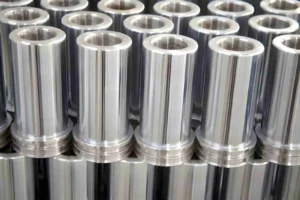
A CNC machine is used to create dimensions, but just dimensions do not constitute finished surfaces. Finishing marks are very fine, visible after the cutting, and can be produced by the use of any of the various types of milling cutters, turning inserts, grinding wheels, etc. These marks are fine in many industrial components, but where the part comes in contact with customers, is used for frequent cleaning, or is in a corrosive environment, it is generally necessary to go through an extra finishing process.
The polishing process is in fact carried out as part of the manufacturing process and is not considered a cosmetic process. This review can be done before machining to enable the engineers to leave an appropriate machining allowance, preserve critical dimensions, and not have to spend time polishing them after production.
- Clears the marks left behind from cutting operations.
- Generates a smoother surface before the assembly and inspection process.
- Properly cleans, seals, and protects functional surfaces from corrosion.
Surface Roughness Before and After Polishing
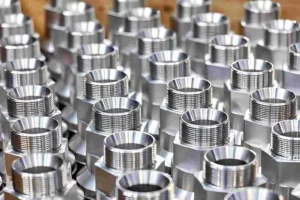
Sometimes, you can see a shiny surface but not be sure of its surface quality. Two components can be virtually indistinguishable but have enough difference in measured roughness that it can impact sealing performance, cleanliness, and wear. Engineering drawings normally specify a surface roughness value, as opposed to only describing the product visually.
| Surface Condition | Typical Ra (µm) | Typical Applications |
| Standard CNC-machined finish | 1.6 – 3.2 | Structural parts, internal features, general components |
| Fine machined finish | 0.8 – 1.6 | Precision assemblies, mounting surfaces |
| Brushed finish | 0.4 – 0.8 | Equipment panels, architectural components |
| Mechanical polished finish | 0.2 – 0.4 | Food equipment, medical devices, sanitary fittings |
| Mirror polished finish | 0.05 – 0.20 | Decorative products, optical components, high-cleanliness equipment |
Common Polishing Finishes Used for Stainless Steel CNC Parts
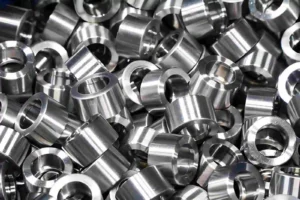
The same stainless steel part can receive different finishes depending on its service conditions. A machine enclosure, a pharmaceutical fitting, and a decorative handle may all be machined from 304 stainless steel, although the required finish is completely different. Instead of selecting the highest polish available, review how the surface will be cleaned, inspected, and exposed during service.
| Finish | Surface Quality | Typical Ra (µm) | Frequently Specified For | Things to Consider |
| Brushed | Directional grain | 0.8 – 1.6 | Machine covers, lift panels, architectural trim | Small scratches blend into the grain during service. |
| Satin | Smooth, low reflection | 0.4 – 0.8 | Food equipment, medical frames, processing machinery | Easier to keep visually consistent across large surfaces. |
| Mirror | Highly reflective | 0.05 – 0.20 | Decorative hardware, premium consumer products | Surface preparation before polishing has a strong influence on the final finish. |
| Electropolished | Bright metallic finish | 0.10 – 0.40* | Sanitary tubing, pharmaceutical equipment, semiconductor components | Applied after mechanical finishing to improve surface cleanliness. |
Brushed Finish
Mirror polishing is typically not used for large visible panels as brushed finishes are often chosen. The directional grain will also help reduce the appearance of marks on the surface of the floor while making it easier to maintain it during the service.
Satin Finish
A satin surface will have a cleaner look with less shine. Sometimes used to specify processing equipment, as it provides a uniform surface even in larger fabricated assemblies.
Mirror Finish
Mirror polishing is usually only performed on parts that will be visible when installed. The surface is very important in the final result – polishing removes fine imperfections and not deep machining marks.
Electropolished Finish
Components subject to hygienic environments are often polished mechanically followed by electropolishing. This process chemically polishes the outer surface, giving the surface a clean end result but no directional polishing pattern.
Polishing Methods Used During Manufacturing
There are several ways to achieve a polished finish, and each of them is well-adapted to a specific production requirement. The polishing process is affected by part size, surface finish specification, geometry, and quantity of production. In many projects, two or more polishing methods are used together to obtain the desired surface quality.
Mechanical Polishing
Mechanical polishing is performed by the use of abrasive belts, wheels, pads, and polishing compounds to work gradually on the machined surface. When choosing a stainless steel finish for CNC parts, it is one of the most popular options as it can be achieved from a brushed finish to a mirror finish, depending on the polishing sequence.
- Cleans up machining marks and minor surface defects.
- Works for brushed, satin, and mirror finishes.
- Ideal for prototype and production parts.
Buffing
When applied after surface polishing, buffing is used. Soft cloth wheels and polishing compounds will polish very fine polishing lines and brighten the surface while removing very little material.
- Produces a brighter and more uniform surface.
- General use for decorative stainless steel parts.
- A well-prepared, polished surface is best.
Electropolishing
Electropolishing is an electrochemical process that removes a very thin surface layer, which is not abrasive polishing. It is commonly used for stainless steel components that demand a clean surface and greater corrosion resistance.
- Smooths out very small peaks on the surface.
- Leaves no directional polishing pattern.
- Usual for food, medical and pharmaceutical machinery.
Vibratory Finishing
Vibratory finishing puts parts inside a vibrating bowl containing abrasive media. The multiple contacts between parts and media will smooth the surface and eliminate small burrs, and create a uniform surface on large quantities of small parts.
- Works on numerous components during a manufacturing cycle.
- Scrapes off light burrs and sharp edges.
- It is recommended for small parts of stainless steel with simple geometry.
Comparison of Stainless Steel Polishing Methods
| Polishing Method | Typical Finish | Best Suited For | Main Limitation |
| Mechanical Polishing | Brushed, Satin, Mirror | General CNC parts, visible surfaces | Manual work increases on complex shapes |
| Buffing | High-gloss finish | Decorative components | Does not remove deep machining marks |
| Electropolishing | Bright, clean surface | Medical, food, pharmaceutical parts | Surface preparation before treatment remains important |
| Vibratory Finishing | Uniform matte finish | Small batch parts, fasteners, fittings | Not suitable for large components or mirror finishes |
Engineering Note
One polishing method rarely suits every component. Large flat panels, small precision parts, sanitary fittings, and decorative products often follow different finishing routes, even when they are manufactured from the same stainless steel grade. Reviewing the surface requirement together with the part geometry helps avoid unnecessary polishing operations while achieving the specified finish.
How Part Geometry Affects Stainless Steel Polishing
A good polishing result starts with a good part design. Some features are easy to polish, while others take much longer because polishing tools cannot reach every surface. Looking at the part geometry before production helps reduce manual work and gives a more consistent finish.
Internal Corners and Deep Cavities
Deep pockets and sharp internal corners are always more difficult to polish than open surfaces. If a good smooth finish is achieved on the outside of the part, these areas can still exhibit a machining mark due to limited access of polishing tools.
- When feasible, use an internal radius of R2-R3 mm, instead of a sharp corner.
- Super deep cavities can often benefit from additional hand polishing.
- If the surface has a functional purpose, then only specify polishing inside the pocket.
Thin Walls and Sharp Edges
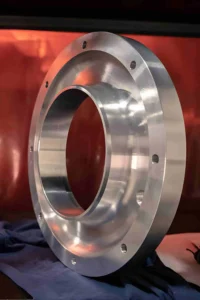
Care should be taken when handling thin walls in polishing. Excessive pressure can cause sharp edges to be rounded and the resulting profile to be slightly altered. It is easier to finish when there is a sufficient amount of material to be kept around polished areas.
- The thicker the wall is > 1.5 mm, the easier it is to polish consistently.
- Care is taken to avoid edge damage by employing small edge breaks, between 0.2 and 0.5 mm.
- Do not polish sharp corners that will need to be held to a specific dimension.
Welded Areas and Heat-Affected Zones
Polishing may cause welded sections to appear different from the surrounding material. Before polishing, smoothing the weld surface with a grader yields a more uniform surface all over.
- Weld Bead Removal before Final Polishing.
- Clean weld spatter before starting the polishing process.
- Polish in the direction of the welded area.
Threads, Holes, and Precision Features
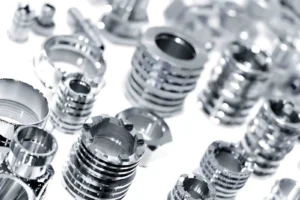
Not all features on the part need to be buffed. Usually, threads, hole location, and bearing seats go unaltered since polishing can alter the fit. Drawing the surfaces to be polished is preferable if only the surfaces that are to be polished are to be drawn.
- Reduce the risk of internal/external threads being damaged during polishing.
- Locating holes and bearing seats should be left as they are machined, unless otherwise indicated.
- Clearly mark surfaces that have been polished in the drawing to prevent over-finishing.
Design Guidelines for Polished Stainless Steel Parts
A polished finish should be considered while the part is still being designed. Simple changes on the drawing can reduce polishing time, keep the finish more consistent, and avoid additional manual work after machining. Reviewing these points early also helps the manufacturer plan the machining and finishing process more accurately.
| Design Point | Recommended Practice | Production Impact |
| Finish Specification | State the finish grade, Ra value, and polished surfaces. | Prevents different interpretations during production. |
| Machining Allowance | Leave 0.05 to 0.20 mm for polishing when a fine finish is required. | Helps remove machining marks without affecting the final dimensions. |
| Part Geometry | Use open surfaces, generous radii, and avoid unnecessary deep pockets. | Reduces manual polishing and improves finish consistency. |
| Inspection | Define the inspection method and acceptance criteria on the drawing. | Simplifies quality inspection and reduces production disputes. |
Specify the Required Finish Clearly
The term ‘polished’ is not sufficient for production purposes. Add the necessary finish grade, surface roughness (Ra), and name the surfaces to be polished. This way, the manufacturer can use the appropriate polishing method at the outset.
- Only mark the surfaces that need to be polished.
- If surface roughness is important, then the necessary Ra value is included.
- Avoid using non-recognised finish standards as much as possible.
Leave Enough Machining Allowance
Polishing takes off a very thin layer of the surface. If the part is being turned to its exact final dimensions, then polishing can cause changes to critical dimensions. It is a good practice to leave a small machining allowance to ensure a good finish and to ensure that the finished part is within specification.
- The allowances for polished surfaces are typically 0.05 – 0.20 mm.
- In general, the higher the polish grade, the more material removal is required.
- Check important dimensions before determining allowances.
Avoid Features That Restrict Polishing Access
Other features are hard to access using polishing tools. In some cases, deep slots, narrow grooves, and sharp internal corners may need additional manual processing, resulting in a slight difference in the surface finish. A little design adjustment makes for easy polishing.
- Increase inner corner radius where practicable.
- Don’t have deep pockets that are hard to reach.
- Maintain cleanliness of polished surfaces.
Define Inspection Requirements
The standard should be assessed by a polished surface rather than by visual means. The finish grade and surface rough areas should be consistent with the drawing before approval of the part.
- Specify the inspection method on the drawing.
- Determine any critical polished surfaces.
- Verify acceptance criteria before production.
Applications of Polished Stainless Steel CNC Parts
A polished finish is specified for different reasons across industries. Some manufacturers focus on surface cleanliness, others review corrosion exposure, while some simply want the finished component to remain visually consistent after years of service. The application determines both the polishing process and the finish grade.
Food Processing Equipment
Product-contact surfaces receive the most attention during design because they are cleaned repeatedly throughout their service life. Deep machining marks and rough welded areas are difficult to wash completely, so polishing is usually limited to surfaces that come into direct contact with food.
Typical components include mixing tanks, filling nozzles, guide rails, and conveyor parts.
Medical Equipment
Medical equipment contains many small stainless steel parts that are touched, cleaned, and sterilized every day. A polished finish gives these exposed components a smoother surface while keeping the appearance consistent across assembled products.
Examples include surgical tools, laboratory fixtures, instrument housings, and medical support frames.
Consumer Products
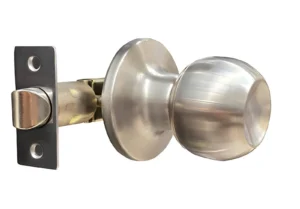
Not every polished component serves a technical purpose. In many consumer products, the finish becomes part of the product itself because customers see and touch the surface every day. Fingerprints, scratches, and polishing consistency often receive more attention than dimensional changes after polishing.
Examples include kitchen appliances, premium electronics, watch components, and household hardware.
Architectural Hardware
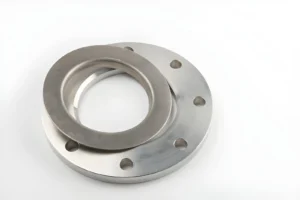
Large stainless steel components rarely leave production without some type of finishing. Handrails, lift panels, door hardware, and decorative trim are exposed to weather and frequent handling, so manufacturers normally select a finish that balances appearance with routine maintenance instead of aiming for the highest polish grade.
Choosing a CNC Manufacturer for Polished Stainless Steel Parts
Finding a supplier for polished stainless steel parts is not simply about comparing prices. Two manufacturers may quote the same drawing, yet the finished parts can look completely different once polishing is complete. The difference usually comes from process planning, machining quality, and finish inspection rather than the polishing equipment itself.
Before placing an order, it helps to review how the supplier prepares a project, controls the polishing process, and checks the finished surface. These steps often tell you more about the final quality than the quotation alone.
Engineering Review Before Production
The first conversation should take place prior to the material getting to the machine. Typically, an experienced engineering team will look at the drawings and discuss with the customer what the finish is required and what features will add to the polishing time. Changes made at this stage are unlikely to cause delays following machining.
- Confirms polishing areas and finish specifications.
- Reviews characteristics that need to be manually polished.
- Proposes DFM enhancements.
Surface Finish Inspection Capability
Checks a polished part as indicated on the drawing. While helpful, visual appearance is not a great degree of acceptance; measurable inspection will yield a better acceptance standard for the customer and manufacturer.
- Measures surface roughness, if necessary.
- Inspects and polishes surfaces before shipment.
- Gives inspection reports on critical parts.
Material and Process Experience
Polishing different grades of stainless steel yields different results in the polishing process. The production team has an understanding of the techniques and processes used in the machining and finishing of various materials, which enables them to choose appropriate tools and processes for specific parts.
- Can be used with a variety of stainless steel grades.
- Appropriate for mechanical and electropolishing.
- Modifies process to accommodate part geometry.
Prototype to Production Support
A lot of projects begin with a prototype before they enter into regular production. Receiving from the same supplier and using the same supplier for the final production batch helps to maintain consistency for both the finish and the machining process and inspection standard.
- Conducts prototypes, bridge production, and batch orders.
- Provides updates following sample approval.
- Produces the same finish level throughout the production process.
Supplier Evaluation Checklist
| Review Item | Check |
| Reviews drawings before machining | ✓ |
| Provides DFM suggestions | ✓ |
| Confirms polishing requirements | ✓ |
| Measures surface roughness when specified | ✓ |
| Offers multiple polishing finishes | ✓ |
| Works with different stainless steel grades | ✓ |
| Supports prototypes and production | ✓ |
| Provides inspection reports if required | ✓ |
| Maintains clear project communication | ✓ |
Looking for a Manufacturing Partner for Polished Stainless Steel Parts?
A polished finish is much easier to achieve when machining and finishing are planned together. Reviewing the drawing before production helps confirm the required finish, identify surfaces that actually need polishing, and avoid unnecessary manual work after machining. That approach also makes inspection more straightforward once the parts are complete.
YD Rapid is an ISO-certified manufacturer specializing in CNC machining and stainless steel finishing for prototypes and production parts. Every project begins with an engineering review, allowing the team to check machining details, polishing requirements, and any features that may affect the finished surface. If improvements are possible, free DFM feedback is provided before production starts.
From a single prototype to repeat production, the focus stays the same—producing parts that match the drawing while keeping communication clear throughout the project. Simply send your CAD model or technical drawing, and the engineering team will prepare a quotation together with manufacturing recommendations based on your part design.

FAQs
Can every stainless steel grade achieve a mirror finish?
Grades such as 304 and 316 usually polish to a very high finish because of their material structure. Free-machining grades can still be polished, although the final appearance may not match the same mirror quality. If appearance is a key requirement, it is worth confirming the material grade before production begins.
Does polishing change part dimensions?
It can. Polishing removes a small amount of material from the surface, even though the change is usually very small. For parts with close-fitting features, manufacturers often allow for this during machining rather than trying to correct it later.
Should polishing be specified before CNC machining starts?
Yes, because polishing affects more than the final appearance. It can influence machining allowance, surface preparation, inspection, and even the order of manufacturing operations. Confirming the finish at the quotation stage helps avoid unnecessary revisions once production has started.
Can threaded areas be polished?
Most threaded features are protected during polishing. Removing material from the thread can affect assembly, so polishing is normally limited to the surrounding surfaces unless the drawing specifies otherwise.
How is polished surface quality inspected?
The inspection method depends on the drawing requirements. Some projects only require a visual check for surface consistency, while others include a specified Ra value that is verified with a surface roughness tester before the parts are approved.
Does electropolishing replace mechanical polishing?
Not in most projects. Mechanical polishing prepares the surface by removing machining marks and refining the finish. Electropolishing is often applied afterward if the application requires a cleaner, brighter surface. These two processes are frequently used together rather than replacing one another.