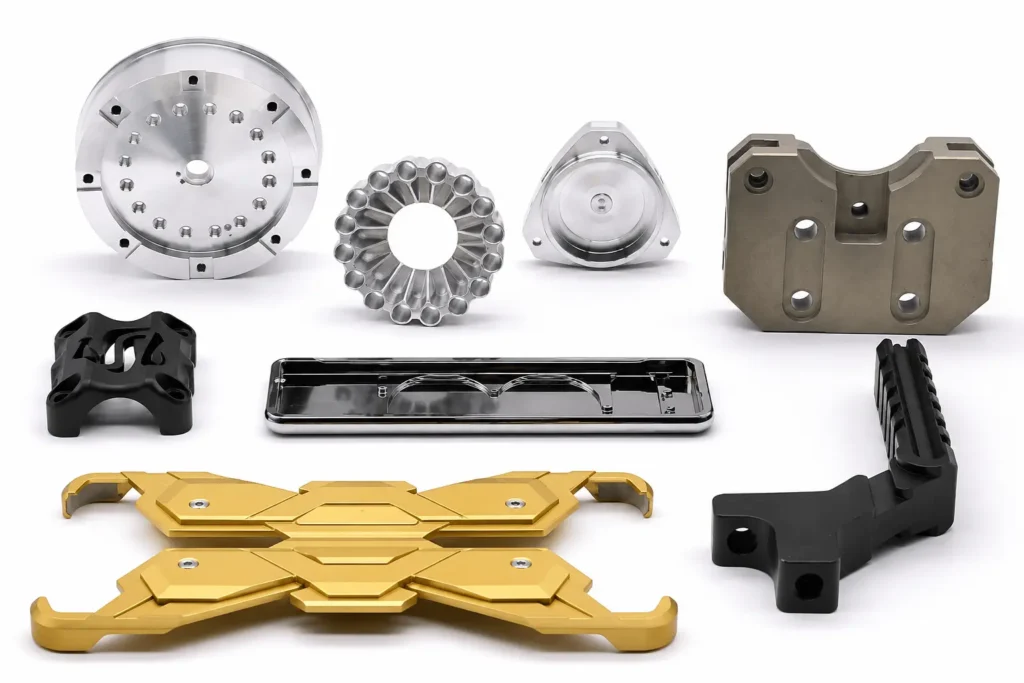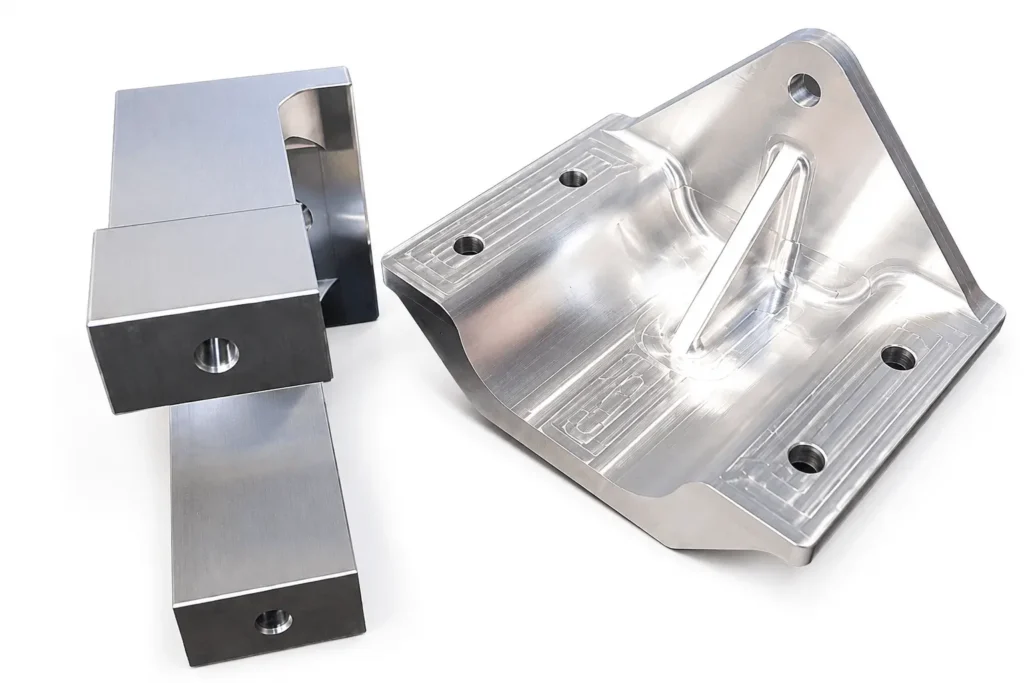
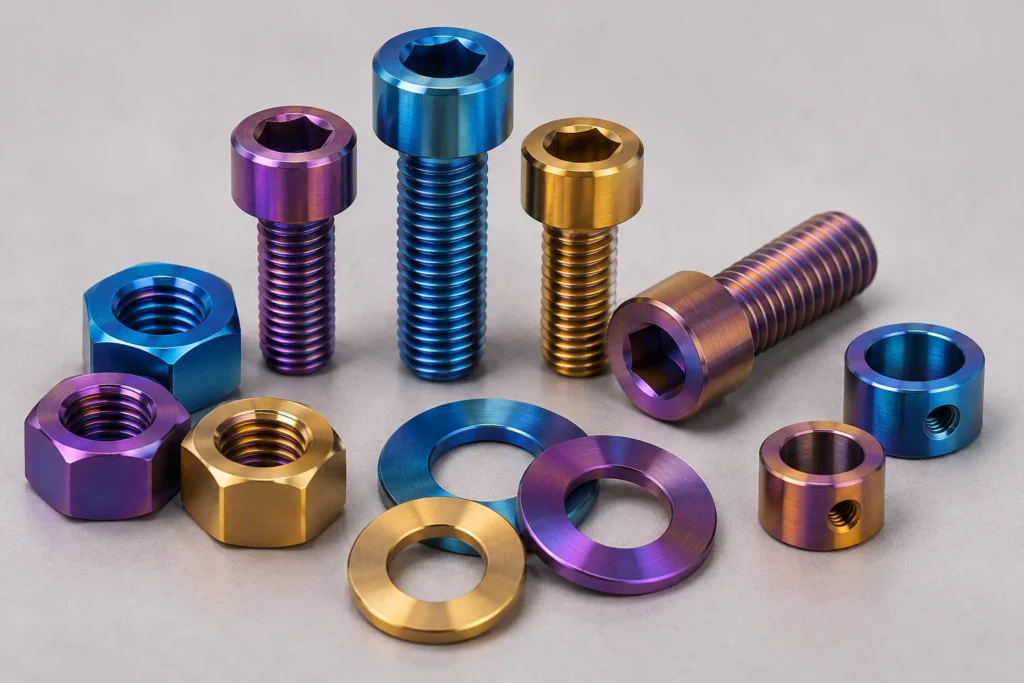
Titanium anodizing grows a surface oxide film through an electrochemical process. You can choose functional treatment to reduce galling or color anodizing for identification and appearance. This guide explains the types, colors, voltage references, process steps, equipment, and limitations to help you select a finish for your titanium parts.
What Is Titanium Anodizing?
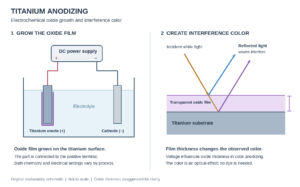
Titanium anodizing uses the part as the positive electrode, or anode, in an electrolytic cell. The oxide film forms from the titanium surface, rather than being applied as paint or deposited as a separate metal layer through electroplating.
You can use color anodizing for part identification and appearance, or functional anodizing to reduce galling between contacting metal surfaces.
How Does Titanium Anodizing Work?
An applied voltage drives an electrochemical reaction between the titanium anode and the electrolyte, growing a surface oxide film.
In color anodizing, light reflects from both the oxide surface and the underlying metal. These reflections interfere, producing visible colors without dyes. By adjusting the voltage, you control the film thickness and therefore the resulting color.
Types of Titanium Anodizing: Type 2 vs. Type 3
Type 2 anodizing targets functional surface performance, while Type 3 produces color for identification and appearance. These are common industry labels; your drawing should identify the required process and specification. Less common Type 1 treatments are outside the scope of this guide.
| Feature | Type 2 Anodizing | Type 3 Anodizing |
| Main purpose | Reduce galling and improve wear performance | Provide color identification and decorative finishes |
| Appearance | Typically matte gray | Bronze, purple, blue, gold, green, and other interference colors |
| Wear protection | Offers functional protection; performance depends on the process and application | Thin color film provides limited abrasion protection |
| Typical applications | Fasteners, sliding components, aerospace and medical parts | Color-coded instruments, screws, jewelry, and visible components |
| Specification | AMS2488 or another specified functional treatment; confirm the required revision | Color and acceptance requirements are typically agreed with the supplier |
Technical references: TIODIZE — functional and color anodizing; SAE AMS2488F — anodic treatment at pH 13 or higher. Follow the specification revision required by your drawing; these references do not define a universal color standard.
Choose Type 2 when your parts need anti-galling performance. Choose Type 3 when color is the priority, and confirm the finish with a reference sample.
Titanium Anodizing Colors
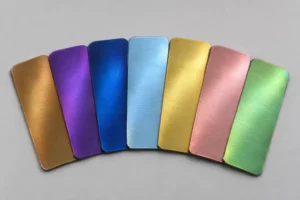
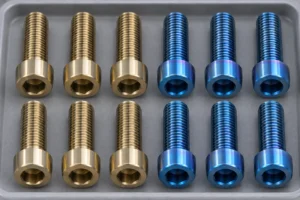
Color anodizing produces bronze, purple, blue, gold, pink, and green shades without dyes. The applied voltage influences oxide thickness and the resulting interference color. However, the same voltage does not guarantee an identical shade under different processing conditions.
Titanium Anodizing Voltage Chart
This titanium anodizing chart links selected voltages to reported colors and calculated oxide thicknesses under the source conditions. Use it as a reference, not a guaranteed color recipe.
| Applied Voltage | Reported Color | Calculated Oxide Thickness |
| 10 V | Golden brown | 36.2 nm |
| 15 V | Purple blue | 49.1 nm |
| 20 V | Dark blue | 58.6 nm |
| 25 V | Sky blue | 70.2 nm |
| 30 V | Pale blue | 81.5 nm |
| 50 V | Lemon yellow | 124.6 nm |
| 55 V | Golden | 131.9 nm |
| 60 V | Pink | 141.0 nm |
| 65 V | Light purple | 157.3 nm |
Source: METALAST, Titanium Anodizing technical bulletin. Samples were treated in a 165 g/L sulfuric acid electrolyte at 23°C for 4–5 minutes. Thicknesses are calculated values converted from angstroms to nanometers, not measured results. This table is a reference for the reported conditions, not a universal color standard. METALAST technical bulletin
Why Colors Vary Between Parts
Titanium grade, surface preparation, cleaning quality, and processing conditions can affect the final shade. Surface texture also changes the appearance: polished parts look brighter, while blasted parts retain a matte finish after anodizing.
If your parts require consistent colors, specify the same material and surface preparation, then approve a physical sample before batch production. Use the voltage chart as a starting reference and the approved sample as your color acceptance reference.
Can You Get Black Anodized Titanium?
Conventional Type 3 color anodizing does not produce a true black finish. If you need black anodized titanium, ask your supplier to identify the actual treatment; a black coating such as PVD may be used instead. Titanium blackening and color anodizing should not be treated as interchangeable specifications. Reactive Metals Studio FAQ
Heat Coloring vs. Anodizing Titanium
Heat coloring titanium grows an oxide film through heating rather than an electrolytic reaction. Terms such as “titanium heat anodizing” or “flame anodized titanium” commonly describe thermal coloring, which is different from the voltage-controlled anodizing process explained here. Waiu — heat coloring titanium
How to Anodize Titanium: Process Steps
To anodize titanium, you prepare and rack the parts, apply controlled electrical conditions in an electrolyte, then rinse, dry, and inspect them. Type 2 and Type 3 anodizing use different bath chemistry, electrical settings, and post-treatments.
Step 1: Cleaning and Degreasing
Remove machining oils, coolant residue, and fingerprints, then rinse thoroughly. Contamination can cause uneven treatment or discoloration.
Step 2: Surface Preparation
Use polishing, blasting, or an appropriate chemical pretreatment to prepare the surface. The method depends on your titanium grade, required surface finish, and anodizing process.
Step 3: Racking and Electrical Connection
Secure the parts on fixtures and connect them to the positive terminal. Position contact points away from critical cosmetic surfaces and mask areas that must remain untreated.
Step 4: Anodizing
Immerse the parts in the specified electrolyte. Type 2 uses controlled conditions for functional surface performance; Type 3 uses voltage control to achieve the approved color.
Step 5: Rinsing and Post-Treatment
Rinse away electrolyte and complete any process-specific post-treatment. Some Type 2 processes require blasting; conventional Type 3 color anodizing generally does not require dye sealing.
Step 6: Drying and Handling
Dry the parts without leaving water spots. Use clean gloves and separate parts to prevent contamination and scratches.
Step 7: Final Inspection
Check color, surface condition, contact marks, masked areas, and critical dimensions against your requirements. For color-sensitive parts, compare the finish with the approved physical sample.
Titanium Anodizing Equipment
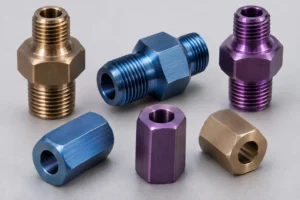
Titanium anodizing equipment must suit your selected process, part size, and production volume. Type 2 and Type 3 treatments may require different power supplies, tank materials, and process controls.
DC Power Supply
A regulated DC power supply provides the required voltage and current. For color anodizing, stable voltage control helps reproduce the approved shade.
Process Tanks
Chemically compatible tanks hold the cleaning solutions, pretreatment chemicals, and electrolyte. Temperature control and agitation are included where required by the process.
Racks and Fixtures
Racks hold parts securely and maintain electrical contact. Their design should allow drainage and place contact marks outside critical appearance areas.
Electrodes and Connections
The titanium part acts as the anode, while a compatible cathode completes the circuit. Suitable cables, connectors, and electrode positioning support reliable treatment.
Cleaning and Rinsing Equipment
Cleaning tanks remove oils and residue; ultrasonic cleaning may help with complex features. Separate rinse tanks limit chemical carryover, with deionized water used where specified.
Inspection and Monitoring Equipment
Voltage and current meters, temperature sensors, and bath-testing instruments monitor processing conditions. Controlled lighting and approved color samples support visual inspection, while dimensional gauges check critical features.
Benefits and Limitations of Titanium Anodizing
The benefits depend on the process: Type 2 targets functional performance, while Type 3 primarily provides color identification and appearance.
| Aspect | Benefit | Limitation |
| Galling and wear | Type 2 can reduce galling and improve wear performance on contacting surfaces. | It does not replace suitable lubrication or contact design. Type 3 offers limited abrasion protection. |
| Color identification | Type 3 produces dye-free colors to distinguish similar parts and enhance appearance. | The color on anodized titanium can wear off through repeated rubbing or scratching. |
| Dimensions | Type 3 generally has little dimensional impact on conventional fits. | Pretreatment, stripping, and functional processing may affect critical dimensions; specify tolerances after finishing. |
| Electrical properties | Increased surface resistance may be useful where reduced conductivity is desired. | Electrical contact areas may require masking. The thin film should not be treated as rated electrical insulation. |
| Appearance | The finish preserves the underlying metallic texture. | Tool marks and scratches remain visible; color matching requires consistent preparation and an approved sample. |
Common Color Anodizing Defects and Rework
Common defects in anodized titanium include uneven color, spots, streaks, unwanted contact marks, and scratches. Possible causes include contamination, inconsistent surface preparation, poor electrical contact, or handling damage.
Some defects require stripping and re-anodizing. Before rework, assess how stripping and any additional surface preparation could affect critical dimensions and surface texture.
Applications of Anodized Titanium
Medical and Dental
Color anodizing helps distinguish titanium instruments and implant components by size or type. Medical use requires application-specific validation of the finished part.
Aerospace
Functional anodizing is used on titanium fasteners and other components requiring anti-galling performance. Color anodizing may also support part identification.
Automotive and Motorsports
Visible titanium fasteners and accessories use color anodizing for appearance. Functional treatments may be specified for components exposed to friction.
Consumer Products and Jewelry
Titanium rings, watches, eyewear, and accessories use color anodizing to create decorative finishes while retaining the underlying surface texture.
FAQs
Can Grade 5 Titanium Be Anodized?
Yes. You can anodize titanium in commercially pure grades and alloys such as Grade 5. However, their color responses can differ. If you need matching shades, approve a sample made from your specified alloy.
Can one titanium part have multiple anodized colors?
Yes. Selective masking and sequential anodizing can create multiple colors on one part. Additional processing and handling generally increase the cost.
Is titanium anodizing the same as aluminum anodizing?
No. Conventional titanium color anodizing produces interference colors without dyes. Colored aluminum anodizing commonly uses dyes absorbed into a porous oxide layer, followed by sealing.
How much does titanium anodizing cost?
The cost depends on the treatment type, part size, quantity, surface preparation, masking, and inspection requirements. Small batches and multiple colors generally cost more per part.
Can you machine titanium after anodizing?
Yes, but machining removes the oxide film from the areas being cut. Complete titanium CNC machining before anodizing unless your design specifically requires exposed metal surfaces afterward.
Conclusion
Choose titanium anodizing based on your part’s function: Type 2 for anti-galling performance or Type 3 for color identification and appearance. Surface preparation and process control affect the final result.
For your next project, share your drawings, titanium grade, quantity, and finishing requirements with YD Rapid to discuss machining and surface treatment options.