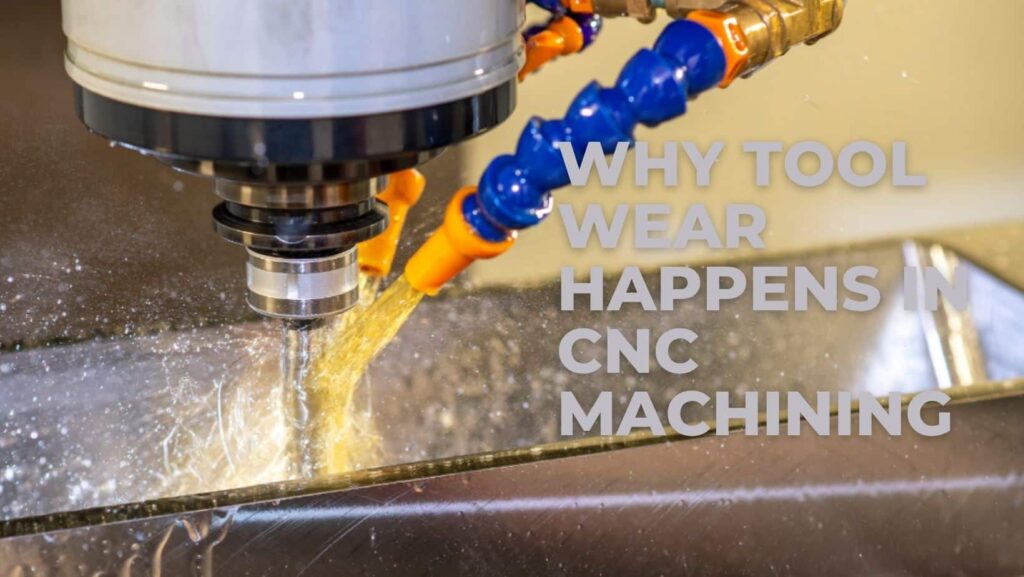
Computer numerical control (CNC) machines put significant stress on your cutting tools. Eventually, all drill bits, end mills and lathe inserts begin to wear out. This normal process is called tool wear in CNC machining. This occurs when the cutting edge contacts the raw material at high speed and high load.
Understanding the causes of CNC tool wear can help you make better choices before beginning a job. It enables you to choose the proper speeds, feeds and tool materials. Failure to address the early signs of worn edges will result in complete cutting tool failure.
Here are the main points to keep in mind about this process:
- Heat is one of the main causes of tool wear.
- Wrong feed rate increases cutter damage.
- Tool wear reduces machining accuracy.
- Proper coolant improves tool life.
- Hard materials increase cutting pressure.
- Regular inspection helps avoid sudden tool failure.
What Is Tool Wear in CNC Machining and Why Does It Matter?
So, what is tool wear in CNC? In simple terms, it is the gradual loss of material from the edge of a cutting tool. As the tool rubs against a workpiece, microscopic pieces of the tool flake off. This happens because of high heat, intense friction, and huge mechanical forces. Over time, the perfectly sharp edge becomes rounded. This gradual damage alters how the tool slices through metal.
Common Signs of Worn CNC Tools
You do not always need a microscope to see CNC tool wear. The machine and the finished part will tell you when a cutter is getting dull.
- First, you will notice surface finish problems, like rough patches or lines on the metal.
- Second, the machine will start making high-pitched noises or deep groans.
- Third, you will feel an unusual vibration, often called chatter, shaking the machine setup.
- Finally, you will see dimensional errors where the finished part is slightly too big because the worn tool is deflecting away from the metal instead of cutting it.
Effects on Machining Accuracy
When tool wear in CNC machining goes unnoticed, your part quality drops quickly. A dull tool cannot hold tight tolerances. It pushes against the metal instead of shearing it cleanly, which forces the tool to bend away from its programmed path. This bending ruins your dimensional accuracy.
Furthermore, it creates large burrs, which are ugly raised edges on the part that require extra work to clean off. If you ignore machining tool wear, the tool will eventually snap, which can ruin a costly part or damage the expensive machine spindle.
Why Does Heat Cause Cutting Tool Failure?
Understanding machining tool wear is key to keeping your industry running smoothly. Each time a tool cuts metal, it’s subjected to intense heat and pressure. The friction between the edge of the tool and the material changes the shape of the part.
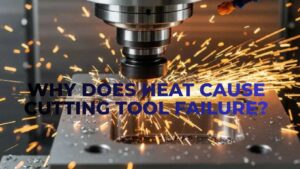
Friction Between Tool and Material
Heat is the absolute number one enemy of any cutting-edge technology. When a CNC tool spins at thousands of revolutions per minute, it rubs against the workpiece material with incredible force. This intense friction creates a localized hot zone right at the cutting edge.
In fact, temperatures at the tip of the tool can easily rise above 1000 Fahrenheit. This extreme heat softens the tool metal, making it easy for the raw material to scrape the tool away.
High-Speed Machining Problems
In modern industries, high-speed machining is very common. While it makes parts faster, it creates major thermal stress. If the temperature spikes and drops too quickly, the tool suffers from thermal shock. This constant expansion and contraction cause a rapid edge breakdown.
This fast thermal damage is a primary cutter wear causes that leads to unexpected cutting tool failure. The tool material simply loses its structural hardness and fails under pressure.
Coolant and Temperature Control
Using the right coolant is the best way to fight heat-driven CNC tool wear. Coolant acts as a heat sponge and a slippery lubricant. It reduces the direct friction between the tool face and the flying chips. By keeping the cutting zone at a stable temperature, coolant stops the tool from softening. However, you must apply the coolant evenly. If the coolant flow stops and starts, it causes thermal cracking, which destroys the cutting edge instantly.
- Heat sources: Direct friction from metal chips sliding over the tool face.
- Friction areas: The tool flank that rubs the part and the tool rake where chips slide.
- Coolant benefits: Lowers total temperature, flushes out sharp chips, and reduces friction.

How Feed Rate Affects Tool Wear?
The answer depends on finding a careful balance. The feed rate is how fast the tool moves forward through the metal. If your feed rate is too heavy, you put too much physical pressure on the tool. This high mechanical force chips the sharp cutting edge. Conversely, if your feed rate is too light, the tool will rub against the metal instead of slicing a clean chip. This rubbing generates massive friction and heat, which wears the tool out just as fast.
Feed rate must be matched to the tool diameter, flute count, workpiece material, and cutting depth. During CNC milling, an excessively low feed rate can cause rubbing and heat buildup, while an overly high feed rate may overload the cutting edge and cause chipping.
Incorrect Feed Settings
Using incorrect feed settings is a major driver of machining tool wear. When the feed rate is mismatched with the spindle speed, the metal chips cannot escape properly. This poor chip evacuation causes the tool to recut its own sharp chips. Recutting chips mashes the metal fragments back into the tool edge, which causes rapid abrasive wear and leads directly to massive tool wear in CNC machining.
Feed Optimization Methods
To protect your tools, you must optimize your feed rates. This means matching your feed speed to your specific tool diameter, number of flutes, and material type. Balanced cutting parameters ensure that the tool cuts a healthy chip that carries the heat away from the tool edge. Proper feeds ensure the cutter works efficiently without experiencing excessive physical stress or friction.
What Is the Mechanism of Tool Wear?
Abrasion Wear
The first major mechanism is abrasive wear. This happens when hard microscopic particles inside the workpiece material scratch and scrape the tool surface. It is like rubbing sandpaper against the tool edge. This mechanical scraping action slowly grinds away the tool material during everyday machining tool wear.
Adhesion Wear
The second mechanism is adhesive wear, which happens at high temperatures and pressures. The metal chip becomes so hot that it actually welds itself to the tool face. As the tool continues to move, this welded metal gets torn away, ripping small microscopic chunks of the tool material out with it. This cycle of sticking and tearing causes severe CNC tool wear.
Diffusion and Oxidation
The final mechanisms are chemical. At extreme temperatures, atoms from the tool diffuse into the metal chips. This atomic movement leaves microscopic holes in the tool structure, creating a deep crater on the tool face. At the same time, oxygen reacts with the hot tool metal, causing oxidation. This chemical reaction creates a brittle outer layer that flakes off easily during cutting.
| Wear Type | Main Cause | Visible Sign | Effect on Machining |
|---|---|---|---|
| Flank wear | Mechanical rubbing and everyday abrasion | Flat worn land on the side of the cutting edge | Increases friction, destroys part finish |
| Crater wear | High heat and chemical diffusion on the tool top | Deep concave pit just behind the cutting edge | Weakens the main edge, leading to breakage |
| Built-up edge | Metal chips are welded to the tool tip | A lump of workpiece material stuck on the edge | Ruins’ dimensions cause micro-chipping |
| Chipping | Heavy physical impact or high vibration | Small notches or missing pieces on the edge | Causes sudden failure, leaves rough lines |
| Thermal cracking | Rapid temperature changes and thermal shock | Small cracks running across the cutting edge | Causes the entire edge to flake off quickly |
How Cutter Runout Affects Tool Wear?
Uneven Cutting Pressure
Another hidden killer of tool life is runout. Runout happens when the tool does not spin perfectly around its true center axis. If a tool has run out, one flute will stick out further than the others. This single flute ends up doing all the heavy work, taking a massive chip while the other flutes do almost nothing. This uneven pressure causes the single flute to suffer from rapid cutter wear.
Spindle and Holder Accuracy
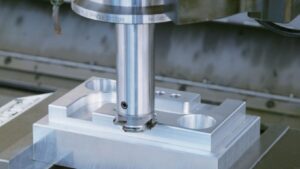
Runout typically occurs due to issues with your tool holder or the machine’s spindle. Dirt, small metal chips, or dried coolant trapped inside the spindle taper can push the tool holder slightly sideways. Any misalignment of 0.001″ or less will increase the forces acting on your cutting tools, resulting in early cutting tool failure and increased tool costs in your shop.
Runout Inspection Methods
To correct this, the machinists use a dial test indicator with high precision for tool alignment. The indicator needle is held against the tool shank, and the spindle is turned by hand slowly. Wiggling needles indicate runout. Regular maintenance of tool holders, collets and spindle tapers keeps tools spinning square, spreading the cutting force evenly across all of the flutes.
CNC Parameters That Increase Tool Wear
Every shop needs to answer: Why is it important to check for tool wear in CNC machining? The most obvious solution is quality control. Checking tools prevents early wear and allows wear offsets in CNC programs.
| Machining Factor | Effect on Tool | Resulting Problem | Suggested Fix |
|---|---|---|---|
| High spindle speed | Generates excessive friction heat | Softens tool edge, accelerates wear | Lower the RPM to match material specs |
| Wrong feed rate | Causes rubbing or high-impact pressure | Chipped flutes or fast thermal dulling | Use calculated chip load charts |
| Poor coolant flow | Allows massive heat zones to develop | Thermal cracking, tool melting | Aim coolant lines directly at the cut |
| Tool runout | Puts all cutting load on a single flute | Early chipping, broken tools | Clean spindle tapers and use quality collets |
| Deep cutting depth | Increases total mechanical force | Tool bending, catastrophic breakage | Take multiple lighter steps or shallow cuts |
| Hard materials | Creates intense abrasive friction | Fast edge rounding, tool failure | Use coated carbide and drop cutting speeds |
Conclusion
Managing tool wear in CNC machining is a critical part of running a successful machine industry. The factors that result in tool breakdown include friction heat, improper feed rate, heavy cutting pressure, and material hardness. You can easily avoid sudden cutting tool failure by tracking these forces, keeping your machine setup clean to prevent runout, and using the right coolants.
Use your wear offsets in CNC software to adjust for minor edge loss, and leverage the adaptive clearing tool life paths to distribute the cutting forces evenly. Inspecting your tools regularly ensures you catch wear patterns early, allowing you to replace tools safely before they break, saving your manufacturing time, parts, and money.

Need More Consistent Tool Life and Part Quality?
Tool wear is affected by cutting speed, feed rate, tool material, coolant delivery, machine rigidity, and workpiece properties. Send us your drawings, material specifications, tolerances, surface requirements, and order quantity for review. YD Rapid manufactures custom CNC parts using suitable tooling and cutting parameters for each project.
Frequently Asked Questions
What is the main cause of tool wear?
The main cause is intense heat and friction. When a tool cuts metal at high speeds, it rubs hard against the material. This creates massive heat that softens the tool edge and scrapes the metal away over time.
What are the effects of tool wear?
Worn tools create rough surfaces and ruin part accuracy. A dull tool pushes against the metal instead of cutting it cleanly. This extra force causes the machine to shake, creates ugly burrs, and can break the expensive tool completely.
Why End Mills Wear Out Quickly in Steel?
Steel is a very hard and dense metal. Cutting it creates massive physical resistance and high heat. This intense pressure quickly dulls the sharp cutting edge. Trapped steel chips also get run over and recut, which damages the tool faster.
How to Prevent Flank Wear in CNC Machining?
You can prevent flank wear by lowering your cutting speed and choosing coated carbide tools. Advanced tool coatings act like a shield against heat. Also, make sure your coolant lines spray directly on the cutting edge to reduce friction.