
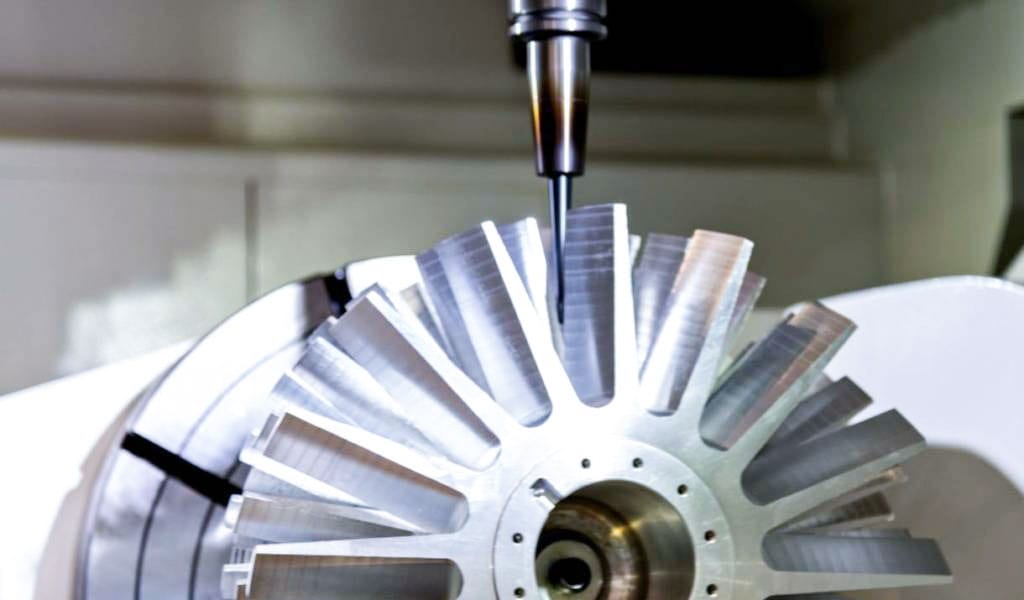
In today’s world of advanced manufacturing, precision defines success. Every product — from medical implants and aerospace components to automotive engines and electronic housings — demands extraordinary accuracy. Achieving such accuracy requires not just skilled craftsmanship but the power of technology.
That’s where CNC precision machining comes in.
CNC (Computer Numerical Control) precision machining is the process of using automated machine tools guided by computer programs to produce complex, highly accurate parts. It is the foundation of modern manufacturing, enabling companies to produce components with microscopic tolerances and flawless consistency.
This article explores everything you need to know about CNC precision machining, including how it works, its benefits, materials, applications, and future trends shaping the manufacturing landscape.
What Is CNC Precision Machining?
CNC precision machining is a subtractive manufacturing process where raw material is removed from a solid block (metal, plastic, or ceramic) using precisely controlled tools. Unlike manual machining, CNC systems are driven by CAD (Computer-Aided Design) and CAM (Computer-Aided Manufacturing) software, ensuring unmatched accuracy and repeatability.
How It Works
- Design Phase – The part design is created using CAD software.
- Programming Phase – The design is converted into machine-readable G-code using CAM software.
- Machining Phase – CNC machines automatically cut, drill, mill, or turn the material.
- Inspection Phase – The finished part undergoes dimensional verification and surface testing.
This digital-to-physical workflow guarantees precision at every step, making CNC machining indispensable for critical industries.
Key Technologies in CNC Precision Machining
CNC Milling
CNC milling involves rotating cutting tools to remove material from a stationary workpiece.
- Ideal for creating complex geometries, holes, and cavities.
- Commonly used for metals like aluminum, steel, and titanium.
CNC Turning
Turning rotates the workpiece while cutting tools remove material to form cylindrical shapes.
- Used for shafts, pins, bushings, and round housings.
- Delivers exceptional concentricity and surface smoothness.
CNC Grinding
Grinding ensures ultra-fine surface finishes and precise dimensions.
- Used in aerospace and tooling applications.
- Achieves tolerances within ±0.001 mm.
EDM (Electrical Discharge Machining)
EDM uses electrical sparks to erode conductive materials.
- Perfect for hardened metals and intricate geometries.
- Common in mold and die manufacturing.
5-Axis CNC Machining
A high-end variant of CNC machining that allows movement along five axes simultaneously.
- Enables complex parts in a single setup.
- Reduces human error and improves surface finish.
Materials Used in CNC Precision Machining
A CNC precision machining factory handles a wide range of materials depending on industry and function.
Metals
- Aluminum – Lightweight, corrosion-resistant, and easy to machine.
- Stainless Steel – Strong, durable, ideal for medical and food industries.
- Titanium – Exceptional strength-to-weight ratio; used in aerospace and implants.
- Copper & Brass – Excellent electrical and thermal conductivity.
Plastics
- ABS, PEEK, Nylon, Delrin (POM) – High dimensional stability, used in electronics and prototyping.
Ceramics
- Zirconia, Alumina – Used in high-temperature and wear-resistant applications.
Advantages of CNC Precision Machining
- Unmatched Accuracy
- Capable of achieving micron-level tolerances.
- Consistency and Repeatability
- Every part is identical, ensuring reliability for mass production.
- Versatility
- Works with a broad range of materials and industries.
- Efficiency
- Automated operation minimizes downtime and human error.
- Scalability
- Suitable for both prototyping and large-scale production.
- Superior Surface Finishes
- CNC machines deliver clean edges and smooth surfaces, reducing post-processing needs.
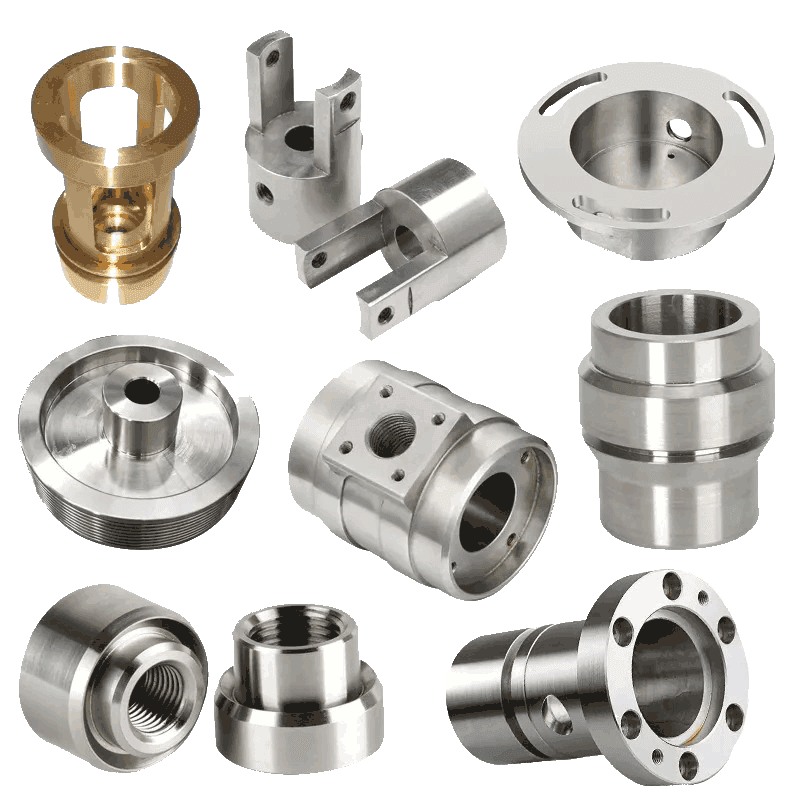
Applications of CNC Precision Machining
Aerospace
CNC precision machining is vital in producing lightweight, high-performance aircraft components.
Examples: turbine blades, engine housings, brackets, and landing gear systems.
Automotive
From prototype car parts to production-grade engine components, CNC machining ensures accuracy and durability.
Examples: pistons, valves, transmission housings, and suspension parts.
Medical Devices
High precision is crucial for surgical tools and implants.
Examples: orthopedic implants, dental components, and surgical instruments.
Electronics
CNC machining produces intricate housings for consumer and industrial electronics.
Examples: smartphone frames, connectors, and heat sinks.
Robotics & Automation
Used for end-effectors, precision gears, and actuator housings.
CNC machining ensures mechanical stability and precise motion control.
The CNC Precision Machining Process
- Concept & CAD Design
- Engineers design 3D models using CAD software.
- CAM Programming
- The CAD model is translated into G-code for CNC operation.
- Machine Setup
- Material selection, tool calibration, and workholding setup.
- Machining
- CNC milling, turning, or grinding operations begin.
- Quality Inspection
- Coordinate Measuring Machines (CMM) verify dimensions and tolerances.
- Surface Treatment
- Anodizing, polishing, painting, or coating for protection and aesthetics.
- Assembly & Delivery
- Final components are assembled, tested, and shipped.
Quality Control in CNC Precision Machining
Precision manufacturing demands rigorous quality control at every stage.
- Dimensional Inspection using CMM and optical systems.
- Surface Roughness Measurement to ensure Ra ≤ 0.8 µm.
- Material Testing through hardness and tensile tests.
- Tool Wear Monitoring for consistent machining performance.
Every CNC precision machining factory relies on ISO-certified processes to guarantee reliability and accuracy.
Tolerances and Surface Finishes
Typical tolerances achieved by CNC precision machining:
ProcessTypical ToleranceSurface Roughness (Ra)
CNC Milling ±0.01 mm 0.8 µm
CNC Turning ±0.005 mm 0.4 µm
CNC Grinding ±0.001 mm 0.2 µm
Such precision ensures a perfect fit, functionality, and performance even in demanding environments.
Cost Analysis: CNC Precision Machining vs. Alternatives
FactorCNC Machining3D PrintingCasting
Accuracy Excellent Moderate Moderate
Material Range Wide Limited Wide
Surface Finish: Superior, Rough, Good
Lead Time Fast Fast Medium
Cost (Prototype) Moderate Low High
Cost (Mass Production) High Moderate Low
While CNC machining may have higher per-part costs for large volumes, its accuracy and consistency make it ideal for high-end and safety-critical applications.
Challenges in CNC Precision Machining
- Tool Wear – Continuous cutting of hard materials reduces tool life.
- Complex Geometry Setup – Requires advanced programming for intricate parts.
- Material Waste – Subtractive nature generates scrap.
- High Equipment Costs – Advanced machines and skilled operators are expensive.
Despite these challenges, the benefits of CNC precision machining far outweigh the limitations.
Innovations and Future Trends
- AI-Driven Machining
- Intelligent software optimizes cutting paths and detects tool wear in real time.
- Hybrid Manufacturing
- Combining additive (3D printing) and subtractive (CNC) methods for efficiency.
- Robotics Integration
- Automated loading/unloading for lights-out manufacturing.
- Digital Twins
- Virtual replicas of machines for predictive maintenance and optimization.
- Sustainability
- Recyclable materials and closed-loop coolant systems reduce environmental impact.
Environmental Responsibility in CNC Precision Machining
Modern factories are embracing green manufacturing practices:
- Recycling metal chips and cutting fluids.
- Using energy-efficient spindles and drives.
- Implementing dry machining to reduce waste.
- Adopting renewable energy sources.
This shift aligns CNC precision machining with sustainable industrial growth.
Global Market and Industry Outlook
The global CNC precision machining market is projected to surpass USD 150 billion by 2032, driven by demand from the aerospace, automotive, and electronics sectors.
- Asia-Pacific leads production, particularly China and Japan.
- Europe focuses on high-end aerospace and medical components.
- North America emphasizes automation and high-mix low-volume production.
Rapid globalization and smart manufacturing will continue to shape the future of CNC machining worldwide.
Frequently Asked Questions (FAQ)
Q1: What industries use CNC precision machining?
Aerospace, automotive, medical, electronics, robotics, and defense.
Q2: What tolerance can CNC machining achieve?
Typically ±0.01 mm; high-precision grinding can reach ±0.001 mm.
Q3: Is CNC machining better than 3D printing?
For high accuracy, surface finish, and material strength, CNC machining remains superior.
Q4: Can CNC precision machining be used for prototyping?
Absolutely. It’s ideal for functional prototypes and low-volume runs.
Q5: What is the future of CNC machining?
Automation, AI, and hybrid manufacturing will dominate the next decade.
Conclusion
CNC precision machining stands as the cornerstone of modern manufacturing. Its unmatched accuracy, versatility, and consistency make it the preferred choice for industries where precision is non-negotiable.
From aerospace to medical devices, every critical innovation relies on the accuracy and reliability of CNC technology. As automation, AI, and sustainability evolve, CNC precision machining will remain at the heart of global industrial progress — driving innovation, performance, and quality into the future.