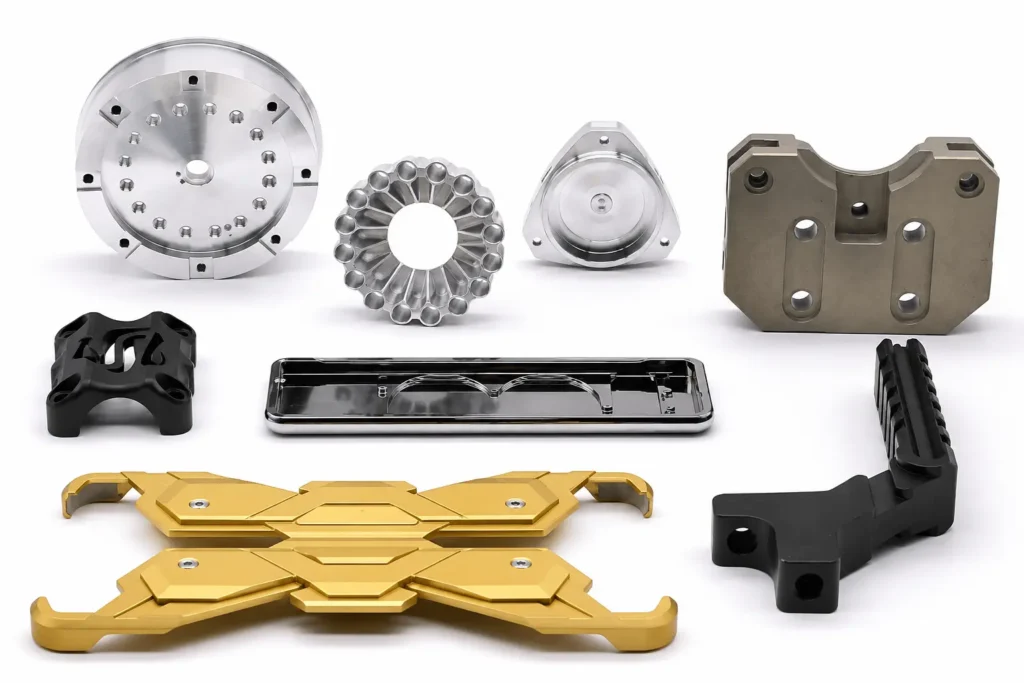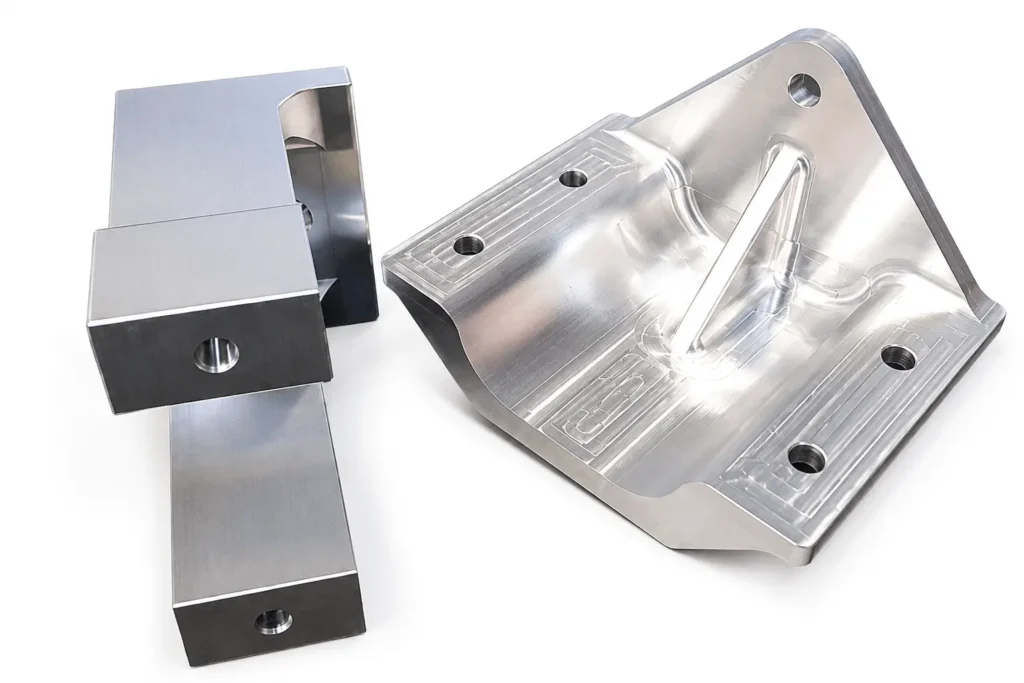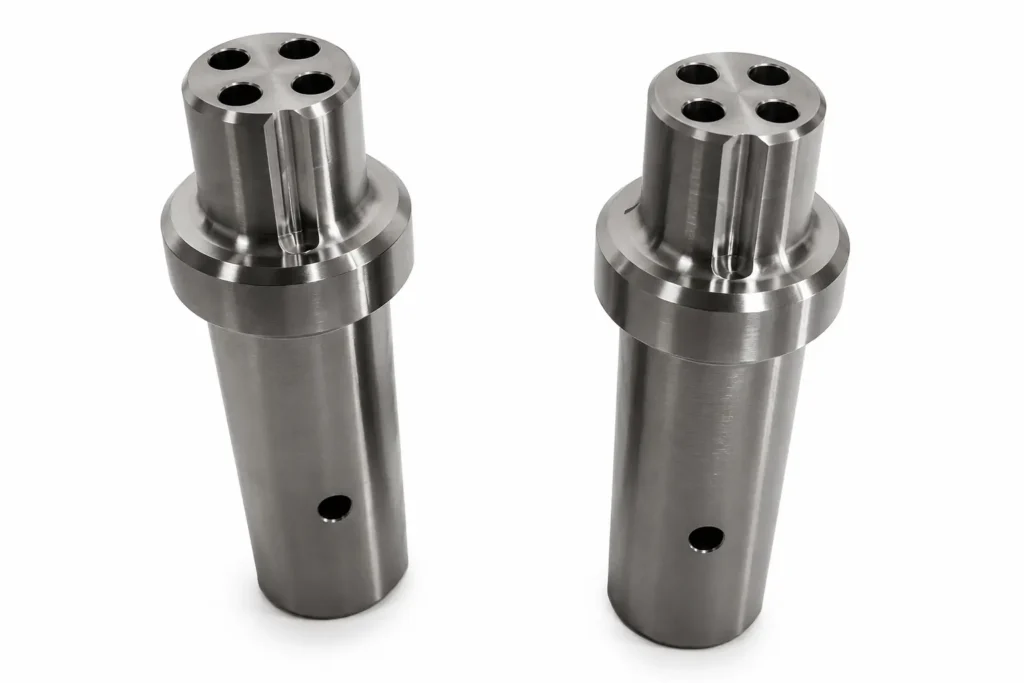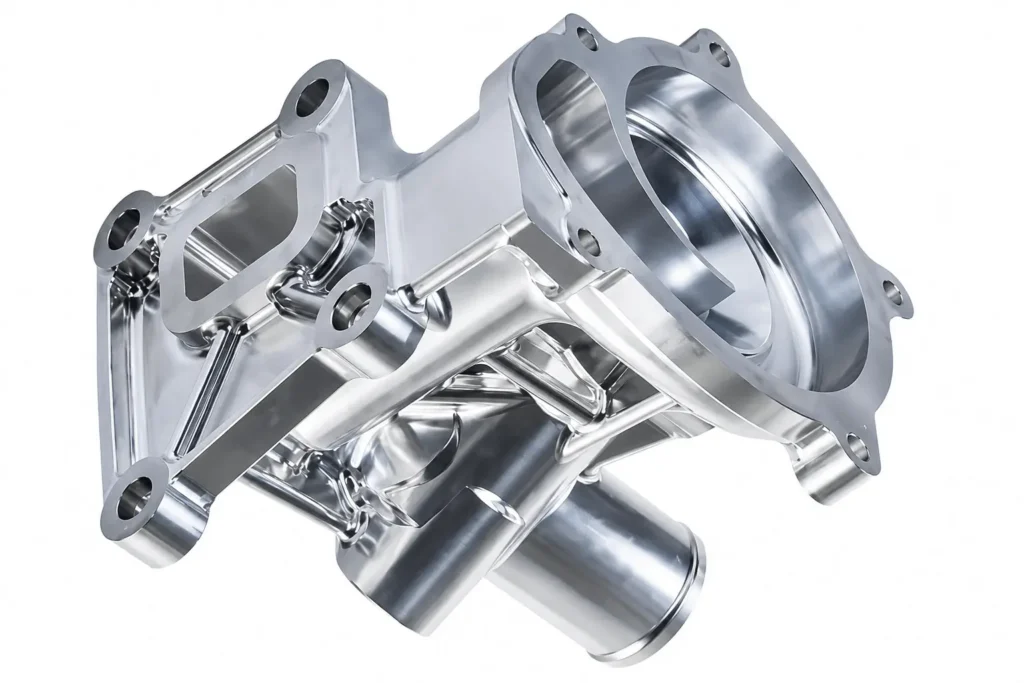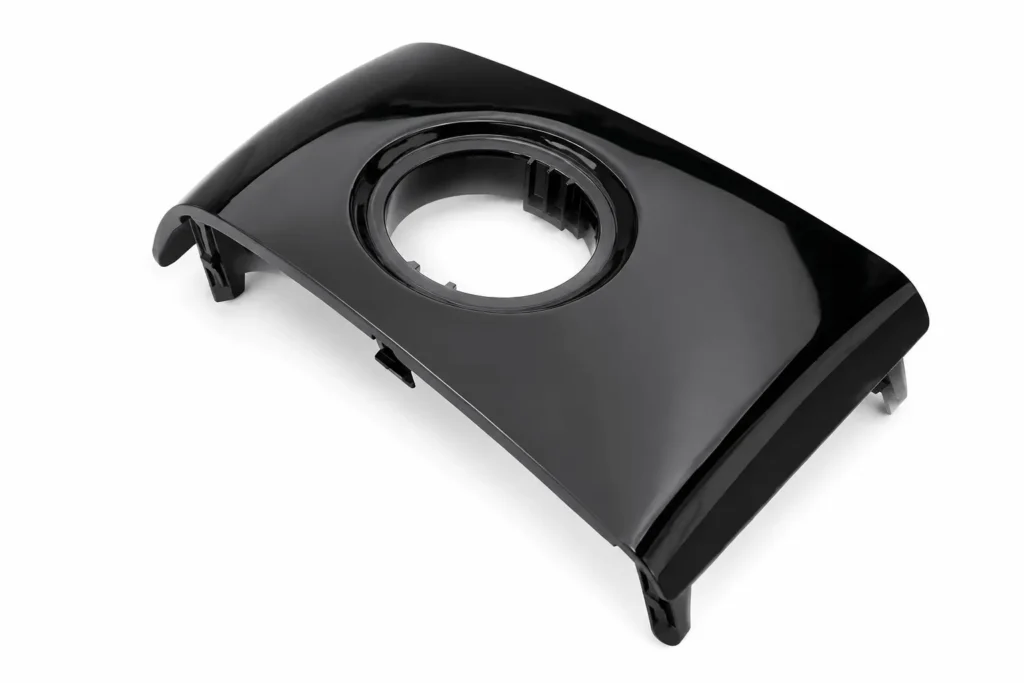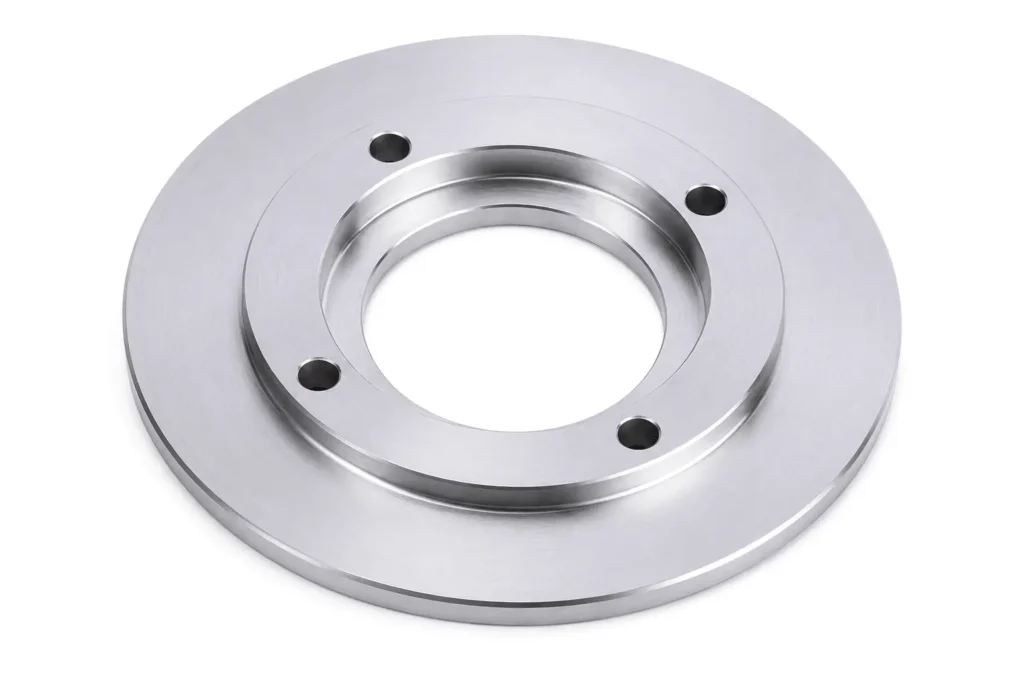
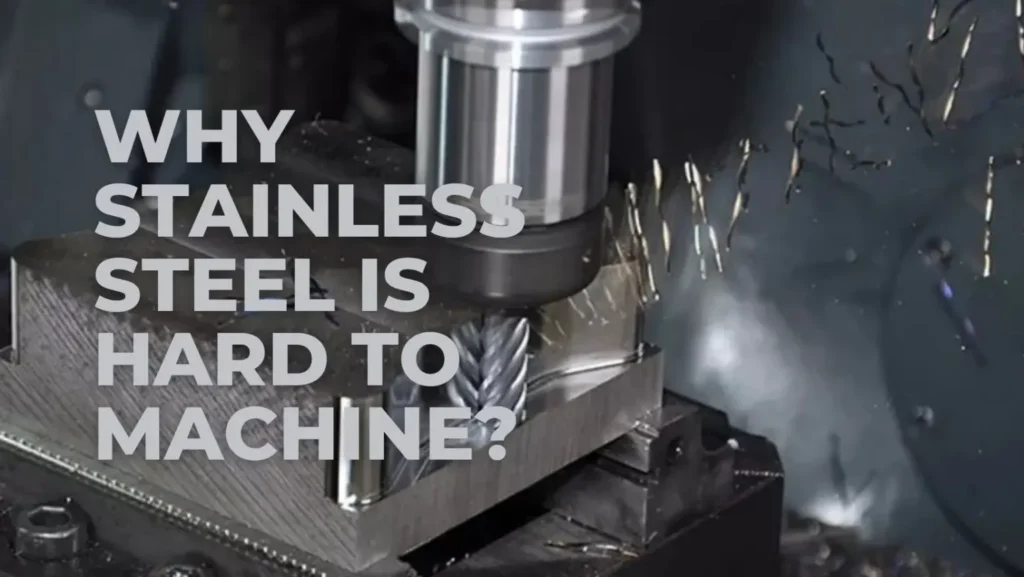
Stainless steel is still a hugely popular material in manufacturing today, as it doesn’t rust easily, is very strong and lasts for a long time. You’ll find CNC-machined stainless steel parts in a lot of places: in parts for airplanes and cars, in equipment used for food, and in medical instruments. However, it can be used for so much; stainless steel is much harder to machine than metals like aluminum or brass.
When CNC machining stainless steel, the biggest issues are creating too much heat, tools wearing out very quickly, the metal becoming harder as you work on it (work hardening), chips moving away from the cutting area, and a build-up of material on the cutting edge.
This guide has all the information for:
- CNC machining stainless steel
- Looking at why some types of stainless steel are easier to machine than others.
- How to make your tools last longer
- The most suitable coolant for stainless steel
- How to avoid the work-hardening issue
Why Is Stainless Steel Difficult to Machine?
Stainless steel is difficult to machine due to its chemical composition. Because of the way stainless steel reacts to heat, it does not dissipate heat quickly like aluminum.
One of the biggest challenges of stainless steel machining is work hardening. When stainless steel is machined, the workpiece surface hardens. If the cutting tool is rubbing against the stainless steel instead of cutting it efficiently, the work hardening makes the stainless steel more difficult to machine.
Stainless steels, like 304 and 316 grades, are difficult to machine due to the long, stringy chips created by these materials. Poor chip control during the machining of stainless steel can damage the workpiece. Additionally, stainless steel will form a built-up edge on the cutting tool, which will negatively impact the stainless steel workpiece’s surface finish.
| Challenges | Effects on machining |
| Work Hardening | The material becomes hard while machining |
| Low thermal conductivity | Heat concentrates at the tool edge |
| High cutting forces | This will increase the tool wear and vibration |
| Built-Up Edge (BUE) | The material gets stuck to the machine |
| Long Stringy Chips | There will be poor chip evacuation and poor surface finish |
Is Stainless Steel Harder to Machine Than Aluminum?
Yes, stainless steel is significantly harder to machine than aluminum.
Stainless steel is much stronger and more rigid than aluminum and retains heat at the cutting tool edge. Aluminum is a soft metal with excellent thermal conductivity. The lower cutting forces required to machine aluminum also allow for less wear on the cutting tool.
The chips created from stainless steel are much longer than aluminum chips. Additionally, work hardening of stainless steel makes it more difficult to machine due to the work hardening of 304 and 316 grades.
| Characteristics | Stainless Steel Machinability | Aluminum Machinability |
| Thermal conductivity | Low | High |
| Tool wear | High | Low |
| Work hardening | Very high | Very low |
| Surface finish | Moderate -high | High |
| Chip control | Difficult | Easy |
Because of these differences, CNC milling stainless steel requires slower speeds, stronger tooling, and better coolant strategies than aluminum machining.
Why is 303 Stainless Steel Machine Better Than 304?
The 303 is better than 304 stainless steel machines due to the presence of sulphur additives, which add to their ability to break the chips and reduce the friction during the cutting process.
303 is a free-machining grade of stainless steel. Inside the material, sulphur reacts with manganese and produces manganese sulphides, which act as internal lubricants for the material during machining. This will significantly enhance the control of stainless steel chips and minimize edge build-up.
303 is easier to machine and is less corrosion-resistant than 304. In applications where food or marine uses are considered, 304 or 316 is typically chosen.
Is 304 Stainless Steel a Good Material to Machine?
Actually, 304 stainless steel is not easy to machine.
The 304 stainless steel is the most popular of the stainless steels due to its high corrosion resistance and versatility, but it is extremely work-hardenable when cut. Rubbing rather than cutting cleanly indicates that the material surface is harder, resulting in higher cutting forces and tool damage.
The following are some of the most frequently occurring issues that occur when working with 304 stainless steel.
- Excessive heat buildup
- Rapid tool wear
- Work hardening
- Poor chip control
- Built-up edge formation
- Surface finish inconsistency
With the right tooling, coolant and cutting parameters, however, 304 can be extremely productive.
Why is 316 Stainless Steel Harder to Machine?
Due to its excellent corrosion resistance, high toughness and significant work-hardening behavior, 316 stainless steel is one of the hardest to machine grades of stainless steel. The addition of Mo to 316 stainless steel gives it better resistance to chlorides and severe chemical environments than does 304 stainless steel.
The most difficult problem encountered during the machining of 316 stainless steel is its greater work-hardening ability. When being cut, the surface of the material hardens quickly because of friction and heat.
From another point of view, 316 also produces higher cutting temperatures due to the low thermal conductivity of stainless steel. In summary, it is harder to machine because:
- Higher cutting temperatures
- Faster tool wear
- Lower machinability rating
- More challenging chip removal process
- Increased cutting forces
- The formation of a more extended edge.
This is why CNC machining of stainless steel grades, such as 316, demands highly rigid machine setups, high precision, high-quality carbide tooling, high-pressure coolant systems, and optimized cutting parameters to maintain productivity and maximize tool life.
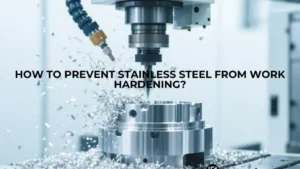
How to Prevent Stainless Steel from Work Hardening?
When stainless steel is subjected to plastic deformation and high concentrations of heat during the process of machining, it becomes harder, which is called work hardening.
Unless controlled, work hardening affects tools and results in poor surface quality. There is a way to machine stainless steel without work hardening. It is possible to machine stainless steel without work hardening.
1. Ensure proper feed rates.
Never allow the tool to rub against the material. The proper feed allows the tool to cut through the hardened material.
2. Use a sharp knife for cutting
Friction and heat with dull tools promote work hardening.
3. Avoid Dwelling
The tool can be stopped in a location, and hardened zones form immediately.
4. Use Positive Rake Geometry
Positive rake cutting tools minimize forces used in cutting and generate good chip flow.
5. Apply Adequate Coolant
Coolant works to dissipate heat prior to excessive hardening.
6. Work with Tools to Engage Consistently
The surface can become hardened repeatedly with interrupted cuts.
These are the most important strategies for successful CNC machining of stainless steel.
How to Choose the Right Coolant for Stainless Steel Machining?
For stainless steel machining, a high-lubricity coolant, which is typically based on oil or semi-synthetic, and is suitable for heavy cutting, is recommended.
Coolant is a significant factor in the surface quality and tool life of stainless steel because it produces a significant amount of heat.
| Type of Coolant | Advantages |
| Semi-Synthetic Coolant | It provides lubrication and provides balanced cooling |
| Oil-based coolant | Great Lubrication and heat reduction |
| MQL system | Reduce the use of the fluid and reduce friction |
| High-pressure Coolant | These kinds of coolants provide high chip evacuation efficiency |
How to Improve Tool Life When Machining Stainless Steel
Tool life is one of the biggest concerns in CNC machining of stainless steel due to the metal’s tendency to generate high temperatures, work hardening, and friction at the cutting edge. These factors all contribute to the rapid wear out of cutting tools, leading to increased costs and decreased efficiency in the machining operation.
Use Premium Carbide Inserts
Using premium carbide inserts instead of standard high-speed steel tools can significantly improve tool life when cutting stainless steel. Carbide tools maintain their cutting edge at high temperatures and can withstand the cutting forces required to CNC machine stainless steel grades like 304 and 316.
Select Proper Tool Coatings
Applying a coating to cutting tools such as TiAlN, TiCN, and AlCrN can significantly extend the life of cutting tools when machining stainless steel. These coatings allow for the reduction of friction between the tool and stainless steel, which reduces heat and wear on the tool.
Use High-Pressure Coolant
Using a high-pressure coolant system can assist in the removal of heat generated during the CNC machining of stainless steel, as well as in improving the control of stainless steel chips during the process.
Optimize Cutting Parameters
Using excessively high cutting speeds will rapidly reduce tool life when machining stainless steel. Using the proper feed rates and RPM settings for the stainless steel being machined will help to even out the cutting process and reduce the work hardening of the metal.
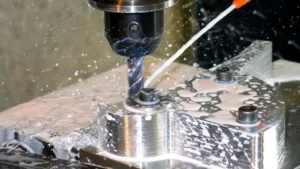
Minimize Vibration and Improve Chip Evacuation
Providing rigid fixturing for the workpiece and cutting tools will help to minimize vibrations and chatter between the tool and the workpiece. Additionally, ensuring that chips can evacuate the workpiece will reduce the risk of recutting and chipping the cutting tool edge, allowing the cutting tool to last longer during CNC machining operations.
Which are the Best Tools for Machining Stainless Steel
The stainless steel CNC machining is a hard task; the best tool for it is carbide tools. These tools have advanced coatings, and they have chip breaker geometries.
| Tool Type | Applications |
| TiAlN-Coated Carbide | It has high temperature resistance |
| Carbide Inserts | Use for general CNC machining |
| Cobalt Drills | These drills have applications in the stainless-steel drilling |
| Ceramic Tools | Their high speed provides great finishing |
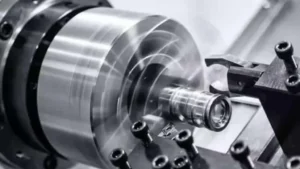
What are the Best Practices for Machining Stainless Steel: CNC Milling Machines
- Tight control of cutting conditions is necessary for CNC milling stainless steel due to its rapid work hardening.
- Climb milling is the best method, since cutting forces are reduced here as well and improve surface character.
- Maintaining a constant chip load in order to avoid rubbing and surface hardening.
- Flood coolant or high-pressure (70–100 bar) coolant systems are frequently employed to both control heat and aid in stainless steel chip control.
- Variable-pitch end mills reduce chatter, and trochoidal milling tools help distribute heat.
Successful stainless steel machining depends on rigid equipment, sharp carbide tools, stable toolpaths, consistent coolant delivery, and careful control of cutting parameters. An experienced CNC machining service provider can select the appropriate tooling and machining strategy according to the stainless steel grade, part geometry, tolerance, and production quantity.
Conclusion
CNC machining of stainless steel requires understanding all the aspects, like tooling, coolant strategy, cutting parameters, and material behavior. The grades such as 304 and 316 provide excellent corrosion resistance and high durability, but pose serious machining challenges arising from work hardening, poor thermal conductivity and rapid tool wear.
Well, lately we are talking about how to machine stainless steel without work hardening and what are the best tools for machining stainless steel pieces with a good solution, so as not to use water for the solution of treating surface, an appropriate coolant for stainless steel machining and optimum RPM and Feed Rate to improve productivity.
In short, stainless steel machining is demanding, but with the right strategy and setup, it can be highly reliable and productive, delivering strong, precise, and long-lasting components for critical industries.

FAQs
What are the common mistakes in stainless steel machining?
Bad tools, feed under 0.05 mm/rev, poor coolant, weak fixturing, and poor chip evacuation are common causes of tool failure and poor surface finish.
Which Stainless Steel Machines the Hardest?
Built on strength and work-hardening, duplex stainless steels are by far the most difficult to machine. 17-4 PH is still quite difficult, while 316 and 304 are successively easier, giving them machinability ratings of about 40–45%.
What are the Stainless Steel surface finish options?
Finishes in popular use include bead blasted (Ra 1.6–3.2 µm), polished (Ra less than 0.2 µm), electropolished for corrosion resistance, passivated to remove free iron, and brushed finishes for decorative use on the shop floor.
What RPM should you use for Stainless Steel?
The proper RPM depends on tooling material, cutter diameter, and stainless steel grade.
RPM Formula
The RPM formula used in CNC machining is:
Where:
- = cutting speed (m/min)
- = tool diameter (mm)
Lower RPM combined with higher feed rates generally helps reduce work hardening.
Stainless steel parts require careful control of heat, tool wear, chip formation, work hardening, and dimensional accuracy. Send us your drawings, stainless steel grade, tolerance requirements, surface finish, and expected quantity. Our engineering team will review the project and recommend a suitable machining approach. Visit YD Rapid to discuss your custom stainless steel parts.