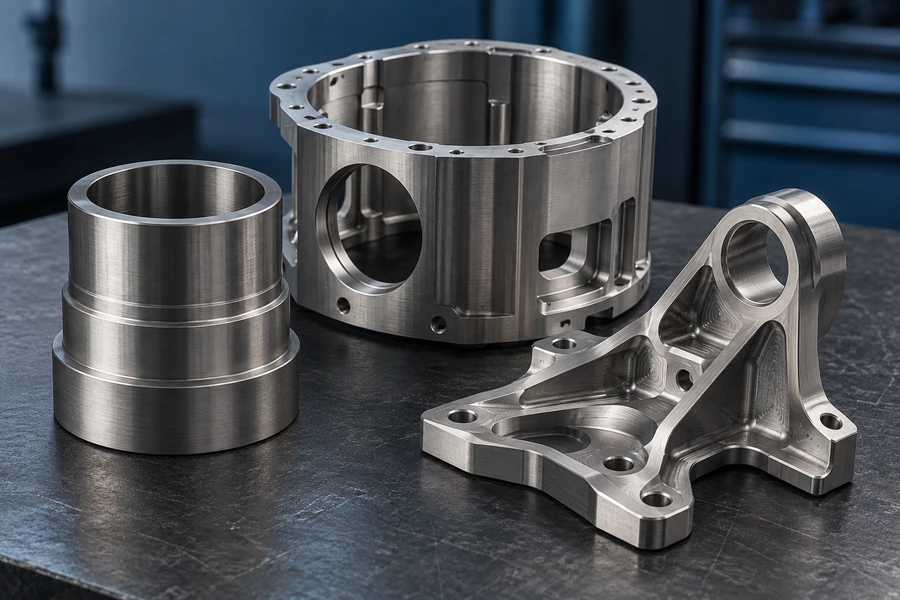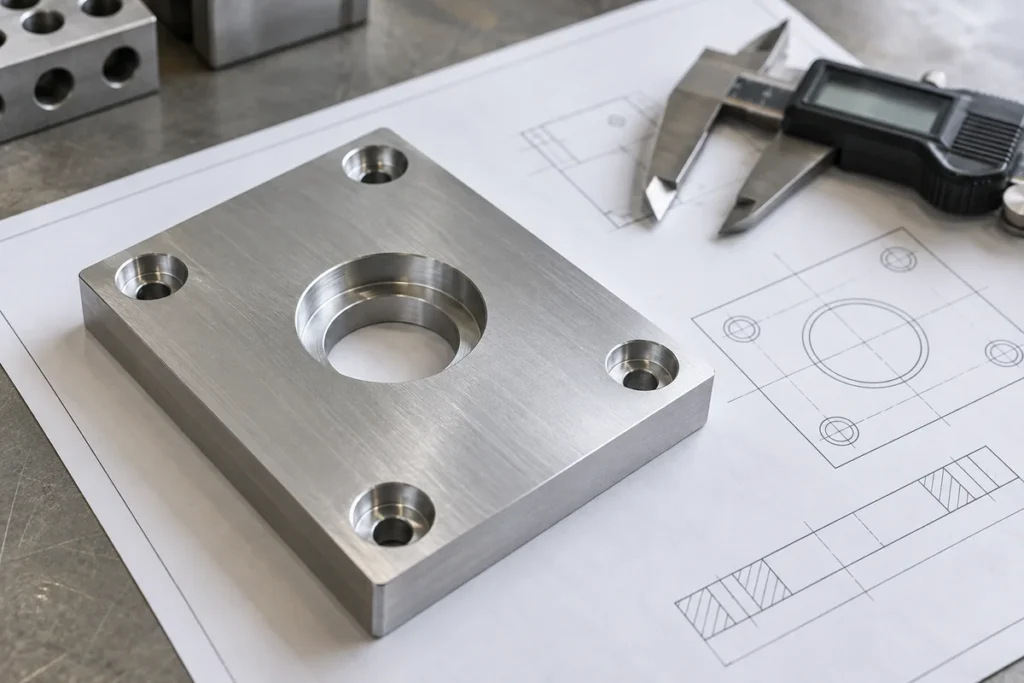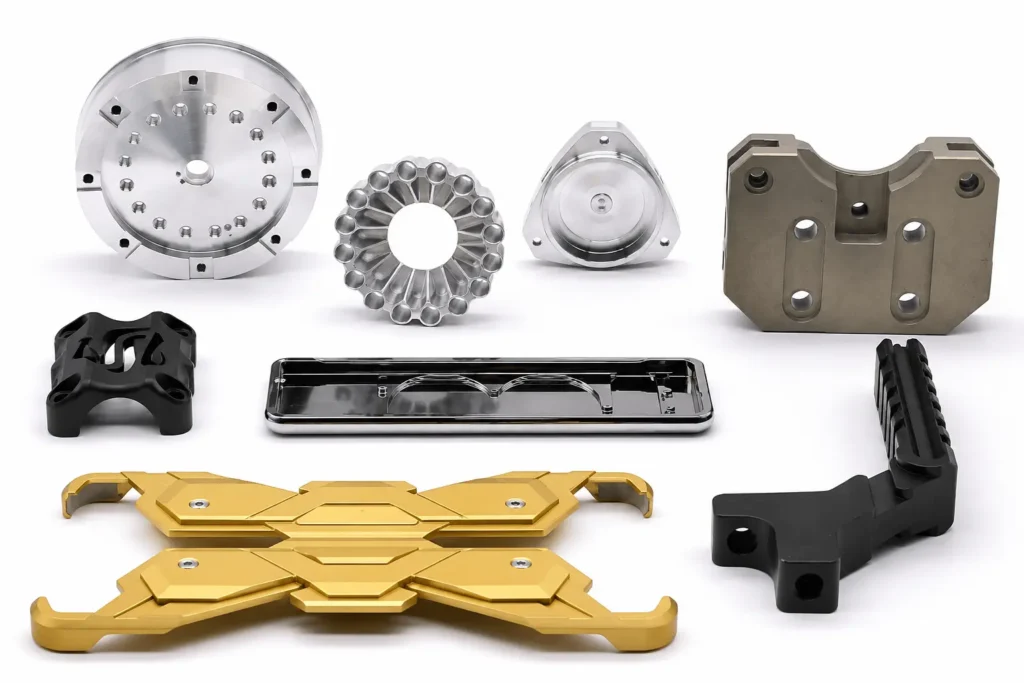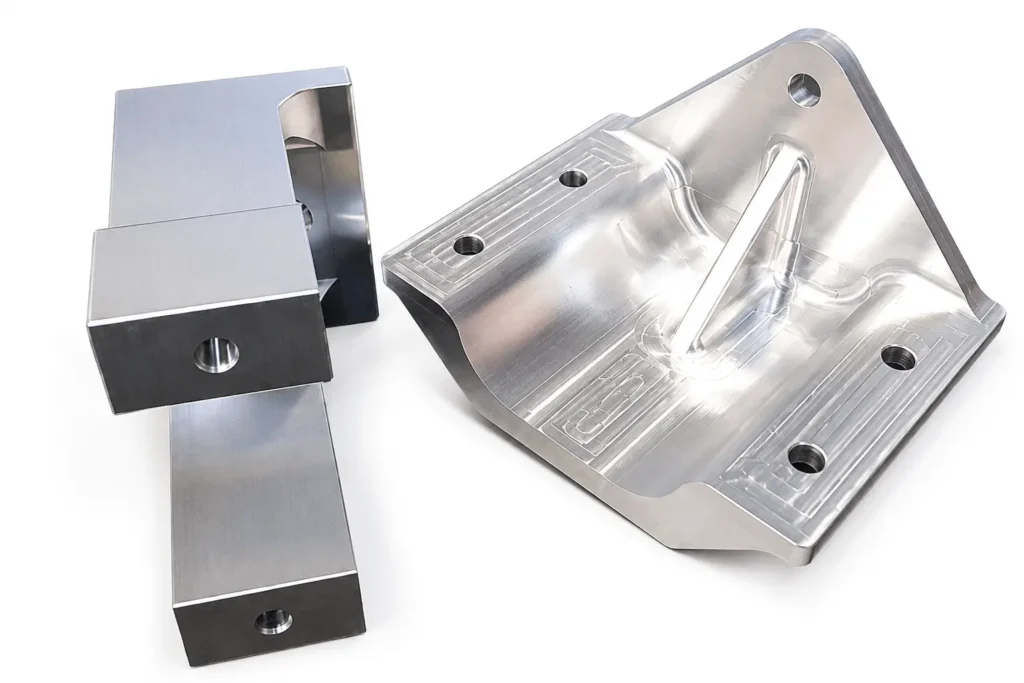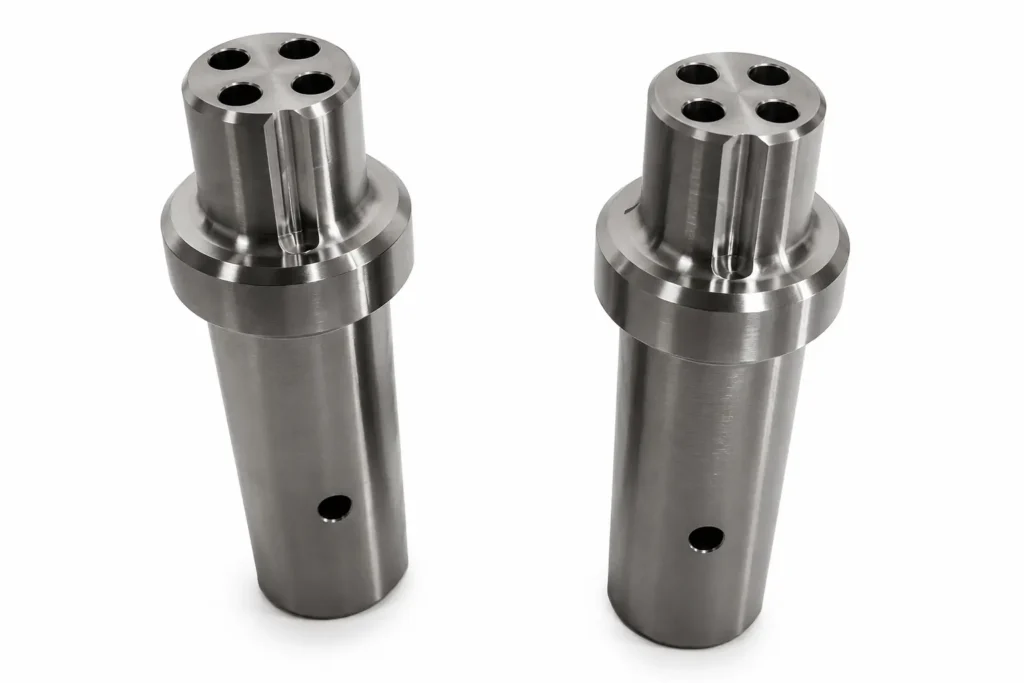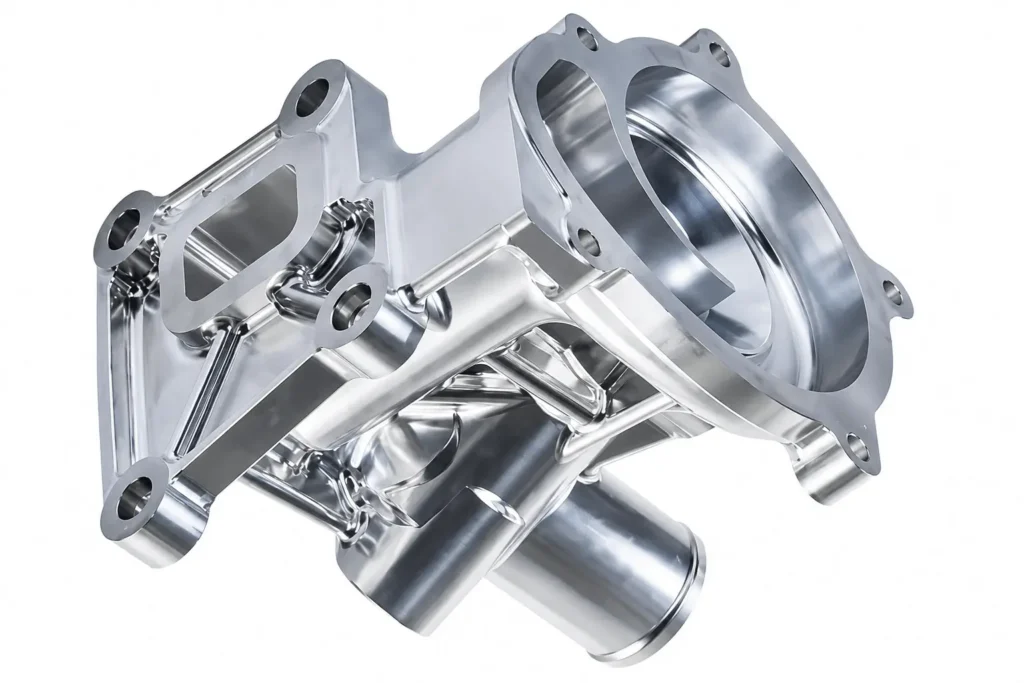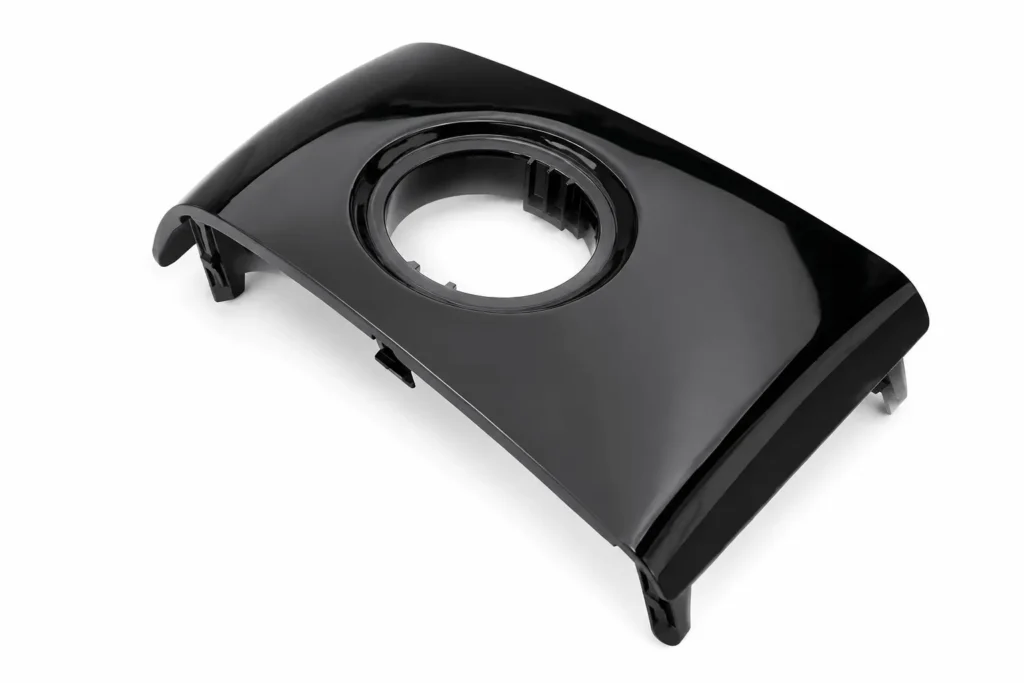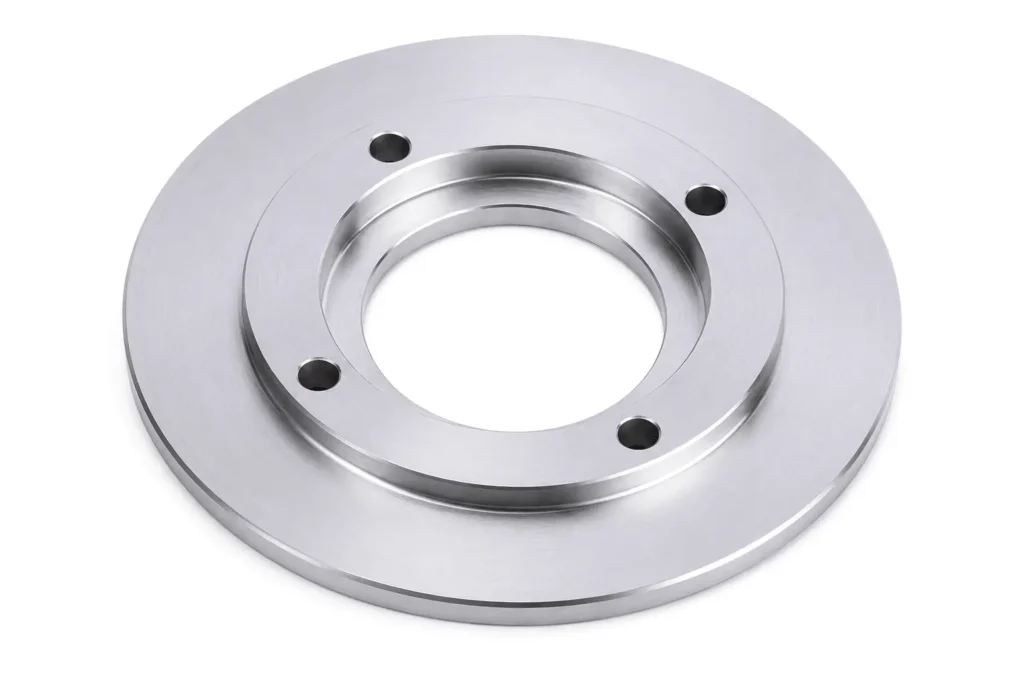
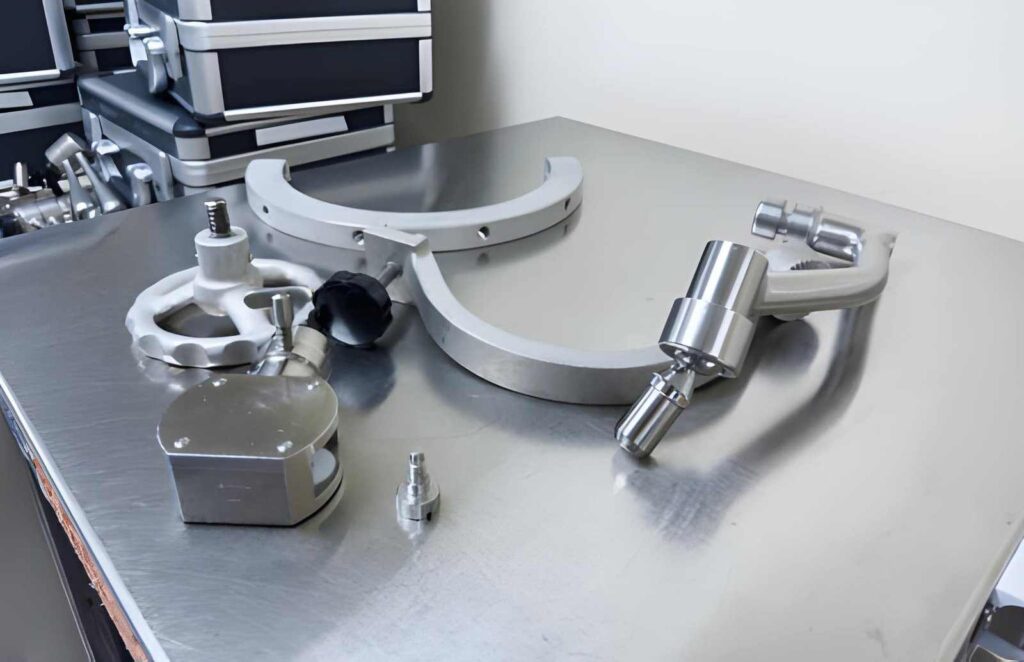
CNC machined parts for medical applications are widely used in surgical instruments, diagnostic equipment, implantable devices, and laboratory systems. Their high precision, excellent repeatability, and compatibility with a wide range of engineering materials make CNC machining one of the most reliable manufacturing methods for the medical industry.
Take a surgical instrument as an example. It is not made from one machined block. It can include shafts, handles, connectors, locking parts, and support components assembled. These parts need a proper fit during assembly because small dimensional variations can create alignment issues later.
Medical products also use different materials and part designs. Some components include thin walls. Some contain small holes, threads, slots, and fine features. Some parts move through cleaning and finishing stages after machining. These conditions create additional production considerations during manufacturing.
Because of this, CNC machining became a common process in medical production. It supports complex part geometry and helps manufacturers produce components used in surgical tools, diagnostic equipment, orthopedic products, and many other medical systems.
This article covers:
- Common CNC-machined medical components
- Materials used in medical production
- Production challenges in medical parts
- Surface and dimensional considerations
7 Medical Components Manufactured Through CNC Machining
Medical products contain many machined components. Some parts support movement. Some hold assemblies together. Some stay inside larger medical systems for years. The part design changes across products, but one thing remains common. Small features and assembly fit receive close attention during production.
Surgical Instruments and Handheld Tool Components
Surgical tools contain many machined parts with detailed features. Typical examples include forceps tips, clamp bodies, handles, retractors, guide sleeves, and instrument shafts.
Many of these parts include slots, hinge areas, threads, and mating features. These components also pass through cleaning and finishing stages after machining. Therefore, burr control and edge condition receive attention during production.
Orthopedic Implant and Bone Fixation Components
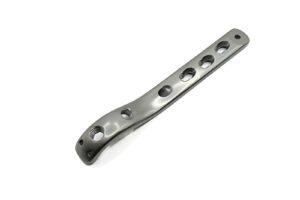
Orthopedic products use machined parts with strict dimensional requirements. Common examples include bone plates, fixation connectors, surgical screws, spinal support parts, and implant bases.
These parts often include curved surfaces and threaded sections. Production teams also pay attention to surface quality because some parts move into finishing processes before use.
Dental Device and Implant Components
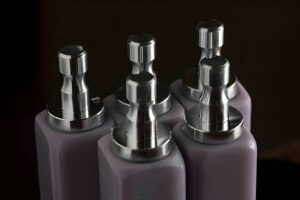
Dental systems use many small machined parts. Typical components include implant abutments, dental screw parts, guide pins, crown support structures, and surgical drilling guides.
These products contain small dimensions and detailed geometry. Some designs also include internal threads and narrow sections that need controlled machining.
Diagnostic Equipment and Imaging System Components
Large medical systems also contain machine components. Examples include sensor housings, support brackets, mounting frames, alignment parts, and equipment connectors.
These parts support assembly inside diagnostic machines. Proper fit remains important because misalignment can affect internal component positioning.
Endoscope and Minimally Invasive Device Parts
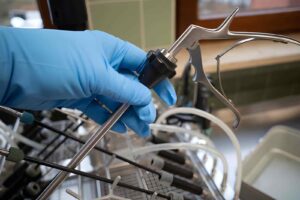
Endoscopic systems contain long and narrow components. Typical parts include tubes, connectors, camera housings, guide sleeves, and miniature support structures.
Small internal spaces create manufacturing challenges. Tool access and feature size often affect machining strategy.
Medical Fluid Control and Pump Components
Medical pumps and fluid systems use machined components that guide movement through internal channels. Common parts include valve bodies, flow connectors, manifolds, and housing components.
Internal passages receive attention during production because rough surfaces and feature variation can affect flow behavior.
Prosthetic and Custom Medical Device Components
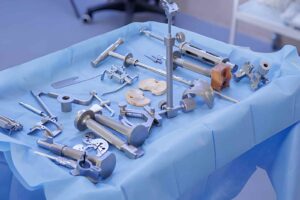
Some medical products need custom geometry for patient-specific applications. Typical examples include prosthetic connectors, support structures, alignment components, and attachment hardware.
Development teams often revise these designs several times during product work. CNC machining supports these updates because dimensions and features can change without dedicated tooling.
Manufacturing Techniques for Medical Parts Machining
Manufacturing CNC machined parts for medical applications requires strict dimensional accuracy, stable machining processes, and comprehensive quality inspection.
Medical parts use different machining methods based on geometry, size, and material behavior. A surgical instrument, for example, follows a different process route compared to an implant screw or a diagnostic housing. Here are the common CNC machining techniques for medical component manufacturing.
For new medical products, prototype machining is often the first step before full-scale manufacturing. Medical prototype development helps evaluate part performance, manufacturing feasibility, and design improvements before production begins.
CNC Milling for Complex Medical Components
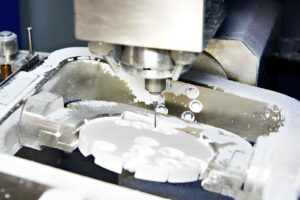
CNC milling is used for parts with pockets, slots, curves, and multi-face geometry. It supports components that need detailed external features and controlled flat surfaces for assembly.
Typical medical parts include surgical handles, device housings, orthopedic brackets, and instrument bodies. Multi-axis milling setups help reduce repositioning and keep feature alignment consistent across surfaces.
CNC Turning for Cylindrical Medical Parts
Turning is used for round components with a controlled diameter along the length. Many medical parts follow rotational symmetry, so turning provides stable dimensional control along the axis.
Common parts include bone screws, instrument shafts, pins, connectors, and threaded medical components. Secondary operations like drilling and grooving are often added during the same setup.
Swiss Machining for Small and Long Medical Components
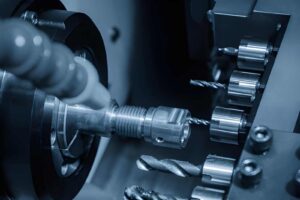
Swiss machining supports long, thin, and small-diameter parts. In operation, the workpiece is supported close to the cutting zone. This helps control deflection during machining.
Typical parts include manufactured includes:
- Guide pins
- Catheter components
- Dental screws
- Miniature connectors
EDM Machining for Fine Features and Hard Materials
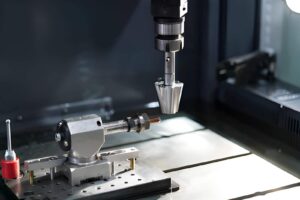
EDM machining removes material using electrical discharge instead of cutting force. It is used when tool contact becomes difficult or when very small features are required.
Medical applications include micro holes, starter holes for wire EDM, fine venting channels, and features in hardened materials like tool steel and carbide. The process supports controlled depth in features where cutting tools struggle.
Grinding for Final Surface Refinement and Dimensional Control
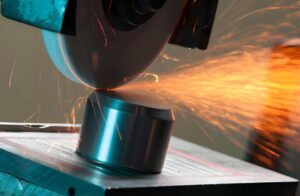
Grinding is used after primary machining to refine the surface condition and improve dimensional control on critical areas. It is commonly used for implant surfaces, mating faces, shafts, and precision contact zones. The process removes small material layers and helps prepare parts for assembly or finishing stages.
Laser Machining for Micro Features and Thin Parts
Laser machining is used for very fine cuts and small openings in thin medical components. It works well on sheet-based parts and delicate structures. Typical applications include stents, thin surgical meshes, marking areas, and micro openings in diagnostic components. It allows detailed geometry without mechanical contact.
Secondary Finishing Processes
After machining, many medical parts go through finishing stages. This stage prepares them for final use. Common steps include:
- Deburring
- Polishing
- Electropolishing
- Passivation
- Anodizing
These steps help remove sharp edges, improve surface condition, and prepare parts ready for assembly.
Comparison Table of Medical Machining Techniques
| Process | Typical Medical Parts | Axis/Setup Type | Main Difference |
| CNC Milling | Surgical handles, housings, and brackets | 3-axis to 5-axis multi-direction cutting | Best for complex external shapes and flat features |
| CNC Turning | Screws, shafts, pins, connectors | Single-axis rotational setup | Best for cylindrical and threaded parts |
| Swiss Machining | Guide pins, catheters, and small connectors | Sliding headstock with guide bushing | Best for long, thin, small-diameter parts |
| EDM Machining | Micro holes, hardened parts, starter holes | Electrical discharge (no cutting contact) | Best for hard materials and fine internal features |
| Grinding | Implants, shafts, mating surfaces | Precision abrasive finishing setup | Best for surface refinement and final sizing |
| Laser Machining | Stents, thin sheets, micro cuts | Non-contact beam-based cutting | Best for thin and delicate structures |
Compatible Materials for CNC Machining of Medical Parts
Medical-grade materials go through machining under controlled conditions. These materials behave differently from standard industrial metals. Some are harder. Some react to heat during cutting. Some need clean surface conditions for later use in medical systems.
Here are the common materials compatible with CNC machining of medical parts.
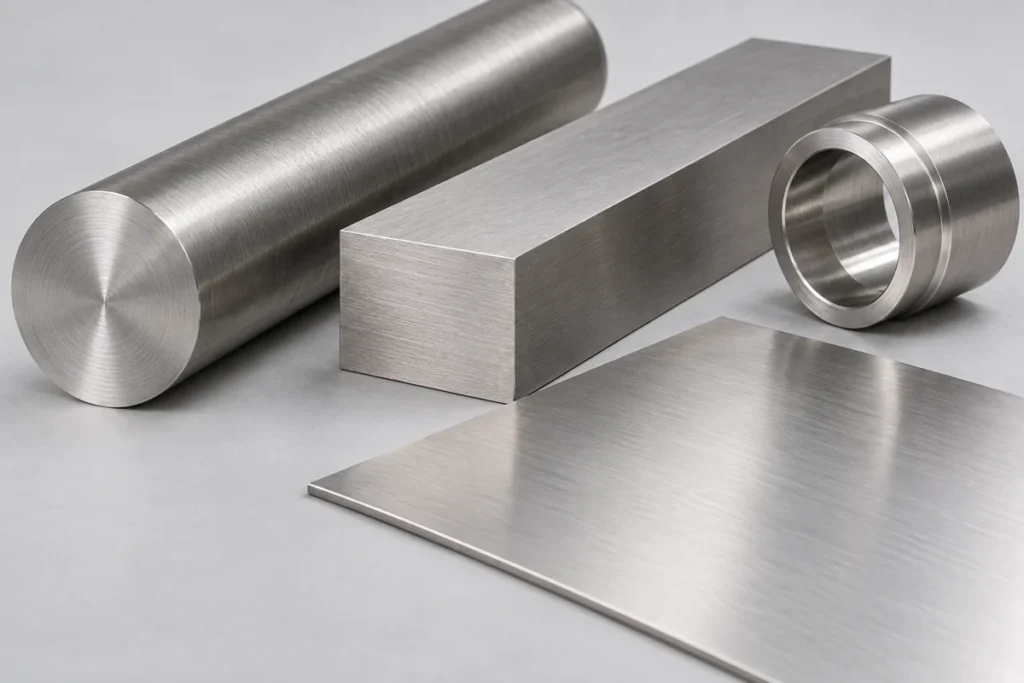
Stainless Steel (Medical Grade)
Stainless steel is widely used in surgical tools and device bodies. It offers stable strength and holds shape during machining. Common grades include 304 and 316L. It is used in forceps, clamps, surgical handles, and structural housings. The material can harden during cutting, so steady tool control is needed.
Titanium (Implant Grade)
Titanium is used in implants and load-bearing medical parts. It combines strength with low weight. It is used in bone screws, joint parts, dental implants, and fixation systems. Heat builds up during machining, so cutting conditions stay controlled to avoid tool wear and surface issues.
Aluminum (Medical Equipment Grade)
Aluminum is used in non-implant medical systems. It machines easily and supports fast cutting. It is used in diagnostic housings, device frames, and support brackets. Surface finish is smooth, and complex shapes can be produced without high cutting load.
Engineering Plastics (Medical Use Polymers)
Engineering plastics like PEEK, PTFE, UHMW, and acetal are used in medical devices. They are used in valve bodies, pump parts, guides, and insulating components. Heat sensitivity affects machining, so chip control and temperature management are important during cutting.
What are the Challenges in CNC Machining of Medical Parts
Medical parts push machining into tight control zones. Small geometry, hard materials, and clean surface needs create real shop-floor problems during production. These issues show up in cutting stability, tool life, and part consistency.
Tool Wear on Stainless Steel and Titanium
Stainless steel and titanium reduce tool life quickly. Cutting edges lose sharpness during long runs. This changes the surface condition and increases the cutting load. Shops often adjust tool paths and replace tools more frequently to keep output stable.
Heat Concentration at Cutting Zone
Titanium holds heat near the cutting area. Stainless steel also builds up heat during deeper cuts. This affects chip break and tool edge condition. Operators reduce cutting speed and use controlled coolant flow to keep the temperature stable.
Difficulty in Small Feature Machining
Medical parts include micro holes, thin walls, and narrow slots. Small tools bend slightly during cutting. This leads to a size shift in features. It becomes visible in parts like surgical tips, dental components, and implant connectors.
Burr Formation on Edges
Sharp burrs appear on edges after machining. This happens in stainless steel and aluminum parts. Burrs affect assembly and cleaning steps. Manual or mechanical deburring becomes part of the production flow.
Chip Build-Up in Deep Cuts
Deep holes and internal cavities trap chips during cutting. Chips disturb the tool movement and surface condition. This issue appears in valve bodies, housings, and fluid channels. Better chip evacuation improves stability during machining.
Dimension Shift in Long Production Runs
Tool wear slowly changes part size during batch production. First parts and later parts may not match exactly. This becomes critical in surgical and implant components. Regular tool checks and small offsets help control variation.
How to Choose a Machine Shop for Medical Precision Components
Choosing a machine shop for medical parts requires a clear technical check. Medical components run in surgical tools, implants, and diagnostic systems. These parts need stable dimensions, a clean surface condition, and controlled production flow across batches.
A weak supplier creates delays, rework, and assembly issues. A capable shop shows control in process, inspection, and material handling from the first sample stage.
ISO 13485 and Quality System Control
A medical machine shop should run a structured quality system. ISO 13485 is commonly used in this sector.
This system controls documentation, inspection flow, and traceability. It also links raw material batches to finished parts. Without this structure, medical production becomes inconsistent during repeat orders.
Experience With Medical Materials
Medical machining depends on material behavior during cutting. Stainless steel, titanium, cobalt chrome, and PEEK behave differently under tool load.
A capable shop already understands how these materials react in production. This reduces trial runs and avoids unstable tool wear patterns during machining cycles.
Equipment for Small and Complex Parts
Medical components often include micro-holes, thin walls, and tight geometries. These features need stable multi-axis machines and Swiss-type systems. 5-axis machining helps reduce setups. Fewer setups reduce alignment shifts during production. This improves consistency in small and complex parts.
Inspection and Measurement Capability
A medical shop must verify parts during production, not only at the end. CMM systems, optical measurement tools, and surface checks support dimensional control. Temperature control in inspection areas also helps reduce measurement variation in precision parts.
Traceability and Documentation Flow
Medical parts need full tracking from material to shipment. Each batch should link to certificates, machine logs, and inspection records. This helps during audits and supports controlled production changes without confusion between batches.
Consistency in Batch Production
Prototype parts are easier to produce than full batches. A capable shop keeps the same dimension control across multiple runs. Tool wear, setup variation, and fixture stability are controlled through process checks. This avoids drift between the first and last parts in a production lot.
Engineering Support During Design Review
A strong machine shop reviews drawings before cutting starts. They check hole depth, tool access, and material selection. This reduces production issues later. It also helps adjust features that may cause tool stress or machining instability.
Get Medical Machining Service from YD Rapid – From Design Review to Finished Parts
We at YD Rapid machine medical components that need stable dimensions, a clean surface condition, and consistent batch output. Our focus stays on surgical tools, implant parts, dental components, and diagnostic system parts with complex geometry and small features.
Every project starts with a drawing review from our engineering team. We check
- Tool access
- Wall thickness
- Hole depth
- Sharp radii and corners
- An assembly fit before machining starts
This step helps avoid production issues and keeps the process stable from the first run. In addition, we machine medical parts using CNC milling, CNC turning, Swiss machining, and EDM. Our material range includes stainless steel, titanium, aluminum, and engineering plastics like PEEK and PTFE. We select the process based on geometry and material behavior during cutting.
Furthermore, we control quality during production, not only at the end. Our inspection uses CMM measurement, gauges, and surface checks. We also maintain batch traceability so each part links back to material and machining records.
We follow structured quality systems used in precision medical manufacturing. This keeps documentation, inspection flow, and production records consistent across all projects.
Send us your CAD file at YD Rapid. We will review your design, highlight machining risks, and confirm manufacturability before production. You get a clear quote, actual lead time, and process feedback from our engineering team with no delays.
 Successful CNC machined parts for medical projects depend on more than tight tolerances alone. Material selection, machining capability, quality control, and manufacturing experience all influence the final performance of medical components. YD Rapid provides precision machining solutions for medical prototypes and production parts, helping customers achieve consistent quality and reliable results.
FAQs
Why do medical parts fail if machining looks correct on the drawing?
Because small features react during cutting. Tool deflection, heat, and chip packing change the final geometry. On drawing, it looks fine, but during machining, thin walls and micro features shift slightly and affect assembly fit.
Why do medical parts need more inspection during machining?
Because checking only the final part is too late. In medical work, we check during production. Tool wear changes size slowly. If we don’t catch it early, batch parts start drifting from the first piece to the last one.
Why do small medical features take longer to machine?
Small tools cannot remove material aggressively. Feed stays controlled to avoid tool breakage. Deep micro holes also need stable flushing. So cutting becomes slow, not because of complexity on paper, but because tool stability limits speed.
Why do drawings often not match real machining results in medical parts?
Because drawings assume perfect tool behavior. In production, tools wear, material reacts, and heat builds up in small zones. These small shifts change edges and internal features slightly. That’s why first article checks are always done before full batch release.