
Choosing the right partner for CNC machining is not easy. Before you place a production order, you need to know what affects CNC machining cost. CNC machining is one of the most precise ways to make industrial parts.
Two similar-looking parts can have very different costs. Why? Because CNC machining pricing depends on more than just material. Design, machine time, batch size, tolerances, and labor all play a role. Knowing these factors helps you plan better. If you understand these costs, you can save money.
This guide breaks down every major cost factor in simple terms. Whether you are a buyer, engineer, or sourcing manager, this is for you.
- Why do some CNC parts cost more
- How materials change machining prices
- Ways to lower CNC machining costs
- Why does machine setup affect total pricing
- How does part design change production cost
What Is the Relationship Between CNC Machining and Production Cost?
CNC machining is the backbone of modern manufacturing. Instead of a person moving a handle, a computer moves the tool. This automation makes parts perfect every time. But this precision is a big part of CNC machining pricing.
The more exact a part must be, the more it costs. For example, a simple aluminum bracket for a shelf is cheap. It does not need to be perfect. But an aerospace part for a plane engine must be perfect. This takes more time on the machine.
What Are the Factors Affecting Machining Cost?
When you get a quote, you see many numbers. First, let’s talk about machining experience. A shop with more skills might charge more. But they often make fewer mistakes. This can save you money later.
Here are the main factors determining the CNC machine pricing:
Material Type
Some materials are soft and easy to cut. Aluminum is a good example. It is cheap. Other metals like titanium are very hard. They are slow to cut. Hard metals also break tools. This makes the price go up.
Part Complexity
Simple shapes are cheap. Complex shapes have many curves or holes. These take more time. Each new shape needs a new setup. More time on the machine means a higher bill.
Tolerance
Tolerance means how exact the part must be. Very tight fits are hard to make. The machine must move slowly. Workers must check the part many times. If a part does not need to be perfect, keep it simple to save money.
Surface Finish
A rough part is fast to make. A shiny, smooth part needs extra steps. This adds more work and more cost.
Machine Time
This is the highest cost. Shops charge for every hour the machine runs. If a part takes a long time to cut, it will cost more.
Batch Size
Making a few parts is expensive. This is because the CNC setup cost is high. If you make a lot of parts, the cost is shared. This makes each part much cheaper.
Skilled Labor
People with a lot of machining experience earn more. But they work faster. They also make fewer errors. For hard jobs, a professional can actually save you money.
Inspection Needs
Some parts need special tests. This is common for plane or medical tools. These tests take time and cost extra money.
Buyer Example
Imagine a buyer needs a metal bracket. They ask for a very shiny finish and a perfect fit. They only ordered five pieces. This makes the price very high. If they buy 50 pieces and use a standard finish, they save a lot of money.
Tooling costs also play a major part. Special cutters cost a lot. Try to design your parts so the shop can use standard tools. This is one of the best ways to answer “what are the factors that affect CNC machining costs?” and keep your budget safe.
Why Does Part Design Increase CNC Machining Cost?
Design is the biggest factor you can control. If a design is hard to make, the price goes up fast. A complex CAD file leads to a higher CNC setup cost. It also means more hours for the engineer to program the machine.
What are the factors affecting machining cost in design?
- Deep Pockets: Cutting deep into a block is slow. It can break tools.
- Thin Walls: These are hard to cut. They can bend or break during CNC machining.
- Sharp Corners: Most tools are round. Making a sharp inside corner is very hard.
- Complex Geometry: If the machine has to move in five ways at once, it costs more.
How Does CNC Milling Cost More Than Simple Machining?
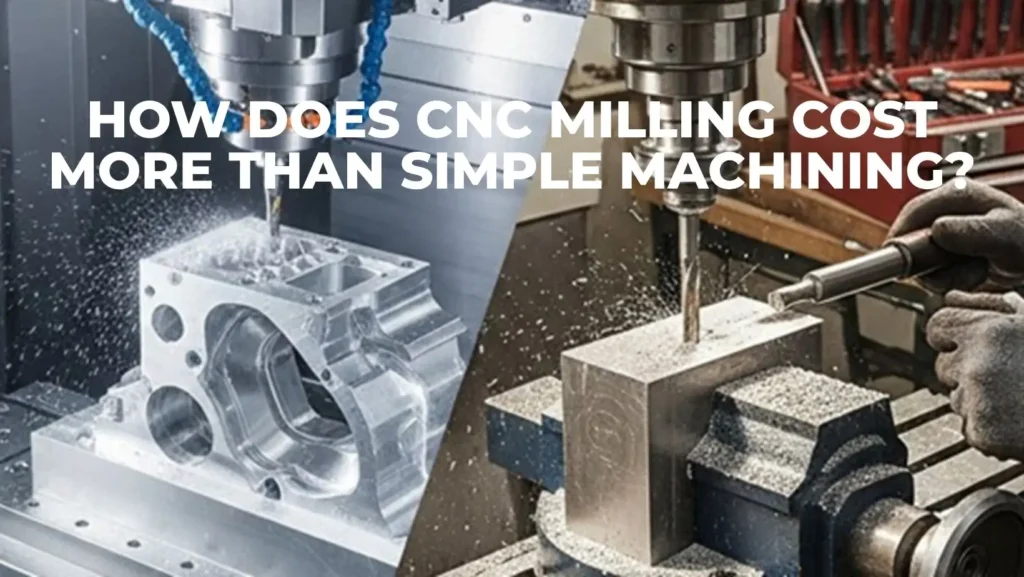
CNC milling is a very common way to make parts. It uses a tool that spins to cut material away. But the CNC milling cost is often higher than for simple tasks like drilling. This is because the machine moves on many axes.
When you use CNC milling, you pay for precision. High-speed machines can cut fast. But they are expensive to run. More axes mean more cost. A 5-axis machine can do a lot. However, the hourly rate is much higher than that of a 3-axis machine.
CNC Milling Operations That Raise Cost
This table shows how different CNC milling operations affect machining cost, setup time, and the best production use for each process.
| Milling Operation | Why It Costs More | Best Use Case |
|---|---|---|
| 3-axis milling | Standard cost, easy setup. | Simple, flat parts. |
| 4-axis milling | Needs more programming. | Parts with holes on the sides. |
| 5-axis milling | High machine rate, complex setup. | Aerospace or medical parts. |
| High-speed milling | Uses expensive, fast machines. | Large batches of metal parts. |
| Precision finishing | Takes a long time to get smooth. | Parts that must look perfect. |
How Much Does CNC Machining Cost?
There is no single price. Most shops charge by the hour. Rates can be $50 to $200 per hour. It depends on the machine used.
For example, the CNC turning cost is often lower than milling. Turning is great for round parts. It is faster and easier to set up. But CNC machining pricing also depends on the CNC demand in the market. If many people want parts, prices go up.
Here are simple price examples for one part:
- Simple Parts: Think of a basic aluminum bracket. It uses a 3-axis machine. It takes about 30 minutes to an hour. The cost is usually $50 to $150.
- Medium Complexity: Think of a stainless steel box. It needs a 4-axis machine. It takes 2 to 4 hours to make. The cost is usually $300 to $800.
- Aerospace Precision Parts: These are made of hard titanium. They need a 5-axis machine and a perfect fit. They take 4 to 10 hours. The cost is $1,000 to $5,000 or more.
The CNC machine market changes every year. Right now, prices are steady, but shipping and labor can add up. Always get a full quote that shows material and labor separately. Using a CNC machining cost calculation guide can help you track these numbers.
How Much Does CNC Machining Cost for Small vs Large Orders?
The number of parts you buy changes the price. This is because of the CNC setup cost. It takes time to get the machine ready. If you make one part, the setup time is expensive. If you make 1,000 parts, the setup cost will spread out.
Small orders are great for prototypes. For just one piece, it can be very high. As CNC demand grows, shops like bigger orders. They can run the machines all night. This makes the price per part go down.
Mass production is the best way to save money. You can get “batch efficiency.” This means the shop buys material in bulk. They also use the same tools for a long time. This keeps tooling costs low for you.
How Much Does a Small CNC Machine Cost?
Some buyers think about buying their own machine. It might cost $500 to $3,000. But these are not for factory work. The best CNC machines for a business cost more. A small industrial machine can cost $20,000 to $50,000. Large 5-axis machines can cost over $200,000. You must also think about the CNC machine market. Resale value is high for good brands.
There are many factors determining the CNC machine pricing:
- Number of axes: More axes mean a higher price.
- Power: Faster machines with more strength cost more.
- Size: A bigger table for large parts raises the cost.
- Software: Better computers and programs add to the bill.
- Brand: Top brands from the US or Japan cost more.
- Automation: Parts that change tools by themselves are expensive.
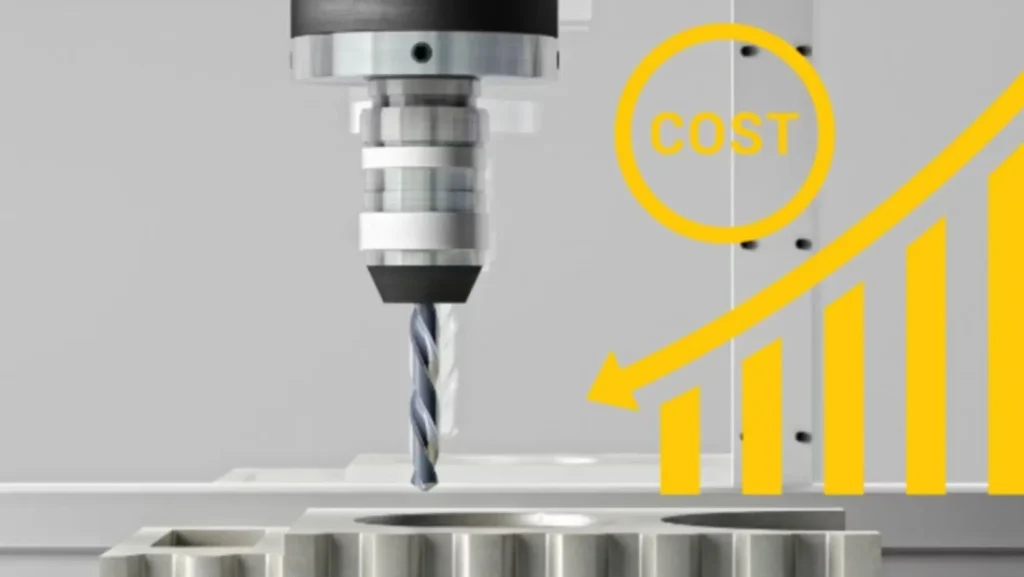
How To Reduce CNC Machining Costs For Manufacturers?
If you want to save, you have to plan. Start with your design. Make it easy for the tool to cut. Use basic sizes for holes. This keeps tooling costs down.
Another way is to look at the metals. If you do not need steel, use aluminum. It is faster to cut. Also, try to keep all cuts on one side. This lowers the CNC setup cost because the worker does not have to move the part.
How Manufacturers Reduce CNC Machining Cost
This table explains easy ways makers lower CNC machining costs by fixing shapes, order plans, and the metal they pick.
| Cost Reduction Method | How It Helps | Estimated Savings |
|---|---|---|
| Simple Geometry | Faster cutting and setup. | 20% to 50% |
| Bulk Production | Spreads out the setup fees. | 30% to 70% |
| Standard Tooling | No need for custom drill bits. | 10% to 15% |
| Reduced Finishing | Skips extra polishing steps. | 5% to 20% |
| Better Material | Faster speeds on the machine. | 10% to 25% |
What Does the CNC Machining Industry Outlook Look Like?
The CNC machining industry outlook is moving fast. More shops are using bots. This is called automation. It helps lower work costs over time. The CNC demand for tech parts is up in cars and planes.
We see more AI in the CNC machine market. AI helps the best CNC machines run well. It tells the shop when a tool is about to break. Even with new tools, you still need people with machining experience. Pro workers are still the heart of the job.
Conclusion
Understanding what affects CNC machining cost helps you make smarter decisions. Material, design, tolerance, batch size, and machine type all drive the final price. Smart design and the right materials can save you thousands. When you understand CNC machining, you can talk to shops with confidence.
CNC machining pricing is not fixed. It responds to design choices, order volume, and market conditions. Buyers who understand this have a real advantage. Work with shops that have great machining experience. They will help you find ways to lower costs without losing quality.
Plan your production early. Choose the right materials. These will keep your CNC machining costs under control and your projects on budget.

Frequently Asked Questions
What material is cheapest for CNC machining?
Aluminum and some plastics are usually the cheapest. They are easy to cut, and the raw material is not too pricey.
Why does CNC prototyping cost more?
Prototyping costs more because you only make one or two. You have to pay the full CNC setup cost for just a few parts.
What increases CNC setup cost?
Complex parts that need to be turned over many times increase setup. Each new position takes time to align.
Is CNC milling more expensive than turning?
Usually, yes. CNC milling cost is higher because the tools and movements are more complex than turning.