
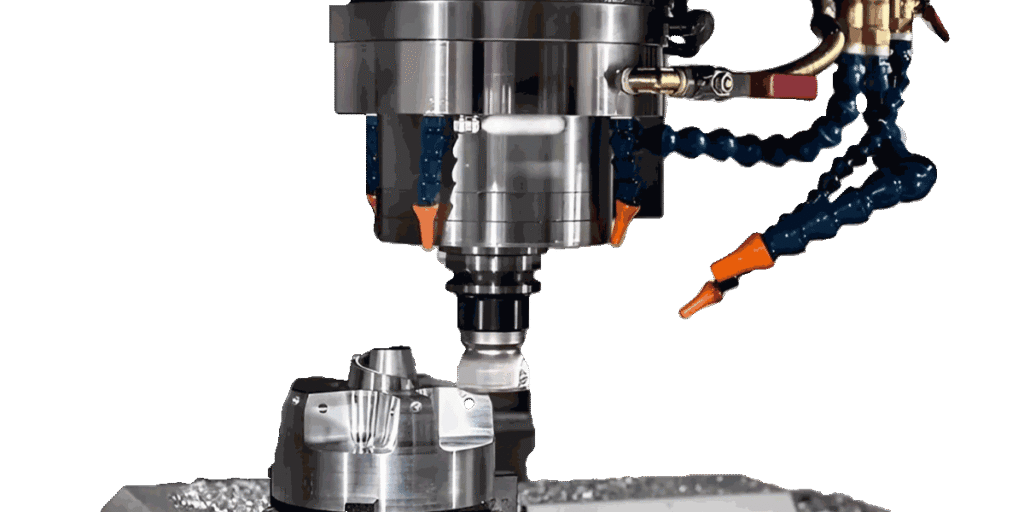
What Is Soft Machining?
Soft machining refers to the process of cutting, shaping, or drilling materials that are still in their soft or un-hardened state. Typically performed before heat treatment or surface finishing, soft machining allows manufacturers to achieve high material removal rates, excellent dimensional accuracy, and cost efficiency.
The term also applies to machining soft materials—such as aluminum, copper, brass, and various plastics—using high-speed tools under optimized cutting conditions. It is a key stage in both CNC manufacturing and precision prototyping, bridging raw material preparation and final hard machining or finishing.
Soft Machining vs. Hard Machining
While both processes use similar machine tools, their objectives and techniques differ significantly:
AspectSoft Machining Hard Machining
Material State: Unhardened or soft materials, Hardened (heat-treated) materials
Tool Wear Minimal High
Cutting Speed Higher Lower
Surface Finish Excellent, smooth. Can require polishing
Applications: Pre-finishing, mass material removal, Finishing, fine tolerances
Soft machining often serves as a preliminary process to prepare components for subsequent hard machining or finishing stages.
The Soft Machining Process
Soft machining includes several cutting and shaping operations performed under moderate force and high-speed conditions. The main steps are:
- Material Preparation – Selecting suitable workpiece materials (e.g., aluminum 6061, brass C360, POM plastic).
- CNC Programming – Designing tool paths optimized for soft-state materials.
- Rough Cutting – Removing the majority of excess material quickly.
- Semi-Finishing – Achieving near-final dimensions.
- Dimensional Inspection – Ensuring accuracy before heat treatment or assembly.
CNC milling, turning, drilling, and even EDM (for conductive soft metals) are all common techniques within the soft machining category.
Materials Used in Soft Machining
Soft machining is primarily applied to ductile, low-hardness materials, including:
- Aluminum alloys (e.g., 6061, 7075) – Lightweight, corrosion-resistant, and ideal for aerospace and electronics.
- Copper and Brass – Excellent electrical conductivity for connectors and terminals.
- Mild Steel (pre-hardened) – Used in automotive and machine parts before heat treatment.
- Plastics (ABS, POM, Nylon) – Common in prototyping and lightweight component manufacturing.
Tools and Equipment for Soft Machining
Soft machining uses specialized tools designed for high-speed and low-resistance cutting:
- Carbide or HSS End Mills – Provide smooth chip evacuation for soft metals.
- Diamond-Coated Tools – Used for superior surface finish on non-ferrous materials.
- CNC Machining Centers – Offer precision control and repeatability.
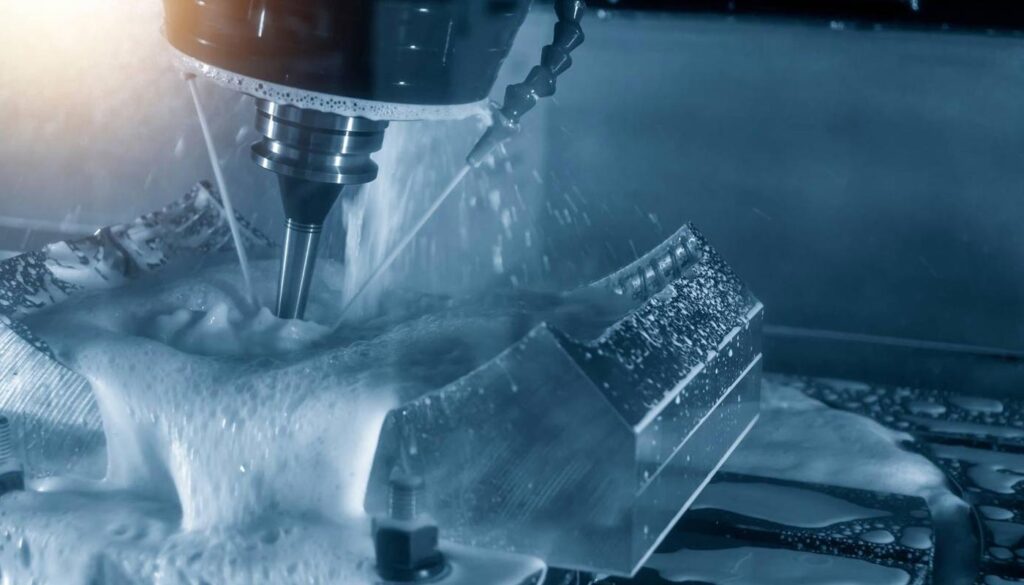
- Coolants and Lubricants – Reduce friction and thermal deformation.
- Fixture and Clamping Systems – Maintain workpiece stability during high-speed operations.
Cutting Parameters and Techniques
The success of soft machining depends on the correct combination of cutting parameters:
- High spindle speeds and moderate feed rates optimize efficiency.
- Sharp cutting edges prevent burr formation.
- Proper coolant flow ensures temperature stability.
- Toolpath optimization minimizes tool retraction and air cutting.
- The depth of cut should balance between chip load and tool life.
For CNC applications, CAM software can simulate cutting strategies to minimize chatter and maximize productivity.
Advantages of Soft Machining
Soft machining offers numerous benefits that make it a preferred process in modern manufacturing:
- High Material Removal Rate – Faster production cycles.
- Reduced Tool Wear – Longer tool life and lower cost.
- Excellent Surface Quality – Ideal for pre-finishing operations.
- Dimensional Flexibility – Easier to correct or modify before hardening.
- Compatibility – Suitable for a wide range of materials and CNC systems.
By completing most shaping during the soft stage, manufacturers minimize time and cost during the final finishing phase.
Applications Across Industries
Soft machining is widely used in:
- Automotive industry – Engine blocks, transmission cases, and brackets before heat treatment.
- Aerospace – Machining aluminum and titanium alloy parts in their soft state.
- Electronics – Precision copper and aluminum components.
- Medical Devices – Soft titanium or plastic prototypes.
- General Engineering – Gears, housings, and frames are pre-machined before hardening.
Soft Machining in CNC Manufacturing
CNC technology plays a vital role in soft machining. It provides:
- High accuracy for complex geometries.
- Automation for consistent production.
- Repeatability across large batches.
- Integration with digital models and CAD/CAM data.
Soft machining under CNC control ensures components are ready for finishing or assembly without dimensional errors.
Challenges and Best Practices
Despite its advantages, soft machining faces challenges like:
- Material deformation due to low rigidity.
- Burr formation on soft metals.
- The tool clogging when chips are not evacuated properly.
- Dimensional drift if heat generation is high.
Best Practices:
- Use sharp tools with high rake angles.
- Maintain optimal coolant temperature.
- Use adaptive feed control.
- Inspect tools regularly to avoid micro-chipping.
Soft Machining vs. Finishing Operations
Soft machining focuses on bulk shaping, while finishing operations such as grinding, honing, or polishing refine surfaces after hardening.
Performing most material removal during the soft phase significantly reduces the time and cost of post-processing.
Future Trends in Soft Machining
Emerging trends include:
- AI-driven machining optimization for soft materials.
- Hybrid machining centers combine additive and subtractive processes.
- Sustainable coolant systems to reduce waste.
- Automated inspection and feedback loops for adaptive correction.
As manufacturing shifts toward digital and precision engineering, soft machining remains essential in achieving flexibility and efficiency.
FAQ: Soft Machining
Q1: What is the main purpose of soft machining?
To shape and remove material efficiently before heat treatment or finishing.
Q2: Which materials are best suited for soft machining?
Aluminum, copper, brass, plastics, and mild steel.
Q3: Is soft machining cheaper than hard machining?
Yes, due to faster cutting speeds and less tool wear.
Q4: Can CNC machines perform soft machining?
Absolutely. CNC milling and turning are ideal for soft-state materials.
Q5: What is the difference between soft and hard turning?
Soft turning handles unhardened materials; hard turning involves heat-treated metals.
Q6: How do you prevent deformation during soft machining?
Use rigid fixtures, lower cutting forces, and proper coolant.
Q7: What is the ideal tool for soft machining aluminum?
High-speed carbide or diamond-coated tools.
Q8: Can soft machining achieve tight tolerances?
Yes, especially with modern CNC systems and precision control.
Q9: When should soft machining be performed?
Before heat treatment or when working with naturally soft materials.
Q10: Is soft machining suitable for prototypes?
Yes, it’s widely used for rapid prototyping and low-volume production.
Conclusion
Soft machining is a fundamental process in precision manufacturing. By machining metals and polymers in their softer state, manufacturers can optimize speed, accuracy, and cost-efficiency before final hardening or finishing. With the integration of advanced CNC systems, soft machining continues to evolve as a critical link between raw material processing and finished product performance.