
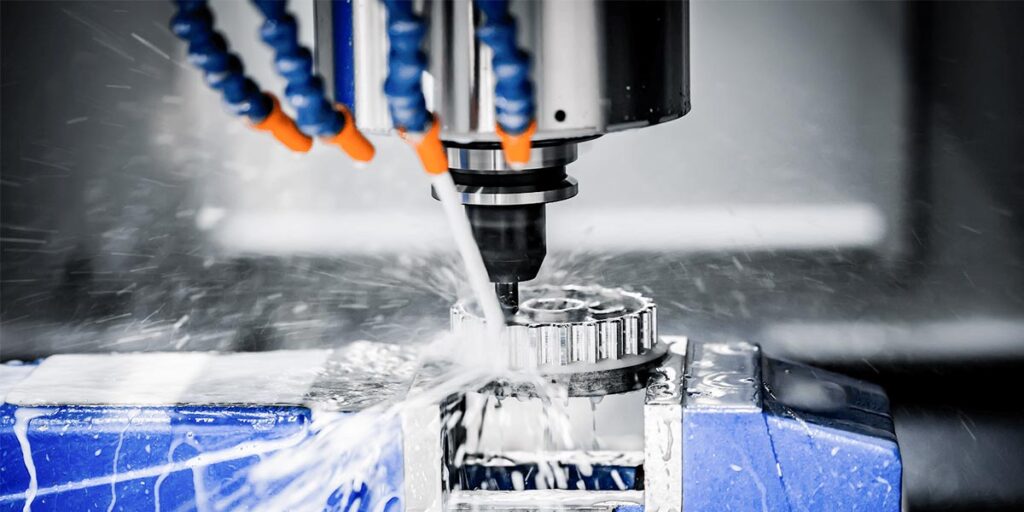
1. Introduction to OEM CNC Machining Service
OEM CNC machining service has become one of the most essential manufacturing solutions for global industries seeking high precision, stable quality, and scalable production. Whether for automotive metal components, aerospace-grade aluminum parts, robotic joint housings, or medical-grade stainless steel parts, OEM CNC machining provides unmatched accuracy and reliability.
As competition increases and brands pursue rapid innovation, companies increasingly rely on OEM CNC machining suppliers to handle everything from prototype development to low-volume manufacturing and mass production. OEM service providers integrate advanced CNC machining capabilities—including milling, turning, drilling, grinding, EDM, and surface finishing—to deliver components that meet strict dimensional tolerances and consistent performance standards.
This comprehensive guide explains everything you need to know about OEM CNC machining services, including manufacturing workflows, materials, tolerances, design recommendations, industrial applications, and how to choose the right OEM machining partner.
2. What Is OEM CNC Machining Service?
OEM stands for Original Equipment Manufacturer, referring to companies that produce parts and components according to the customer’s design, drawings, or specifications. When combined with CNC machining, OEM CNC machining service refers to:
A manufacturing solution where the supplier uses CNC equipment to machine parts under the customer’s brand and requirements.
Key characteristics include:
- Manufacturing based strictly on customer drawings (2D/3D)
- High repeatability and tight tolerances
- Capability for prototypes, small batches, and mass production
- Use of automated CNC milling, turning, and multi-axis machining centers
- Comprehensive production, inspection, and packaging under the customer’s brand guidelines
OEM CNC machining service is widely used in industries that require durable, dimensionally stable, and high-precision metal or plastic components.
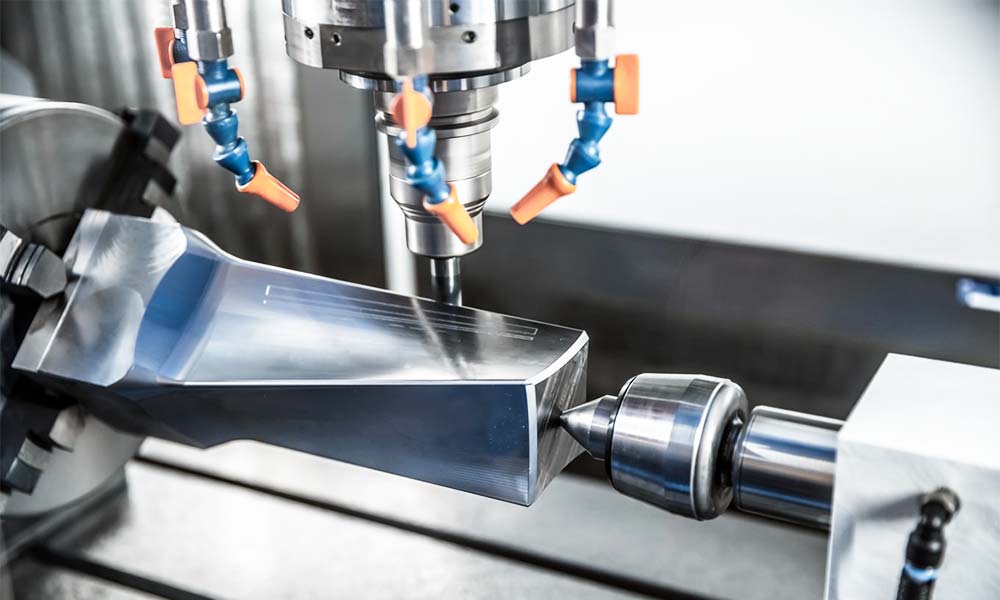
3. Why CNC Machining Is Ideal for OEM Manufacturing
OEM manufacturing requires consistency, repeatability, and accuracy across thousands—or even millions—of produced parts. CNC machining offers these advantages because of:
1. High precision and tight tolerances
Advanced 3-axis, 4-axis, and 5-axis CNC machines can achieve ±0.005 mm tolerances, ensuring stable and repeatable part quality.
2. Superior productivity for medium to high-volume manufacturing
CNC machining supports automated tool changes, multi-axis operations, and continuous production cycles.
3. Compatibility with a wide range of materials
OEM CNC machining service supports metals, plastics, engineering composites, and superalloys.
4. Excellent surface finish
Machining ensures smooth surfaces, reduced friction, and better mechanical performance—crucial in industries such as robotics and medical devices.
5. Fast turnaround time
From sampling to mass production, CNC machining enables short lead times and quick delivery.
6. High stability and repeatability
Once the program is set, CNC machining repeats the exact toolpaths with extremely low deviation.
These advantages make CNC machining the gold standard for OEM manufacturing across global industries.
4. Core Capabilities of OEM CNC Machining Service
OEM CNC machining providers typically offer a full suite of manufacturing technologies:
4.1 CNC Milling
Essential for producing complex 3D geometries, slots, pockets, and multi-surface features.
Capabilities include:
- 3-axis, 4-axis, 5-axis machining
- Complex surface contouring
- High-speed milling for aluminum, brass, and engineering plastics
- Mold cavity machining
4.2 CNC Turning
Ideal for cylindrical parts such as shafts, pins, bushings, fittings, and connectors.
Capabilities include:
- Swiss-type turning for micro components
- Turning with a milling function
- High repeatability for mass production
4.3 Multi-Axis Machining
5-axis machining enables:
- Undercuts and complex geometries
- Reduced setups
- Improved precision in aerospace, robotics, and medical industries
4.4 EDM Machining
For manufacturing:
- Extremely hard materials
- Sharp internal corners
- Fine features for precision tooling
4.5 Surface Finishing for OEM Parts
OEM CNC machining service includes finishing processes such as:
- Anodizing (Type II & III)
- Sandblasting
- Polishing
- Powder coating
- Electroplating
- Black oxide
- Brushing
- Laser engraving with the customer’s logo
These finishes improve durability, corrosion resistance, appearance, and branding.
5. Materials Used in OEM CNC Machining Service
OEM CNC machining supports a wide range of materials depending on application, mechanical performance, and cost considerations.
5.1 Metals
Aluminum
- 6061-T6: balanced strength and machinability
- 7075-T6: aerospace-grade high-strength
- 2024 & 5083: excellent fatigue resistance
- 6082: structural applications
Stainless Steel
- 304: general-purpose corrosion resistance
- 316 & 316L: superior chemical resistance for medical & marine
- 17-4PH: high strength & hardness
Steel
- 1018, 1045, 4140, 4340
- Excellent strength, machinability, and heat treatment compatibility
Brass & Copper
- Used for electrical components, connectors, and precision fittings
Titanium
- Aerospace, medical implants, high-performance robotics
- Extremely high strength-to-weight ratio
5.2 Plastics
ABS
- Good for prototypes
POM/Delrin
- Low friction, high stiffness
Nylon (PA6, PA66)
- Wear resistant
PEEK
- High temperature resistance
PC
- Optical clarity and impact strength
Plastics are widely used for housings, fixtures, insulators, and lightweight components.
6. Tolerance Capabilities in OEM CNC Machining Service
High-precision OEM machining manufacturers typically offer:
Feature Type Standard Tolerance Precision Level
Linear dimensions ±0.01 mm ±0.005 mm
Hole dimensions ±0.01 mm ±0.005 mm
Cylindricity 0.01 mm 0.003 mm
Flatness 0.02 mm 0.005 mm
Tolerances depend on:
- Material
- Part size
- Machine capability
- Measurement method (CMM recommended for tight tolerance parts)
For ultra-precision industries like aerospace or robotics, tolerances can be further customized.
7. OEM CNC Machining Workflow Explained
A typical OEM CNC machining service follows a structured industrial workflow:
1. RFQ & Technical Review
- Review drawings (STEP, IGES, STL, SLDPRT)
- Discuss tolerances, materials, and surface finishing
- Evaluate manufacturing feasibility
2. Quotation
- Based on machining time, materials, quantity, and finishing
3. Prototype or First Article (FAI)
- Machining of the first sample for customer approval
- CMM report provided if needed
4. Production Setup
- CNC programming (CAM)
- Fixture design and toolpath optimization
- Tooling preparation
5. Mass Production
- Continuous machining cycles
- In-process inspection (IPQC)
- Zero-defect control for OEM shipments
6. Final Inspection
- CMM
- Digital calipers
- Surface roughness measurement
- Hardness testing
7. Branding & Packaging
- Custom labels
- OEM packaging
- Laser-engraved logo
8. Shipping & Long-Term Supply
- Regular replenishment for large OEM customers
- Stocking and on-demand delivery services
8. Applications of OEM CNC Machining Service
OEM CNC machining is used across almost all modern industries due to its versatility, scalability, and precision.
8.1 Automotive Industry
- Gear housings
- Engine brackets
- Custom metal fittings
- Chassis components
- EV battery connectors
High durability and repeatability make CNC machining ideal for automotive OEM parts.
8.2 Aerospace & Aviation
- Aluminum and titanium brackets
- High-strength structural parts
- Landing gear components
- Electronic enclosures
Aerospace requires very tight tolerances, which CNC machining provides reliably.
8.3 Robotics & Automation
- Joint housings
- Robot arm components
- Sensor mounts
- Gearbox housings
- Precision shafts
OEM CNC machining helps robotic manufacturers achieve accuracy and stable mechanical performance.
8.4 Medical & Healthcare Devices
- Surgical tools
- Stainless steel implants
- Titanium components
- Precision enclosures
CNC machining ensures safe, biocompatible, high-accuracy medical components.
8.5 Electronics & Consumer Products
- Aluminum housings
- Connectors
- Heat sinks
- Custom mechanical parts
OEM CNC machining allows global brands to produce durable, aesthetically pleasing products.
8.6 Industrial Machinery & Tooling
- Fixtures
- Custom end-effectors
- Precision gears
- Wear-resistant components
CNC machining supports the reliability and strength required in industrial equipment.
9. Advantages of OEM CNC Machining Service
1. Scalable Production
From prototypes to mass production, OEM CNC machining supports all stages.
2. Cost Efficiency for Large Quantities
CNC machining becomes highly cost-effective at medium to high volumes.
3. Consistent Quality
CNC automation reduces human error and ensures repeatable precision.
4. Better Engineering Support
OEM suppliers often provide DFM (Design for Manufacturing) suggestions.
5. Strong IP Protection
OEM suppliers maintain confidentiality for all customer designs and drawings.
6. Global Logistics & OEM Packaging
Finished parts can be delivered branded and ready for assembly.
10. How OEM CNC Machining Enhances Product Development
OEM machining suppliers greatly accelerate the development cycle of new products.
Faster Prototyping
Parts can be machined within days.
Shorter Product Launch Time
Rapid iteration improves design speed.
Better Material Evaluation
Machining allows testing of multiple material options.
Stable Mass-Production
Once approved, the supplier can produce consistent quality for years.
11. How to Choose the Right OEM CNC Machining Supplier
Choosing the right partner is critical for long-term product success. Evaluate the supplier based on:
1. Manufacturing Capabilities
- 3/4/5-axis machining
- Quantity capacity
- Material expertise
2. Quality System
- ISO 9001 / ISO 13485 / AS9100 certification
- CMM inspection
- Traceability & documentation
3. Engineering Support
- DFM optimization
- Material selection guidance
- Tolerance analysis
4. Experience in Your Industry
Robotics, electronics, medical, and automotive require different expertise.
5. Cost, Lead Time & Communication
Transparent pricing and responsive communication are essential for OEM partnerships.
12. Common OEM CNC Machining Challenges and Solutions
Challenge 1: Maintaining tight tolerances in large batches
Solution: In-process inspection & fixture optimization
Challenge 2: Material deformation (e.g., aluminum warping)
Solution: Stress-relief machining & thermal stabilization
Challenge 3: Surface finish inconsistencies
Solution: Automated finishing & strict QC process
Challenge 4: Long lead time
Solution: Parallel production lines & advanced scheduling
13. Future Trends of OEM CNC Machining Service
1. Automation & Lights-Out Machining
Machines operate 24/7 without operators.
2. Intelligent Toolpath Optimization
AI-based CAM improves tool life and reduces waste.
3. Sustainable Manufacturing
Higher recyclability and energy-efficient machining.
4. Hybrid Machining
Combining CNC with 3D printing for advanced geometries.
14. Conclusion
OEM CNC machining service plays a fundamental role in modern product development and industrial manufacturing. With unmatched precision, scalability, versatility, and consistency, CNC machining empowers companies to bring reliable, high-performance products to market faster and more competitively.
For brands seeking long-term success—whether in robotics, automotive, aerospace, electronics, or medical devices—partnering with the right OEM CNC machining provider ensures not only product quality but also supply chain stability.
OEM CNC Machining Service – FAQ
1. What is OEM CNC machining service?
OEM CNC machining service refers to manufacturing precision components based on the customer’s drawings, specifications, and brand requirements. OEM suppliers produce parts using CNC milling, turning, drilling, and multi-axis machining, delivering consistent quality for prototypes and mass production.
2. What industries use OEM CNC machining?
OEM CNC machining is widely used in automotive, aerospace, medical devices, robotics, electronics, industrial machinery, consumer products, marine engineering, and energy industries.
3. What materials can be machined using OEM CNC services?
Common materials include aluminum, stainless steel, carbon steel, brass, titanium, copper, and plastics such as ABS, POM, PC, Nylon, PEI, and PEEK.
4. What tolerances can OEM CNC machining achieve?
Standard tolerance is ±0.01 mm, while high-precision machining can achieve ±0.005 mm or better depending on material, geometry, and equipment.
5. Do OEM CNC machining suppliers provide prototypes?
Yes. Most OEM CNC suppliers offer rapid prototyping before mass production, including FAI (First Article Inspection) reports.
6. Can OEM CNC machining be used for mass production?
Absolutely. CNC machining is ideal for medium to high-volume production due to its excellent repeatability, accuracy, and automated workflow.
7. Do you provide surface finishing for OEM CNC parts?
Yes. Typical finishes include anodizing, sandblasting, powder coating, electroplating, brushing, black oxide, laser engraving, and polishing.
8. How long does OEM CNC machining production take?
Lead time depends on part complexity and quantity. Prototypes typically take 3–7 days, and mass production may require 2–4 weeks.
9. Do OEM suppliers sign NDA agreements?
Reputable OEM CNC machining companies always sign NDAs to protect customer IP, drawings, and production files.
10. What file formats are supported for OEM machining?
Most suppliers accept STEP, IGES, SLDPRT, STL, DWG, DXF, and PDF technical drawings.
11. Can complex 5-axis machining be provided?
Yes. OEM CNC machining supports 3-axis, 4-axis, and 5-axis machining to produce complex geometries and high-precision surfaces.
12. How do OEM CNC manufacturers ensure quality?
Through:
- CMM inspection
- In-process QC
- Raw material certification
- Final inspection reports
- ISO 9001 / AS9100 quality systems
13. Do OEM CNC machining services include assembly?
Some suppliers offer sub-assembly, press-fitting, thread insertion, fastening, and custom packaging as part of OEM service.
14. What is the minimum order quantity (MOQ)?
OEM CNC machining usually has a low MOQ, sometimes as low as 1–10 pieces for prototypes.
15. Can OEM CNC machining services support custom logos?
Yes. Logos can be laser-engraved, CNC-engraved, or printed according to your branding requirements.
16. What surface roughness can be achieved?
CNC machining typically provides Ra 1.6–3.2 μm, while polishing and grinding can achieve Ra 0.2–0.8 μm.
17. Do OEM CNC machining suppliers offer DFM support?
Yes. Design for Manufacturing feedback helps optimize part structure, reduce cost, and improve machinability.
18. What is the difference between OEM machining and ODM machining?
- OEM: Customer provides drawings; supplier manufactures.
- ODM: Supplier provides design + manufacturing.
OEM is ideal for custom-designed parts.
19. Can CNC machining replace die casting or injection molding?
For low-volume production, CNC machining is more flexible and faster.
For very high volumes (100,000+), molding is more cost-effective.
20. What factors affect OEM CNC machining cost?
- Material type
- Part complexity
- Production volume
- Tolerance level
- Surface finishing requirements
- CNC machine time
21. Do OEM CNC suppliers offer packaging and labeling?
Yes. Customized OEM packaging, labels, barcodes, and instructions can be included for direct retail shipment.
22. What are the maximum part sizes for CNC machining?
This depends on the machine, but typical travel ranges:
- Milling: up to 1500 × 800 × 500 mm
- Turning: up to Ø500 × 1500 mm
23. Do you offer material certification for OEM orders?
Yes. Certificates such as RoHS, REACH, SGS, and material composition reports are available upon request.
24. Can OEM CNC machining produce both metal and plastic parts?
Yes. CNC machining supports most industrial metals and engineering plastics.
25. How do I get a quote for OEM CNC machining service?
You can submit 3D/2D files, quantity, material, tolerance, and surface finish details. Suppliers usually reply within 12–24 hours with a complete quotation.