
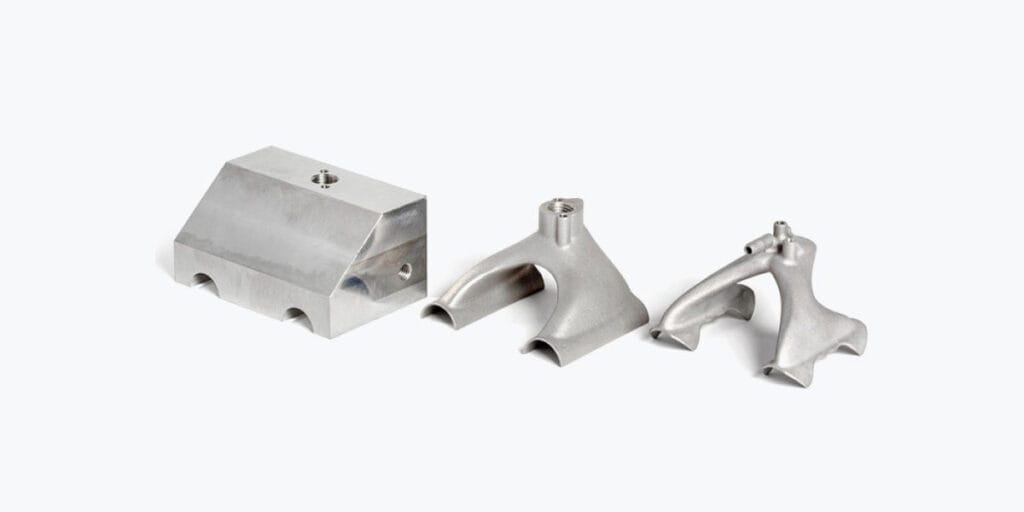
In today’s manufacturing landscape, metal 3D printing service companies play an increasingly critical role in providing high-precision, cost-effective, and innovative solutions. With industries like aerospace, automotive, medical, robotics, and tooling requiring stronger and more complex parts, traditional methods alone can no longer keep up with demand. That’s where metal additive manufacturing comes in.
This article explores the value of partnering with a professional metal 3D printing service company, explaining the technology, materials, applications, benefits, and what to look for when choosing the right partner for your projects.
1. What is a Metal 3D Printing Service Company?
A metal 3D printing service company specializes in additive manufacturing processes that use advanced metal powders to build components layer by layer. Unlike traditional subtractive methods such as CNC machining, which remove material from a block, metal 3D printing creates parts directly from a digital design file.
These companies typically provide:
- Rapid prototyping of metal components
- Low-volume production runs for niche applications
- Complex geometries that are impossible to machine
- Customized metal parts for industries with strict requirements
By outsourcing to such a service provider, businesses reduce upfront costs on machinery, materials, and labor while gaining access to expertise in design optimization and finishing.
2. Core Metal 3D Printing Technologies
Metal 3D printing is not a single process—it includes several technologies, each suited to different applications. A reputable metal 3D printing service company often provides one or more of the following:
2.1 Direct Metal Laser Sintering (DMLS)
- Uses a high-powered laser to fuse metal powder layer by layer.
- Ideal for aerospace and medical implants due to excellent precision.
2.2 Selective Laser Melting (SLM)
- Similar to DMLS, but fully melts the powder.
- Produces parts with high density and strength, equivalent to forged materials.
2.3 Electron Beam Melting (EBM)
- Utilizes an electron beam instead of a laser.
- Common in titanium-based aerospace and orthopedic applications.
2.4 Binder Jetting
- Deposits a binding agent onto a powder bed, followed by sintering.
- Faster and more cost-effective for large-scale production.
2.5 Directed Energy Deposition (DED)
- Adds material using a laser or electron beam with simultaneous metal powder feed.
- Often used for repairing and adding features to existing parts.
3. Common Materials Used in Metal 3D Printing
A metal 3D printing service company must offer a wide selection of materials to meet industry demands. Popular options include:
- Stainless Steel – corrosion-resistant, strong, cost-effective.
- Aluminum Alloys – lightweight, high-strength-to-weight ratio, used in aerospace and automotive.
- Titanium Alloys – biocompatible, strong, and heat-resistant, widely applied in medical implants and aircraft.
- Nickel Alloys (Inconel) – superior heat and corrosion resistance, ideal for turbines and aerospace engines.
- Cobalt-Chrome – biocompatible, used in dental and orthopedic implants.
- Tool Steels – strong and durable for molds and dies.
Material choice directly affects cost, performance, and production time.
4. Advantages of Working with a Metal 3D Printing Service Company
Choosing a specialized service company comes with unique benefits compared to handling everything in-house:
- Reduced Costs – No need for expensive 3D printing equipment or materials.
- Expertise & Consultation – Service providers help optimize designs for additive manufacturing.
- Access to Multiple Technologies – Companies often provide various printing methods.
- Faster Turnaround – Rapid prototyping and small-batch production speed up development.
- Complex Geometries – Freedom to design lightweight, intricate structures.
- Scalability – From prototypes to small or medium production volumes.
- Post-Processing Services – Includes machining, polishing, heat treatment, and coating.
5. Applications Across Industries
Metal 3D printing has disrupted several industries, and a metal 3D printing service company often tailors solutions based on customer requirements.
Aerospace & Defense
- Lightweight titanium brackets
- Complex turbine blades
- Engine components with internal cooling channels
Automotive
- Customized engine parts
- Lightweight brackets and housings
- Prototyping performance components
Medical & Dental
- Custom orthopedic implants
- Patient-specific surgical instruments
- Dental crowns and bridges
Robotics & Industrial Automation
- Lightweight robotic joints
- End-of-arm tooling
- Structural frames for precision systems
Tooling & Manufacturing
- Conformal cooling channels in injection molds
- Rapid prototyping of dies and jigs
- Spare part production on demand
6. Comparing Metal 3D Printing with Traditional Manufacturing
FactorMetal 3D Printing Machining / Casting
Geometry Complex, lightweight, internal features possible, limited by tooling.
Lead Time Fast prototyping, shorter cycle Longer setup, machining time
Material Usage: Minimal waste, efficient, High material waste
Production Volume Best for low to medium runs . More cost-effective for mass production
Customization is Excellent for one-off and small batches. Less cost-effective for customization
This comparison shows why companies increasingly seek out a metal 3D printing service company as part of their supply chain.
7. Key Considerations When Choosing a Metal 3D Printing Service Company
When selecting a service provider, businesses should evaluate:
- Technology Offering – Do they provide DMLS, SLM, or multiple options?
- Material Range – Can they supply the alloy you require?
- Quality Assurance – Certifications like ISO 9001, AS9100, or medical-grade standards.
- Post-Processing Capabilities – Heat treatment, machining, finishing.
- Experience & Portfolio – Proven success in your industry.
- Scalability – Ability to move from prototype to low-volume production.
- Customer Support – Technical consultation and responsive communication.
8. Future of Metal 3D Printing Services
The global metal 3D printing market continues to expand rapidly. According to industry reports, the market size is expected to surpass USD 20 billion by 2030, driven by:
- Growth in electric vehicles and aerospace
- Increasing demand for personalized medical devices
- Advances in multi-material printing
- Integration of AI-driven design optimization
This means companies that collaborate with a metal 3D printing service company now are positioning themselves ahead of the curve.
Conclusion
A metal 3D printing service company provides more than just manufacturing—they deliver innovation, speed, and flexibility that modern industries demand. By offering advanced technologies, diverse material options, and expert consultation, these companies enable businesses to reduce costs, accelerate development, and access designs that were once impossible to produce.
As industries evolve, relying on professional service providers ensures you stay competitive in a fast-changing market. Whether you’re in aerospace, automotive, medical, or robotics, choosing the right partner can make the difference between a good product and a groundbreaking one.