
Understanding what differences between 3, 4, and 5-axis machining is essential for engineers, product designers, procurement managers, and manufacturers seeking optimal precision, cost efficiency, and production performance. As CNC machining continues to evolve, multi-axis machining has become a critical factor in producing complex, high-precision components across industries such as aerospace, robotics, medical devices, automotive, and industrial automation.
This comprehensive guide explains what differences between 3, 4, and 5-axis machining, how each system works, its advantages and limitations, cost implications, design considerations, and real-world applications. By the end of this article, you will clearly understand which machining method best fits your specific manufacturing requirements.
1. Overview of CNC Axis Machining
Before analyzing what differences between 3, 4, and 5-axis machining, it is important to understand what “axis” means in CNC machining.
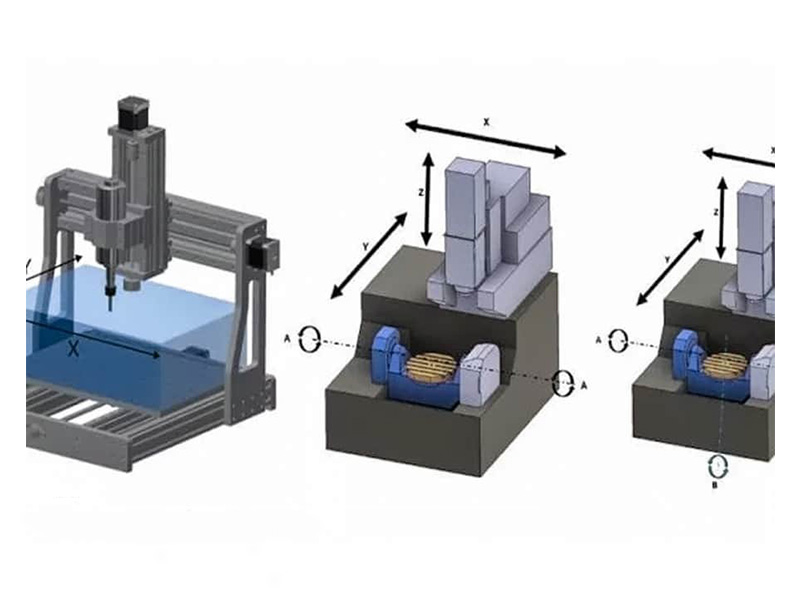
In CNC machining, an axis refers to the direction in which a cutting tool or workpiece can move. The more axes a machine has, the more complex geometries it can produce in a single setup.
Standard CNC Axes
- X-axis: Left to right movement
- Y-axis: Front to back movement
- Z-axis: Up and down movement
Additional axes allow rotation of the workpiece or spindle, enabling machining from multiple angles without manual repositioning.
2. What Is 3 Axis Machining?
2.1 Definition of 3 Axis Machining
3-axis machining is the most basic and widely used CNC machining method. In this configuration, the cutting tool moves along the X, Y, and Z axes simultaneously, while the workpiece remains fixed.
2.2 Capabilities of 3 Axis Machining
3-axis CNC machines are capable of producing:
- Flat surfaces
- Simple pockets and slots
- Holes and basic contours
- Rectangular or prismatic parts
2.3 Advantages of 3 Axis Machining
- Lower machine cost
- Simple programming
- Short setup time
- Ideal for simple and medium-complexity parts
- Cost-effective for large production volumes
2.4 Limitations of 3 Axis Machining
- Cannot machine undercuts
- Multiple setups required for complex parts
- Limited access to angled surfaces
- Reduced accuracy when repositioning is required
2.5 Typical Applications
- Brackets
- Plates
- Enclosures
- Basic mechanical components
When evaluating what differences between 3, 4, and 5-axis machining, 3-axis machining stands out for its simplicity and affordability.
3. What Is 4 Axis Machining?
3.1 Definition of 4 Axis Machining
4-axis machining adds a rotational axis (A-axis) to the traditional X, Y, and Z axes. This allows the workpiece to rotate around a single axis while machining occurs.
3.2 How 4 Axis Machining Works
The fourth axis typically rotates the workpiece horizontally, enabling machining on multiple sides without manual repositioning.
3.3 Capabilities of 4 Axis Machining
4-axis machining enables:
- Machining around cylindrical parts
- Indexed machining on multiple faces
- Improved consistency across surfaces
3.4 Advantages of 4 Axis Machining
- Reduced the number of setups
- Higher accuracy than 3-axis machining
- Faster production for multi-face parts
- Better surface consistency
3.5 Limitations of 4 Axis Machining
- Still limited in machining complex undercuts
- Cannot handle freeform surfaces easily
- More expensive than 3-axis machining
3.6 Typical Applications
- Shafts
- Cam components
- Turbine housings (simple)
- Indexed mechanical parts
When discussing what differences between 3, 4, and 5-axis machining, 4-axis machining represents a balance between cost and enhanced capability.
4. What Is 5 Axis Machining?
4.1 Definition of 5 Axis Machining
5-axis machining allows movement along three linear axes (X, Y, Z) plus two rotational axes simultaneously. This enables the cutting tool to approach the workpiece from virtually any direction.
4.2 Types of 5 Axis Machining
- 3+2 (Positional) Machining: Rotational axes position the part, and machining occurs with 3 axes
- Simultaneous 5 Axis Machining: All five axes move at the same time
4.3 Capabilities of 5 Axis Machining
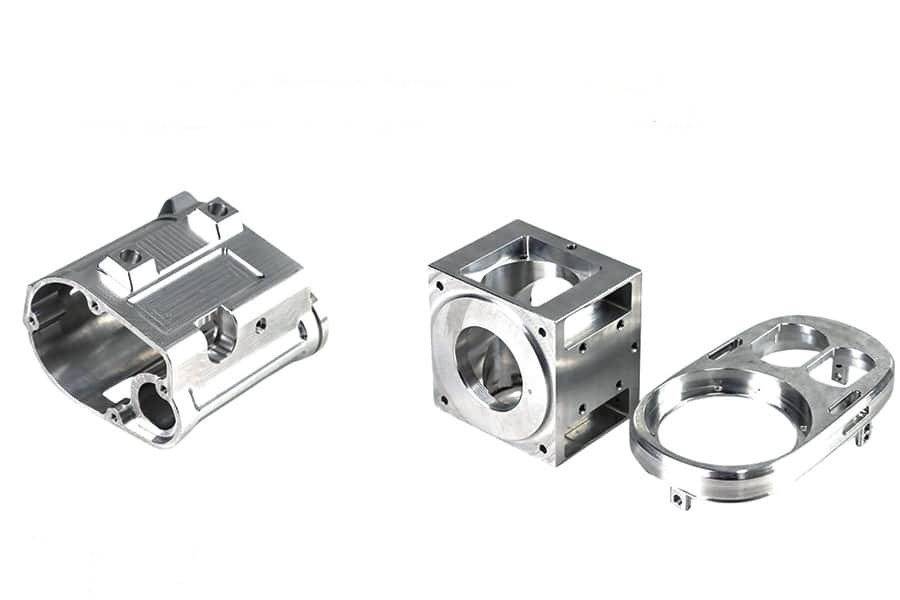
5-axis CNC machining can produce:
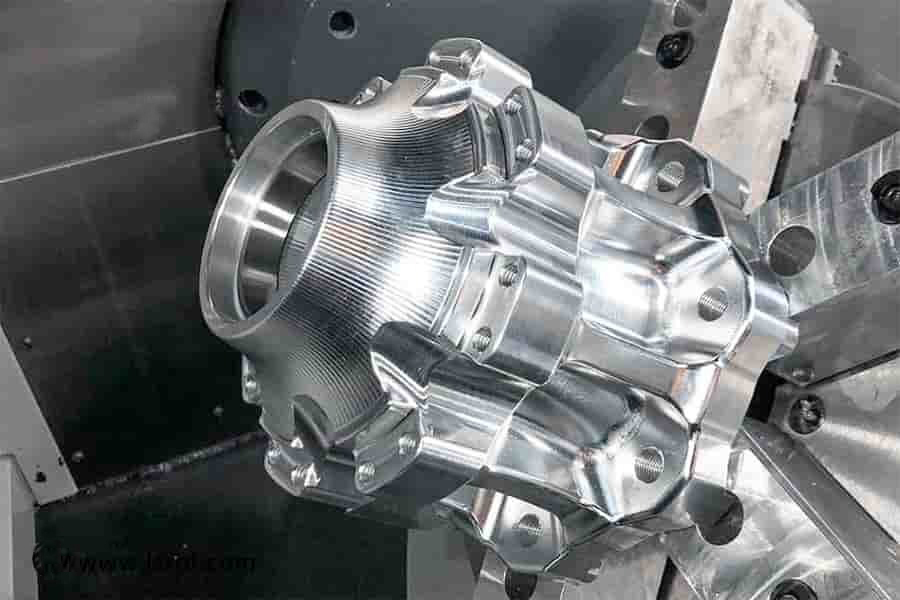
- Complex freeform surfaces
- Deep cavities
- Undercuts
- Multi-angle features
- High-precision aerospace-grade parts
4.4 Advantages of 5 Axis Machining
- Single setup machining
- Exceptional accuracy
- Superior surface finish
- Shorter lead time
- Reduced fixturing requirements
- The capability to machine extremely complex parts
4.5 Limitations of 5 Axis Machining
- Higher machine and programming costs
- Requires skilled operators
- Complex CAM programming
4.6 Typical Applications
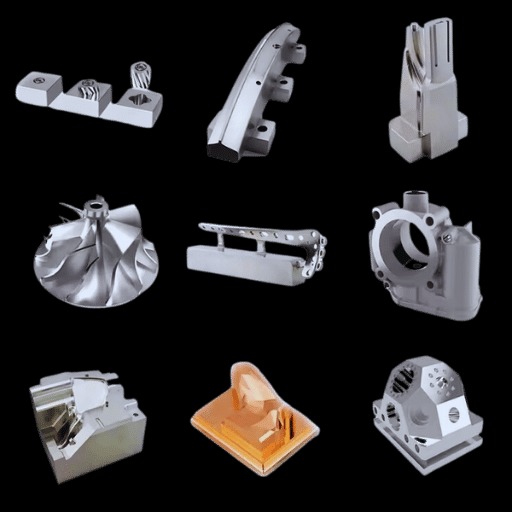
- Aerospace components
- Medical implants
- Turbine blades
- Robotic joints
- Mold and die components
In understanding what differences between 3, 4, and 5-axis machining, 5-axis machining represents the highest level of capability and precision.
5. Key Differences Between 3, 4, and 5 Axis Machining
Feature: 3 Axis 4 Axis 5 Axis
Number of axes: 3 4 5
Undercut machining :❌ Limited ✅
Complex geometry: Low Medium High
Set up requirements: Multiple, Fewer, Single
Accuracy: Good Better Excellent
Cost: Low Medium High
Programming complexity: Low Medium High
This table clearly summarizes what differences between 3, 4, and 5-axis machining in real-world manufacturing.
6. Accuracy and Surface Finish Comparison
One of the most critical differences between 3, 4, and 5-axis machining is accuracy.
- 3-axis machining may introduce errors due to repeated repositioning
- 4-axis machining reduces error by machining multiple faces in one setup
- 5-axis machining achieves the highest accuracy through single-setup machining
Surface finish quality improves significantly as axis capability increases, especially for curved and organic surfaces.
7. Cost Considerations
Understanding what differences between 3, 4, and 5-axis machining also requires cost analysis.
Cost Factors
- Machine investment
- Programming time
- Setup time
- Tool wear
- Scrap rate
While 5-axis machining has a higher upfront cost, it often reduces total project cost for complex parts by minimizing rework and production time.
8. Design Considerations for Each Machining Type
3 Axis Design Guidelines
- Avoid undercuts
- Use flat surfaces
- Limit deep cavities
4 Axis Design Guidelines
- Cylindrical symmetry preferred
- Indexed faces
- Uniform geometry
5 Axis Design Guidelines
- Freeform surfaces allowed
- Deep pockets acceptable
- Complex contours supported
Designing with the correct axis capability in mind reduces cost and improves manufacturability.
9. Industry Applications
Aerospace
5-axis machining for turbine blades and structural parts
Medical
5-axis machining for implants and surgical tools
Automotive
3 and 4-axis machining for brackets, housings, and shafts
Robotics
5-axis machining for joints and complex motion components
Industrial Equipment
A combination of 3, 4, and 5-axis machining, depending on complexity
10. Choosing the Right Machining Method
To decide which machining method is best, consider:
- Part complexity
- Required tolerance
- Production volume
- Budget constraints
- Lead time requirements
For simple parts, 3-axis machining is sufficient. For moderately complex components, 4-axis machining provides efficiency. For high-precision, complex geometries, 5-axis machining is the optimal choice.
11. Future Trends in Multi-Axis Machining
- AI-driven CAM optimization
- Automated toolpath simulation
- Hybrid CNC + additive manufacturing
- Smart factory integration
- Advanced 5-axis automation
These trends will further expand the gap when analyzing what differences between 3, 4, and 5-axis machining.
12. Conclusion
Understanding what differences between 3, 4, and 5-axis machining is critical for achieving optimal manufacturing results. Each machining method serves a distinct purpose, balancing complexity, accuracy, cost, and efficiency.
As product designs continue to evolve toward higher precision and complexity, multi-axis CNC machining—especially 5-axis machining—will play an increasingly vital role in advanced manufacturing.
FAQ: What Differences Between 3, 4, and 5 Axis Machining
1. What is the main difference between 3, 4, and 5-axis machining?
The main difference between 3, 4, and 5-axis machining lies in the number of directions a cutting tool or workpiece can move.
- 3-axis machining operates on X, Y, and Z directions only.
- 4-axis machining adds one rotational axis, allowing machining on multiple sides.
- 5-axis machining includes two rotational axes, enabling complex geometry machining in a single setup.
2. Which machining method is most accurate?
5-axis machining offers the highest accuracy because it allows parts to be machined in one setup, minimizing repositioning errors and improving dimensional consistency and surface finish.
3. When should I choose 3-axis machining?
3-axis machining is ideal for:
- Simple or prismatic parts
- Flat surfaces and basic pockets
- High-volume production
- Cost-sensitive projects
It is the most economical option when complex geometry is not required.
4. What are the advantages of 4-axis machining over 3-axis machining?
4-axis machining reduces setup time by allowing indexed rotation of the workpiece. This improves efficiency and accuracy for parts requiring machining on multiple faces, especially cylindrical or symmetrical components.
5. Can 4-axis machining replace 5-axis machining?
No. While 4-axis machining improves flexibility over 3-axis systems, it cannot machine complex undercuts, deep cavities, or freeform surfaces that require continuous multi-axis movement—capabilities unique to 5-axis machining.
6. Why is 5-axis machining more expensive?
5-axis machining involves:
- Higher machine and tooling costs
- Advanced CAM programming
- Skilled operators
However, for complex parts, 5-axis machining often reduces total manufacturing cost by eliminating multiple setups and minimizing scrap.
7. What industries typically require 5-axis machining?
Industries that frequently use 5-axis machining include:
- Aerospace
- Medical and dental
- Robotics and automation
- Defense
- Mold and die manufacturing
These sectors require complex geometries and extremely tight tolerances.
8. Does multi-axis machining improve surface finish?
Yes. Multi-axis machining—especially 5-axis machining—allows the cutting tool to maintain optimal orientation, reducing tool marks and improving surface finish quality.
9. What types of parts are best suited for 4-axis machining?
4-axis machining is ideal for:
- Shafts
- Cams
- Indexed housings
- Components with features on multiple sides
It is commonly used in automotive and industrial equipment manufacturing.
10. Can 3-axis machining handle tight tolerances?
Yes. 3-axis machining can achieve tight tolerances for simple parts. However, for complex components requiring multiple repositionings, accuracy may decrease compared to 4 or 5-axis machining.
11. Does 5-axis machining reduce lead time?
In many cases, yes. Although programming time is longer, 5-axis machining significantly reduces setup time and rework, resulting in shorter overall lead times for complex parts.
12. Are 5-axis machined parts stronger than 3-axis machined parts?
The strength of a part depends primarily on material selection and design, not the number of axes. However, 5-axis machining can reduce welds or joints, improving structural integrity.
13. What file formats are required for multi-axis machining?
Preferred file formats include:
- STEP (.stp / .step)
- IGES (.igs)
- STL
- 2D drawings (DWG/DXF) for tolerances
STEP files are recommended for complex 4 and 5-axis machining.
14. How do I choose the right axis machining for my project?
Consider:
- Part geometry complexity
- Required tolerances
- Production volume
- Budget
- Lead time
Consulting an experienced CNC machining supplier is often the best way to determine the optimal solution.
15. Will 5-axis machining replace 3-axis machining in the future?
No. 3 axis machining will remain essential for simple, cost-sensitive, high-volume parts. Multi-axis machining complements—not replaces—traditional CNC machining.