
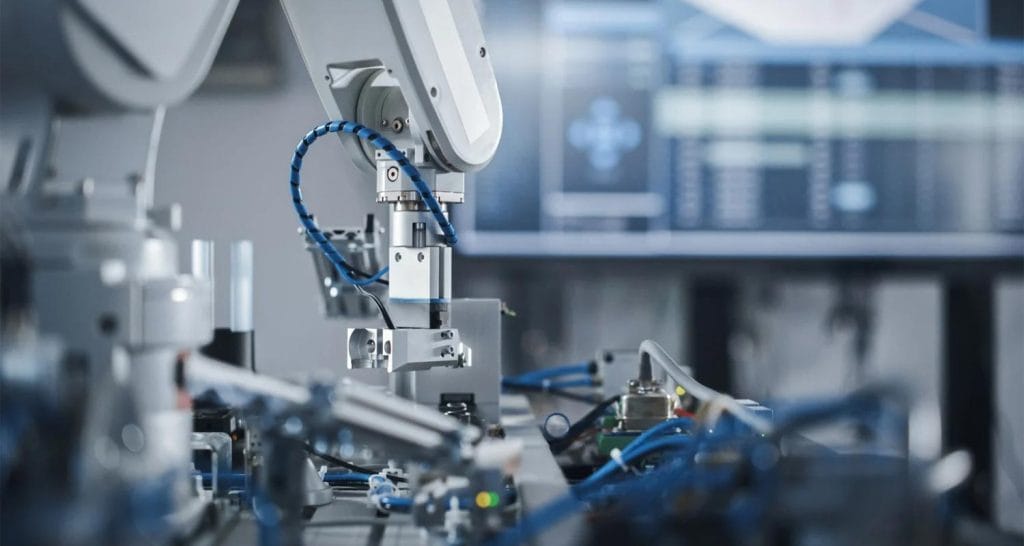
In today’s fast-paced, innovation-driven world, time is one of the most valuable assets for businesses. Companies that can move quickly from concept to market-ready product hold a significant competitive advantage. However, traditional manufacturing often comes with high tooling costs, long lead times, and limited flexibility. This is where the rapid prototyping factory comes in.
A rapid prototyping factory is a specialized facility designed to produce prototypes and small-batch parts quickly and accurately. By combining advanced technologies such as CNC machining, 3D printing, vacuum casting, and injection molding, these factories provide businesses with the ability to iterate designs, validate concepts, and prepare for production in record time.
This comprehensive guide will take you inside the world of the rapid prototyping factory—exploring technologies, benefits, challenges, applications, and the future of prototyping.
What Is a Rapid Prototyping Factory?
At its core, a rapid prototyping factory is a production hub dedicated to speed, flexibility, and precision. Unlike traditional factories optimized for mass production, these facilities are equipped to handle one-off prototypes, low-volume runs, and design iterations.
Key features include:
- Speed: Transforming CAD designs into prototypes in days, not weeks.
- Versatility: Supporting multiple manufacturing processes under one roof.
- Precision: Achieving tolerances suitable for functional testing.
- Scalability: Seamlessly bridging the gap between prototyping and production.
By offering these capabilities, a rapid prototyping factory becomes an essential partner in modern product development.
Core Technologies in a Rapid Prototyping Factory
CNC Machining
CNC machining remains a cornerstone of prototyping factories. With its ability to carve parts from metals, plastics, and ceramics, CNC machining ensures accuracy and material versatility.
- Advantages: High precision (tolerances as tight as ±0.01 mm), excellent surface finishes, and durability.
- Applications: Automotive parts, aerospace brackets, medical devices, and electronic housings.
3D Printing (Additive Manufacturing)
Additive manufacturing revolutionized prototyping by enabling complex designs that were previously impossible.
- Technologies: SLA, SLS, FDM, MJF, and metal 3D printing.
- Advantages: Freedom of design, rapid turnaround, and low material waste.
- Applications: Functional prototypes, architectural models, lightweight aerospace components.
Vacuum Casting
Vacuum casting allows engineers to replicate prototypes in small batches using silicone molds.
- Advantages: Cost-effective for 20–100 units, properties close to injection molding, and wide material selection.
- Applications: Consumer product enclosures, functional testing parts.
Injection Molding
Although traditionally associated with mass production, injection molding plays a critical role in prototyping.
- Advantages: Production-grade prototypes, excellent surface quality, and durability.
- Applications: Large-volume product validation, functional testing.
Sheet Metal Fabrication
Rapid prototyping factories often include sheet metal services.
- Advantages: Strong, lightweight structures; flexibility in design.
- Applications: Enclosures, brackets, robotic arms, automotive panels.
Materials Available in Rapid Prototyping Factories
A rapid prototyping factory supports a wide range of materials to simulate end-use products.
- Plastics: ABS, Nylon, PC, PMMA, PEEK.
- Metals: Aluminum, Stainless Steel, Copper, Titanium.
- Ceramics: Alumina, Zirconia, Silicon Carbide.
- Resins: Transparent, high-temperature, flexible, bio-compatible.
This diversity allows engineers to select materials that closely match final production requirements.
Benefits of Using a Rapid Prototyping Factory
- Faster Time-to-Market
- Products can move from design to prototype in days, accelerating development.
- Cost Savings
- Eliminates expensive tooling during early stages.
- Design Flexibility
- Engineers can test multiple iterations without significant cost increases.
- Improved Collaboration
- Physical models enhance communication among design, engineering, and marketing teams.
- Risk Reduction
- Identifying flaws early prevents costly errors during mass production.
- Market Readiness
- Prototypes can be used for investor presentations, trade shows, and customer testing.
Applications of Rapid Prototyping Factories
Aerospace Industry
- Engine prototypes for thermal testing.
- Lightweight structures for performance evaluation.
Automotive Industry
- Dashboards, gear systems, and brackets.
- Crash-test prototypes for safety validation.
Medical Devices
- Custom implants, surgical instruments, and prosthetics.
- Dental devices and patient-specific models.
Consumer Electronics
- Smartphone cases, wearables, and IoT devices.
- Rapid ergonomic and functional testing.
Robotics
- Structural frames, gears, and grippers.
- Enables fast iteration of robotic systems.
Workflow Inside a Rapid Prototyping Factory
- Concept Development → CAD modeling.
- Design for Manufacturability (DFM) → Optimizing for chosen processes.
- Prototype Production → CNC machining, 3D printing, or casting.
- Post-Processing → Polishing, coating, painting.
- Testing & Validation → Functional and mechanical testing.
- Iteration → Refining design for performance.
- Bridge Production → Small-batch manufacturing before mass production.
Cost and Efficiency Analysis
A rapid prototyping factory saves businesses money in multiple ways:
- Reduced Tooling Costs: No need for expensive molds in early stages.
- Short Lead Times: Avoids long delays in traditional production.
- Material Optimization: Additive manufacturing reduces waste.
- Scalable Investment: Pay only for the parts needed at each stage.
Example: Traditional tooling for injection molding may cost $30,000 and take 6–8 weeks. With a prototyping factory, 3D printing or vacuum casting can deliver test parts in under a week for a fraction of the cost.
Challenges of Rapid Prototyping Factories
- Material Restrictions: Not all production-grade materials are available.
- Tolerance Variability: Some 3D printing processes offer lower accuracy.
- Scaling to Production: Transitioning from prototype to mass production requires adaptation.
- High Equipment Costs: Investment in advanced machinery is significant.
Business Models of Rapid Prototyping Factories
- Dedicated Service Providers: Focus solely on prototyping services.
- OEM Partnerships: Work closely with original manufacturers for development.
- Hybrid Factories: Offer both prototyping and small-batch production.
- Global Networks: Distributed factories offering on-demand production worldwide.
Environmental Sustainability in Rapid Prototyping Factories
- Reduced Waste: Additive manufacturing consumes only the required material.
- Recyclable Materials: Increasing use of recycled plastics and metals.
- Energy Efficiency: Optimized production processes lower the carbon footprint.
- Localized Production: On-demand manufacturing reduces shipping and logistics.
Future of Rapid Prototyping Factories
- AI and Machine Learning Integration: Automated design optimization.
- Hybrid Manufacturing: Combining additive and subtractive processes.
- Smart Factories: Robotics and IoT enabling lights-out manufacturing.
- Sustainable Manufacturing: Use of bio-materials and green energy.
- Global On-Demand Production: Factories connected by digital networks.
Frequently Asked Questions (FAQ)
Q1: How fast can a rapid prototyping factory deliver prototypes?
Depending on complexity, prototypes can be delivered in 3–7 days.
Q2: What industries benefit most?
Aerospace, automotive, medical, consumer electronics, and robotics.
Q3: Can a rapid prototyping factory handle mass production?
While optimized for low to medium volumes, many offer bridge production solutions.
Q4: Is rapid prototyping cost-effective?
Yes, especially in early design stages when avoiding tooling costs.
Q5: What materials are available?
Plastics, metals, ceramics, and resins are commonly supported.
Conclusion
The rapid prototyping factory has revolutionized product development. By offering speed, flexibility, and precision, it helps businesses accelerate design validation, reduce costs, and reach markets faster. Whether you are in aerospace, automotive, medical, or consumer electronics, partnering with a rapid prototyping factory ensures a competitive edge in today’s fast-moving economy.
As technologies like AI, robotics, and hybrid manufacturing continue to evolve, the rapid prototyping factory will only grow more critical in shaping the future of global innovation.