
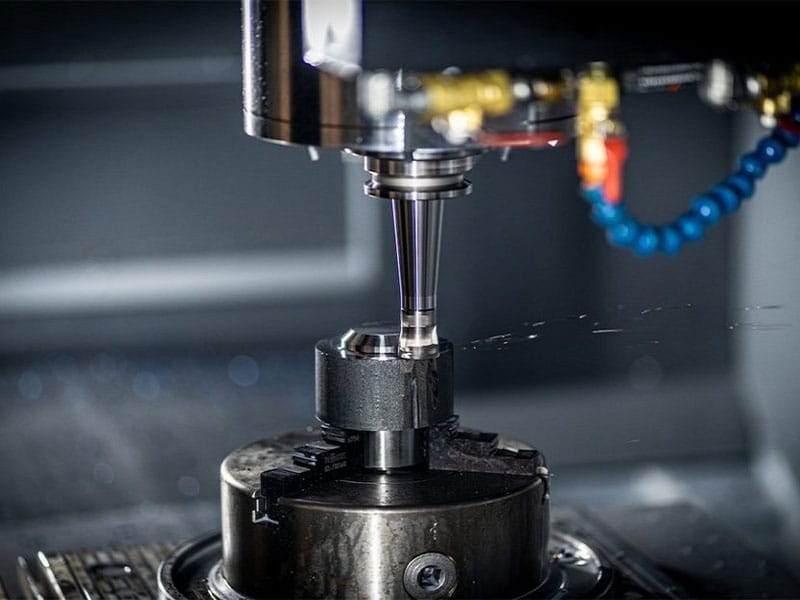
In today’s fast-paced manufacturing environment, CNC milling services have become a cornerstone of precision engineering. Whether producing prototypes or high-volume production parts, CNC milling provides manufacturers with an efficient, accurate, and cost-effective method for creating complex geometries and achieving tight tolerances. As industries continue to demand higher precision and better performance, the role of CNC milling services has only grown more critical.
This article explores everything you need to know about CNC milling services—from the fundamental principles and processes to applications across industries, materials used, benefits, and how to choose the right service provider.
What is CNC Milling?
CNC milling is a subtractive manufacturing process where rotating cutting tools remove material from a workpiece to achieve the desired shape. The “CNC” stands for Computer Numerical Control, meaning the entire process is automated and guided by computer programming. This automation ensures repeatability, precision, and efficiency that manual machining cannot achieve.
How CNC Milling Works
- CAD Design – The part begins as a 3D CAD (Computer-Aided Design) model.
- CAM Programming – The CAD file is converted into CNC code (G-code) using CAM software.
- Machine Setup – The material is fixed on the milling machine’s worktable or vice.
- Cutting Operation – Rotating tools cut, drill, or carve the workpiece layer by layer.
- Finishing – Additional treatments like polishing, anodizing, or coating can be applied.
Key Features of CNC Milling
- Ability to work with a wide variety of materials
- Production of complex geometries
- High precision with tolerances as tight as ±0.01 mm
- Scalability from prototypes to mass production
Types of CNC Milling Services
CNC milling is not a one-size-fits-all process. There are multiple types of CNC milling services tailored to different project requirements:
1. 3-Axis Milling
The most basic type, where the cutting tool moves along three axes (X, Y, Z). It is suitable for simple geometries and flat surfaces.
2. 4-Axis Milling
Adds a rotating axis, enabling cutting along the A-axis. This allows for more complex shapes and multiple sides to be machined without repositioning the workpiece.
3. 5-Axis Milling
One of the most advanced services, where the cutting tool moves along five axes simultaneously. 5-axis CNC milling services are widely used in the aerospace and medical industries for highly complex and precise parts.
4. Prototype Milling
Ideal for small-batch production and design validation. Companies use prototype CNC milling services to test new designs before committing to full production.
5. High-Volume Milling
For industries requiring thousands of identical parts, high-volume CNC milling services deliver consistent quality at scale.
Materials Used in CNC Milling Services
One of the major strengths of CNC milling is its versatility in handling a wide range of materials.
Metals
- Aluminum – Lightweight, corrosion-resistant, and ideal for aerospace and automotive applications.
- Steel – Strong, durable, and suitable for structural components.
- Stainless Steel – Corrosion-resistant, commonly used in the medical and food industries.
- Titanium – High strength-to-weight ratio, preferred in aerospace and medical implants.
- Brass & Bronze – Excellent machinability and aesthetic appeal.
Plastics
- ABS – Affordable and widely used for prototypes.
- Nylon – Tough, wear-resistant, and ideal for gears and bearings.
- PEEK – High-performance plastic resistant to chemicals and high temperatures.
- Acrylic – Transparent and used for display components.
Composites
- Carbon fiber reinforced plastics (CFRP) and fiberglass are increasingly used for lightweight and high-strength applications.
Applications of CNC Milling Services
CNC milling services are applied across multiple industries, each with unique requirements:
Aerospace
The aerospace industry requires ultra-precise parts like turbine blades, brackets, and housings. CNC milling services ensure safety-critical components meet stringent tolerances.
Automotive
From engine blocks to custom car parts, CNC milling enables efficient production of both standard and high-performance automotive components.
Medical & Dental
CNC milling services are used for surgical instruments, orthopedic implants, dental crowns, and prosthetics. The ability to work with titanium and biocompatible plastics makes milling ideal for this sector.
Electronics & Robotics
PC housings, heat sinks, and precision gears for robotics are manufactured using CNC milling services. The method supports miniaturization with extreme accuracy.
Industrial Machinery
Large-scale CNC milling services are essential for heavy-duty equipment parts, molds, and industrial automation systems.
Advantages of CNC Milling Services
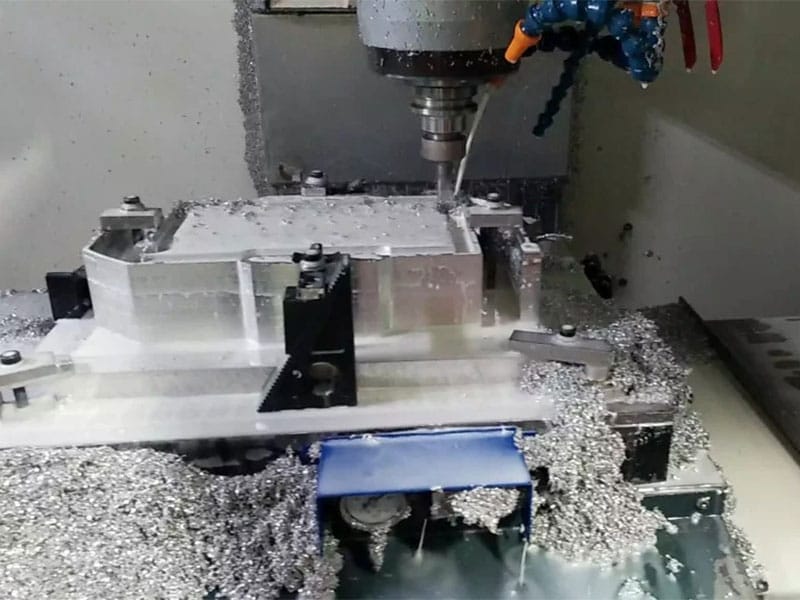
Why do companies rely heavily on CNC milling services? Here are the primary advantages:
- High Precision and Accuracy – Critical for aerospace, robotics, and medical parts.
- Repeatability – Once programmed, CNC machines can produce identical parts consistently.
- Cost-Efficiency – Reduces material waste and speeds up production.
- Flexibility – Works with metals, plastics, and composites.
- Scalability – Suitable for one-off prototypes or mass production.
- Customization – Tailored to specific client requirements.
CNC Milling vs Other Manufacturing Methods
When comparing CNC milling services to other processes, clear differences emerge:
CNC Milling vs CNC Turning
- Milling removes material using a rotating tool, while turning rotates the workpiece.
- Milling is ideal for complex shapes; turning is best for cylindrical parts.
CNC Milling vs 3D Printing
- 3D Printing is additive, building parts layer by layer, while CNC milling is subtractive.
- Milling provides superior surface finish, higher strength, and wider material compatibility.
CNC Milling vs Casting
- Casting is better for very large quantities of identical parts.
- CNC milling services excel in prototyping, custom parts, and projects requiring precision.
The Future of CNC Milling Services
CNC milling continues to evolve with advanced technologies:
- Automation & Robotics Integration – Robotic arms for part loading/unloading increase efficiency.
- AI & Machine Learning – Real-time monitoring and predictive maintenance optimize operations.
- Sustainability – Eco-friendly coolant systems and energy-efficient machines reduce environmental impact.
As industries shift toward smart manufacturing, CNC milling services will play a central role in Industry 4.0.
How to Choose the Right CNC Milling Services Provider
When selecting a CNC milling partner, consider the following:
- Experience and Expertise – Providers with years of experience across industries deliver more reliable results.
- Quality Standards – ISO certifications and strict QC processes are essential.
- Technology and Equipment – Ensure the provider has 5-axis machines and modern inspection tools.
- Lead Times – Quick turnaround is crucial for competitive industries.
- Cost Transparency – Look for clear, competitive pricing without hidden fees.
Case Studies and Real-World Examples
- Aerospace Brackets: CNC milling services produced lightweight yet strong aluminum brackets that passed rigorous FAA tests.
- Medical Implants: Titanium implants machined with 5-axis CNC milling achieved biocompatibility and high accuracy.
- Automotive Prototyping: High-volume CNC milling services enabled faster product development cycles for electric vehicle parts.
Conclusion
CNC milling services are indispensable in today’s precision-driven industries. From aerospace and automotive to medical and robotics, the ability to produce highly accurate, scalable, and versatile parts makes CNC milling the go-to solution for manufacturers worldwide.
Whether you’re a startup needing prototypes or a global corporation requiring mass production, investing in CNC milling services ensures quality, efficiency, and innovation in every component.